The best cycling routes in Kortright Centre For Conservation
4.8
(57)
254
riders
4
rides
Touring cycling routes in Kortright Centre For Conservation explore the natural landscapes surrounding this conservation area, which features diverse woodlands, wetlands, and meadows. The Humber River runs through the western extent of the region, providing riparian corridors. While bicycles are not permitted on the internal trails of the Kortright Centre itself, the surrounding area offers varied terrain for touring cyclists. The routes often follow river valleys and connect natural spaces within the broader Vaughan and Toronto regions.
Best touring cycling routes in Kortright Centre For Conservation
- The most popular touring cycling route is East Humber River Bridge – Scenic Gravel Trail loop from Vaughan—Woodbridge, a 6.6 miles (10.6 km) trail that takes 46 minutes to complete. This easy route features a scenic gravel path along the river.
- Another top favourite among local touring cyclists is Humber River Trail – Scenic Gravel Trail loop from Vaughan—Woodbridge, an easy 10.0 miles (16.0 km) path. This route offers views of the Humber River and passes through varied natural scenery.
- Local touring cyclists also love the Humber River Rail Bridge – Humber River Bridge loop from Humber Summit, a 22.3 miles (35.9 km) trail leading through river valleys and urban green spaces, often completed in about 2 hours 8 minutes.
- Touring cycling in Kortright Centre For Conservation is defined by river valleys, natural woodlands, and connecting paths through the broader region. The network offers options for different ability levels, from easy loops to more difficult, longer rides.
- The routes in Kortright Centre For Conservation are highly rated by the komoot community with an average score of 4.9 stars from over 40 reviews. More than 200 touring cyclists have used komoot to explore Kortright Centre For Conservation's varied terrain.
Last updated: August 28, 2026
5
riders
Easy bike ride. Great for any fitness level. Mostly paved surfaces. Suitable for all skill levels.
9
riders
16.0km
01:04
110m
110m
Easy bike ride. Great for any fitness level. Mostly paved surfaces. Suitable for all skill levels.

Sign up for free
4.7
(26)
140
riders
94.8km
05:43
460m
460m
Hard bike ride. Very good fitness required. Mostly paved surfaces. Suitable for all skill levels.
4.7
(19)
52
riders
35.4km
02:06
190m
190m
Moderate bike ride. Good fitness required. Mostly paved surfaces. Suitable for all skill levels.
5.0
(6)
24
riders
30.4km
02:01
140m
140m
Moderate bike ride. Good fitness required. Mostly paved surfaces. Suitable for all skill levels.
Our route recommendations are based on thousands of hikes, rides, and runs completed by other people on komoot.
Start today with a free account
Your next adventure awaits.
Login or Signup
Popular around Kortright Centre For Conservation

Tips from the Community

The Marita Payne Pond was named in honour of the Canadian sprinter and Olympic medallist, Marita Payne. This is small but scenic little pond is nestled at the south end of David Lewis Park and along the paths of Bartley Smith Greenway, making it the perfect spot for families, joggers, walkers, bikers and anyone seeking a break from the city’s hustle and bustle.
0
0
Keffer Marsh protects a range of flora and fauna, including migratory birds, amphibians, and rare plant species. Sitting on the Rouge River, this marsh assists in filtering water, preventing erosion, and supporting biodiversity. The marsh is not pretty but also a testament to preserving urban green spaces for both ecological and recreational purposes.
0
0

Standing 30 feet tall with a 15-foot arm span, the Toronto Inukshuk was built from about 50 tonnes of mountain rose granite by Inuit artist Kellypalik Qimirpik of Cape Dorset, Nunavut. Created in 2002 as a legacy project commemorating World Youth Day and the visit of Pope John Paul II, it’s one of the largest structures of its kind in North America. Sitting just west of Coronation Park in what’s now known as Toronto Inukshuk Park, it looks out across Lake Ontario and the harbour. There is a granite slab beside it that includes part of then-mayor Mel Lastman’s unveiling speech, describing the Inukshuk as an invitation to “become beacons of light and hope, striving for justice and peace in this world.”
0
0

comfortable armchairs for a short rest and to enjoy the great view
0
0

The Don River Valley cuts through Toronto in a surprisingly wild stretch of forested ravines, wetlands and multi-use trails just beyond the downtown core. Shaped by the Don River flowing through it, the valley is one of the city’s largest natural corridors, with paved and dirt paths passing beneath bridges, alongside marshes and through dense tree cover that feels far removed from the surrounding city.
0
0

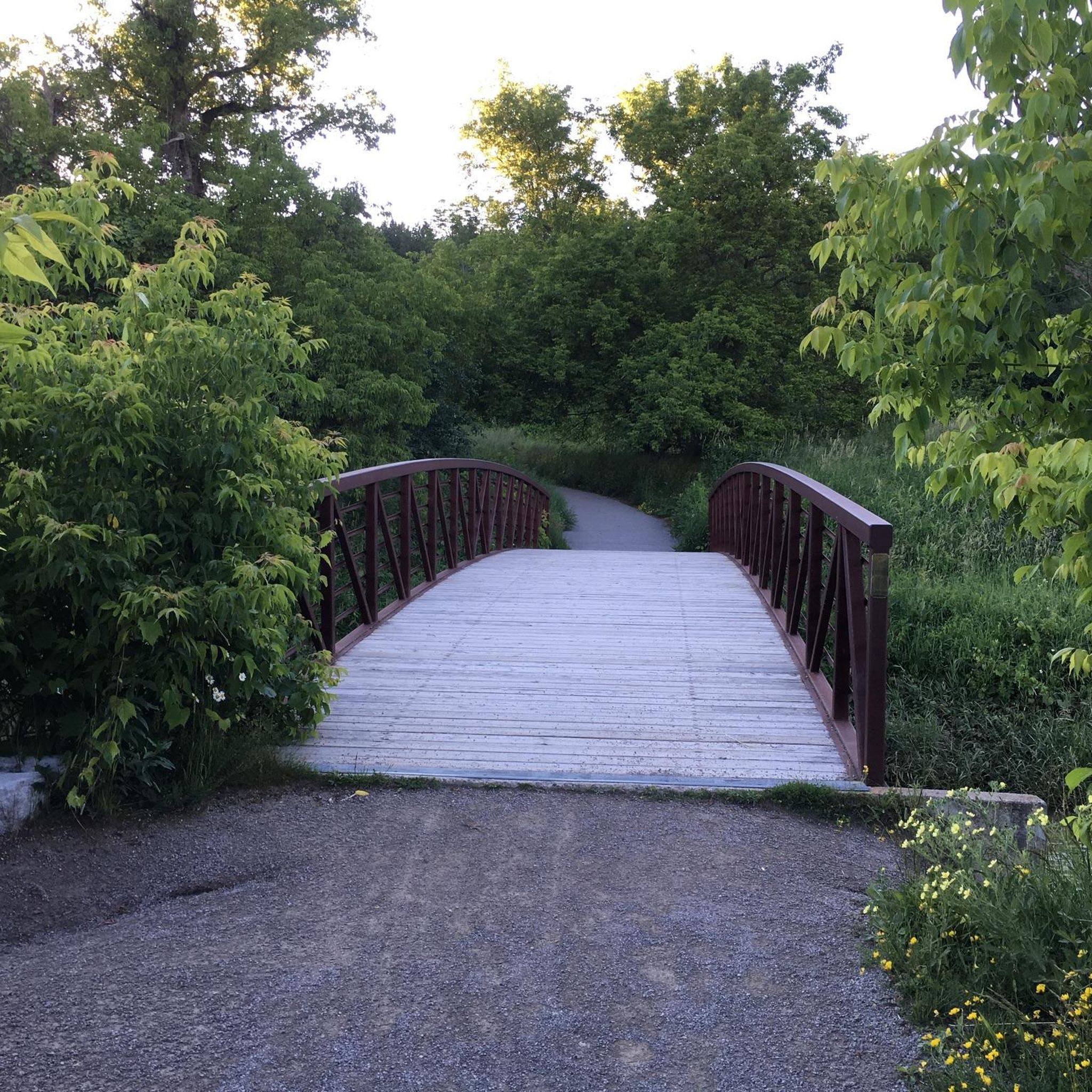
This bridge offers a nice view over the Humber River. There are several benches here where you can stop for a rest and enjoy the surroundings.
0
0
Hidden Trail Park is a small green space connected to neighbouring trails and parks. The public is welcome to enjoy the parks' open grassy fields, swaths of trees, and amenities like restrooms, benches, trash cans, and gardens. Though the park is in northern urban Toronto, it feels like a nice escape from big city life.
0
0
The Don River West Branch is a scenic river that flows through the western side of the Don Valley. As it passes through urban spaces, greenways, and natural landscapes, it creates a haven for animals with its surrounding trees, shrubs, and wetlands. Ongoing restoration strides have helped improve water quality and restore the riverbanks, so with the help of TRCA, the City of Toronto, Don't Mess with the Don, and Waterfront Toronto, everyone can enjoy a healthy river.
0
0
Frequently Asked Questions
Can I cycle directly within the Kortright Centre For Conservation?
No, touring cycling is not permitted on the internal trails of the Kortright Centre For Conservation itself. The centre is primarily for hiking and nature appreciation. However, the surrounding area offers numerous touring cycling routes that pass by or start near the centre, allowing you to explore the diverse natural landscapes of the region.
How many touring cycling routes are available around the Kortright Centre For Conservation?
There are 4 touring cycling routes available for exploring the area around the Kortright Centre For Conservation. These routes cater to various skill levels, including 2 easy, 1 moderate, and 1 difficult option.
What kind of terrain can I expect on touring cycling routes near Kortright Centre?
The touring cycling routes in this region feature varied terrain, often following river valleys like the Humber River and passing through natural woodlands, meadows, and urban green spaces. Some routes, such as the East Humber River Bridge – Scenic Gravel Trail loop from Vaughan—Woodbridge, include scenic gravel paths, while others are paved.
Are there any easy touring cycling routes suitable for beginners or families?
Yes, there are easy routes available. For instance, the East Humber River Bridge – Scenic Gravel Trail loop from Vaughan—Woodbridge is an easy 10.6 km route featuring a scenic gravel path along the river. Another easy option is the Humber River Trail – Scenic Gravel Trail loop from Vaughan—Woodbridge, which is 16.0 km long and offers views of the Humber River.
What are some notable natural features or attractions I might see along the routes?
The routes often highlight the region's natural beauty. You might encounter the East Humber River Bridge, which is a key landmark. The area is rich in diverse ecosystems, including forests, meadows, and wetlands, with the Humber River running through the western extent. While cycling, you'll experience these varied natural landscapes.
What do other touring cyclists enjoy most about cycling near Kortright Centre?
The area is highly rated by the komoot community, with an average score of 4.9 stars from over 40 reviews. Cyclists often praise the scenic river valleys, natural woodlands, and the connecting paths that allow exploration of the broader Vaughan and Toronto regions. The variety of routes, from easy loops to more challenging rides, is also frequently appreciated.
Are there any longer or more challenging touring cycling routes in the area?
Yes, for those seeking a longer challenge, the Don River Valley – Humber Bay Arch Bridge loop from Rutherford is a difficult 95.4 km route. A moderate option is the Humber River Rail Bridge – Humber River Bridge loop from Mount Olive, which covers 32.1 km through river valleys and urban green spaces.
Is there parking available for cyclists near the touring routes?
While specific parking for each route varies, the Kortright Centre for Conservation itself has visitor parking facilities. Many routes in the surrounding Vaughan and Woodbridge areas also have access points near public parking, making it convenient to start your ride.
Can I reach the touring cycling routes by public transport?
The Kortright Centre For Conservation is located in Vaughan, north of Toronto, and is accessible by public transport, though direct access to specific route starting points may require some planning. You can check local transit options for Vaughan and Toronto to find the best way to reach the vicinity of the routes.
What is the best time of year to go touring cycling in this region?
The region offers beautiful scenery throughout the year. Spring and fall are particularly popular due to comfortable temperatures and vibrant foliage. The Kortright Centre also hosts a popular Maple Syrup Festival between March and mid-April, which can be a unique seasonal attraction if you're cycling nearby during that time.
Are there any loop trails for touring cyclists?
Yes, many of the touring cycling routes in the area are designed as loops. Examples include the easy East Humber River Bridge – Scenic Gravel Trail loop from Vaughan—Woodbridge and the moderate View of the Marsh – G. Ross Lord Park loop from Maple, which is 31.2 km long.
Most popular routes in Kortright Centre For Conservation
Most popular attractions in Kortright Centre For Conservation

Get inspired with the komoot mobile app


Explore more
Browse the best Cycling routes in other regions.
