The best walks and hikes in Sic Boschi Mesofili Di Allumiere
4.2
(63)
326
hikers
24
hikes
Hiking trails in Sic Boschi Mesofili Di Allumiere traverse a varied landscape within the volcanic Tolfa Mountains in Lazio, Italy. This Special Area of Conservation is characterized by diverse forest ecosystems, including unique mesophilous woods and the notable low-altitude beech forest of Faggeto di Allumiere. The terrain features traces of dense lava flows, historical alum quarries, and mixed forests, offering a blend of natural beauty and geological interest. Hikers can explore paths that wind through these forested areas and rural…
Last updated: July 5, 2026
4.2
(6)
33
hikers
24.7km
07:11
660m
660m
Hard hike. Very good fitness required. Easily-accessible paths. Suitable for all skill levels.
4.5
(10)
46
hikers
12.0km
03:34
360m
360m
Moderate hike. Good fitness required. Easily-accessible paths. Suitable for all skill levels.

Sign up for free
4.3
(3)
16
hikers
5.09km
01:27
110m
110m
Easy hike. Great for any fitness level. Easily-accessible paths. Suitable for all skill levels.
5.0
(1)
11
hikers
2.07km
00:34
40m
40m
Easy hike. Great for any fitness level. Easily-accessible paths. Suitable for all skill levels.
3
hikers
10.00km
03:05
350m
350m
Moderate hike. Good fitness required. Easily-accessible paths. Suitable for all skill levels.
Get access to more routes and recommendations from other explorers.
Sign up for free
Already have an account?
Our route recommendations are based on thousands of hikes, rides, and runs completed by other people on komoot.
Start today with a free account
Your next adventure awaits.
Login or Signup

Tips from the Community

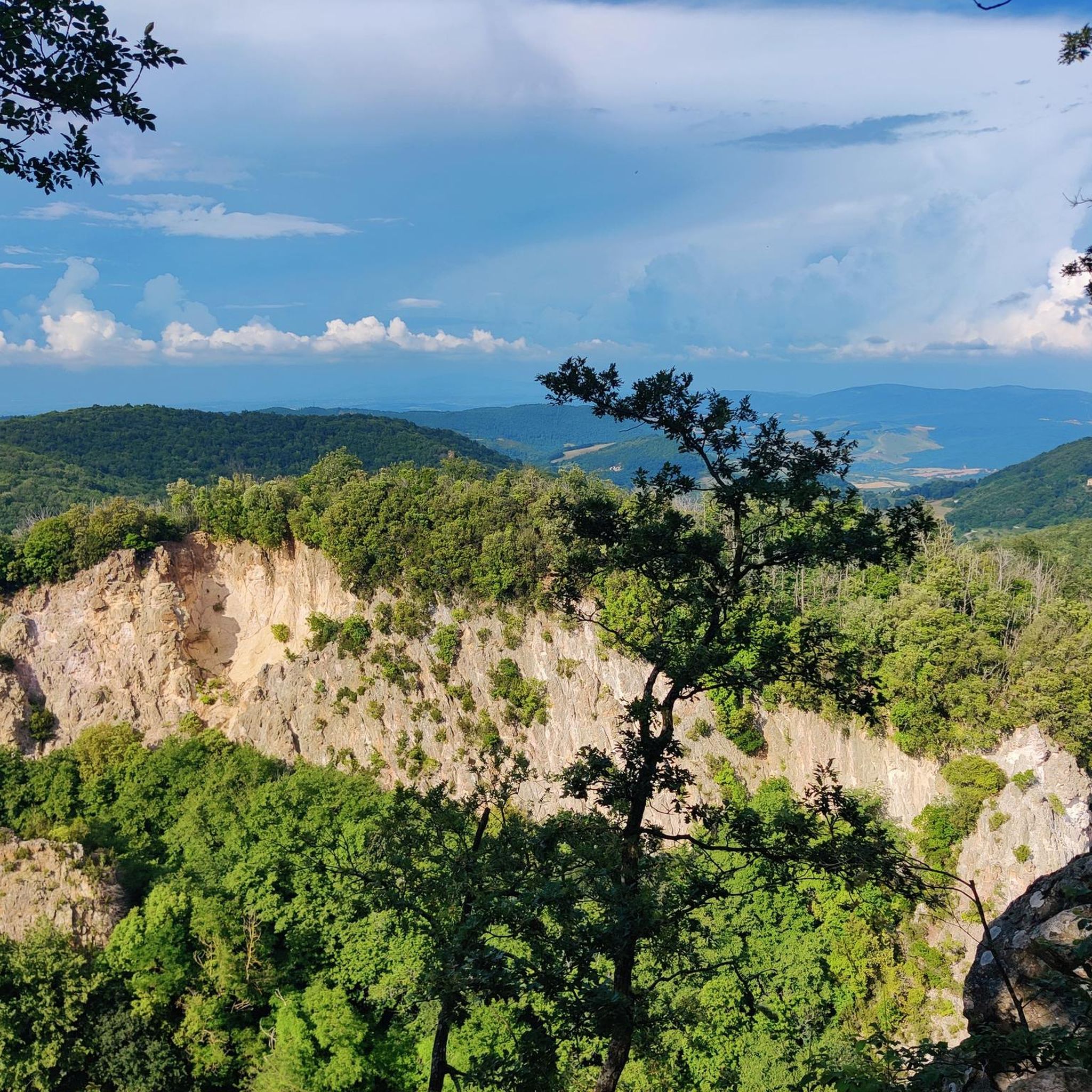
Kaolin quarry, massive abandoned mining site rich in kaolinite, clay mineral, hydrated aluminum silicate. The formation is linked to the hydrothermal alteration processes present in the area. The quarry appears of extreme interest for understanding the dynamics of spontaneous re-naturalization underway by a very rich floristic biodiversity. Interpretation point of the NW landscape of the Tolfa complex up to the Mignone valley, the sea and in the background the Tuscan archipelago to Mount Amiata.
0
0

from Wiki: "According to what is reported in the Liber Pontificalis, the city was founded by Pope Leo IV on 15 August of the year 854 to give a safer seat to the citizens of Centumcellae (Civitavecchia) and the related diocese[1], being the city hit by the raids of the Saracens on the Tyrrhenian coast. According to his biographer, the pope gave the new city the name of Leopoli, but in all the documents, in the first centuries, the name of Centumcellae - civitas or castrum centumcellensis, later changed, is found in Centucelle - Cincelle - Cencelle. The new city was founded on a branch of the Via Aurelia, on an easily defensible hill between the Mignone river and its tributary Melledra, which had also been occupied in ancient times by the Etruscans. At the time of the foundation, the city walls were built, a first church, an episcopal seat, with an adjoining cemetery and wooden houses, later replaced by brick houses and buildings. The main church dedicated to Saint Peter was rebuilt larger between the end of the 11th and the beginning of the 12th century. The city was damaged by the earthquake of 1349 and the buildings were subsequently restored. It progressively declined and at the beginning of the 15th century the lands were, according to sources, "destroyed and uninhabited". In the second half of the fifteenth century the city area was used for the exploitation of the alum mines in the Tolfa mountains and in the seventeenth century it was probably the center of an agricultural company".
0
0

The ruins are very suggestive and there is a wonderful 360 degree view
1
0

Boiling water, two man-sized tanks. It is recommended to stay in the water for a maximum of 2-3 minutes.
1
0

It is an archaeological site where the remains of a medieval city built in the mid-ninth century and abandoned in the modern age were excavated. From the web: According to what is reported in the Liber Pontificalis, the city was founded by Pope Leo IV on August 15 of the year 854 to give a safer seat to the citizens of Centumcellae (Civitavecchia) and its diocese, as the city was hit by the raids of the Saracens on the coast Tyrrhenian. According to his biographer, the pope would have given the new city the name of Lviv, but in all the documents we find, in the first centuries, the name of Centumcellae - civitas or castrum centumcellensis, later changed to Centucelle - Cincelle - Cencelle. The new city was founded on a branch of the Via Aurelia, on an easily defensible hill between the river Mignone and its tributary Melledra, which had also been occupied in ancient times by the Etruscans [2]. At the time of the foundation, the city walls were built, a first church, an episcopal seat, with an adjoining cemetery and wooden houses, subsequently replaced by masonry houses and palaces. The main church dedicated to San Pietro was rebuilt larger between the end of the 11th and the beginning of the 12th century. The city was damaged by the earthquake of 1349 and the buildings were subsequently restored. It gradually decayed and at the beginning of the 15th century the lands were "destroyed and uninhabited" according to sources. In the second half of the fifteenth century the town area was used for the exploitation of the alum mines of the Tolfa mountains and in the seventeenth century it was probably the center of a farm. The site has been the subject of excavation campaigns conducted by the chair of medieval archeology of Sapienza - University of Rome by Letizia Pani Ermini since 1994, in collaboration with several other universities and research institutes. The excavation is directed by Francesca Romana Stasolla.
1
0
Information taken from the web: Ripa Maiale (313 m a.s.l.) is a volcanic cliff composed of ignimbrite and trachyte, which originated at the end of the Pliocene with the birth of the Tolfa mountains. Topographically this vertical wall is the final term of the Palano maquis. The area is geologically very interesting due to the presence of marine fossils (bivalve molluscs such as pectinidae and oysters) from the Miocene and volcanic breccias containing leucite crystals. The cliff has natural caves and a perennial source of water, elements that favored human settlement from the end of the Middle Palaeolithic.
2
0
Village dating back to the 15th - 17th centuries and grown around a water mill in an important area for alum mines. Unfortunately today the village is in a state of almost total abandonment. Near the village the Church of the Immaculate Conception at the Farnesiana of the century. XIX, this too in a state of neglect, unfortunately. In what was the old granary now there is the Tenuta Farnesiana farmhouse
1
0
Frequently Asked Questions
Are there easy hiking trails suitable for beginners or families in Sic Boschi Mesofili Di Allumiere?
Yes, Sic Boschi Mesofili Di Allumiere offers several easy hiking options. There are 5 easy trails, perfect for a relaxed walk or families with children. An example is the Santa Barbara Mine loop from Allumiere, a 3.2-mile trail that takes about 1 hour 26 minutes to complete, leading through historical mining landscapes.
What kind of terrain can I expect on the hiking trails in this region?
The terrain in Sic Boschi Mesofili Di Allumiere is quite varied due to its volcanic origin and diverse ecosystems. You'll encounter paths winding through mesophilous woods, chestnut groves, and mixed forests. Expect traces of dense lava flows and areas shaped by historical alum mining, offering a blend of natural beauty and geological interest.
Are there circular hiking routes available in Sic Boschi Mesofili Di Allumiere?
Yes, many of the trails in the region are designed as circular routes, allowing you to start and end in the same location. For example, the Ripa Maiale Cliff – Ruins of Cencelle loop from Allumiere is a challenging 15.3-mile circular trail, and the Cava di Caolino loop from Allumiere offers a moderate 7.5-mile circular option.
What natural features or historical sites can I see while hiking?
The region is rich in both natural and historical points of interest. You can explore the unique low-altitude beech forest, the Monumento Naturale Faggeto di Allumiere, or discover the historical significance of alum mining at the Alunite Quarries and Lime Kilns of Calcezzo. Some trails also offer scenic vistas, including potential glimpses of the sea from higher elevations.
Are there trails with panoramic views in Sic Boschi Mesofili Di Allumiere?
Absolutely. Many trails offer scenic vistas across the volcanic Tolfa Mountains. Routes like the Ripa Maiale Cliff – Ruins of Cencelle loop from Allumiere are known for their panoramic views, encompassing areas like the Ripa Maiale Cliff and potentially offering glimpses of the sea.
Can I hike with my dog in Sic Boschi Mesofili Di Allumiere?
While specific regulations for dogs are not detailed, the protected status of Sic Boschi Mesofili Di Allumiere as a Natura 2000 site suggests that dogs should generally be kept on a leash to protect local wildlife and ensure a pleasant experience for all hikers. Always check local signage for any specific restrictions.
What is the best time of year to go hiking in Sic Boschi Mesofili Di Allumiere?
The diverse forest types, including the unique beech forest, make the area appealing throughout the seasons. Spring and autumn offer pleasant temperatures and vibrant foliage. The beech forest, in particular, provides a cooler retreat during warmer months, making it enjoyable even in summer.
How many hiking trails are available in Sic Boschi Mesofili Di Allumiere?
There are over 20 hiking trails recorded in Sic Boschi Mesofili Di Allumiere, catering to various fitness levels. This includes 5 easy routes, 12 moderate routes, and 3 difficult routes, ensuring options for everyone from casual walkers to experienced hikers.
What do other hikers say about the trails in Sic Boschi Mesofili Di Allumiere?
The trails in Sic Boschi Mesofili Di Allumiere are highly rated by the komoot community, with an average score of 4.5 stars from over 30 reviews. Hikers often praise the varied landscapes, the unique blend of natural beauty and historical sites, and the well-maintained paths through the diverse forest ecosystems.
Is parking available near the trailheads in Sic Boschi Mesofili Di Allumiere?
While specific parking areas are not detailed for every trailhead, the town of Allumiere serves as a common starting point for many routes. You can typically find parking within or on the outskirts of the town, providing access to the network of trails.
Can I explore the region's mining history on the trails?
Yes, the region has a rich history of alum mining, and several trails are part of the 'Miners' Route' (Cammino dei Minatori). These paths allow you to explore former alum quarries and historical sites related to this centuries-old industry, offering a unique historical perspective on your hike.
Are there any unique or less-known spots to discover in Sic Boschi Mesofili Di Allumiere?
Beyond the well-trodden paths, the region's volcanic origins and historical context offer hidden gems. The unique low-altitude beech forest, Faggeto di Allumiere, is an ecological marvel. Exploring the old alum quarries and the traces of dense lava flows can also lead to fascinating discoveries off the main routes.
Most popular routes in Sic Boschi Mesofili Di Allumiere
Most popular attractions in Sic Boschi Mesofili Di Allumiere

Get inspired with the komoot mobile app


Explore more
Browse the best Hikes in other regions.
