The best road cycling routes in Wurmberg-Possenberg
4.5
(314)
3,141
riders
100
rides
Road cycling routes in Wurmberg-Possenberg traverse a landscape characterized by rolling hills, river valleys, and agricultural plains within the Landkreis Bad Kissingen. The region offers a mix of gentle gradients and more challenging ascents, making it suitable for various road cycling abilities. Paved roads connect small villages and historical sites, providing diverse terrain for exploration.
Best road cycling routes in Wurmberg-Possenberg
- The most popular road cycling route is Maßbach Local History Museum – Thundorf Moated Castle loop from Auferstehungskirche,…
Last updated: July 5, 2026
8
riders
Easy road ride. Great for any fitness level. Mostly well-paved surfaces and easy to ride.
4.3
(19)
6
riders
Moderate road ride. Good fitness required. Mostly well-paved surfaces and easy to ride.

Sign up for free
4.3
(3)
21
riders
Moderate road ride. Good fitness required. Mostly well-paved surfaces and easy to ride.
4.0
(2)
11
riders
Easy road ride. Great for any fitness level. Mostly well-paved surfaces and easy to ride.
7
riders
Moderate road ride. Good fitness required. Mostly well-paved surfaces and easy to ride.
Get access to more routes and recommendations from other explorers.
Sign up for free
Already have an account?
Our route recommendations are based on thousands of hikes, rides, and runs completed by other people on komoot.
Start today with a free account
Your next adventure awaits.
Login or Signup
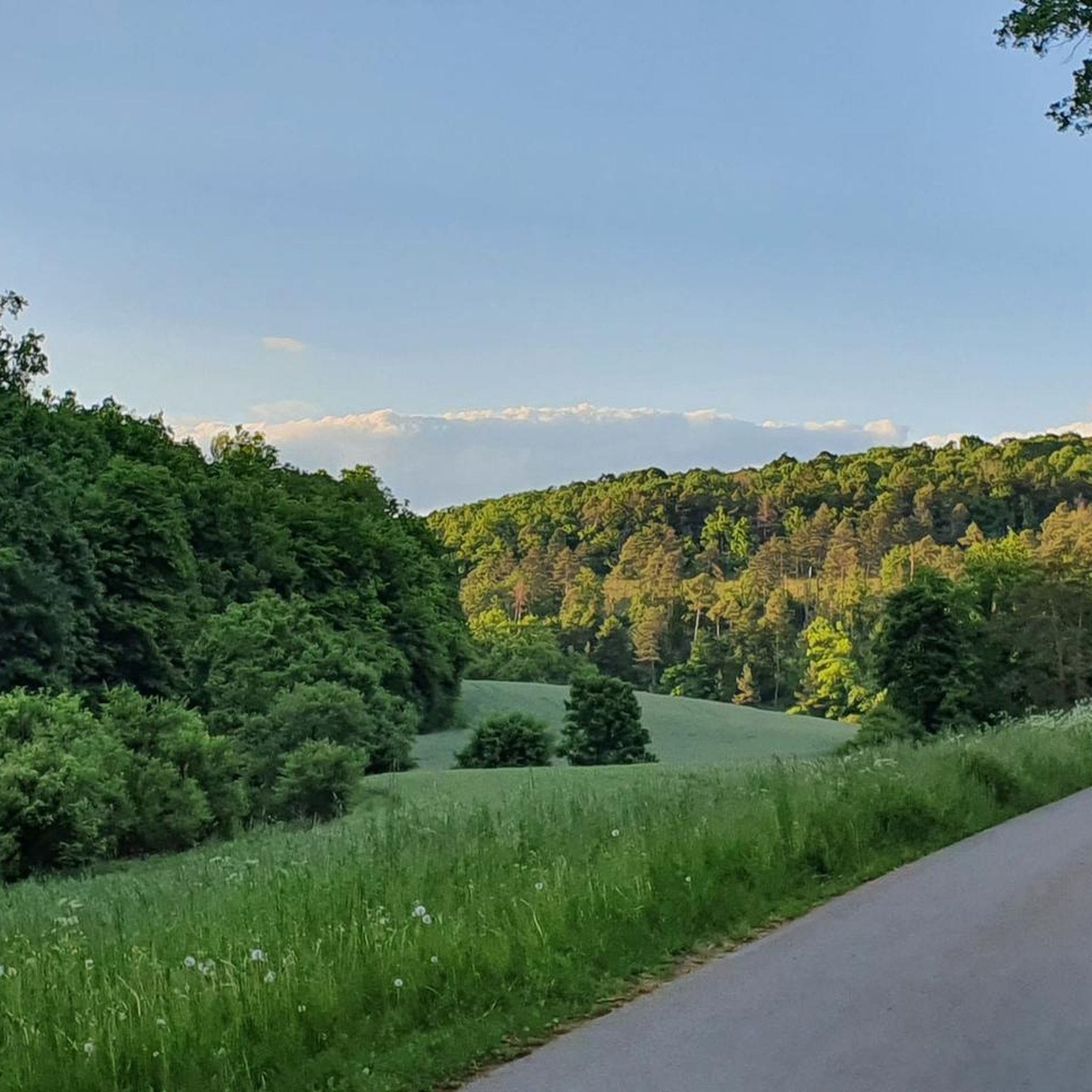
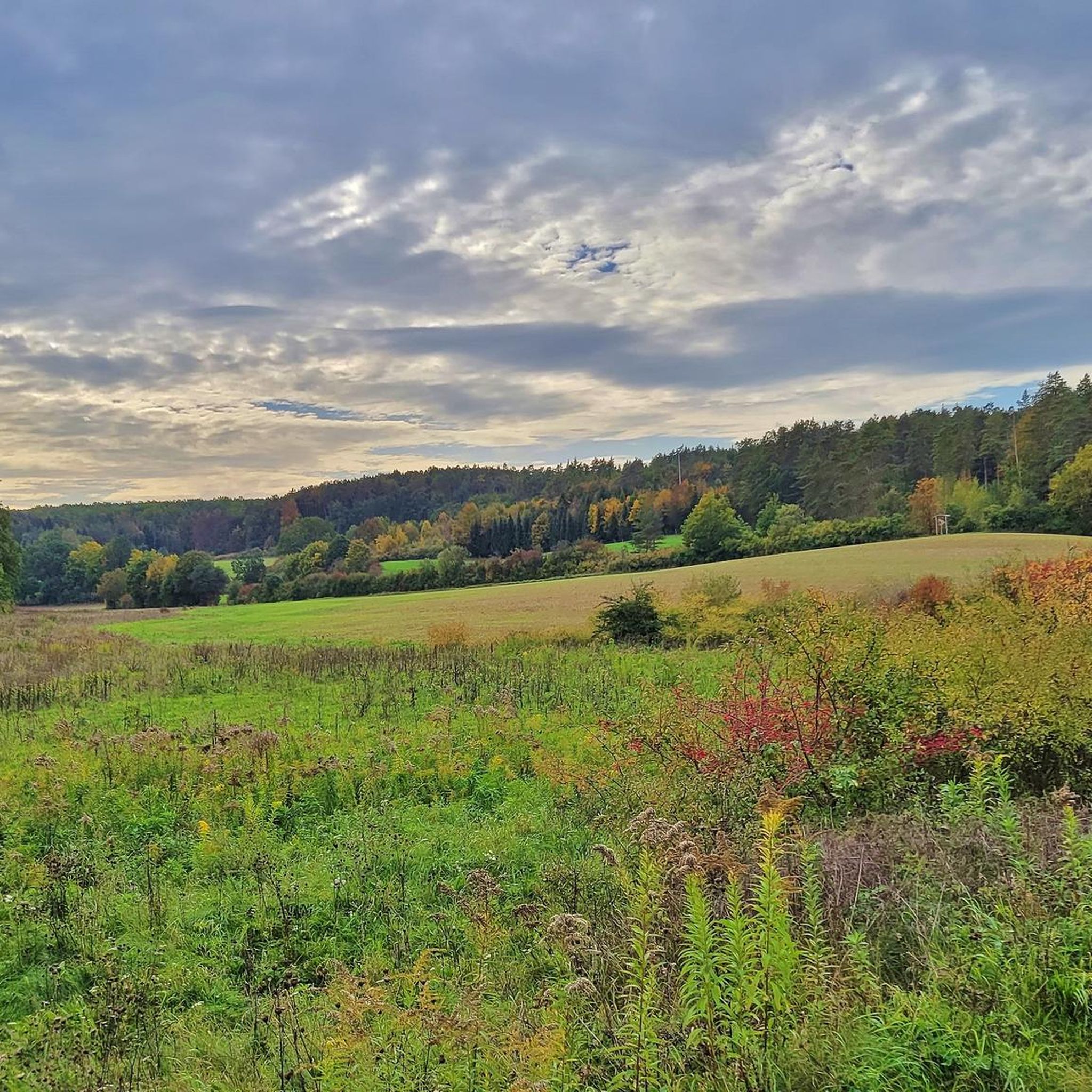
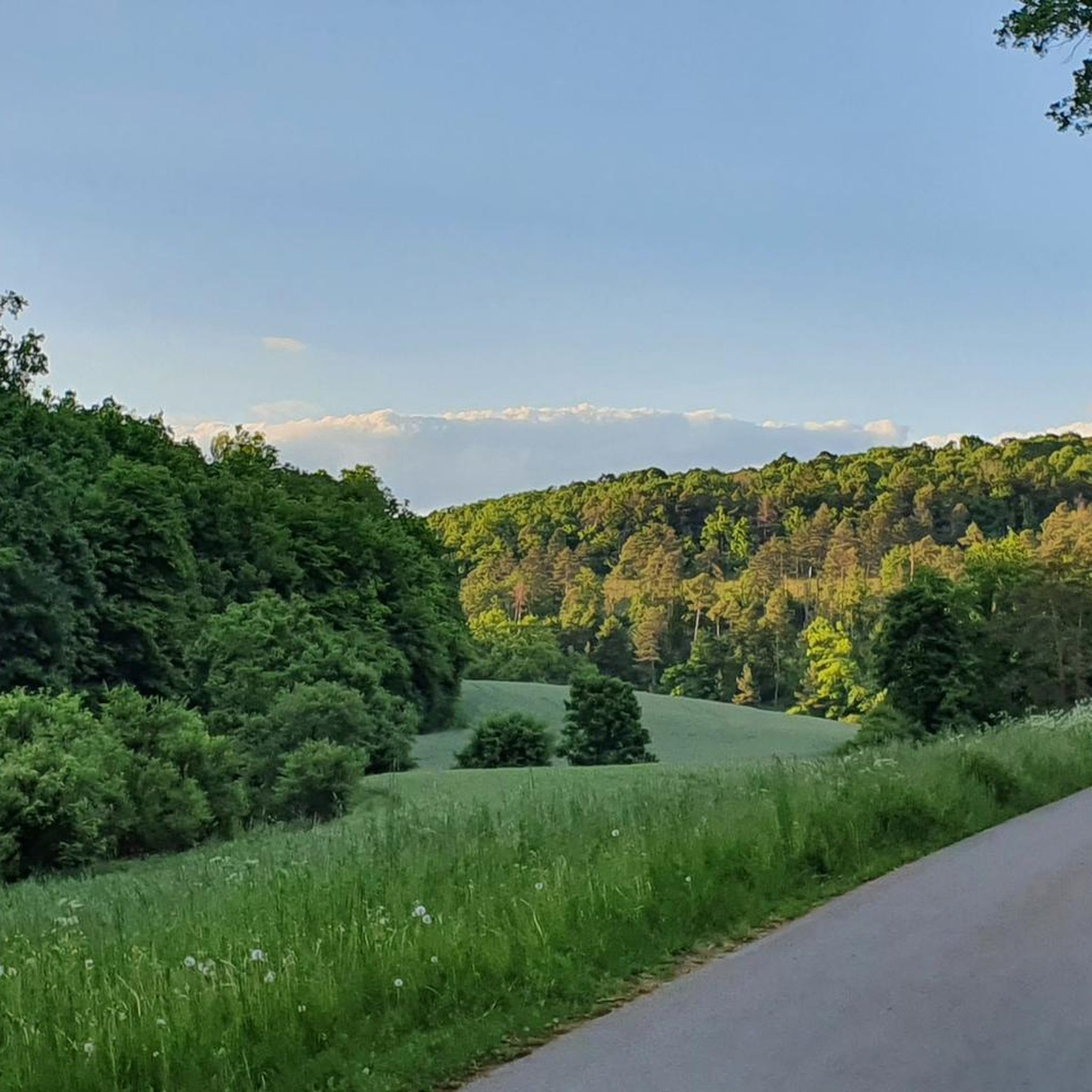
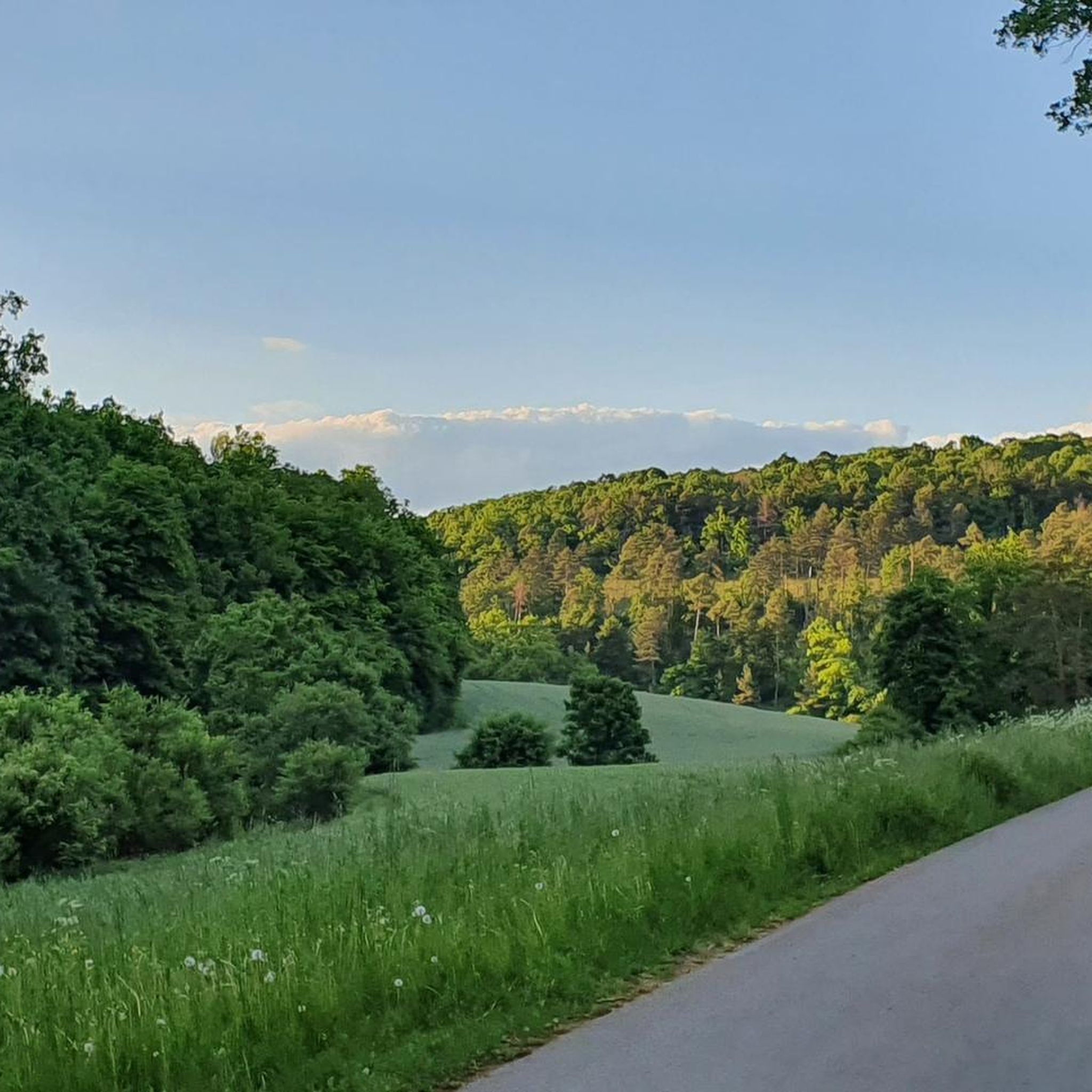
Tips from the Community

beautiful cycle path along the Saale
0
0

The bridge is located in the Saalewiesen, a natural landscape that acts as a fresh air corridor for Bad Neustadt and Salz.
0
0

Roman Catholic Parish Church of the Nativity of Mary - Before the establishment of the parish, Hambach was likely a branch of Maibach. Prince-Bishop Julius Echter von Mespelbrunn had the chancel tower of the church built around 1600 on Romanesque foundations. The nave, originally built with two window bays, was constructed in 1734 and extended by two more window bays in 1928. Two side wings were added between 1988 and 1990. The nave is oriented towards the eastern chancel in the lower level of the church tower. The church tower is built in the Echter style. The walls of the nave are pierced to create transitions to the northern and southern side wings. The church furnishings are Baroque, dating from the time the nave was built. The central figure of the high altar, which, like the side altars, has two columns, is a gilded Madonna and Child. The pulpit depicts the four Evangelists. Next to it, a crucifix from 1952. Wikipedia
0
0

The Franconian Saale River flows right through Bad Neustadt and shapes the expansive meadow landscapes surrounding the town. From the bridge, there is a beautiful view of the river and the surrounding Saale meadows.
0
0
The farm shop exclusively sells farm-grown products and those from regional producers, such as smoked sausages, canned sausages, pasta, potatoes, lamb, lambskins and lamb products, honey, fine wines, juices, and oat products. In the shepherd's cottage, also located in the farmyard, you'll find eggs, chilled drinks, pasta, potatoes, ice cream, and a bench where you can relax. Small celebrations are also held on the farm.
0
0
Thundorf Castle is a moated castle in the center of Thundorf in Lower Franconia, now used as a parish center. After abandoning the fortified site on the hill, the Burgraves of Schaumberg built their residence on the plain around 1600 in the form of a moated castle. This moated castle replaced an earlier structure that was destroyed in the German Peasants' War. E. Titschack assumes that this earlier structure must have been built before 1444, as a document from 1444 distinguishes between a fortified residence and a hilltop castle on the one hand, and the castle and village of Thundorf on the other.[2] He contradicts S. Zeißner, who had assumed a construction date of 1485/90.[3] He points out that, firstly, the lord of the manor, Oskar von Schaumburg, was in Jerusalem around 1485/90, and secondly, that no evidence of a construction company can be found in the approximately 60 building accounts for this period. ... After the Thirty Years' War, the present-day moated castle, originally built in 1600, became the property of the Barons von Rosenburg. From 1749 to 1756, they added a second wing to the northeast side of the castle and renovated the original wing and corner towers. After the von Rosenburg family line died out, the property became the property of the Kingdom of Bavaria. Starting in 1816, the newer wing was converted into the parish church of St. Laurentius under the direction of master builder Büttner. During renovations of the castle and church in the autumn of 1976, remains of walls and wooden posts were discovered. It is unclear whether the remains of the walls are the remnants of a corner tower from a multi-winged structure or the foundations of a defensive tower at the edge of the fortifications. The wooden posts suggest the construction of a structure on marshy ground. In 1976, the church interior was enlarged and a baptistery added using modern concrete construction. The castle grounds include the tithe barn with other outbuildings, as well as a small park containing a half-timbered pavilion. Wikipedia
0
0

From here you have a beautiful view of Königsberg Castle.
2
0

Frequently Asked Questions
What is the general difficulty level of road cycling routes in Wurmberg-Possenberg?
Wurmberg-Possenberg offers a diverse range of road cycling routes. You'll find a good mix of easy, moderate, and challenging options. Out of over 100 routes, approximately 17 are considered easy, 67 are moderate, and 20 are more difficult, catering to various fitness levels.
Are there beginner-friendly road cycling routes in Wurmberg-Possenberg?
Yes, there are several beginner-friendly routes. For an easy ride, consider the Salz Lime Tree – Arch Bridge at the Saale Meadows loop from Münnerstadt, which is just under 12.3 miles (19.7 km) with minimal elevation gain, making it ideal for those new to road cycling or looking for a relaxed tour.
What are some challenging road cycling routes for experienced riders?
Experienced riders looking for a challenge will find routes with significant elevation gain and longer distances. The region features routes with up to 844 meters of ascent. For a longer, more demanding ride, the Königsberg–Hofheim Cycle Path – Königsberg Castle loop from Münnerstadt covers over 66 miles (107 km) and includes substantial climbing.
What is the typical length of road cycling routes in Wurmberg-Possenberg?
Route lengths vary significantly. You can find shorter loops, such as the Maßbach Local History Museum – Thundorf Moated Castle loop from Auferstehungskirche at 14.9 miles (23.9 km), perfect for a quick outing. Longer routes, like the Thundorf Moated Castle – Cycle Path Pfändhausen–Hambach loop from Münnerstadt, extend to over 42.9 miles (69.0 km), offering full-day adventures.
Where can I find parking or trailheads for road cycling in Wurmberg-Possenberg?
Many routes in Wurmberg-Possenberg start from towns like Münnerstadt or Auferstehungskirche, which typically offer public parking facilities. It's advisable to check local parking options in these starting points before your ride. The routes are often loops, bringing you back to your starting location.
Are there family-friendly road cycling routes in Wurmberg-Possenberg?
While the region features rolling hills, there are easy routes suitable for families, especially those with older children comfortable on bikes. Look for routes designated as 'easy' with lower elevation gains, such as the Salz Lime Tree – Arch Bridge at the Saale Meadows loop from Münnerstadt, which offers a gentle ride through scenic areas.
When is the best time of year for road cycling in Wurmberg-Possenberg?
The best time for road cycling in Wurmberg-Possenberg is generally from spring through autumn (April to October). During these months, the weather is typically mild, and the agricultural plains and river valleys are at their most picturesque. Summer offers longer daylight hours, while spring and autumn provide comfortable temperatures and vibrant landscapes.
Is winter road cycling possible in Wurmberg-Possenberg?
Winter road cycling in Wurmberg-Possenberg can be challenging due to colder temperatures, potential ice, and shorter daylight hours. While some dedicated cyclists may venture out, it's generally recommended to exercise caution and check road conditions thoroughly. Many prefer to switch to other sports or indoor training during the colder months.
What historical sites or points of interest can I see while road cycling in Wurmberg-Possenberg?
The region is rich in historical and natural attractions. You can cycle past the impressive Talkirche (Pilgrimage Church of the Holy Cross), explore the serene Münnerstadt Valley, or even spot the ancient Wild Boar Oak. Many routes incorporate these cultural and natural landmarks, adding to the cycling experience.
Are most road cycling routes in Wurmberg-Possenberg loop routes?
Yes, a significant number of road cycling routes in Wurmberg-Possenberg are designed as loops. This allows cyclists to start and end their journey at the same point, which is convenient for those traveling by car. Examples include the Thundorf Moated Castle – Maria Bildhausen Monastery loop from Auferstehungskirche.
What do other road cyclists say about the routes in Wurmberg-Possenberg?
The road cycling routes in Wurmberg-Possenberg are highly rated by the komoot community, with an average score of 4.6 stars from over 280 reviews. Cyclists often praise the varied terrain, the well-maintained paved roads connecting charming villages, and the scenic views across rolling hills and river valleys.
How many road cycling routes are available in Wurmberg-Possenberg?
There are over 100 road cycling routes available in Wurmberg-Possenberg, offering a wide selection for different preferences and skill levels. This extensive network ensures that you can always find a new path to explore.
Are there opportunities for cafe stops or refreshments along the routes?
Given that the routes often connect small villages and pass through towns like Münnerstadt, you will find opportunities for cafe stops, bakeries, or restaurants to refuel and relax. Planning your route with komoot can help identify potential stops along your chosen path.
Most popular routes in Wurmberg-Possenberg
Most popular attractions in Wurmberg-Possenberg

Get inspired with the komoot mobile app


Explore more
Browse the best Road cycling routes in other regions.
