The best walks and hikes in Schoonbroek
4.3
(5297)
33,387
hikers
1,467
hikes
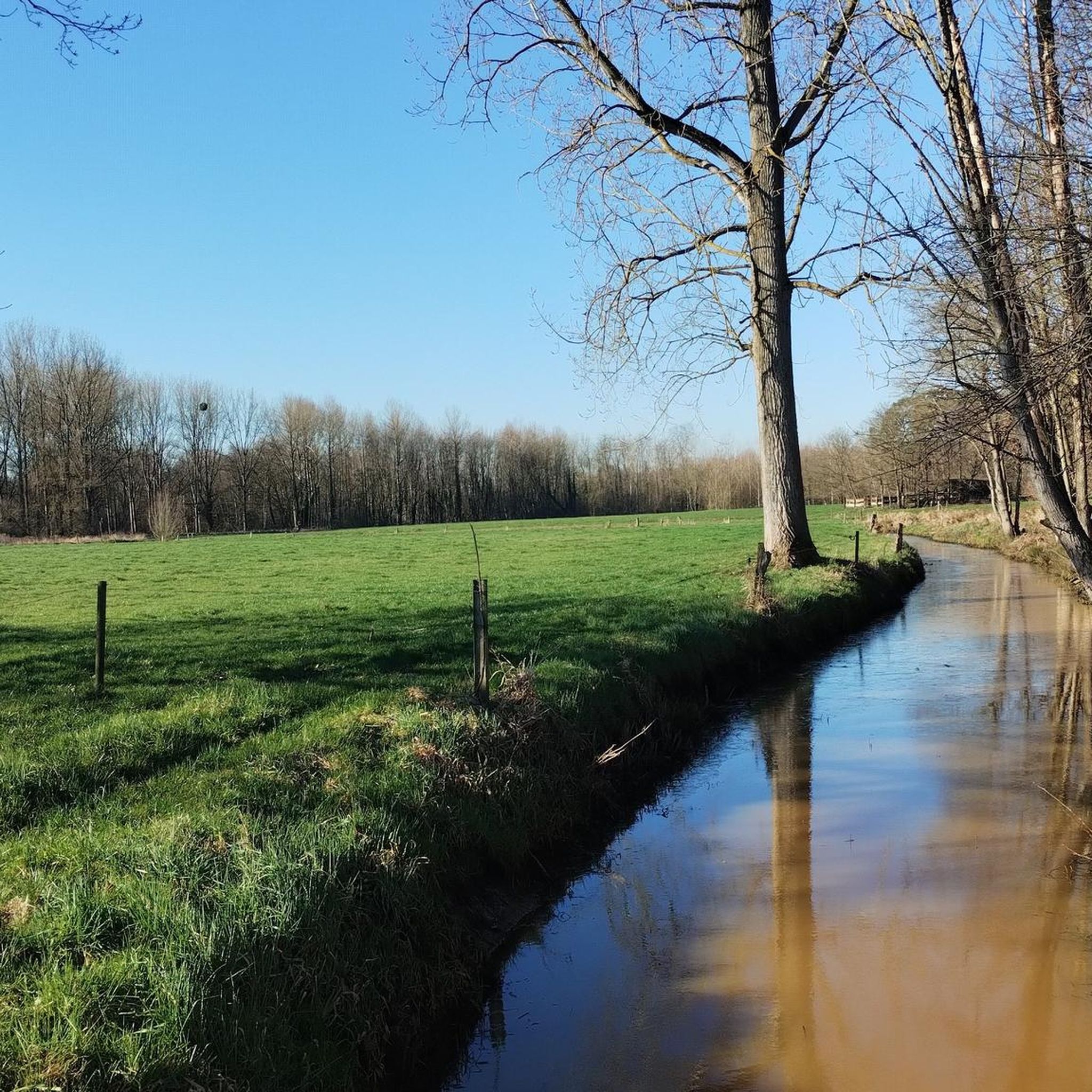
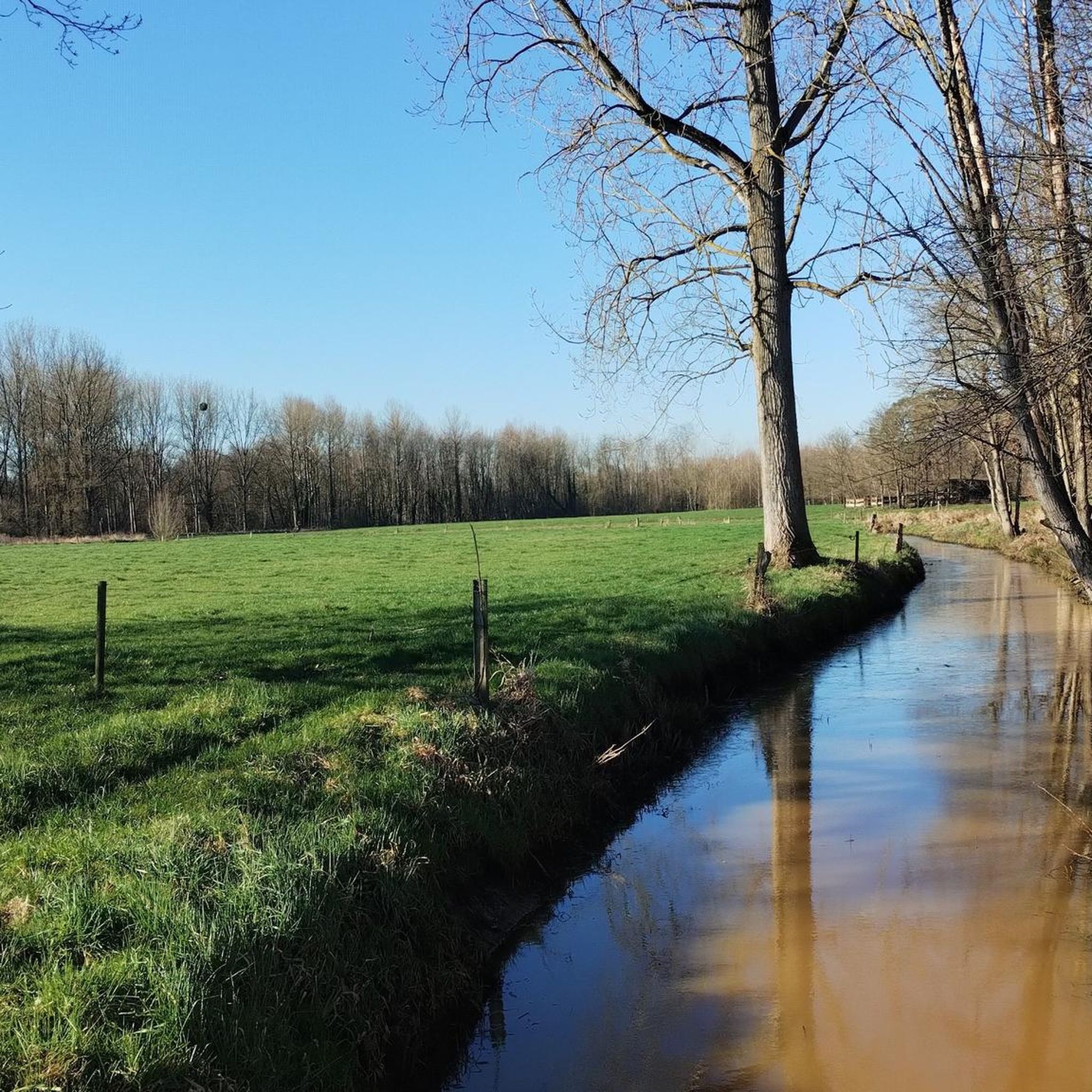
Hiking trails in Schoonbroek traverse a diverse landscape characterized by a patchwork of agricultural land, wasteland, and small forest patches, all interwoven by ditches. This region offers an extensive network of trails, providing a valuable green space for outdoor activities. The terrain is generally flat, with minimal elevation changes, making it accessible for various fitness levels. Schoonbroek is recognized for its natural beauty and varied environment, suitable for both casual walkers and experienced trekkers.
Best hiking trails in Schoonbroek
- The…
Last updated: July 3, 2026
4.6
(9)
62
hikers
12.4km
03:07
10m
20m
Moderate hike. Good fitness required. Easily-accessible paths. Suitable for all skill levels.
5.0
(8)
48
hikers
5.80km
01:28
10m
10m
Easy hike. Great for any fitness level. Easily-accessible paths. Suitable for all skill levels.

Sign up for free
4.8
(4)
28
hikers
9.74km
02:28
20m
20m
Moderate hike. Good fitness required. Easily-accessible paths. Suitable for all skill levels.
3.8
(4)
23
hikers
5.73km
01:27
10m
10m
Easy hike. Great for any fitness level. Easily-accessible paths. Suitable for all skill levels.
5.0
(2)
16
hikers
25.4km
06:24
40m
40m
Hard hike. Very good fitness required. Easily-accessible paths. Suitable for all skill levels.
Get access to more routes and recommendations from other explorers.
Sign up for free
Already have an account?
Our route recommendations are based on thousands of hikes, rides, and runs completed by other people on komoot.
Start today with a free account
Your next adventure awaits.
Login or Signup

Tips from the Community

Where war still remembers in the present...
2
0


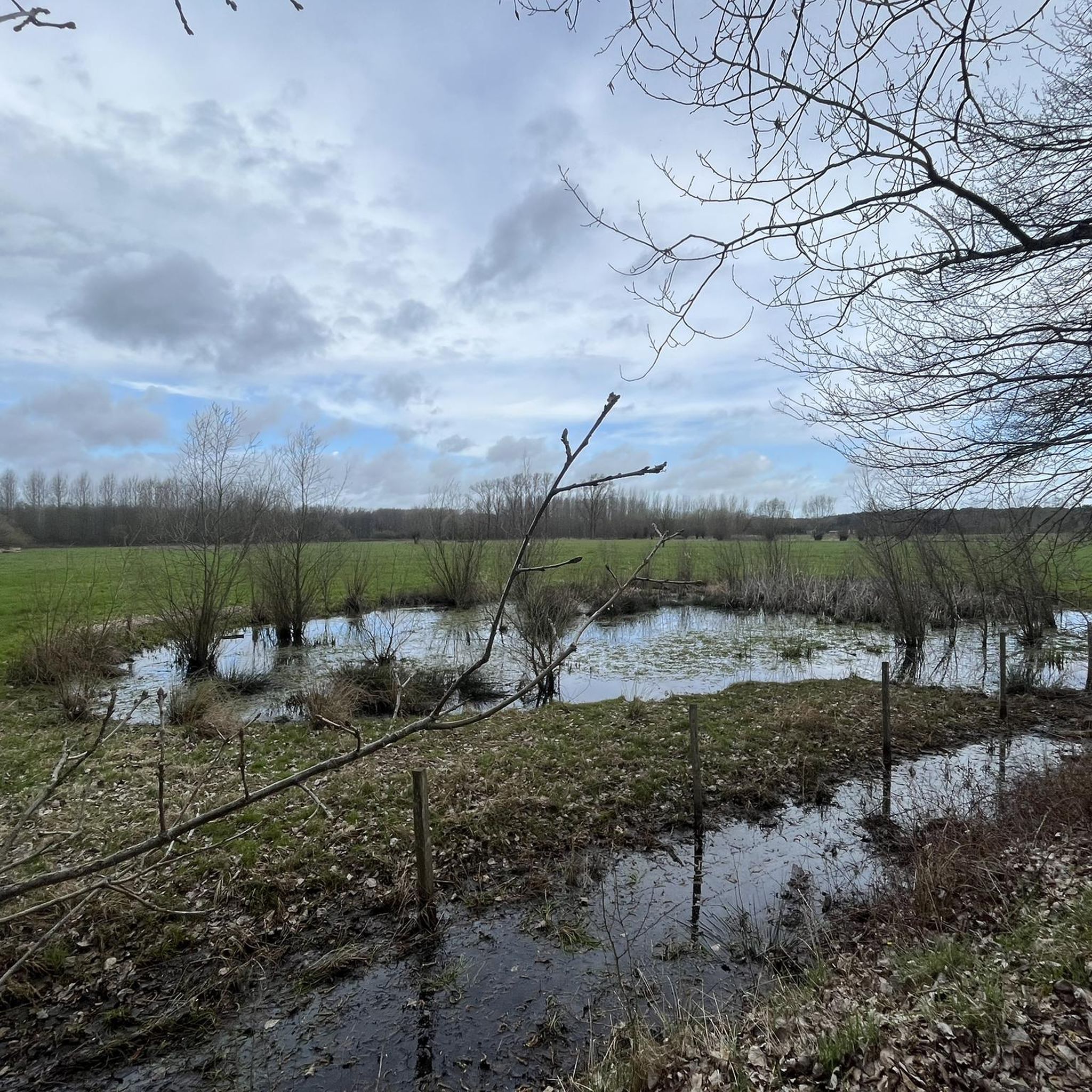
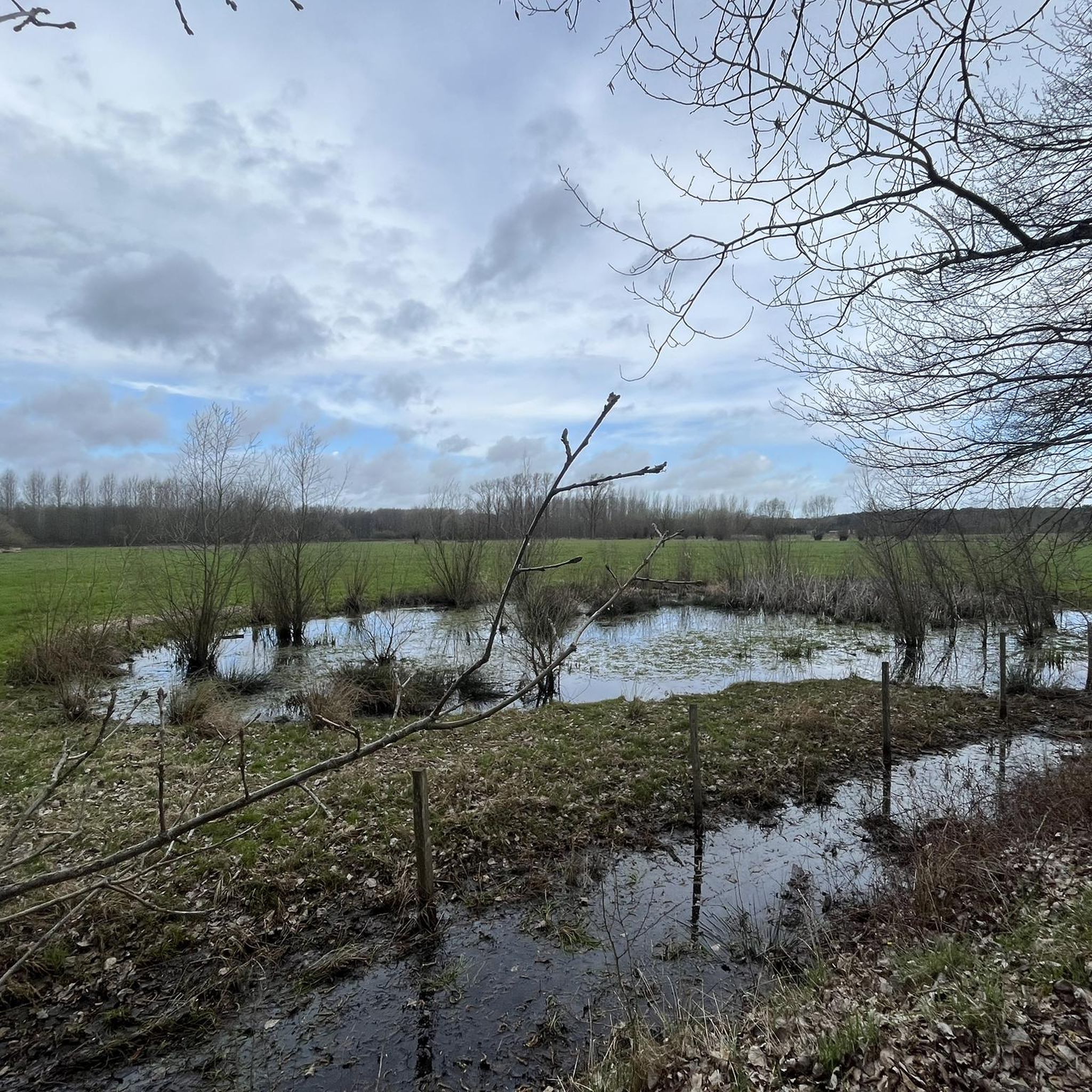
This boardwalk runs from the Leibeek (if you walk north) to approximately the entrance to the grazing area, along which you can walk to the bunker used by bats. After that, there is another long boardwalk that runs through an even wetter area and which you often cannot pass (unless with high boots as indicated). Here it is usually not too bad, although thanks to the path you already cross some quite wet parts of the marsh.
4
0
Here is a small parking area with, next to it, this wooden structure where you can picnic, take shelter, start/end your walk and, perhaps most importantly, learn a lot about the Dijle as a defense location throughout the ages and the nearby bridge.
5
0
The second specification for the construction of an anti-tank canal in Haacht included the construction of a dam on the Dijle and a beam lock, a bunker and a wall connecting the dam to the lock bunker complex. This lock bunker was actually used during the invasion to flood the area. But there was never any fighting here. Quote: "On the morning of May 10, 1940, the day of the German invasion, troops from the 4th Directorate of Engineering and Fortifications, assisted by about a thousand workers, began building a temporary dam made of sandbags on the Dijle. Despite the confusion caused by the German air raids, retreating soldiers and fleeing civilians, the water reached the intended inundation level (9.5 meters) five days later. However, no battle will be fought because French General Bilotte decided to withdraw the Allied troops after the German breakthrough at Sedan." Inventory of Immovable Heritage: Anti-tank canal, https://id.erfgoed.net/erfgoedobjecten/126647 You can find a sound fragment by the municipality of Haacht about the bridge (and other themes) via https://www.haacht.be/antitankgracht Direct link: https://www.haacht.be/file/download/2b2adca8-83e5-4980-8552-4e4bd0e6a1af/XXPnFQW2OITQiURsGQ8VZsureVbWKkyku7c86dDcfUs3d.mp3 Information boards on site.
5
0
The Oude Hansbrug has been a protected monument since 1988. It is a cast-iron, late 19th-century bridge over the Dijle between Keerbergen and Haacht. There has been a lot of history surrounding the Oude Hansbrug. It can already be found in the 13th century, albeit as a wooden bridge. In the 19th century, it was replaced by a cast-iron riveted bridge with a fixed section on the Keerbergen side and a drawbridge section on the Haacht side. During the First and Second World Wars, it was repeatedly destroyed and rebuilt. In 1958, a new concrete bridge was built 200 meters upstream, and the Oude Hansbrug was retired. It could no longer handle the traffic flow. Deterioration began, and it soon had to be closed, even to pedestrians and cyclists, because it was no longer safe. It simply rusted away. Together with the historical societies of Haacht and Keerbergen and both municipal administrations, a battle against time began. It soon became clear that this battle was being lost, and restoration was out of the question because there was simply nothing left to restore. Rebuilding the bridge by perfectly replicating it was the only alternative to save this now-classified monument. While pillars and bridgeheads were being restored, the Flemish Region began replicating the old bridge: a perfect copy in the same materials as the original bridge. In the night of June 14 to 15, 2005, this bridge was brought to the site in pieces by three semi-trailers, and the next day it was assembled by a large crane. On August 27, 2005, the bridge was officially reopened. The Oude Hansbrug has been a protected monument since March 16, 1998. Source: https://www.keerbergen.be/product/292/oude-hansbrug
4
0
Iron balance bridge over the Dijle, built to replace a worn-out swing bridge from 1822 (3 wooden spans on 2 stone pillars). A bridge was already located at this site in 1234 (deed drawn up by Knight Walter van Haacht). Earliest depiction of 'a' Hansbrug with toll house of the de Croy Family (figurative pre-cadastral plans by Adriaan van Montigny). Sometimes the bridge had to be replaced by a ferry or pontoon (including around 1820). The current bridge was damaged by the Belgian Army in 1914 and then repaired. Tolls were levied until after 1886. On December 23, 1890, the Municipalities of Keerbergen (Province of Antwerp) and Haacht (Province of Brabant) were granted permission to build a new bridge by the Ministry of Agriculture, Industry and Public Works, Bridges and Roads Department. After some changes to the original plans, this bridge was completed and delivered in 1893 (February 22). The total cost was 46,550 BEF paid by the Belgian State, the Province of Brabant, and the two municipalities involved. The iron parts were built by the Van Aerschot company from Herentals, also widely known as a caster of iron mill axle heads and as a constructor of riveted iron mill rods. Inventory Immovable Heritage: Hansbrug, https://id.erfgoed.net/erfgoedobjecten/200147
5
0
On the other side of the anti-tank ditch, you will of course find another pole. This one is next to the bridge that separates Keerbergen and Haacht (busy road) with a bridge over the Dijle and a view of the aforementioned Oude Hansbrug. The anti-tank ditch in Haacht is part of the so-called KW-line, a defense line between Koningshooikt (province of Antwerp, near Lier) and Waver (hence KW) with an extra piece towards Namur. Anyone who has walked in the Dijle region has undoubtedly come across elements of the KW-line. The anti-tank ditch of Haacht dates from 1939. It has been transformed into a combination of heritage site, nature reserve and recreational elements. It is actually a concrete wall with a ditch in front of it. The wall is more than 3 kilometers long and about three meters high. Of course, there are other constructions such as a lock bunker. You can find out all about it during a beautiful walk - with many information boards - but you can also learn a lot online before or after a visit to the "Haachts Broek - Antitankgracht" nature reserve at https://www.haacht.be/antitankgracht The bunkers and other parts of the KW-line, including those of Haacht of course, can be discovered at https://www.regionalelandschappen.be/kw-linie
7
0
Frequently Asked Questions
How many hiking trails are available in Schoonbroek?
Schoonbroek offers an extensive network of over 1300 hiking trails. This includes a wide variety of routes, from easy strolls to more challenging long-distance paths, catering to all fitness levels.
What kind of terrain can I expect on hikes in Schoonbroek?
The terrain in Schoonbroek is characterized by a diverse patchwork of agricultural land, wasteland, and small forest patches, often interwoven by ditches. The area is generally flat with minimal elevation changes, making it accessible for various fitness levels. You'll find paths along waterways like the Dijle river and through open landscapes.
Are there any easy hiking routes suitable for beginners or casual walkers?
Yes, Schoonbroek has many easy routes. For instance, the Old Dijle Meander – Dijle Bridge loop from Haacht is an easy 5.7 km trail. Overall, there are over 875 easy routes available, ensuring plenty of options for a relaxed walk.
What natural features or landmarks can I see while hiking in Schoonbroek?
Schoonbroek is known for its natural beauty, often described as a 'whimsical piece of green'. You'll encounter the Dijle river, old meanders, and a diverse landscape of agricultural fields and small forests. The region's biodiversity, including various plants, birds, beetles, and butterflies, also adds to the natural appeal.
Are there any long-distance or more challenging hikes in the area?
For those seeking a greater challenge, Schoonbroek offers more demanding routes. The Antitank Canal Haacht – Gravel at the Dijle loop from Haacht is a difficult 25.6 km route that requires very good fitness, providing a substantial day out for experienced hikers.
Are the hiking trails in Schoonbroek suitable for families with children?
Many trails in Schoonbroek are suitable for families, especially the numerous easy routes with accessible paths and minimal elevation. The diverse natural environment and opportunities for wildlife observation can make for an engaging outdoor experience for children.
Can I bring my dog on the hiking trails in Schoonbroek?
Generally, Schoonbroek's trails are dog-friendly, allowing you to enjoy the diverse landscapes with your canine companion. However, it's always recommended to keep dogs on a leash, especially in areas with agricultural land or near wildlife, and to respect local signage regarding pet regulations.
Are there many circular hiking routes in Schoonbroek?
Yes, Schoonbroek features a comprehensive network of trails, including many circular routes. For example, the Het Schoonbroek – Electric art loop from Wespelaar is a popular 9.7 km circular trail that takes you through varied natural scenery.
What do other hikers say about the trails in Schoonbroek?
The komoot community highly rates the hiking experience in Schoonbroek, with an average score of 4.3 stars from over 4600 reviews. Hikers often praise the varied terrain, the peaceful natural environment, and the well-maintained paths that make exploring the region enjoyable.
Is public transport available to access hiking trails in Schoonbroek?
Schoonbroek is generally accessible, and depending on your starting point, public transport options may be available to nearby towns or trailheads. It's advisable to check local bus or train schedules for specific access points to your chosen hiking route.
Are there designated parking areas for hikers in Schoonbroek?
Yes, for many popular trailheads and starting points in and around Schoonbroek, you will find designated parking areas. It's recommended to check the specific starting point of your chosen route for information on nearby parking facilities.
What is the best time of year to go hiking in Schoonbroek?
Schoonbroek can be enjoyed year-round. Spring brings blooming flora, while autumn offers beautiful foliage. Summer is ideal for longer days, and even winter can be picturesque, especially on the generally flat and accessible trails. The best time depends on your preference for weather and scenery.
Most popular routes in Schoonbroek

Get inspired with the komoot mobile app


Explore more
Browse the best Hikes in other regions.
