Top 20 Natural Monuments around Böllenborn
Best natural monuments around Böllenborn are found within the Palatinate Forest, a region characterized by its distinctive red sandstone formations and expansive views. These natural features are often integrated with historical sites, offering a blend of geological interest and cultural heritage. The area is accessible via numerous hiking trails, providing opportunities to explore its diverse natural landscape. Visitors can discover unique rock formations, panoramic viewpoints, and ancient structures built into the natural environment.
Best natural monuments around Böllenborn
- The most…
Last updated: August 20, 2026
Landeck Castle
Highlight • Castle
Showing Translation
Tip by

Ruins of Altdahn Castle
Highlight • Castle
Translated by Google •
Tip by

Sign up now to discover places like this
Get recommendations on the best single tracks, peaks, & plenty of other exciting outdoor places.
Sign up for free
Wegelnburg Castle Ruins
Highlight • Castle
Translated by Google •
Tip by

Drachenfels Castle Ruins
Highlight • Castle
Translated by Google •
Tip by

Hohenbourg Castle
Highlight • Viewpoint
Translated by Google •
Tip by

Sign up for free to discover even more natural monuments around Böllenborn.
Sign up for free
Already have an account?
Start today with a free account
Your next adventure awaits.
Login or Signup
Tips from the Community

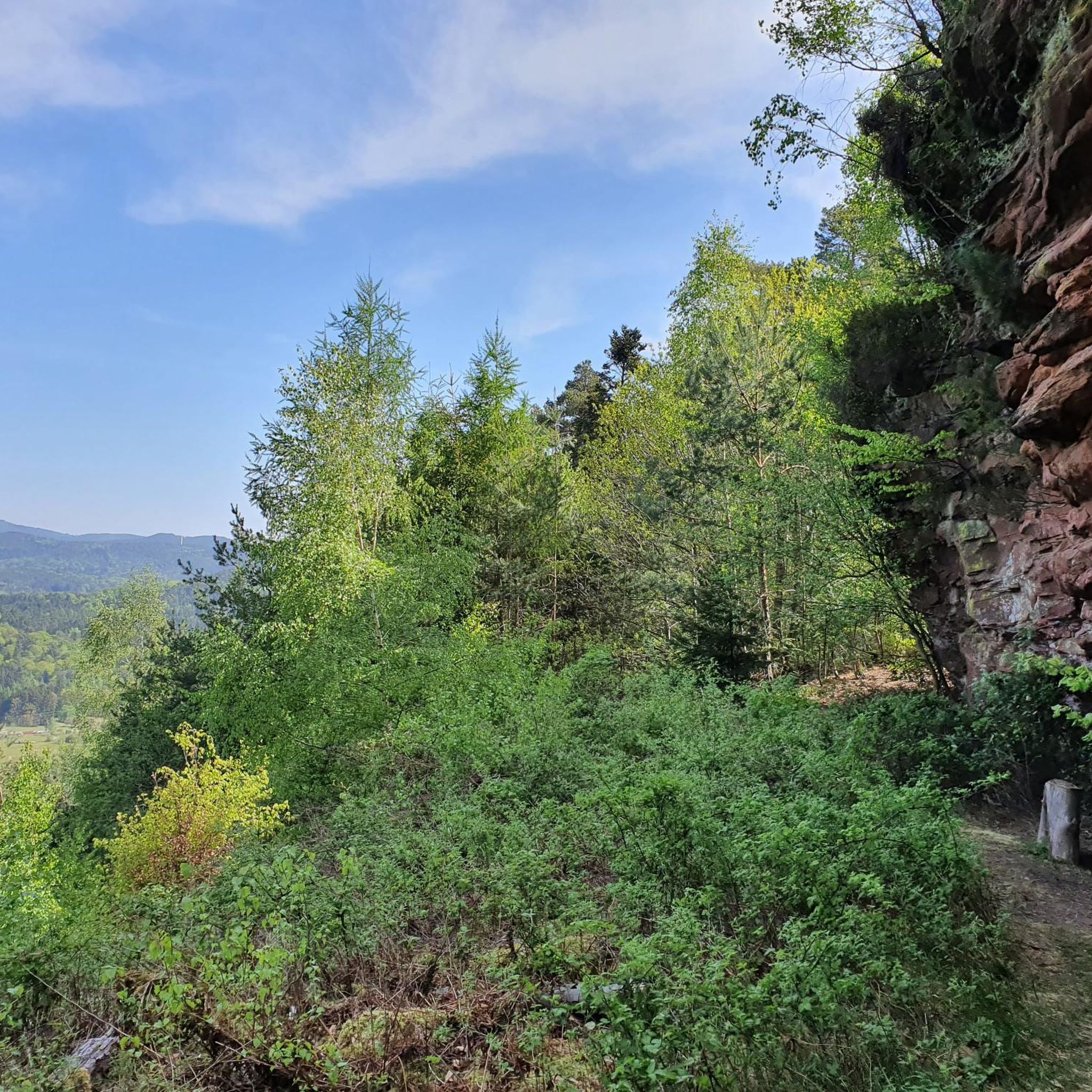
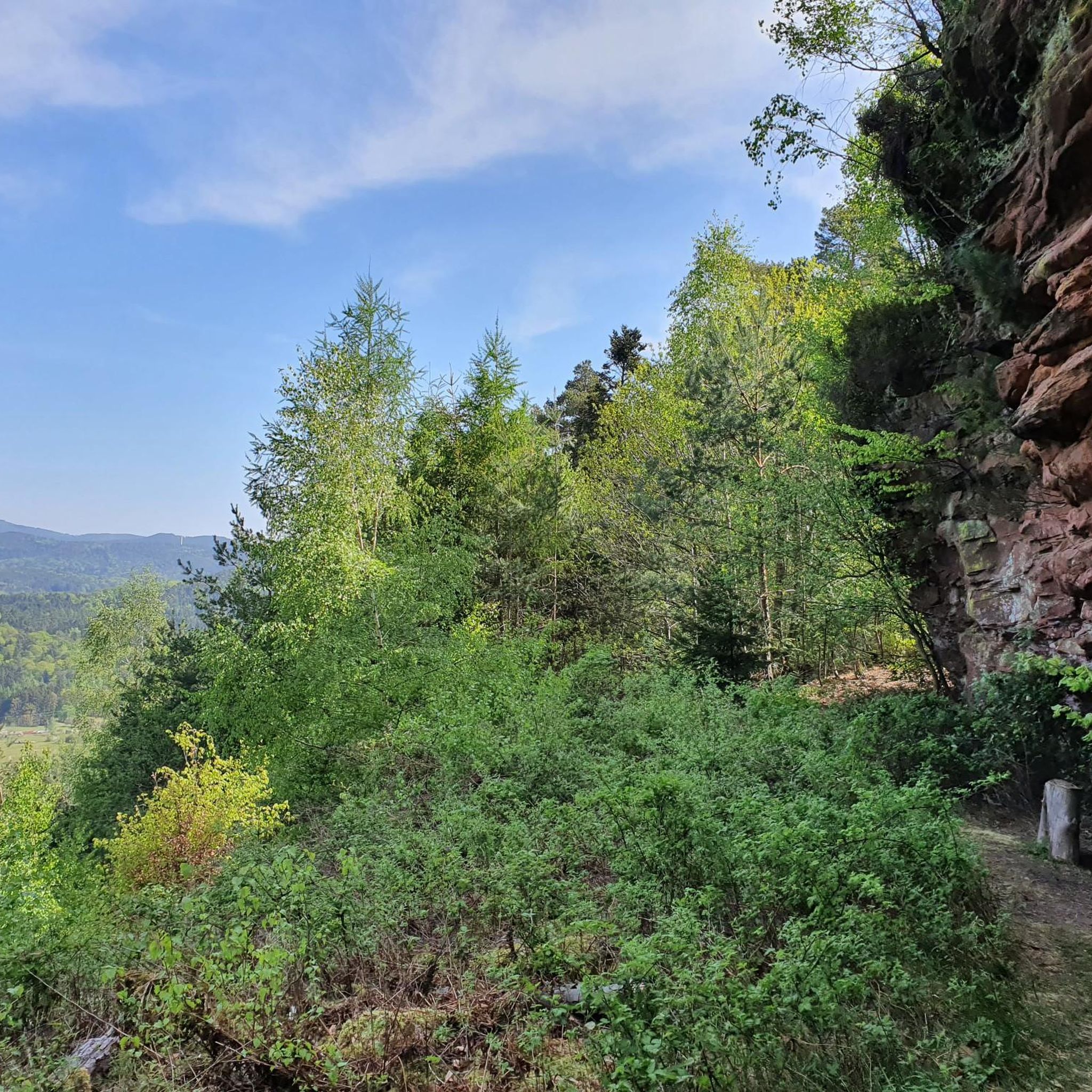
Quite well preserved castle with a beautiful view of Fleckenstein Castle and, in the other direction, of Wegelnburg.
8
4

This typical rock castle is the highest castle in the Palatinate. From here you have a fantastic view of the Wasgau. There are three other castle ruins in the immediate vicinity.
14
1

The White Lady of Hohenbourg Castle Not far from Hohenbourg Castle, just before the German-French border, is the Maidenbrunnen, which bears witness to a sad story: The lords of Hohenbourg and Wegelnburg were enemies for a long time. And as it was bound to happen, the squire Robert von Wegehiburg fell in love with Edwige, daughter of Lord von Hohebourg. She often lingered at the rich source between the two castles. One day Robert went hunting. He chased after a wild boar that rushed to the spring where Edwige was staying. In the heat of the moment, the wild boar jumped at Edwige, but Robert, a good hunter, was able to catch the wild boar just in time and won the heart of his beloved through this act. Often the two secretly spent time at this spring between the enemy castles. But one day the lord of Hohenbourg surprised his daughter in the arms of his archenemy's son. In blind rage he stabbed Robert in front of Edwige's eyes. She collapsed in grief and died on the spot, immediately following her lover to the realm of the dead. Since that awful day, two forget-me-not shrubs have been growing at this spring, now known as the Maiden's Well. It is not uncommon to see a white shadow over the Maidenbrunnen here at dusk: it is the ghost of Edwige, which descends from the cellars of the Hohenbourg and seeks the place of her love. There she sings sad words and sheds tears in the rivulet before vanishing again, carried by the wind. This legend comes from this link_: (https://www.wanderparadies-wasgau.de/hohenbourg.php)
17
0

Tanstein Castle stretches across the two westernmost castle rocks in the castle group. Both rocks used to be connected by a bridge. Today there are modern parapet walls on the rocks, which were placed arbitrarily during restoration work and do not convey any impression of the former castle buildings. The west rock was apparently built with tower-like buildings leaning against the rock. Evidence of this is given by beam holes and workings in the rock, as well as a large cistern, in which water was collected from the roofs. From this point you have a great view of the facility.
15
0

The castle was cleverly built in and around a high sandstone spur. Many remnants of the walls are still visible. The architectural style and carved dates suggest different historical periods. The view from the highest point is breathtaking. Two information panels explain the panorama. In this respect, this castle far surpasses the much more extensive, but also lower-lying, Fleckenstein Castle.
26
0

In the large castle complex you have several possibilities for a "gate view".
19
1

Very beautiful ruin with a gigantic view ... a visit is definitely worth it
13
0

South of Busenberg, on the 367 m high castle hill, rises the once proud medieval Drachenfels Castle, which is already striking from afar because of its striking shape. Although it has become a ruin over the centuries as a result of military conflicts, it is still one of the historically most important sites in the Palatinate, according to many archaeologists and historians. First mentioned in connection with a knightly family of the same name in the 12th century, the castle was probably once the border castle of the Benedictine monastery in Klingenmünster. In 1335, because of the robber baronship of its owners, besieged and destroyed by Strasbourg citizens, the castle came to the knights of Dürkheim in the further course of its history, which was to be decisive for the Drachenfels for many years and rebuilt the Drachenfels. A mutual protective and defiant alliance of the Dürkheimers with a certain Franz von Sickingen, who was a valiant knight, led to the second destruction of the Drachenfels on May 10, 1523. Although the Drachenfels was never a Sickingen castle, it was destroyed by the allied troops of the Elector and Archbishop of Trier, the Elector Palatinate and the Landgrave of Hesse. The castellan and eight servants were no match for the superiority and surrendered the Drachenfels without a fight. Subsequently destroyed and razed, a ban on reconstruction was also imposed. The castle has remained a ruin to this day. In the course of the French Revolution, in its history the Palatinate was alternately German and French, the ruins came into the possession of the municipality, which is still the owner of the Drachenfels today. Visit the Drachenfels with its many characteristic rock chambers, with its towers and thickly reinforced shield walls. An overwhelming view of the magnificent landscape of the Dahner Felsenland, where mountain ridges crowned with red sandstone rocks repeatedly rise out of the green sea of forests, compensates you for the effort of the short ascent. Source: http://www.busenberg.de/drachenfels.html
13
0
Frequently Asked Questions
What unique natural features can I expect to see around Böllenborn?
The region around Böllenborn is characterized by its distinctive red sandstone formations. You'll encounter impressive rock formations like the table-like Drachenfels Castle Ruins, the extensive "sea of rocks" at Felsenmeer Hüttenberg, and the spectacular Orensfels. These geological wonders often blend with historical sites, offering a unique blend of natural beauty and cultural heritage.
Are there natural monuments with historical significance near Böllenborn?
Yes, many natural monuments in the area are intertwined with history. For example, the Landeck Castle is an extremely well-preserved medieval ruin offering views from its keep. The Ruins of Altdahn Castle, built on steep cliffs, features chambers and passages carved into the rock. The Orensfels Viewpoint also has historical traces, possibly dating back to the Celtic period, with an "Opferschale" (sacrifice bowl) and remains of an ancient circular rampart.
What are some of the best viewpoints among the natural monuments?
For breathtaking panoramic views, the Stäffelsberg observation tower is a must-visit. From its 21-meter height, you can see across the Rhine valley to Alsace, deep into the Palatinate Forest, and even to the Black Forest and Vosges Mountains on clear days. The Orensfels Viewpoint also offers extensive all-round views of the Palatinate Forest and the Upper Rhine Plain. Additionally, Wegelnburg Castle Ruins, the highest castle in the Palatinate, provides a fantastic panorama over the Wasgau.
Are there family-friendly natural monuments to visit near Böllenborn?
Absolutely! Many of the castle ruins, which are often integrated with natural rock formations, are great for families. For instance, Drachenfels Castle Ruins is described as a great adventure for kids to explore. The Ruins of Altdahn Castle also offers many corners and dark chambers to explore, making it a highlight for young and old. The Felsenmeer Hüttenberg, with its impressive rock formations, is often described as an "adventure playground" popular with boulderers.
What kind of outdoor activities can I do near the natural monuments around Böllenborn?
The natural monuments are excellent starting points for various outdoor activities. You can enjoy extensive hiking, mountain hiking, and cycling. For detailed routes, explore the Hiking around Böllenborn, Mountain Hikes around Böllenborn, and Cycling around Böllenborn guides.
Are there specific hiking trails that lead to these natural monuments?
Yes, many natural monuments are integrated into hiking networks. For example, the Steinerner Tisch is a key highlight on a circular hiking route starting from the "Drei Eichen" car park. The Stäffelsberg tower is also a key point on various hiking trails. You can find specific routes like the "Stone Table – View of Berwartstein Castle loop from Böllenborn" in the Hiking around Böllenborn guide.
What are the geological features that make the natural monuments around Böllenborn unique?
The region's geology is dominated by Buntsandstein (red sandstone). This soft rock has been shaped by millions of years of natural forces, particularly frost weathering during cold periods of the Pleistocene, creating unique formations. The Felsenmeer Hüttenberg is a prime example, with its vast expanse of sandstone fragments and unusual rock formations like the nearly 19-meter-high Hausfelsen and the Kugelfelsen.
Is there an observation tower offering panoramic views in the area?
Yes, the Stäffelsberg features a 21-meter-high observation tower. After climbing its 120 steps, visitors are rewarded with exceptional panoramic views across the Rhine valley, the Palatinate Forest, and even distant mountain ranges. You can find more information about the Stäffelsberg tower on rlp-tourismus.com.
Can I find places to eat or rest near the natural monuments?
Yes, several natural monuments and nearby trails offer opportunities for refreshment. For instance, the Landeck Castle has a castle tavern with a terrace serving local dishes. Near the Drachenfels Castle Ruins, you'll find the Drachenfelshütte of the Palatinate Forest Association, offering traditional Palatinate specialties. The Felsenmeer Hüttenberg also has a nearby refuge hut with views of the Rhine plain.
What is the "Steinerner Tisch" and why is it worth visiting?
The Steinerner Tisch, or Stone Table, is a notable Buntsandstein rock formation located on the Hohe Derst plateau. It gets its name from its distinctive table-like appearance. It's worth visiting for the beautiful view it offers over the surrounding landscape and serves as an inviting spot for a break amidst nature, often included in circular hiking routes.
What makes the castles around Böllenborn unique as natural monuments?
The castles in this region, such as Hohenbourg Castle and Anebos Castle Ruins, are unique because they are often built directly into or on top of natural rock formations. This integration means that the natural rock is not just a foundation but an integral part of the castle's structure, with chambers, stairs, and passages often carved directly into the sandstone. This creates a fascinating blend of human architecture and natural landscape.
What is the Orensfels Viewpoint known for?
The Orensfels Viewpoint, located on the 581-meter-high Orensberg, is known for its spectacular rock formation and extensive all-round views of the Palatinate Forest and the Upper Rhine Plain. It also holds cultural significance, featuring an "Opferschale" (sacrifice bowl), a natural hollow in the sandstone with historical traces possibly dating back to the Celtic period, and remains of an ancient circular rampart.
Most popular routes around Böllenborn
Most popular attractions around Böllenborn

Get inspired with the komoot mobile app


Explore more
Extend your search for the best caves by checking out these guides of the top ones around Böllenborn:
