Attractions and Places To See around Sembach - Top 20
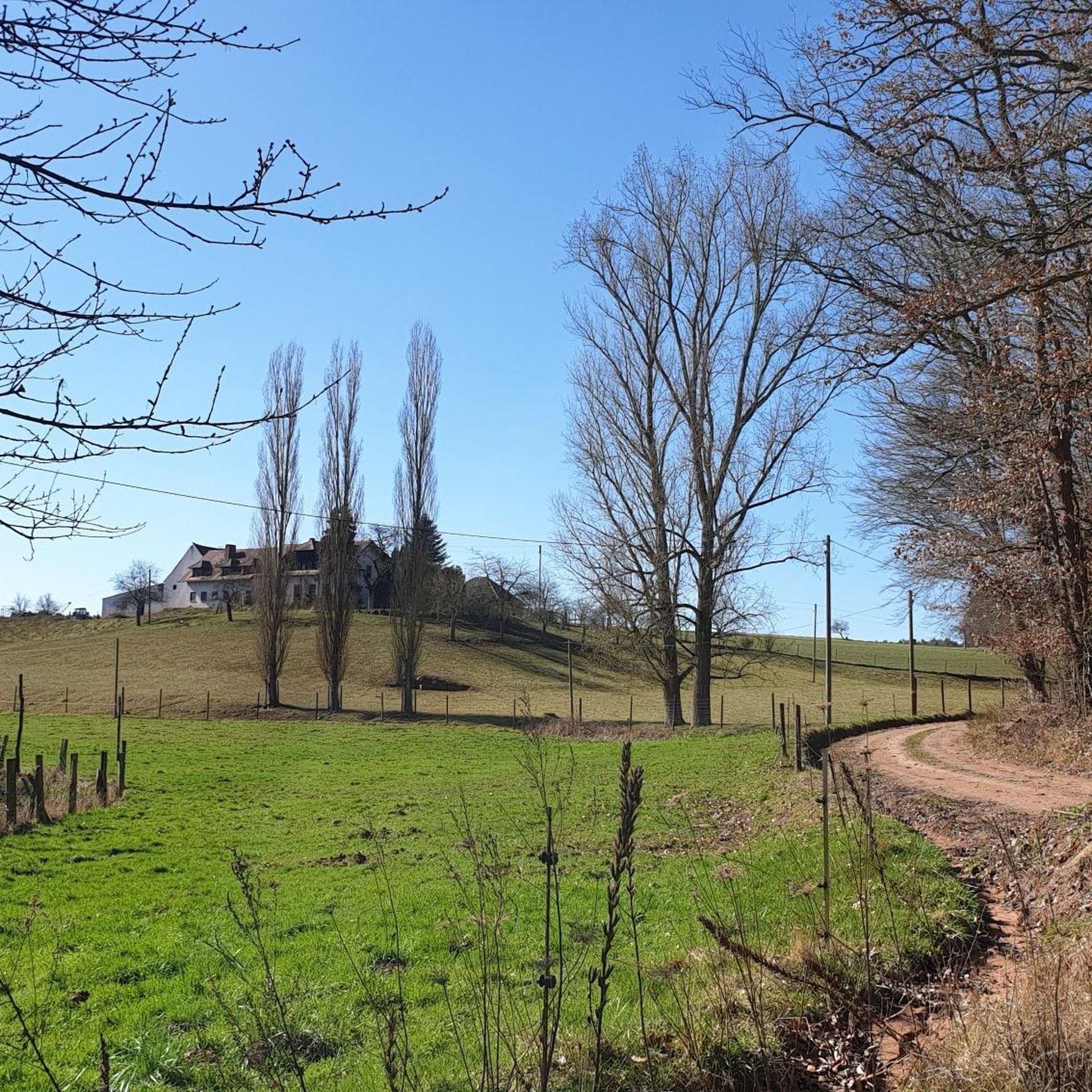
Best attractions and places to see around Sembach, a municipality in the district of Kaiserslautern, Germany, offers a blend of historic charm and natural beauty. The region is characterized by rolling hills, varied flora and fauna, and serves as a starting point for nature enthusiasts. Visitors can explore dense forests, meadows, and idyllic streams, making it suitable for outdoor activities.
Best attractions and places to see around Sembach
- The most popular attractions is Ruins of Falkenstein Castle, a castle that features well-restored ruins with a great view. There is also a place to stop for refreshments directly at the castle.
- Another must-see spot is Kupferberg Hut, a hiking hut. This hut offers great views and multiple benches for resting.
- Visitors also love Eiswoog, a lake with refreshments. On hot summer days, this lake provides a place for swimming and relaxation.
- Sembach is known for its historic sites, natural landscapes, and outdoor activity routes. The area offers a variety of attractions to see and explore, from cultural landmarks to extensive cycling paths.
- The attractions around Sembach are appreciated by the komoot community. With over 1200 upvotes and more than 600 photos, these spots are well-documented and enjoyed by visitors.
Last updated: October 9, 2026
Eiswoog
Highlight • Lake
Every two years the lake is pumped empty. Eiswoogfest.
Translated by Google •
Tip by

Mehlinger Heath
Highlight • Natural
Translated by Google •
Tip by

Sign up now to discover places like this
Get recommendations on the best single tracks, peaks, & plenty of other exciting outdoor places.
Ruins of Falkenstein Castle
Highlight • Castle
Translated by Google •
Tip by

Kupferberg Hut
Highlight • Mountain Hut
Translated by Google •
Tip by

Ruins of Rosenthal Monastery
Highlight • Historical Site
The Rosenthal cemetery (almost 1 km from the monastery) has existed since the mid-19th century. Thanks to a citizens' initiative from the 1990s, which painstakingly made the cemetery safe and accessible again and still looks after it today, you can find peace and quiet there in the shade.
Translated by Google •
Tip by

Sign up for free to discover even more attractions around Sembach.
Already have an account?
Start today with a free account
Your next adventure awaits.

Tips from the Community

Beautiful, well-restored castle ruins with a great view. There is also a place to stop for refreshments right at the castle.
4
1

It is wonderful what has been created on this former military training ground. Highly Recommended!
7
0

The monastery was founded in 1241 by Count Eberhard IV. von Eberstein (earlier count Eberhard II.), lord of Stauf, and his wife Adelheid von Sayn. Eberhard von Eberstein was the brother of Speyer Bishop Konrad von Eberstein and a cousin of St. Hedwig. He was descended from the Andechser family on his mother's side and was related by marriage to the Leininger and the Raugrafen through his two sisters. His nephew Raugraf Eberhard I, Bishop of Worms, consecrated the early Gothic church of the Rosenthal monastery founded by his uncle on May 22, 1261. In October of that year, the bishop's brother Raugraf Heinrich I († 1261) was buried there; the gravestone is preserved in the church ruins. According to the Regensburg Chronicle by Carl Theodor Commoner, he was the knight who corresponded with Duchess Maria of Brabant, which is why, out of unfounded jealousy, she was beheaded in 1256 on the orders of her husband Louis the Strict of Bavaria.[1] History of the monastery The church ruins from the south (2014) Church ruins from the inside Gravestone of the monastery founder Eberhard von Eberstein in the Rosenthal church ruins Many daughters of the landed nobility entered the monastery. In 1496 it had 70 members, including 31 choir sisters, 14 lay sisters and 24 servants. The nuns brought the marriage property they were entitled to into the monastery community and other donations also fell to them. As a result, the convent had considerable property in the surrounding area and further afield, especially in Asselheim, Bechtolsheim, Breunigweiler, Göllheim, Guntheim, Hillesheim, Candlesheim, Lautersheim and in Sippersfeld. King Adolf of Nassau fell in the Battle of Göllheim on July 2, 1298 and was buried here. He was the great-nephew of the founder of the monastery and remained buried in Rosenthal for eleven years because his surviving opponent Albert of Austria refused to allow him to be buried in Speyer Cathedral. Only after his death could it be transferred to the cathedral in 1309. According to tradition, his wife Imagina von Isenburg-Limburg prayed in the Rosenthal monastery church while the battle was raging not far away. She later had the early Gothic royal cross erected at the place of her husband's death and lived to see it transferred to Speyer. In the Mainz Abbey Feud (1461/62), the convent under Abbess Anna von Lustadt († 1485) was affected. At the end of the 15th century, her successor Margaretha von Venningen († 1505) had the monastery church rebuilt in the late Gothic style, which also created the striking pinnacle tower. During the Palatinate Peasants' War, during the term of office of Abbess Barbara Göler von Ravensburg († 1535), the monastery was looted and devastated in 1525, but it was able to continue to operate; until finally in 1572 the 14th abbess, Elisabeth von Geispitzheim, ceded all rights to the then sovereign, Count Philip IV of Nassau-Saarbrücken, in the course of the Reformation. He had already banned the admission of new sisters and pushed for the convent to be closed. He dissolved the monastery, took ownership of the property and appointed a secular steward to manage and manage the property. In the period that followed, the monastery slopes served as a source of income for the changing lines of the ruling House of Nassau. Towards the end of the Thirty Years' War, Emperor Ferdinand III. restored the rights of the Cistercian Order. Under the Abbess of Königsbruck, Rosenthal was once again populated by nuns in the spring of 1646 and the complex was renovated. Citing the agreements reached in the Peace of Westphalia, the Counts of Nassau expelled the sisters from the monastery again in February 1651. It remained dissolved and was administered as a state domain. In 1794 the French confiscated the property and auctioned off parts of it. Mennonites settled there, continued to manage the former monastery property and lived in the monastery buildings, which they divided among the families. The church served as a quarry for them and they began to demolish the choir area. The Bavarian state put a stop to the work of destruction when the district administrator of the Kirchheim district office bought the church ruins in 1851 for the benefit of the Historical Association of the Palatinate and the Bavarian district government in Speyer. In 1863 it became the property of what was then the Rosenthal Association and today the Rosenthal and Surroundings Historical Association looks after the impressive complex.
4
0

Beautiful ruins of the former monastery church with an interesting history - for example, Emperor Adolph von Nassau, who fell in battle, was buried here for several years.
6
0

One of the largest heathland areas in southern Germany. During the flowering period in August and September, it is advisable not to come on the weekend as it is very crowded. If you want, you can extend the heather tour a little and make a loop in the adjacent forest, where it is very calm and cool and a nice contrast to the sunny, dry heather.
6
0
Great hut with good food and nice benches.
5
0

There are really great places to rest at this hut, the benches are set up very carefully and you have a great view from here. It was also open today and the ice-cold drinks were good in the heat.
6
0

A beautifully preserved castle ruin with a great view and a castle room. It's worth a visit.
6
0
Frequently Asked Questions
What natural features can I explore around Sembach?
The region around Sembach is rich in natural beauty. You can visit the Eiswoog, a picturesque lake perfect for swimming and relaxation on hot days, surrounded by a romantic forest. Another unique natural highlight is the Mehlinger Heath, known for its distinct flora. The broader Palatinate landscape offers varied flora and fauna, with numerous trails through dense forests and meadows.
Are there good cycling opportunities near Sembach?
Yes, the Lauter Valley Cycle Path is a beautiful, flat, and often quiet route that is ideal for road cyclists. It offers an idyllic experience along the Lauter river. Many other cycling routes are available, including various MTB trails.
Where can I go hiking around Sembach?
Sembach is an excellent starting point for hiking. You can explore trails around the Mehlinger Heath or enjoy paths leading to the Kupferberg Hut, which offers great views. For more options, you can find numerous hiking routes in the Hiking around Sembach guide.
What historical sites can I visit near Sembach?
History enthusiasts can explore the Ruins of Falkenstein Castle, a well-restored castle ruin offering great views. In Sembach itself, you can admire the historic Town Hall, the Collegiate Church of St. Martin with its Gothic elements, and the unique Old Cemetery. Nearby, Nanstein Castle in Landstuhl is another well-preserved castle ruin worth visiting.
Are there any unique historical remnants from the Cold War era in Sembach?
Yes, remnants of the former Sembach Air Base, which was an important US Air Force and later US Army installation during the Cold War, can still be seen. These include the old tower and bunkers along a multi-use trail north of Mehlingen. For more information, you can visit the Wikipedia page on Sembach Kaserne.
What family-friendly activities are available around Sembach?
Families will enjoy the Eiswoog for swimming and relaxation. The Mehlinger Heath and the Sembach Nature Trail offer opportunities to explore local flora and fauna. The Lauter Valley Cycle Path is also suitable for family bike rides due to its flat terrain. Additionally, the Betzenberg Wildlife Park is a great option to see native animal species up close.
When is the best time to visit the Mehlinger Heath?
The Mehlinger Heath is particularly beautiful at the end of July and beginning of August when the heather is in bloom. This period offers excellent opportunities for photography, especially during foggy mornings before sunrise.
Are there viewpoints or scenic spots to enjoy the landscape?
Absolutely. The Ruins of Falkenstein Castle offer spectacular views of the surrounding area. The Kupferberg Hut is another popular spot with great vistas and benches for resting. You can also find a fascinating ancient site with a stone circle at Steinkreis Hermanns-Berg, which provides a unique viewpoint.
What kind of outdoor activities can I do near these attractions?
Beyond hiking and cycling, the area around Sembach offers various outdoor pursuits. You can find numerous running trails, including those around the Mehlinger Heath, detailed in the Running Trails around Sembach guide. Mountain biking is also popular, with many routes available in the MTB Trails around Sembach guide.
What is the Sembach Nature Trail?
The Sembach Nature Trail allows visitors to explore the local environment and learn about the region's diverse flora and fauna. It's an excellent way to experience the habitats of deer, birds, rabbits, hedgehogs, and insects firsthand, making it an educational and engaging outdoor activity.
What do visitors enjoy most about the attractions around Sembach?
Visitors frequently praise the well-restored Ruins of Falkenstein Castle for its great views and on-site refreshments. The Kupferberg Hut is loved for its scenic views and comfortable resting spots. The Eiswoog is a favorite for its refreshing swimming opportunities and tranquil forest setting. The overall natural beauty and variety of outdoor activities are highly appreciated.
Most popular attractions around Sembach

Get inspired with the komoot mobile app


Explore more
Still not found the Highlight you’re looking for? See guides of the top attractions in other regions:
