Top 20 Castles around Hallgarten
Best castles around Hallgarten are primarily located in the Rhineland-Palatinate region, an area characterized by its historical significance and diverse natural landscapes. This locale features medieval strongholds and ruins, often positioned on strategic hills that offer expansive views of the surrounding valleys. The region provides opportunities for historical exploration alongside scenic outdoor experiences, with many sites freely accessible.
Best castles around Hallgarten
- The most popular castles is Rheingrafenstein Castle Ruins, a castle that offers panoramic views into the Huttental…
Last updated: October 9, 2026
Rheingrafenstein Castle Ruins
Highlight • Castle
Enjoy the nature!
Translated by Google •
Tip by

View of Rheingrafenstein Castle
Highlight • Viewpoint
View from the town of Bad Münster am Stein.
Its origins are legendary: the devil is said to have built the castle on the steep, 245 m …
Translated by Google •
Tip by

Sign up now to discover places like this
Get recommendations on the best single tracks, peaks, & plenty of other exciting outdoor places.
Altenbaumburg Castle Ruins
Highlight • Castle
Translated by Google •
Tip by
Evangelical Castle Church, Meisenheim
Highlight • Religious Site
Translated by Google •
Tip by

Montfort Castle Ruins
Highlight • Castle
Translated by Google •
Tip by

Sign up for free to discover even more castles around Hallgarten.
Already have an account?
Start today with a free account
Your next adventure awaits.
Tips from the Community

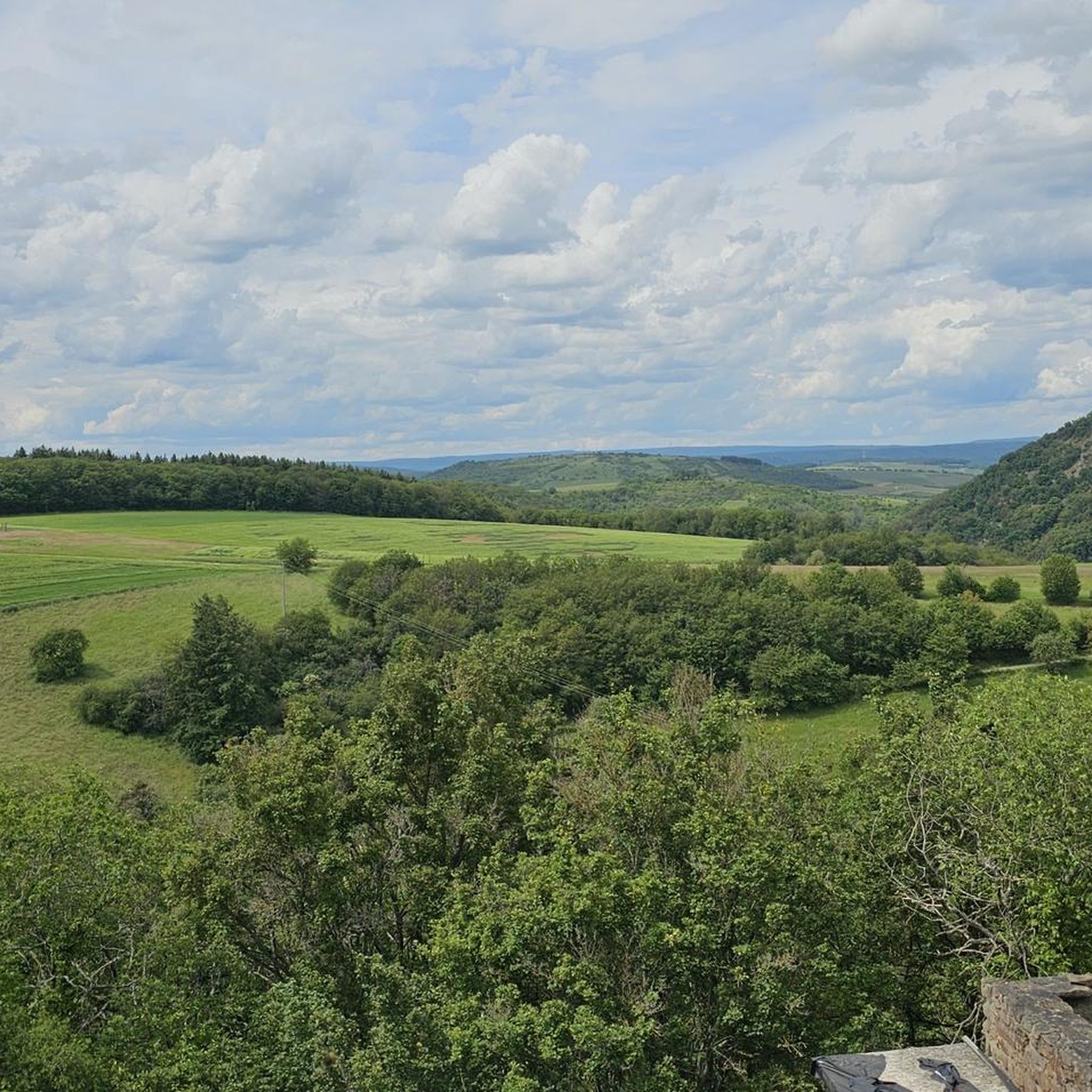
👑 Rheingrafenstein Castle Ruins – The Rock Boss on the Cycle Path Tip: Stop here! The Rheingrafenstein ruins sit dramatically perched on a 136-meter-high porphyry cliff above the Nahe River – one of the most impressive sights of the entire tour. The castle was the ancestral seat of the famous Wildgraves and Rhinegraves (until it was blown up in 1689). The view from the cycle path is phenomenal! If you really want to go up (and have enough energy), you can take the small hand-pulled ferry across and take the steep hiking trail to the ruins. It's worth it for the view over the Nahe Valley, but honestly: My legs were already tired enough from cycling. The panoramic view from below is worth its weight in gold! A must-have for your photo collection!
1
0

Rheingrafenstein Castle sits enthroned on a steep porphyry cliff (245 meters high) directly above the Nahe River near Bad Münster am Stein-Ebernburg. Legend has it that the devil himself built the castle—a reference to its dramatic location and mystical aura. In fact, it likely dates back to the 11th century and was the ancestral seat of the Lords of Stein, later the Wildgraves and Rhinegraves. In 1689, it was blown up by French troops under Louis XIV, and since then it has been a ruin—but an extremely impressive one.
3
0

Beautiful rock with the Rheingrafenstein castle ruins. It is said that the devil is said to have built the castle. In any case, the castle was blown up by the French troops under Louis XIV.
4
3

The landmark of the town of Meisenheim am Glan is the Evangelical Castle Church on the Castle Square, one of the most important late Gothic buildings on the left bank of the Rhine. In contrast to many churches on the left bank of the Rhine, the Castle Church has been mercifully protected from major damage for centuries. The Evangelical Castle Church, together with the Herzog-Wolfgang-Haus, is the only remaining part of the former castle in Meisenheim. The cornerstone of the church building was laid in 1479 and construction was completed in 1504. http://www.stadt-meisenheim.de/historie/evangelische-schlosskirche/
3
0

The landmark of the town of Meisenheim am Glan is the Evangelical Castle Church on the Castle Square, one of the most important late Gothic buildings on the left bank of the Rhine. In contrast to many churches on the left bank of the Rhine, the Castle Church has been mercifully protected from major damage for centuries. Brief information – Evangelical Castle Church Foundation stone laid in 1479 – construction completed in 1504 Builder: Philipp von Gmünd Organ by the Stumm brothers from the 18th century Rococo pulpit from the Meisenheim Schmidt workshop Source: http://www.stadt-meisenheim.de/historie/evangelische-schlosskirche/
3
0

Very nice ruin. Worth visiting the castle. We have linked the system with our tour on Lemberg.
4
0

The ascent pulls a bit in the calves, but it's definitely worth it. Beautiful castle ruins to discover, especially in the evening in the light of the setting sun. There is a viewing platform and even a long table with benches for a rest.
4
0

You can take the ferry here, walk up to the ruins and enjoy the view. If you like, you can continue on the way to the spa gardens of Bad Kreuznach. It's worth it.
5
2
Frequently Asked Questions
What types of castles can I expect to find around Hallgarten?
Around Hallgarten, particularly in the Rhineland-Palatinate region, you'll primarily discover medieval castle ruins. These strongholds are often situated on strategic hilltops, offering historical insights and panoramic views. Examples include the impressive Rheingrafenstein Castle Ruins and the historically significant Montfort Castle Ruins.
What are some of the most historically significant castles in the area?
The Montfort Castle Ruins are highly significant, built around 1240 by the Counts of Veldenz to monitor a military road. Though destroyed in 1456, its remnants are freely accessible and offer a direct link to the region's past. The Rheingrafenstein Castle Ruins also boast a rich history, with origins dating back to the 11th century and a legendary past.
What makes the Rheingrafenstein Castle Ruins a popular destination?
The Rheingrafenstein Castle Ruins are renowned for their mega panoramic views into the Huttental valley, Bad Münster, the Rotenfels, and the Kreuznacher forest. Its natural keep, carved out of rock, and the overwhelming vista over the Nahe Valley make it a truly spectacular and popular spot for visitors.
What can I expect when visiting Montfort Castle Ruins?
When visiting Montfort Castle Ruins, you'll find the remnants of a medieval stronghold located on a 280-meter-high summit amidst a forest. The ruins are freely accessible and provide a tangible connection to the 13th-century history of the region, including its past as a strategic military outpost and temporary home to robber barons.
Are there good viewpoints near the castles around Hallgarten?
Yes, many of the castles double as excellent viewpoints. For instance, the Rheingrafenstein Castle Ruins offer breathtaking panoramic views of the Nahe Valley. Similarly, Altenbaumburg Castle Ruins serve as a scenic lookout and a great spot for relaxation.
Can I combine castle visits with hiking or other outdoor activities?
Absolutely. The region around Hallgarten is ideal for combining historical exploration with outdoor activities. Many castles, like Altenbaumburg Castle Ruins, are meeting points for tours, with trails like the "Eagle Owl Trail" branching off nearby. You can find various hiking routes in the area, including those leading to Montfort Castle Ruins. Explore more options on the Hiking around Hallgarten guide.
Are the castle ruins around Hallgarten generally accessible to visitors?
Yes, many of the castle ruins in the Hallgarten area are freely accessible to visitors. For example, the remnants of Montfort Castle Ruins can be visited without an entrance fee. While some involve a climb, they are generally open for exploration.
Are there family-friendly options for visiting castles in this region?
Many castle ruins, including Montfort Castle Ruins, are considered family-friendly, offering an engaging historical experience in a natural setting. The Evangelical Castle Church in Meisenheim, while not a ruin, is also noted as family-friendly and surrounded by a beautiful park.
What is the best time of year to visit the castles around Hallgarten?
Visiting the castles around Hallgarten is enjoyable throughout much of the year. Spring and autumn offer pleasant temperatures for hiking and exploring the ruins, with vibrant foliage or blooming nature. Summer is also popular, though it can be warmer. Even in winter, some trails are accessible, offering a different, often serene, perspective of the ruins and landscapes.
Are there options for cycling or gravel biking near the castles?
Yes, the area around Hallgarten provides excellent opportunities for cycling and gravel biking, often passing by or offering views of the castles. You can find various routes, from easy to difficult, that incorporate scenic landscapes and historical sites. Check out the Cycling around Hallgarten guide and the Gravel biking around Hallgarten guide for detailed routes.
What do visitors enjoy the most about the castles around Hallgarten?
Visitors consistently praise the stunning panoramic views offered by many of the castle ruins, such as those from Rheingrafenstein Castle Ruins. The combination of historical exploration, the natural beauty of the surrounding forests and valleys, and the opportunity for outdoor activities like hiking and cycling are highly appreciated by the komoot community.
Are there any unique features or legends associated with these castles?
Yes, the Rheingrafenstein Castle Ruins, for example, are steeped in legend, with tales suggesting the devil himself built the castle on its steep porphyry rock. Its natural keep, carved directly from the rock, is also a unique architectural feature. Montfort Castle Ruins has a history involving robber barons, adding to its intriguing past.
Most popular routes around Hallgarten
Most popular attractions around Hallgarten

Get inspired with the komoot mobile app


Explore more
Looking for the best castles somewhere else? Discover other guides around Hallgarten:
