Top 20 Natural Monuments around Gößweinstein
Best natural monuments around Gößweinstein are characterized by dramatic rock formations and an extensive network of caves, making it a key destination for nature enthusiasts. The region's geology, primarily composed of dolomite limestone from the Jurassic period, has sculpted unique natural features. This area offers a diverse landscape for exploration, with numerous geological formations and historical sites. Visitors can experience the effects of millions of years of natural processes on the Jurassic dolomite.
Best natural monuments around Gößweinstein
- The most…
Last updated: October 13, 2026
Oswald Cave
Highlight • Cave
Translated by Google •
Tip by

Quackenschloss
Highlight • Cave
Translated by Google •
Tip by

Sign up now to discover places like this
Get recommendations on the best single tracks, peaks, & plenty of other exciting outdoor places.
Ruins of Neideck Castle
Highlight • Castle
Translated by Google •
Tip by

St. Walburga's Chapel and Statue, Walberla Plateau
Highlight • Religious Site
Translated by Google •
Tip by

Riesenburg Collapse Cave
Highlight • Cave
Translated by Google •
Tip by
Sign up for free to discover even more natural monuments around Gößweinstein.
Already have an account?
Start today with a free account
Your next adventure awaits.
Popular around Gößweinstein
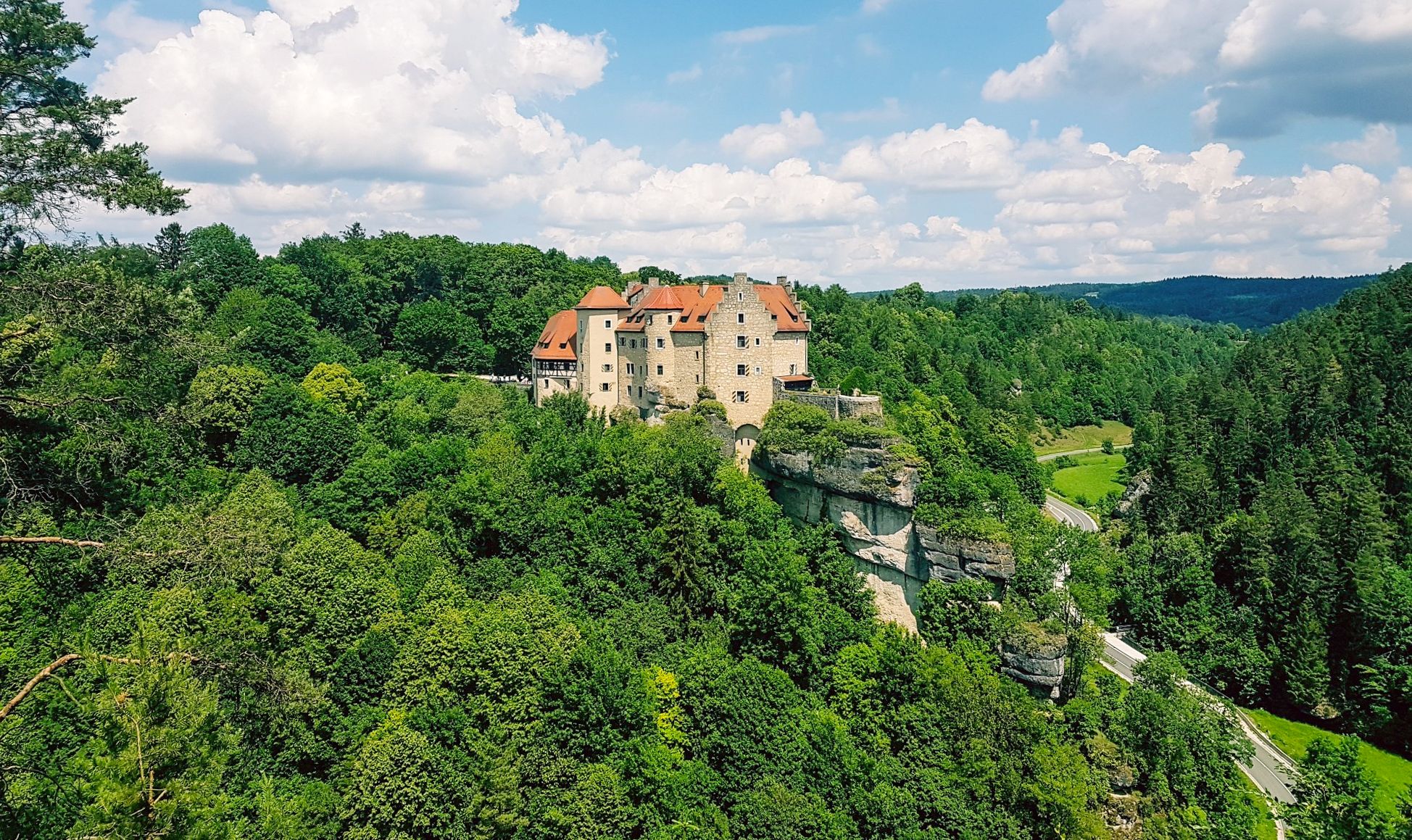
Forests, rocks and castles – 5-day circular through Franconian Switzerland
Hikes for tiny boots – VGN recreational activities for families
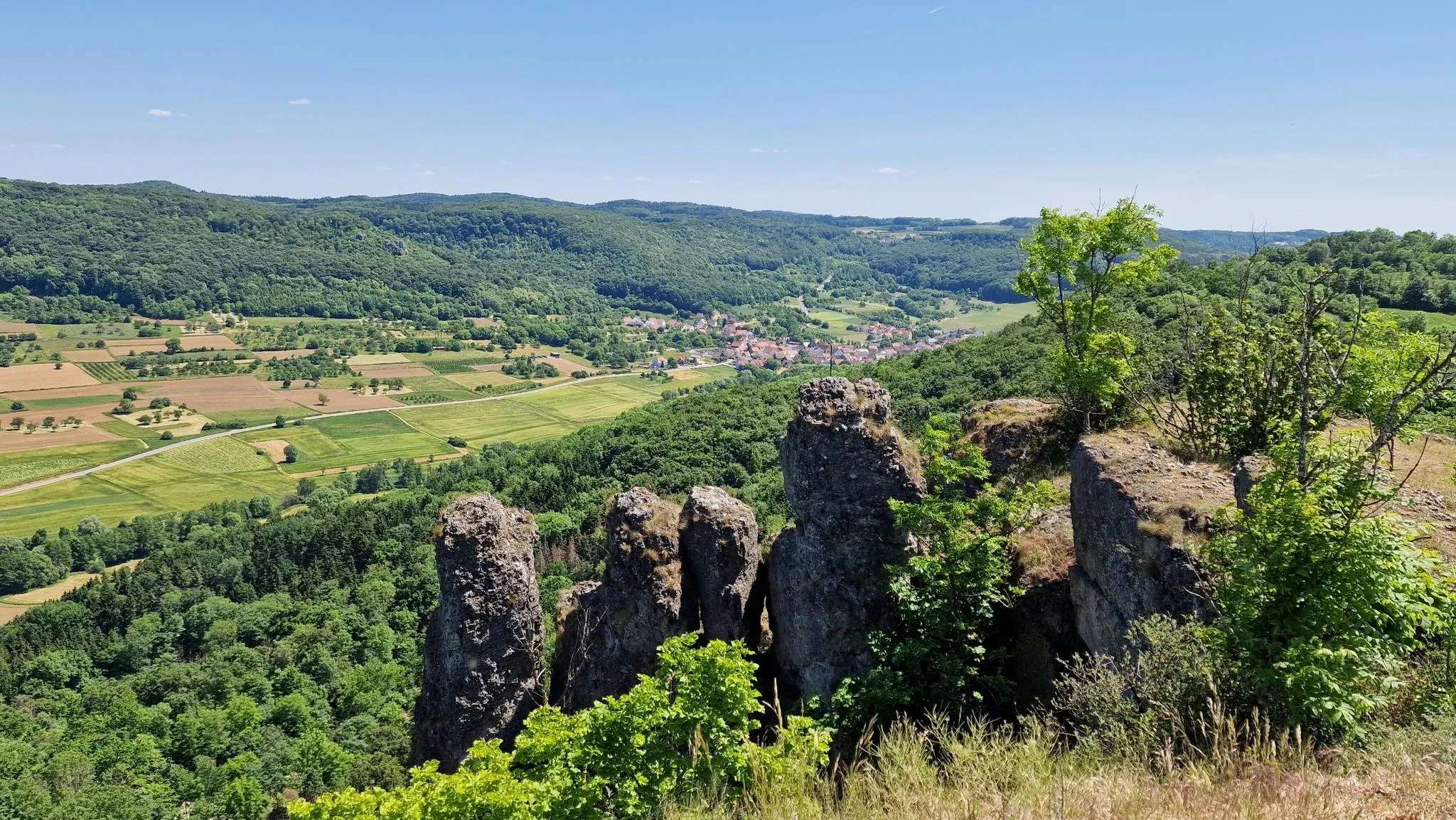
Delightful hiking in Franconian Switzerland
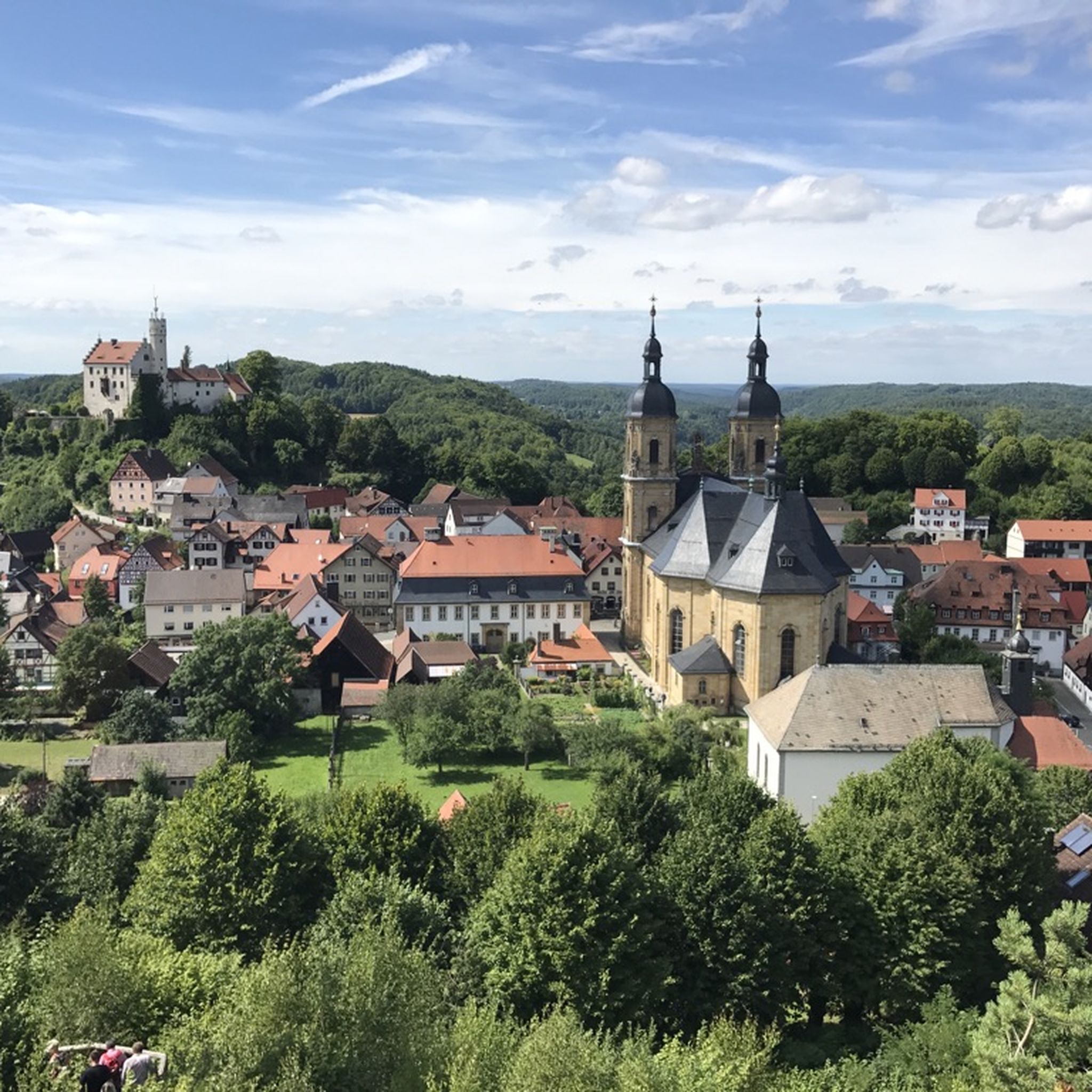
Hiking around Gößweinstein
Cycling around Gößweinstein
MTB Trails around Gößweinstein
Running Trails around Gößweinstein
Road Cycling Routes around Gößweinstein
Gravel biking around Gößweinstein
Mountain Hikes around Gößweinstein
Other adventures around Gößweinstein


Tips from the Community

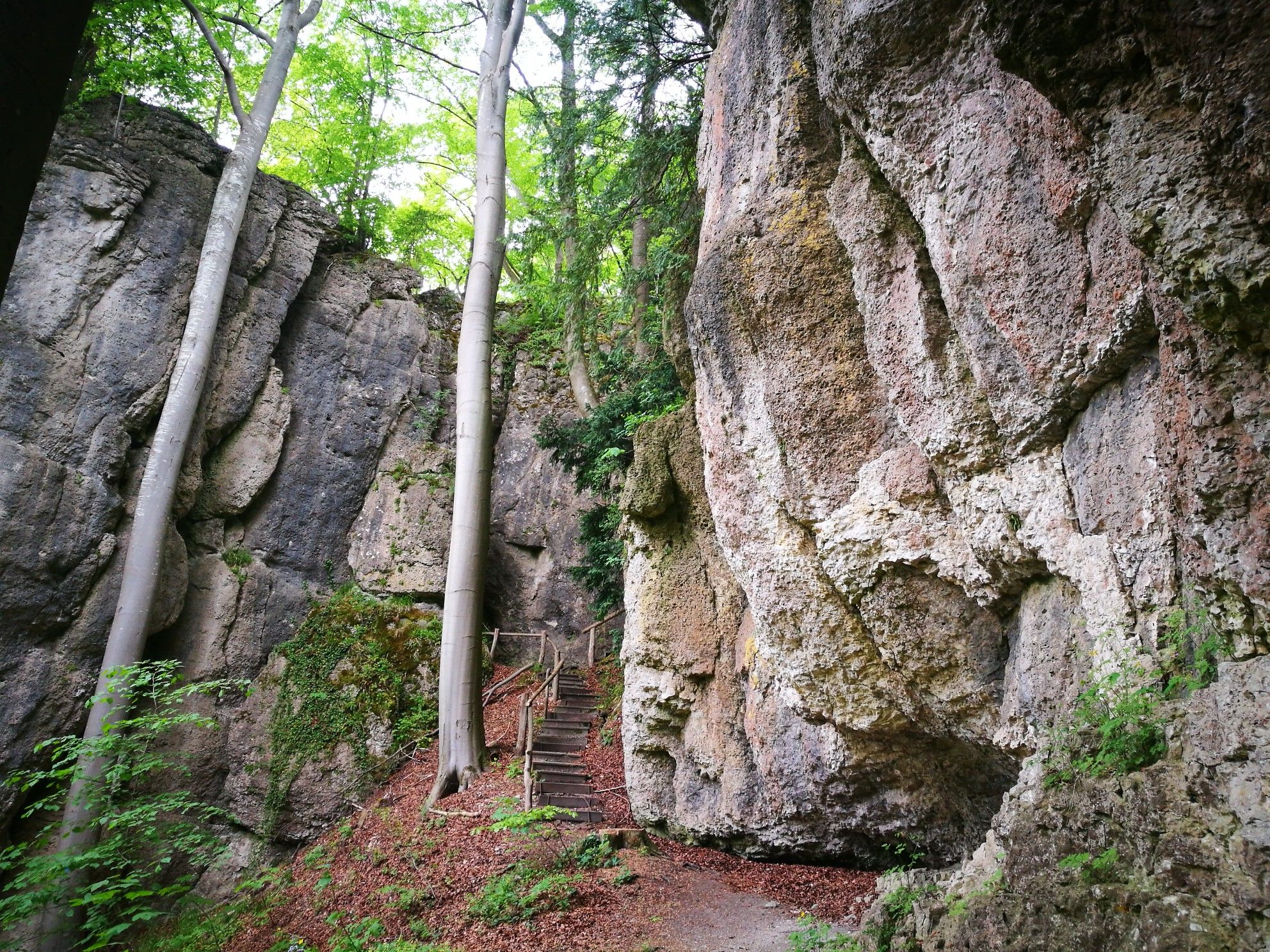
The Quackenschloss is a passage cave about 18 meters long. It is the remains of a very old and high-lying cave system. The rock wall has a patchy appearance due to the weathering of individual shells. The cave probably gets its name from this rock composition. The type of stone with holes in it (smokewacke) is called quacke here. The oblique oval shape of the cave is determined by two longitudinal fissures and two diagonally sloping bank joints. Two larger fissures cross the passage. One portal is about 7 meters wide and 2.5 meters high, the other, divided by a rock pillar, is about 9 meters wide and 5 meters high. The cave is registered as C 4 in the Franconian Alb Cave Register (HFA). It has been designated by the Bavarian State Office for the Environment as an important geotope (474R060)[1] and as a natural monument (ND-04580). The cave, which is easily accessible via hiking trails, is one of the most frequently visited destinations in the Franconian Jura, also because of its scenic location. There is a sport climbing area next to the cave. Source: Wikipedia
19
0

The Quackenschloss is a cave ruin, the remains of which belong to a very high (505 meters) and therefore very old cave system. The rock grotto, which is about three meters high and six meters wide, is open on two sides and can be safely entered from the east side. In the gallery cave, which takes its name from the enclosed fossils, the so-called Quacken, the remains of a 17-meter-long cave system can be explored.
17
0

A small steep path leads to the roof of the Quakenschloss. Great view from above.
14
0
The Oswald cave is a passage cave that can be crossed effortlessly.
19
0

The Oswald cave is a beautiful passage cave, you should take a flashlight with you because of the height, it is accessible all year round.
21
1

Statue of St. Walburga, Walberla High Plateau in the Ehrenbuerg Nature Reserve, Kirchehrenbach, Franconian Switzerland, Franconia
12
1
The Sankt-Walburgis-Chapel is the namesake of the "Walberla-Berg". The chapel was already built in the 17th century. It is dedicated to Saint Walburga. The chapel, which was probably first mentioned in 1350, was originally made of wood. The current chapel was built in 1697 by the Lords of Wiesenthau. The bronze statue of Saint Walburga, which stands in front of the chapel and was inaugurated in 2000, is very striking.
13
0

In front of the chapel there is a sculpture of St. Walburga by the sculptor Ernst Steinacker with the inscription "God in your heart".
12
1
Frequently Asked Questions
What kind of natural features can I expect to see around Gößweinstein?
The region around Gößweinstein is characterized by dramatic rock formations and an extensive network of caves, primarily composed of dolomite limestone from the Jurassic period. You'll encounter impressive geological structures like the Quackenschloss karst cave and the unique Riesenburg Collapse Cave, which showcases the effects of millions of years of natural processes.
Are there any historical sites among the natural monuments?
Yes, several natural monuments also hold historical significance. For instance, the Ruins of Neideck Castle is a landmark of Franconian Switzerland, offering insights into its history and archaeological background. Additionally, the St. Walburga's Chapel and Statue, Walberla Plateau combines a historical chapel with stunning natural views.
Which natural monuments are suitable for families?
Many natural monuments are family-friendly. The Quackenschloss is a frequently visited destination with a scenic location, and the Ruins of Neideck Castle offers a lot to discover for all ages. The Oswald Cave is described as an exciting experience, not only for children, though a flashlight is recommended for its passage.
What are some popular hiking trails that visit these natural monuments?
The region offers around 260 to 300 kilometers of marked hiking trails. You can find various routes that incorporate these natural wonders. For example, the Gößweinstein Rock Trail offers a scenic climb through a deep rock gorge. The Jägersteig also winds through bizarre rock formations. You can explore more options on the Mountain Hikes around Gößweinstein guide.
Are there any caves I can explore?
Absolutely. Gößweinstein is known for its impressive caves. The Oswald Cave is a passage cave that can be crossed effortlessly, offering an exciting experience. The Quackenschloss is another accessible karst cave, and the Riesenburg Collapse Cave is an impressive natural formation worth a visit.
What is the best time of year to visit the natural monuments in Gößweinstein?
The natural monuments are accessible year-round. Visiting caves like the Vogelherd Grotto in the morning can offer a peaceful experience. The region's hiking trails are particularly enjoyable in spring, summer, and autumn when the weather is mild, allowing for comfortable exploration of the rock formations and scenic views.
Are there options for more challenging hikes among the rock formations?
Yes, for those seeking more challenge, paths like the Jägersteig offer routes through a beautiful world of rocks, with both upper and lower sections winding through bizarre formations. Sturdy shoes and surefootedness are recommended for these paths due to their diverse and sometimes precarious nature. You can find challenging routes in the Mountain Hikes around Gößweinstein guide.
What makes the rock formations in Gößweinstein unique?
The rock formations in Gößweinstein are unique due to their geological origin. They are primarily composed of dolomite limestone from the Jurassic period, remnants of an ancient reef that grew in a tropical sea. Over millennia, the Püttlach river carved its way through, isolating these formations and creating distinctive 'Umlaufberge' (island mountains), such as those seen at Tüchersfeld.
Are there any viewpoints offering panoramic scenery?
Yes, several natural monuments provide excellent panoramic views. The Ruins of Neideck Castle features an observation tower with great vistas. The Walberla Plateau, with St. Walburga's Chapel, also offers a wide-reaching view of the surrounding landscape, including the Wiesenttal.
What other outdoor activities can I do near the natural monuments?
Beyond hiking, the area around Gößweinstein offers various outdoor activities. You can find numerous running trails and cycling routes that explore the scenic Franconian Switzerland. Some areas, like next to the Quackenschloss, even have sport climbing areas.
What do visitors particularly enjoy about the natural monuments in this region?
Visitors appreciate the dramatic effects of millions of years of natural processes visible in the Jurassic dolomite. The combination of unique rock formations, mysterious caves, and picturesque trails provides a compelling outdoor experience. The opportunity to explore passage caves like Oswald Cave and enjoy panoramic views from historical sites like the Ruins of Neideck Castle are frequently highlighted.
Is the Felsentor bei Gößweinstein (Rock Gate) easily accessible?
Yes, the Felsentor bei Gößweinstein is an impressive natural rock arch that is easily accessible. Visitors can walk through it, making it a notable geological feature often included in hiking routes around Gößweinstein and providing a picturesque landmark and photo opportunity.
Most popular routes around Gößweinstein
Most popular attractions around Gößweinstein

Get inspired with the komoot mobile app


Explore more
Extend your search for the best caves by checking out these guides of the top ones around Gößweinstein:
