The 12 Most Amazing Peaks around Rockeskyll
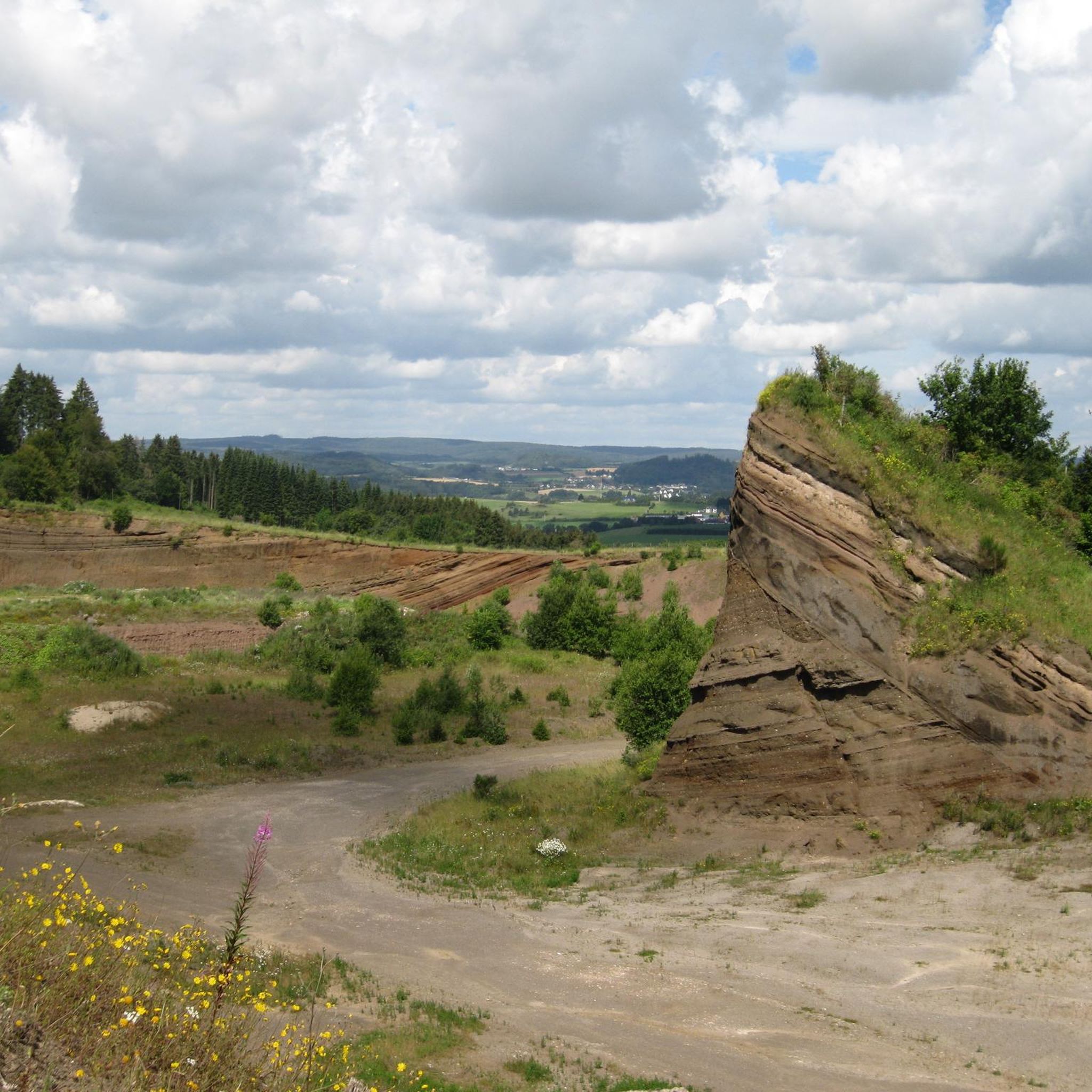
Best mountain peaks around Rockeskyll are situated within the Eifel Mountains and the Volcanic Eifel Nature Park. The region is characterized by its volcanic origins, featuring extinct volcanic complexes such as the Rockeskyller Kopf. This area provides opportunities to observe various stages of volcanic development and offers significant geological features. Hiking trails provide access to these natural monuments and historical sites.
Best mountain peaks around Rockeskyll
- The most popular mountain peaks is Freudenkoppe Castle Ruins, a castle that is…
Last updated: October 11, 2026
View of Gerolstein from the Munterley
Highlight • Viewpoint
Translated by Google •
Tip by

Millstone Cave at Nerother Kopf
Highlight • Cave
The millstone cave consists of lava boards and is an artificial cave in the Vulkaneifel, Rhineland-Palatinate. It was created by the production of …
Translated by Google •
Tip by

Sign up now to discover places like this
Get recommendations on the best single tracks, peaks, & plenty of other exciting outdoor places.
Freudenkoppe Castle Ruins
Highlight • Castle
Translated by Google •
Tip by
Dietzenley Observation Tower
Highlight • Viewpoint
Translated by Google •
Tip by

Ernstberg
Highlight • Volcano
Translated by Google •
Tip by

Sign up for free to discover even more peaks around Rockeskyll.
Already have an account?
Start today with a free account
Your next adventure awaits.

Tips from the Community

The 699 meter high Ernstberg is the highest elevation in the Eifel after the Hohe Acht. Since the summit is covered in forest, you unfortunately don't have a clear view of the surrounding landscape of the Volcanic Eifel from up here. About 500 meters away and about 60 meters lower is the Eifel-Blick Ernstberg, which offers us a wonderful panorama in clear weather.
3
1
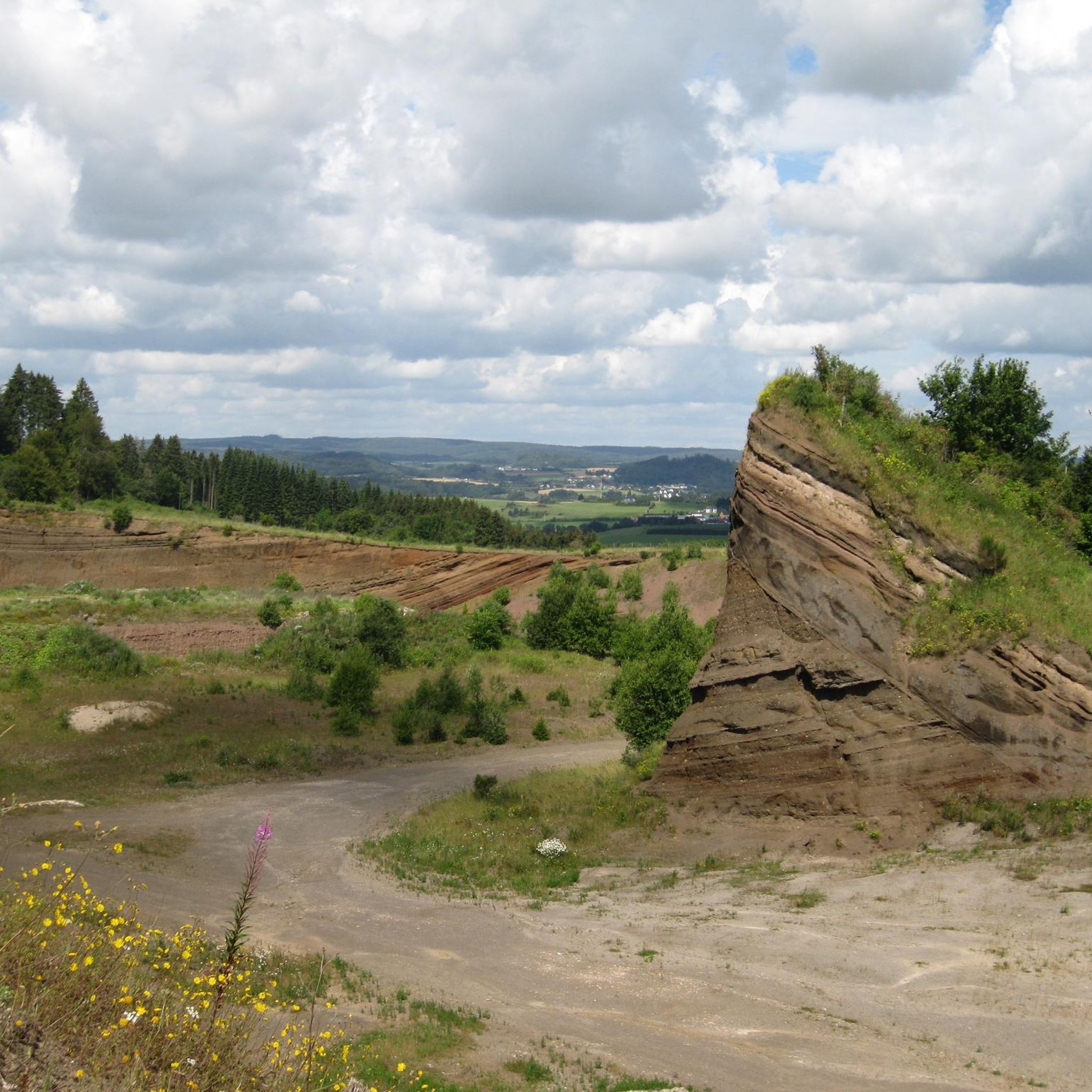
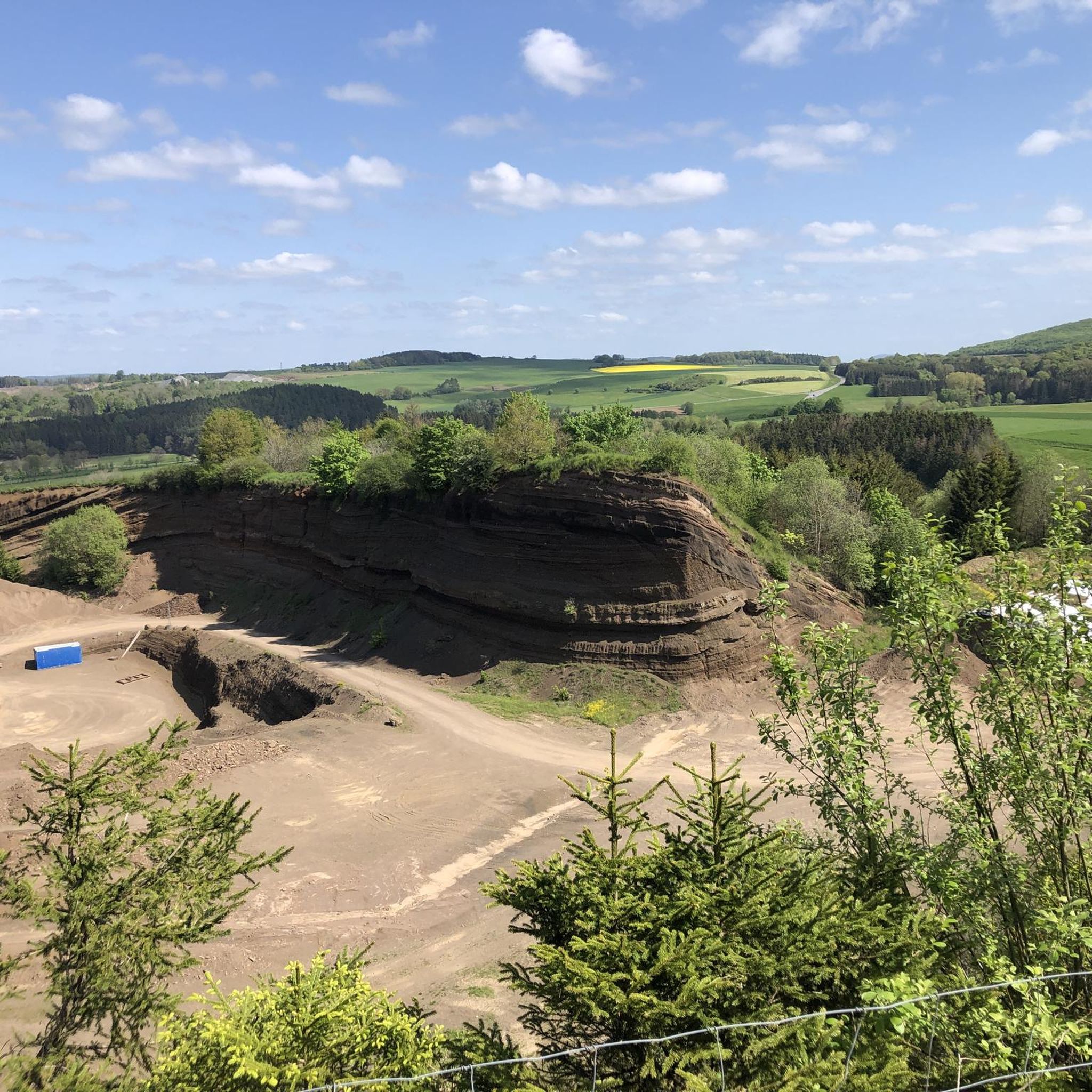
The Ernstberg is an old Pleistocene stratovolcano with a distinctive ring-shaped arrangement of welding slag and basalt deposits. Its summit consists of welding slag, which builds up a crater wall that is open to the east. This is where the basalt masses flowed out, forming a semicircle on the eastern slope of the mountain; from the Middle Ages until around 1930, millstones were quarried at the foot of the mountain. Source: Wikipedia
4
0
After the climb to the summit of the Ernstberg, the benches offer a well-deserved breather.
3
0

Strenuous climb to a lot of rocks in the forest, a beautiful piece of unspoilt nature.
2
0

The steep climb to the castle is quite difficult. A real calf biter! But once at the top you forget it all. Beautiful ruin and the cave is more than worth it.
5
0

For Ernstberg see https://de.m.wikipedia.org/wiki/Ernstberg
4
1

"With an area of approx. 102 hectares, the area around the Gerolsteiner Dolomites has been a nature reserve since 1990. + occurring animal species: bat + occurring plant species: juniper, orchids, character plants calcareous grassland, grove rush-beech forest, woodruff-beech forest, orchid-limestone-beech forest Around 380 million years ago there was a warm, subtropical shallow sea here, in which mighty reefs of stromatopores - relatives of sponges - and corals formed. After the dolomitization, sinking and folding of the rocks, the Devonian deposits were lifted out again. Today's Gerolsteiner Dolomites were formed, which rise steeply above the Kylltal north of the center of Gerolstein. The rocks "Hustley", "Munterley", "Drohende Ley", "Große Kanzel" and "Auberg" characterize the cityscape from afar and form the landmark of Gerolstein. The most famous summit of the Gerolsteiner Dolomites is the "Munterley" - with a height of 482 meters - and offers a breathtaking view over Gerolstein, the Kylltal and far into the Vulkaneifel. Stone Age people, who settled here 30,000 years ago, obviously enjoyed this view, as evidenced by stone tools and bones found at the nearby Buchenloch Cave. Visiting the Gerolsteiner Dolomites can be perfectly combined with hiking the Felsenpfad - the northern part of the "Gerolsteiner Dolomiten Acht". The almost eight-kilometer round tour offers many magical places and geological traces." https://www.eifel.info/a-gerolsteiner-dolomites
10
0

Very well preserved ruin. Exploring them with children is a very special experience. Especially nice in late spring when the trees all around are fresh green.
8
0
Frequently Asked Questions
What makes the mountain peaks around Rockeskyll unique?
The mountain peaks around Rockeskyll are primarily characterized by their volcanic origins, situated within the Eifel Mountains and the Volcanic Eifel Nature Park. This region offers a unique opportunity to observe various stages of volcanic development, with prominent features like the Rockeskyller Kopf, an extinct volcanic complex considered one of the most complete volcanoes in Germany. You can find visible volcanic buildings, cooled lava, and slag ash layers, providing significant geological insights.
Which mountain peaks offer the best panoramic views in the Rockeskyll area?
For impressive panoramic views, visit the Dietzenley Observation Tower, which provides expansive vistas of the Vulkaneifel landscape. Another excellent spot is the View of Gerolstein from the Munterley, offering a fantastic perspective over Gerolstein and the beautiful Kylltal valley.
Are there any historical sites or landmarks among the mountain peaks?
Yes, the region is rich in history. The Freudenkoppe Castle Ruins, located on a 610-meter high basalt cone, is a notable historical site. Additionally, the Millstone Cave at Nerother Kopf is an artificial cave created by the production of millstones from volcanic rock, with a history dating back before the castle's construction around 1340. The Dietzenley also hosted a Celtic housing estate approximately 2500 years ago.
What kind of hiking trails can I find near the mountain peaks of Rockeskyll?
You'll find a variety of hiking trails around Rockeskyll, ranging from easy to moderate. Many trails circle significant geological sites like the Rockeskyller Kopf, offering accessible paths for different fitness levels. For more detailed options, explore the Hiking around Rockeskyll guide, which includes routes like the 'View of Kasselburg – Rockeskyller Kopf Lava Quarry loop'.
Are there family-friendly mountain walks in the Rockeskyll area?
Many of the hiking routes around the mountain peaks are suitable for families. The trails around the Rockeskyller Kopf, for instance, are generally accessible and offer educational information boards about the geological processes. The 'View of Gerolstein from the Munterley' is also listed as family-friendly, providing a rewarding experience for all ages.
What is the highest mountain peak in the Western Eifel near Rockeskyll?
The highest volcano in the Western Eifel, and the second highest mountain in the entire Eifel region, is Ernstberg. While its summit is densely forested and offers no direct view, its slopes are dotted with exciting rock formations that create a primeval atmosphere, making it a worthwhile hike.
What geological features can I observe at the mountain peaks?
The region is a geological marvel. At the Rockeskyller Kopf, you can see the
What other outdoor activities can I do near the mountain peaks?
Beyond hiking, the Rockeskyll area offers opportunities for running and gravel biking. You can find various routes in the Running Trails around Rockeskyll guide, with options like the 'Little Bolsdorf Museum – Bolsdorfer Valley loop'. For cyclists, the Gravel biking around Rockeskyll guide provides routes such as the 'View of Salm – View of Bertrada Castle loop'.
Is there parking available near the mountain peaks?
While specific parking locations for each peak are not detailed, hiking trails often have designated parking areas at their starting points. For example, routes around the Rockeskyller Kopf typically have accessible parking in Rockeskyll village or nearby trailheads.
What do visitors enjoy most about the mountain peaks around Rockeskyll?
Visitors particularly appreciate the unique blend of geological education, natural beauty, and historical intrigue. The visible volcanic structures, impressive viewpoints like the Dietzenley Observation Tower, and historical sites such as the Freudenkoppe Castle Ruins are frequently highlighted. The area's trails are also popular for their scenic routes and the opportunity to explore ancient landscapes.
Are there any hidden gems or lesser-known spots among the peaks?
While not strictly 'hidden,' the Millstone Cave at Nerother Kopf offers a unique and less common experience, delving into the historical industry of millstone production within a volcanic landscape. The rock formations on Ernstberg also provide a distinct, primeval atmosphere away from typical viewpoints.
Most popular routes around Rockeskyll
Most popular attractions around Rockeskyll

Get inspired with the komoot mobile app


Explore more
See even more amazing summits around Rockeskyll with these guides:
