The 6 Most Amazing Peaks around Duppach
Mountain peaks around Duppach are characterized by the moderate elevations of the Vulkaneifel region, ranging from 400 to 600 meters above sea level. This area serves as a base to explore significant volcanic formations and scenic viewpoints. The landscape is defined by its volcanic origins, offering unique geological features and diverse hiking opportunities. Visitors can discover a variety of natural landmarks and viewpoints in the vicinity.
Best mountain peaks around Duppach
- The most popular mountain peaks is Dietzenley Observation Tower…
Last updated: June 17, 2026
View of Gerolstein from the Munterley
Highlight • Viewpoint
Translated by Google •
Tip by

Dietzenley Observation Tower
Highlight • Viewpoint
Translated by Google •
Tip by

Sign up now to discover places like this
Get recommendations on the best single tracks, peaks, & plenty of other exciting outdoor places.
Sign up for free
Basilica of St. Salvator, Prüm
Highlight • Religious Site
Translated by Google •
Tip by

Langer Stein and Seimersberg
Highlight • Summit
Translated by Google •
Tip by

Homecomers' Cross Jischbühl
Highlight • Monument
Translated by Google •
Tip by

Sign up for free to discover even more peaks around Duppach.
Sign up for free
Already have an account?
Start today with a free account
Your next adventure awaits.
Login or Signup

Tips from the Community

In one of the – wonderfully told and far beyond the borders of Italy popular – short stories that Giovanni Guareschi (1908 to 1968) tells about the two protagonists he invented, “Don Camillo” and “Peppone”, the title is “AUTUMN”. Even though most of his stories have a humorous background, this time it is about a serious topic, namely the national remembrance of the fallen on the occasion of November 4th. The communist mayor Peppone expresses himself in the heated discussion with the priest as follows: » “The people are fed up with all these wars and victories. The people know very well what a war is and do not need speeches and appeals that glorify it.” Don Camillo shook his head. “You are on the wrong path, Peppone. Nobody wants to glorify war. It is only about paying homage and gratitude to all those who suffered in this war and lost their lives.” « (G. Guareschi)
0
0

Commemoration / thanks to / for safe return from World War II
0
0

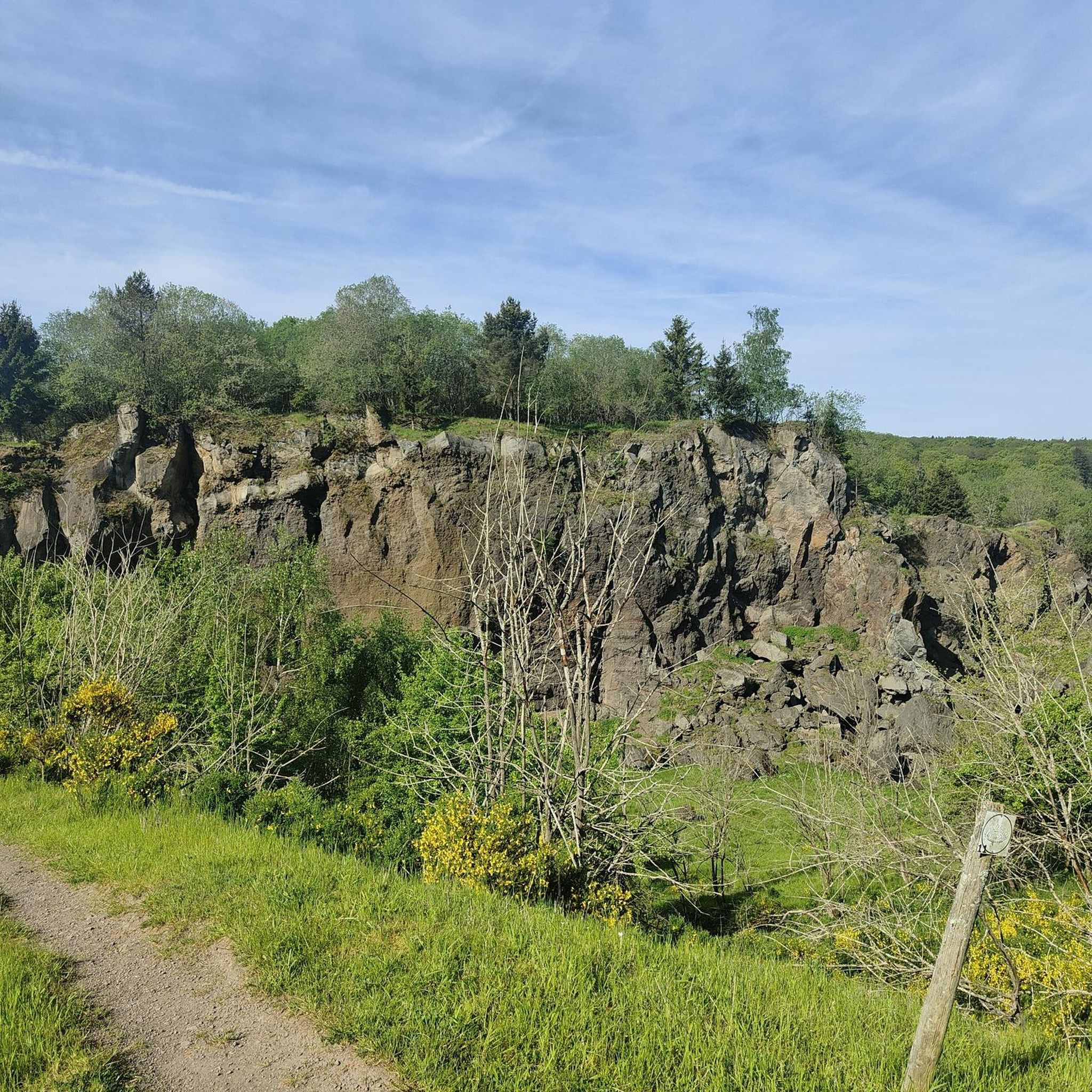
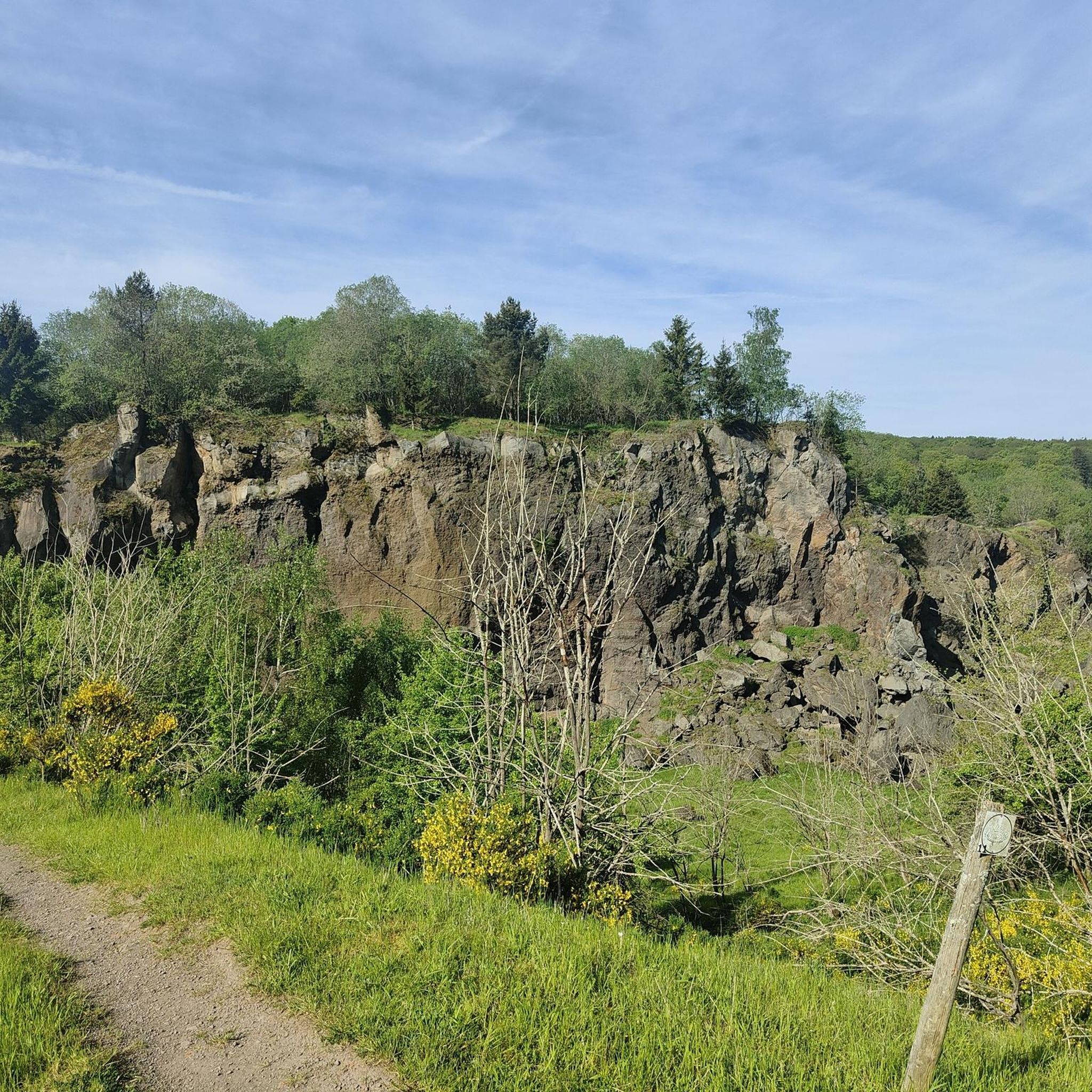
"To the west of the Langer Stein (640m) and Seimersberg (662m) we move to the Prümer Kopf. The gradients have so far proven to be very moderate, as they are today. In the surrounding spruce forest we repeatedly discover up to two meter high anthills ( https://www.das-tierlexikon.de/ameise/) and these are often surprisingly close together. We also encounter an unusually large number of hard-working dung beetles; we often have to be very careful not to step on them. (https://www .biologie-schule.de/mistkaefer-steckbrief.php)" https://www.komoot.de/tour/778942841
0
0

"With an area of approx. 102 hectares, the area around the Gerolsteiner Dolomites has been a nature reserve since 1990. + occurring animal species: bat + occurring plant species: juniper, orchids, character plants calcareous grassland, grove rush-beech forest, woodruff-beech forest, orchid-limestone-beech forest Around 380 million years ago there was a warm, subtropical shallow sea here, in which mighty reefs of stromatopores - relatives of sponges - and corals formed. After the dolomitization, sinking and folding of the rocks, the Devonian deposits were lifted out again. Today's Gerolsteiner Dolomites were formed, which rise steeply above the Kylltal north of the center of Gerolstein. The rocks "Hustley", "Munterley", "Drohende Ley", "Große Kanzel" and "Auberg" characterize the cityscape from afar and form the landmark of Gerolstein. The most famous summit of the Gerolsteiner Dolomites is the "Munterley" - with a height of 482 meters - and offers a breathtaking view over Gerolstein, the Kylltal and far into the Vulkaneifel. Stone Age people, who settled here 30,000 years ago, obviously enjoyed this view, as evidenced by stone tools and bones found at the nearby Buchenloch Cave. Visiting the Gerolsteiner Dolomites can be perfectly combined with hiking the Felsenpfad - the northern part of the "Gerolsteiner Dolomiten Acht". The almost eight-kilometer round tour offers many magical places and geological traces." https://www.eifel.info/a-gerolsteiner-dolomites
10
0

A mighty, beautiful building in the middle of the Eifel, including the building of the adjoining grammar school.
8
1

The Basilica of St. Salvator stands in Prüm, a town in the West Eifel region. In 721, the Frankish noblewoman Bertrada founded a monastery on her estate on the Prüm River with monks from Echternach. A second foundation was established in 752 by King Pippin, who had married a granddaughter of the first founder, with monks from Meaux near Paris, who lived according to the Rule of St. Benedict. In 1222, the monastery became the center of an independent principality, which was annexed by the Elector of Trier in 1576. The Elector and Archbishop of Trier then served as the abbot's administrator. Reconstruction of the abbey buildings began in 1721. As part of the Napoleonic secularization, the abbey was finally dissolved in 1802. Prüm, which initially belonged to the original parish of Rommersheim, was under the pastoral care of the Marienstift (St. Mary's Collegiate Church) from the mid-15th century. The Marienstift had been founded in 1016 by Abbot Urold of Prüm. The collegiate church became the parish church. In 1802, the monastery church became the parish church, and the collegiate church was demolished in 1826.
9
0

The observation tower on the Dietzenley offers an impressive view of the landscape of the Vulkaneifel. About 2500 years ago there was a Celtic housing estate on the Dietzenley with pasture areas, which were protected against attacks by ramparts up to 9 m high and 4 m wide.
13
0

Soldiers returning from Berndorf built a large wooden cross as a thank you that Berndorf was not shot at when the Americans marched in and placed it on Jischbühl. The cross had already been struck twice by lightning, but it was repeatedly restored. The cross is visible from far and wide on the road to Hillesheim. A plaque on the cross bears the inscription: "This cross was inaugurated in 1948 as a thank you to those who took part in the war 1939-1945 for returning home from the Second World War.
1
0
Frequently Asked Questions
What are the most popular viewpoints around Duppach?
Visitors frequently enjoy the View of Gerolstein from the Munterley, which offers expansive vistas over Gerolstein, the Kyll Valley, and the broader Vulkaneifel. Another popular spot is the Dietzenley Observation Tower, providing impressive views of the Vulkaneifel landscape. The View of Auberg and Munterley also provides a beautiful perspective of the Gerolstein Dolomites.
What unique natural features can I explore near Duppach?
The region is rich in volcanic formations and ancient geological structures. You can explore the Eichholzmaar, a fascinating maar lake with a distinct circular basin, showcasing the region's volcanic past. The Munterley and Auberg are part of the Gerolstein Dolomites, which are ancient Devonian reefs formed approximately 380 million years ago in a tropical shallow sea.
Are there historical sites or cultural landmarks to visit?
Yes, the region has significant historical and cultural sites. The Basilica of St. Salvator, Prüm, is a notable religious building with connections to Charlemagne and the relic of Christ's sandals. Additionally, the Dietzenley was once home to a Celtic housing estate about 2500 years ago, and the Munterley features the Buchenloch, a karst cave inhabited by humans during the Old Stone Age.
What kind of hiking trails are available around Duppach?
The area offers a variety of hiking trails suitable for different fitness levels. You can find leisurely circular paths around natural landmarks like the Eichholzmaar, which is also integrated into longer routes such as the 'Vulkanpfad'. The Gerolstein Dolomites, including the Munterley and Auberg, are popular hiking destinations with circular walks, though the terrain can be steep and rugged in places.
Are there family-friendly activities or trails near Duppach's peaks?
Many of the natural landmarks and viewpoints are suitable for families. The Eichholzmaar, for instance, offers a tranquil setting for birdwatching and observing wildlife, with well-maintained circular paths ideal for leisurely strolls. The View of Gerolstein from the Munterley and View of Auberg and Munterley are also listed as family-friendly highlights, offering scenic views that can be enjoyed by all.
What outdoor activities can I do near these mountain peaks besides hiking?
Beyond hiking, the region around Duppach offers excellent opportunities for cycling. You can explore various routes for gravel biking, road cycling, and general cycling tours. These routes often pass by scenic viewpoints and natural landmarks, allowing you to experience the Vulkaneifel landscape from a different perspective.
What is the best time to visit the mountain peaks and natural sites around Duppach?
The period between April and October is generally ideal for visiting the natural sites around Duppach, especially for activities like hiking. During this time, guided tours are often available, and the weather is typically pleasant for outdoor exploration and enjoying the natural beauty of the Vulkaneifel.
What makes the Munterley and Gerolstein Dolomites geologically significant?
The Munterley and the broader Gerolstein Dolomites are unique because they are remnants of a coral reef that formed approximately 380-320 million years ago in a tropical Devonian shallow sea. Visitors can observe the reef's upper edge, steep drop-offs, and block scree, which are similar to modern coral reefs. The dolomite rock itself formed from the lime skeletons of ancient marine organisms reacting with magnesium.
Can I find mineral springs near Duppach's natural landmarks?
Yes, near the Eichholzmaar, you can find two natural mineral springs: the Steffelner Drees and the Aueler Drees. These ferruginous springs offer refreshing mineral water and are easily accessible on foot, providing another interesting geological attraction in the vicinity.
What do visitors appreciate most about the mountain peaks and viewpoints in the Duppach area?
Visitors highly appreciate the expansive and fantastic panoramic views offered by spots like the View of Gerolstein from the Munterley and the Dietzenley Observation Tower. The unique geological history, such as standing on a 380-million-year-old Devonian reef at Munterley, also captivates many. The tranquility and the opportunity to observe diverse flora and fauna in nature reserves like Eichholzmaar are also frequently mentioned.
Are there any specific tips for visiting the Dietzenley Observation Tower?
The Dietzenley Observation Tower offers a very nice view over Gerolstein and Büscheich. On clear days, you might even see the Lissinger Kaserne, Birresborn, Salm, and the Kasselburg. It's known for its peaceful atmosphere, with visitors often remarking on the quiet surroundings and the grandiose all-round view.
What should I know about the nature reserves in the Duppach region?
The Eichholzmaar is a vital nature refuge for rare water birds and reptiles, especially after its renaturalization. The Gerolstein Dolomites, including the Munterley and Auberg, have been a nature reserve since 1990, protecting diverse flora and fauna such as rare orchids, nutrient-poor grasslands, juniper, and bats in nearby caves. These areas are excellent for nature observation.
Most popular routes around Duppach
Most popular attractions around Duppach

Get inspired with the komoot mobile app


Explore more
See even more amazing summits around Duppach with these guides:
