Top 13 Castles around Schwarzenfeld
Best castles around Schwarzenfeld offer a glimpse into the region's historical architecture and past. Located in Germany, Schwarzenfeld features a landscape dotted with various historical sites, including original castle foundations and repurposed structures. The area provides opportunities to explore medieval remnants and later architectural styles.
Best castles around Schwarzenfeld
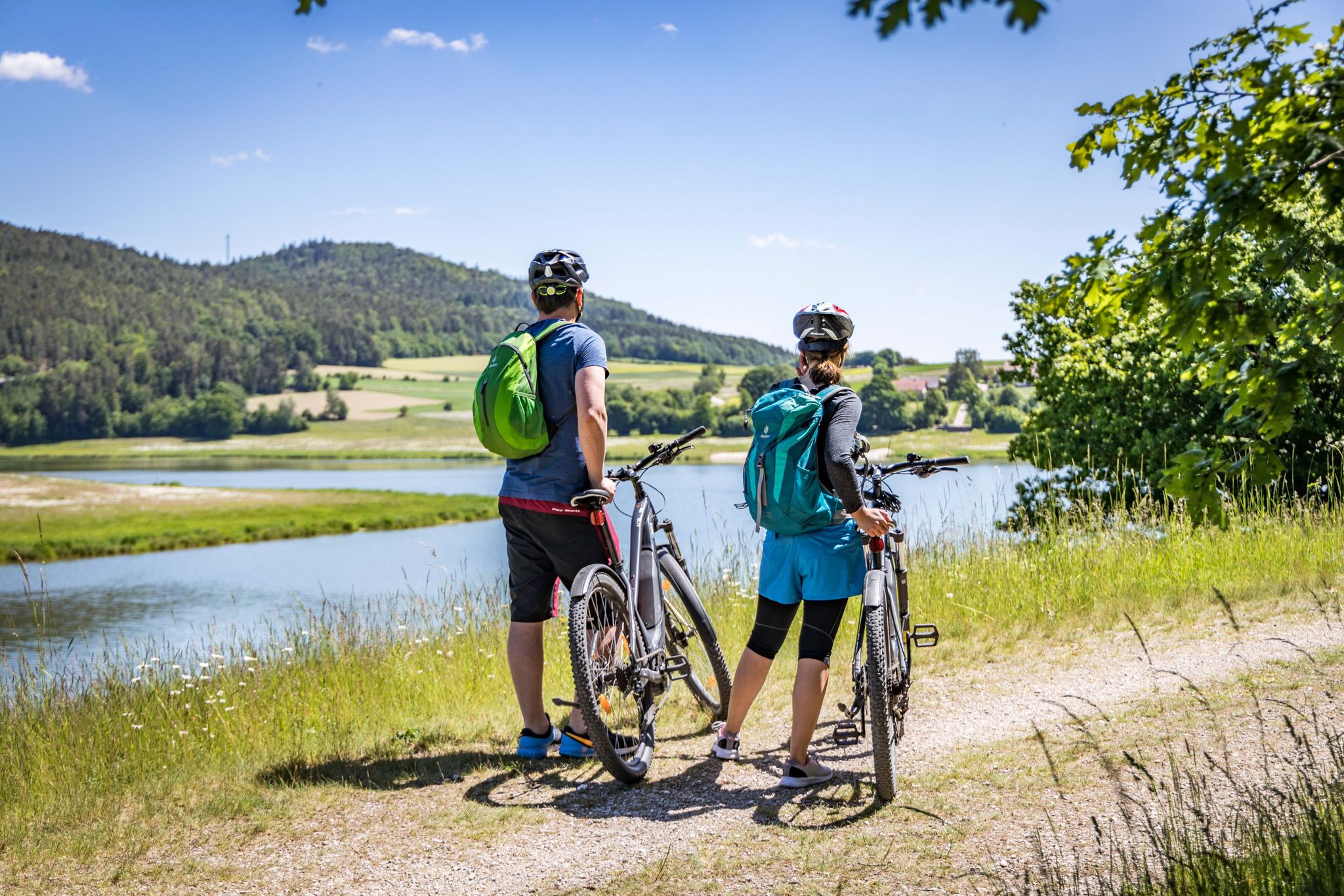
- The most popular castles is Zangenstein Castle Ruins and Chapel, a castle that features a beautiful castle chapel. This site is located in a traditional village along the "Bavarian-Bohemian Friendship Cycle Path".
- Another must-see spot is Ebermannsdorf Castle Ruins, a historical site with an imposing keep. Visitors can explore the remains of this Salian-period tower, one of the oldest preserved keeps in the Upper Palatinate.
- Visitors also love Former Moated Castle in Pettendorf, a historical site built in the late Gothic period. This privately owned property features a striking flat bay window with cross-rib vaults and tracery windows.
- Schwarzenfeld is known for castle ruins, historical sites, and repurposed castles. The area offers a variety of castles to see and explore, from medieval foundations to structures rebuilt in later architectural styles.
- The castles around Schwarzenfeld are appreciated by the komoot community, with more than 180 upvotes and 80 photos shared across the highlights.
Last updated: July 1, 2026
Zangenstein Castle Ruins and Chapel
Highlight • Castle
Along the "Bavarian-Bohemian Friendship Cycle Path", which runs on the former railway line from Wölsendorf to Schönsee, there is only one place to stop during the weekday to Obervietach in the village inn Kellermann in the middle of Zangenstein. Since there are no signs along the cycle path, cyclists who do not know the restaurant pass the mostly open "refreshment station" unsuspectingly.
Hence my tip:
Simply cycle a few meters from the cycle path to the center of Zangenstein. Mondays are always closed, but guests are welcome on all other days of the week between 10am and 6pm. Edeltraud, a passionate landlady, provides her guests, who prefer to sit under the awning around the large table in the courtyard, with snacks and drinks. Franz, the landlord, is very knowledgeable about bikes and can help if someone has a problem with their bike.
God preserve us beautiful village inns like that of the Edeltraud and Franz Stockerl families.
Translated by Google •
Tip by

Schwarzenfeld Castle
Highlight • Castle
Translated by Google •
Tip by

Sign up now to discover places like this
Get recommendations on the best single tracks, peaks, & plenty of other exciting outdoor places.
Sign up for free
Schloss Guteneck Christmas Market
Highlight • Castle
Today is a place where many events take place. At schloss-guteneck.de there is current information on events and opening hours.
Translated by Google •
Tip by

Ebermannsdorf Castle Ruins
Highlight • Castle
Translated by Google •
Tip by

Former Moated Castle in Pettendorf
Highlight • Castle
Translated by Google •
Tip by

Sign up for free to discover even more castles around Schwarzenfeld.
Sign up for free
Already have an account?
Start today with a free account
Your next adventure awaits.
Login or Signup
Popular around Schwarzenfeld



Tips from the Community

Guteneck Castle The castle was built in the 12th century, as evidenced by its Gothic walls. Guteneck was also first documented at this time. In 1278, Guteneck Castle came into the possession of the von und zu Murach family. A Jordan von Murach is first officially recorded in 1299. Wolff Albrecht von Murach sold Guteneck Castle to the Barons von Kreith in 1576. The Barons von Kreith were elevated to the rank of Imperial Counts in the 17th century and, like their predecessors, retained control of Guteneck for 300 years. During the Thirty Years' War, Guteneck and Weidenthal were devastated by soldiers. The castle burned down completely in 1822 during a village fire. Initially, only the chapel and the adjoining castle building were rebuilt. The last Imperial Countess, Franziska von Kreith (being childless), sold Guteneck Castle and its estate to her brother, Count Franz von Spreti, in 1894. That same year, he built a residential wing on medieval foundations, incorporating remnants of Baroque walls. In 1923, Count Spreti sold the property to a real estate agent from Nuremberg, who in turn sold it to Hereditary Prince Leopold of Saxe-Coburg and Gotha in 1937. In 1961, Count Albrecht Beissel von Gymnich acquired Guteneck Castle from the Duchess of Saxe-Coburg and Gotha and gave the estate its current appearance. Count Burkhard Beissel von Gymnich inherited the property from his father, Albrecht, in 2001. The building is a three- to four-sided structure. Parts of the castle were added later, including an arcaded courtyard in the 19th century. The castle chapel of St. Catherine dates from the 14th to 15th centuries and was rebuilt with alterations at the beginning of the 19th century. It features a roof turret with an onion dome. A so-called Swiss chalet with ground-floor vaulted ceilings and a former schoolhouse also belong to the complex. The castle has been revitalized through a variety of measures. Parts of it are offered as holiday apartments, a medieval banquet is regularly held there, a traditional Christmas market has been held for several years, the castle serves as a wedding venue, and the Highland Games and other celebrations take place there annually. In addition, the castle is used as a conference and seminar center. Source: Excerpts from www.wikipedia.de / www.schloss-guteneck.de/
2
0

Beautifully preserved privately owned castle
0
0

The beautiful Christmas market at Guteneck Castle is particularly recommended. It is open on all four Advent weekends from Thursday to Sunday and recently even the weekend before as a "pre-opening" (except on Remembrance Sunday). The atmosphere is unique and the food selection is very varied. Despite the expensive entrance fee (between €8 and €10), it is really highly recommended.
2
0
Eberburg Castle Ruins Ebermannsdorf originally belonged to the territory of the Margraves of Ammerthal. After their extinction, it was donated by Emperor Henry II to the Bishopric of Bamberg. Eppo von Ebermannsdorf is mentioned for the first time in 1079, and he operates as a noble knight. In 1108, Meribot von Ebermannsdorf - presumably a son - sold a nearby estate to the Bishop of Regensburg. Meribot and his brothers remained close to the Bishops of Bamberg and are mentioned on many of their documents. They can also be found in the entourage of other great noble families: the Wittelsbachs, the Margraves of Cham and the Margraves of Hohenburg. From 1200 onwards, however, little is heard of them. In 1309, Albrecht, the last knight to call himself "von Ebermannsdorf", died. In 1338, the castle appears to be divided between various minor noble lines, as Ulrich the Imsteter sold his third of the property to Count Palatine Rupert. Other owners: Dietrich Tanlacher in 1377, Heinrich von Kummersbrück (died 1390), Conrad Kemnater (1410). From 1501, the Fuchssteiners were in charge of the Ebernburg. Johann Fuchssteiner zu Ebermannsdorf was even chancellor of Count Palatine Friedrich, but was imprisoned in the Amberg "Fuchssteinerturm" in 1522 after breaking his oath. He is said to have taken bribes when the offices of Lauf and Hersbruck were sold. Released in 1525, he was imprisoned in Regensburg shortly afterwards, where he died in 1536. The Ebernburg fell into disrepair and was abandoned in favor of a new castle in the village, which was built in the 17th century. It is now inhabited by the von Eyb family, who bought the castle around 1880 and also own the castle ruins. The main thing worth noting is the keep, which dominates the centre of the Eberburg castle, slightly offset to the right. The octagonal, 16-metre-high tower's masonry technique dates back to the Salian period around 1100: the Ebermannsdorf tower is therefore one of the oldest preserved keeps in the Upper Palatinate. The tower was accessed via a round-arched high entrance. Two beam holes mark the starting points of a detachable wooden staircase. The interior is narrow and dark due to the walls being over 2 metres thick - it is only lit by a narrow slit of light - and has surprisingly comfortable furnishings: a fireplace and a toilet shaft running through the wall, which is clearly visible at the foot of the keep. Source: Extracts from www.burgenseite.de
3
0

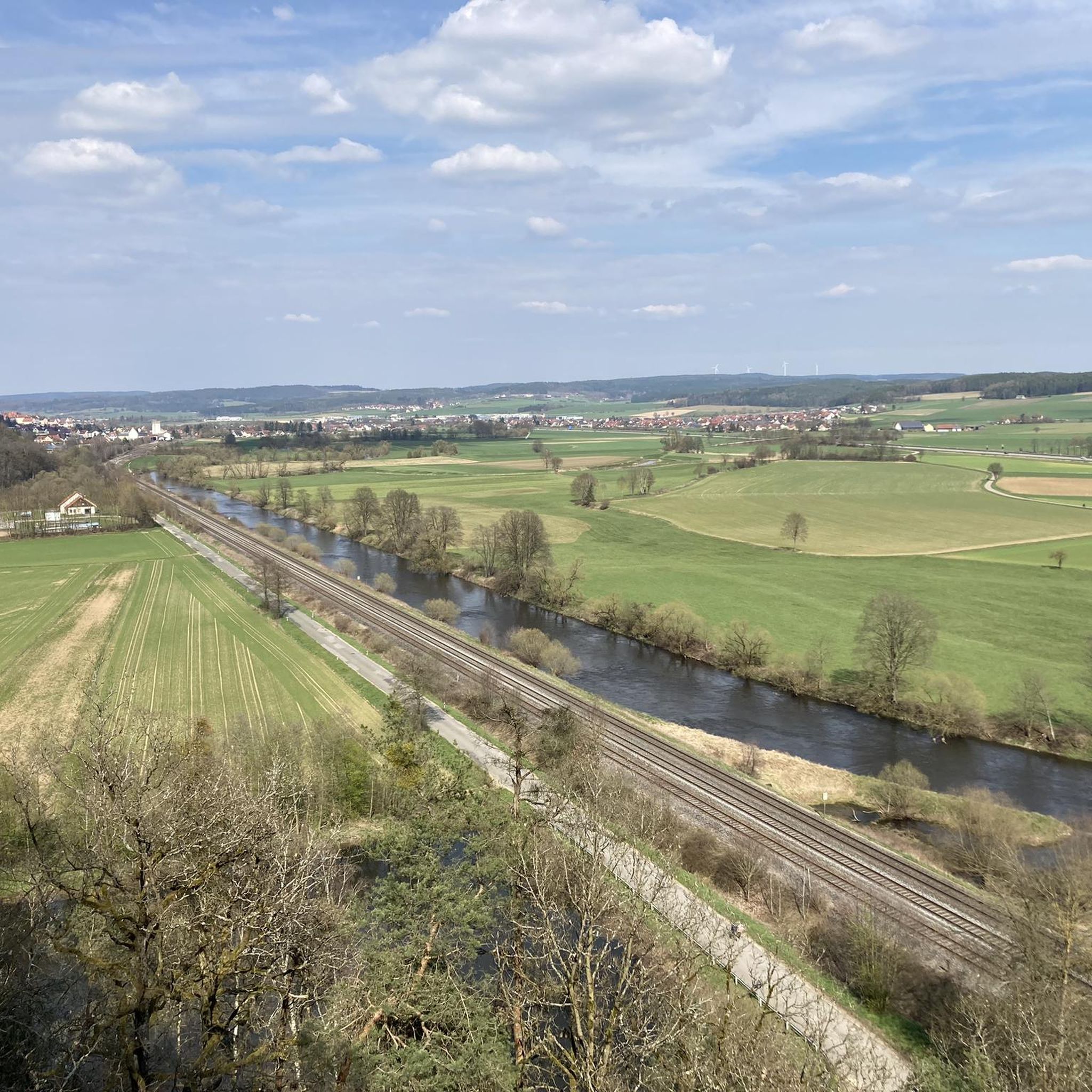
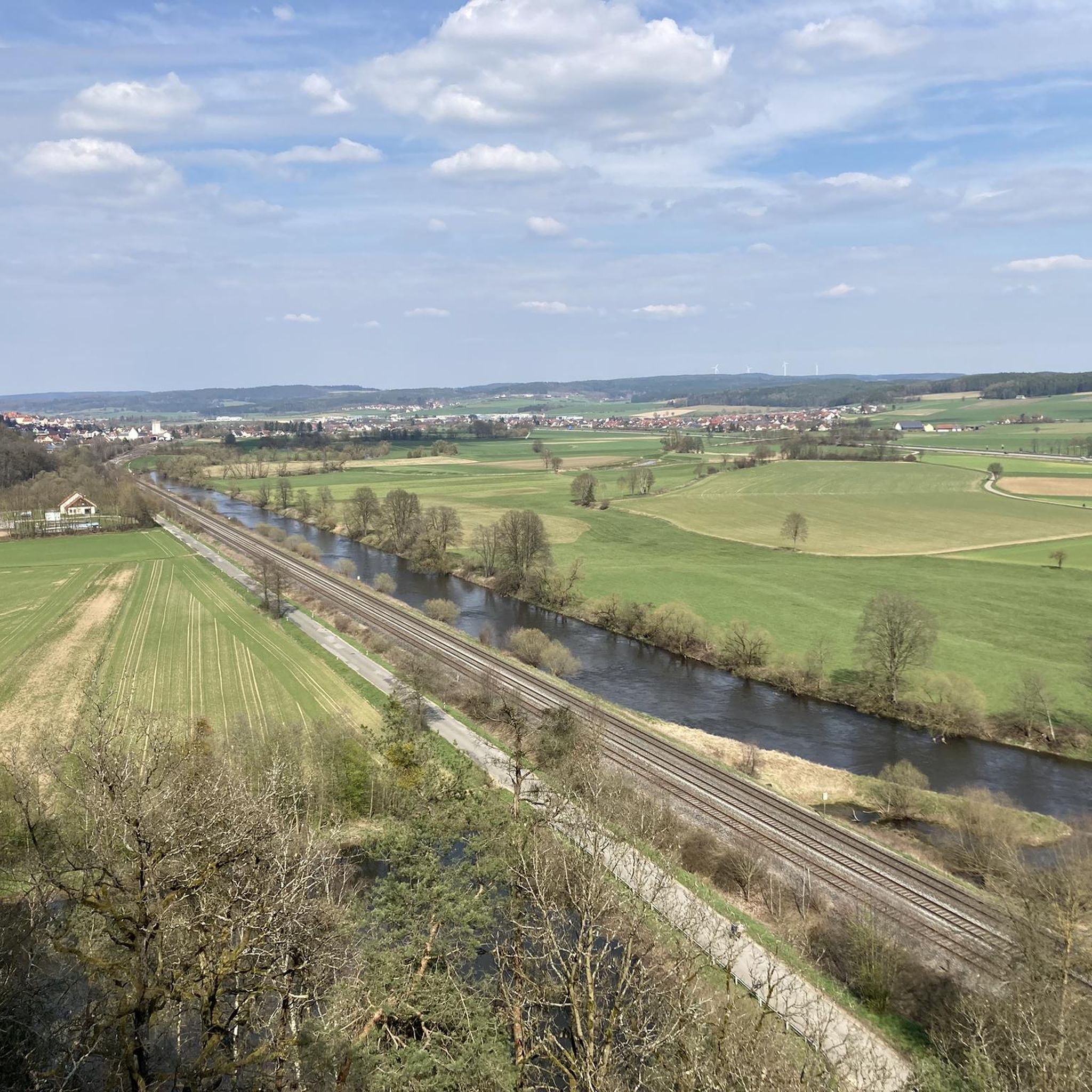
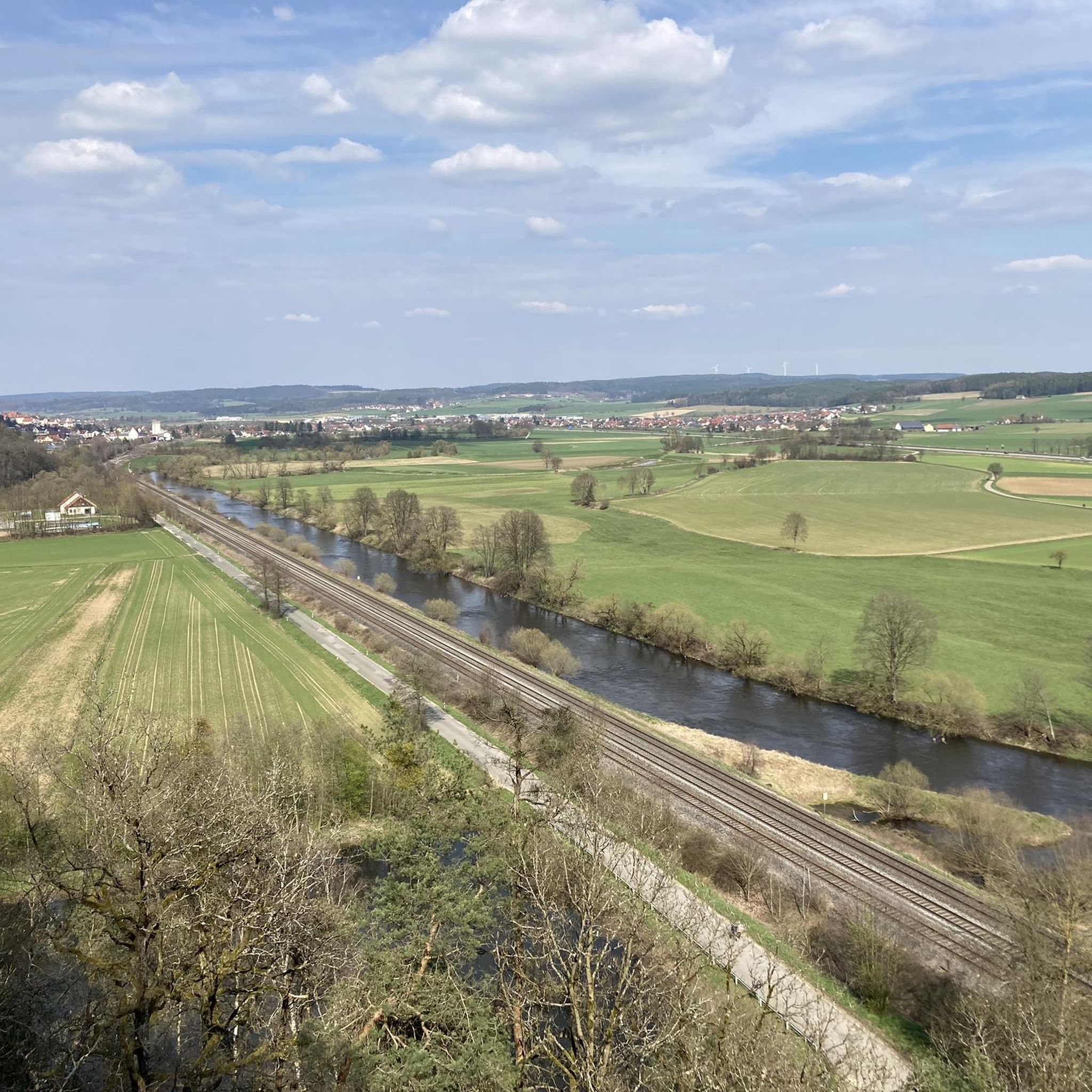
Good panoramic view, very nice!
2
0

Today, Schwarzenfeld Castle is a conference and recreation hotel with a beautiful park on the banks of the Naab.
3
0
Schwarzenfeld Castle The Schwarzenfeld seat was built and inhabited by Conrad Pullenhofer in 1372, before it became the property of the Plankenfelser noble family in 1389. They expanded the rather inconspicuous building and added four towers in the 15th century. In the 1580s, the Teuffel von Pirkensee family bought Schwarzenfeld. During the Thirty Years' War, the castle and the town were devastated. The castle's four towers were probably destroyed and have not been rebuilt since. From 1654, the imperial colonel Peter Pischer and his family were lords of Schwarzenfeld. In 1686, the baronial von Schneidau family took over Schwarzenfeld as a manor. In 1707, a fire destroyed the castle and the surrounding buildings, so that it had to be completely rebuilt elsewhere. A new building, called the "Plankenfelser Schlössl", was built on the foundations of the old castle. It was adapted to the period with stepped gables. In 1717, Schwarzenfeld was owned by the von Wildenau family, and in 1794 the property was purchased by the Counts of Holnstein. At the beginning of the 19th century, the main building was given its current shape by removing the stepped gables in favor of a hipped roof. Two small towers with onion tops were also added. In 1890 and 1892, Maximilian von Holnstein had the castle extended by Julius Hofmann to include the annex and the two towers in the style of the then popular historicist architectural style. At times, up to 160 workers were involved in the reconstruction, which gave the castle its final appearance. Surrounding buildings were also demolished to provide a view of the castle. Shortly after its completion, Count von Holnstein used the castle as a retirement home. He went blind in 1893 and died in the castle on February 1, 1895. After the Holnstein family moved out in 1907, the castle remained unused for a long time, except for short-term leases. The market acquired the castle in 1934, and after several changes of ownership, the main building of the castle burned down on the night of June 25, 1982 and lay abandoned for many years. In 1995, it was sold to private individuals Christine and Hans Dobler from Nabburg. They had the castle completely gutted, renovated and converted into a conference hotel, which opened in 1996 and is called "Hotel Schloß Schwarzenfeld". Source: Excerpts from www.wikipedia.de
3
0

Traditional village inn in Zangenstein Along the "Bavarian-Bohemian Friendship Cycle Path", which runs on the former railway line from Wölsendorf to Schönsee, there is only one place to stop during the weekday to Obervietach in the village inn Kellermann in the middle of Zangenstein. Since there are no signs along the cycle path, cyclists who do not know the restaurant pass the mostly open "refreshment station" unsuspectingly. Hence my tip: Simply cycle a few meters from the cycle path to the center of Zangenstein. Mondays are always closed, but guests are welcome on all other days of the week between 10am and 6pm. Edeltraud, a passionate landlady, provides her guests, who prefer to sit under the awning around the large table in the courtyard, with snacks and drinks. Franz, the landlord, is very knowledgeable about bikes and can help if someone has a problem with their bike. God preserve us beautiful village inns like that of the Edeltraud and Franz Stockerl families.
4
0
Frequently Asked Questions
What types of historical castles can I find in Schwarzenfeld?
In Schwarzenfeld, you can explore a mix of historical sites, from original castle foundations and ruins to structures that have been significantly repurposed. For example, you'll find the impressive remains of Ebermannsdorf Castle Ruins with its ancient keep, and the privately owned Former Moated Castle in Pettendorf, built in the late Gothic period. There's also Schloss Schwarzenfeld, which now operates as a conference hotel, offering a blend of historical grandeur and modern amenities.
What is the history behind Schloss Schwarzenfeld?
Schloss Schwarzenfeld, originally built in 1372, has a rich history of various noble owners and reconstructions. After a devastating fire in 1707, it was rebuilt. Between 1890 and 1892, Count Maximilian von Holnstein, an advisor to King Ludwig II, commissioned Julius Hofmann (engineer behind Neuschwanstein) to rebuild and enlarge it in the 'Historicism' style. Following another major fire in 1982, it was transformed into a conference hotel in 1995, blending its historical past with modern use.
Are there any castle ruins to explore in the Schwarzenfeld area?
Yes, the area offers several fascinating castle ruins. A notable example is Ebermannsdorf Castle Ruins, which features an imposing, octagonal keep dating back to the Salian period around 1100, making it one of the oldest preserved keeps in the Upper Palatinate. Another site is Zangenstein Castle Ruins and Chapel, located in a traditional village along the "Bavarian-Bohemian Friendship Cycle Path".
What makes the Altes Schloss Schwarzenfeld significant?
The Altes Schloss Schwarzenfeld, also known as the Plankenfelser Schlössl, is significant as the site of the original castle in Schwarzenfeld, first built in 1372. It's a protected architectural monument with archaeological importance, showcasing the medieval and early modern predecessors of the town's fortifications. While it may not offer public access like the hotel, it provides a deep historical contrast to the more modern Schloss Schwarzenfeld.
Can I visit Schloss Schwarzenfeld, and what can I expect there?
Schloss Schwarzenfeld now functions as a conference hotel. While full castle tours are not typically offered, visitors can experience the historic ambiance by visiting the castle cafe located within the premises. The impressive Historicism architecture and the expansive 50,000 square meter castle park (Schlossgarten) are also points of interest. It's a place where historical grandeur meets modern comfort.
Are there family-friendly castles or activities near Schwarzenfeld?
While specific family-friendly activities at the castles themselves might vary, the region offers options. For instance, Schloss Guteneck is known for hosting various events, including a popular Christmas market, which can be a delightful family experience. The castle park at Schloss Schwarzenfeld also provides open space for a pleasant stroll. When planning, consider the overall experience of visiting the sites and nearby natural areas.
What outdoor activities can I do near these castles?
The area around Schwarzenfeld offers a variety of outdoor activities. You can find numerous cycling routes, such as those detailed in the Cycling around Schwarzenfeld guide, including loops around local lakes like Hammersee and Murnersee. For mountain biking enthusiasts, there are challenging trails like the Root Trail or routes to Steinköppl Summit, as highlighted in the MTB Trails around Schwarzenfeld guide. Additionally, there are running trails, including loops around Schwarzenfeld and its castle park, which you can explore in the Running Trails around Schwarzenfeld guide.
Are there hiking or walking routes that include castles in Schwarzenfeld?
Yes, you can combine castle visits with walking or cycling. The Zangenstein Castle Ruins and Chapel are located along the "Bavarian-Bohemian Friendship Cycle Path," making it accessible for walkers and cyclists. While Schloss Schwarzenfeld is now a hotel, its castle park offers pleasant walking opportunities. For more structured routes, consider the running and cycling guides for the region, which often pass by points of interest.
What natural features or viewpoints can I find near the castles?
Many castles in the region offer scenic views or are situated near natural features. For instance, Ebermannsdorf Castle Ruins is noted as a viewpoint. The expansive Schlossgarten (castle park) at Schloss Schwarzenfeld provides a green oasis. The nearby cycling and running routes often lead through picturesque landscapes, including views of lakes like Hammersee and Murnersee, offering a blend of historical exploration and natural beauty.
Are there cafes or places to eat near the castles in Schwarzenfeld?
Yes, you can find places to eat and drink. Schloss Schwarzenfeld itself has a castle cafe where visitors can enjoy the historic ambiance. In the traditional village of Zangenstein, near the Zangenstein Castle Ruins and Chapel, there's a village inn that offers snacks and drinks, particularly welcoming to cyclists on the nearby path. The wider Schwarzenfeld area also has various cafes and pubs.
What is the best time to visit the castles around Schwarzenfeld?
The best time to visit depends on your interests. Spring and autumn offer pleasant weather for exploring the castle ruins and engaging in outdoor activities like hiking and cycling. If you're interested in special events, Schloss Guteneck hosts a renowned Christmas market on all four Advent weekends, offering a unique seasonal experience. The castle park at Schloss Schwarzenfeld is enjoyable in warmer months.
What do visitors enjoy most about the castles around Schwarzenfeld?
Visitors appreciate the blend of historical architecture and the opportunities for outdoor activities. The community has shared over 80 photos and given more than 180 upvotes to the highlights, indicating a strong interest in the historical sites. Many enjoy the impressive architecture, the historical significance of sites like the Ebermannsdorf keep, and the charming atmosphere of places like the village inn near Zangenstein. The repurposed Schloss Schwarzenfeld also offers a unique experience of history meeting modern comfort.
Most popular routes around Schwarzenfeld
Most popular attractions around Schwarzenfeld

Get inspired with the komoot mobile app


Explore more
Looking for the best castles somewhere else? Discover other guides around Schwarzenfeld:
