Top 17 Castles around Runding
Best castles around Runding include significant historical sites such as Burgruine Runding, which represents one of the largest castle complexes in the Bavarian Forest. The region features elevated positions offering panoramic views of the surrounding landscape. Visitors can explore extensive remains of medieval fortifications and learn about their history. This area combines historical exploration with natural scenery.
Best castles around Runding
- The most popular castles is Lichteneck Castle Ruins, a castle that is a ruin of a 13th-century castle.…
Last updated: June 24, 2026
Lichteneck Castle Ruins
Highlight • Castle
According to a local story, the lords of the castle at Lichteneck are supposed to have defeated their worst enemies, …
Translated by Google •
Tip by

Schwarzenburg Castle Ruins
Highlight • Castle
Translated by Google •
Tip by

Sign up now to discover places like this
Get recommendations on the best single tracks, peaks, & plenty of other exciting outdoor places.
Sign up for free
Runding Castle Ruins
Highlight • Castle
Translated by Google •
Tip by

Buchberg Castle Ruins
Highlight (Segment) • Castle
The first representative of the Puchbergs, who can certainly be referred to this place, was Otto I, first mentioned in 1196. The family originally belonged to the …
Translated by Google •
Tip by

Ödenturm (Ruins of Chameregg Castle)
Highlight • Castle
Translated by Google •
Tip by

Sign up for free to discover even more castles around Runding.
Sign up for free
Already have an account?
Start today with a free account
Your next adventure awaits.
Login or Signup

Tips from the Community

The destination isn't worthwhile. The remains of the ruins are completely overgrown. Therefore, you don't get a complete overview and have no long-distance view.
0
0

Magnificent view from up there. Definitely worth a detour.
0
0

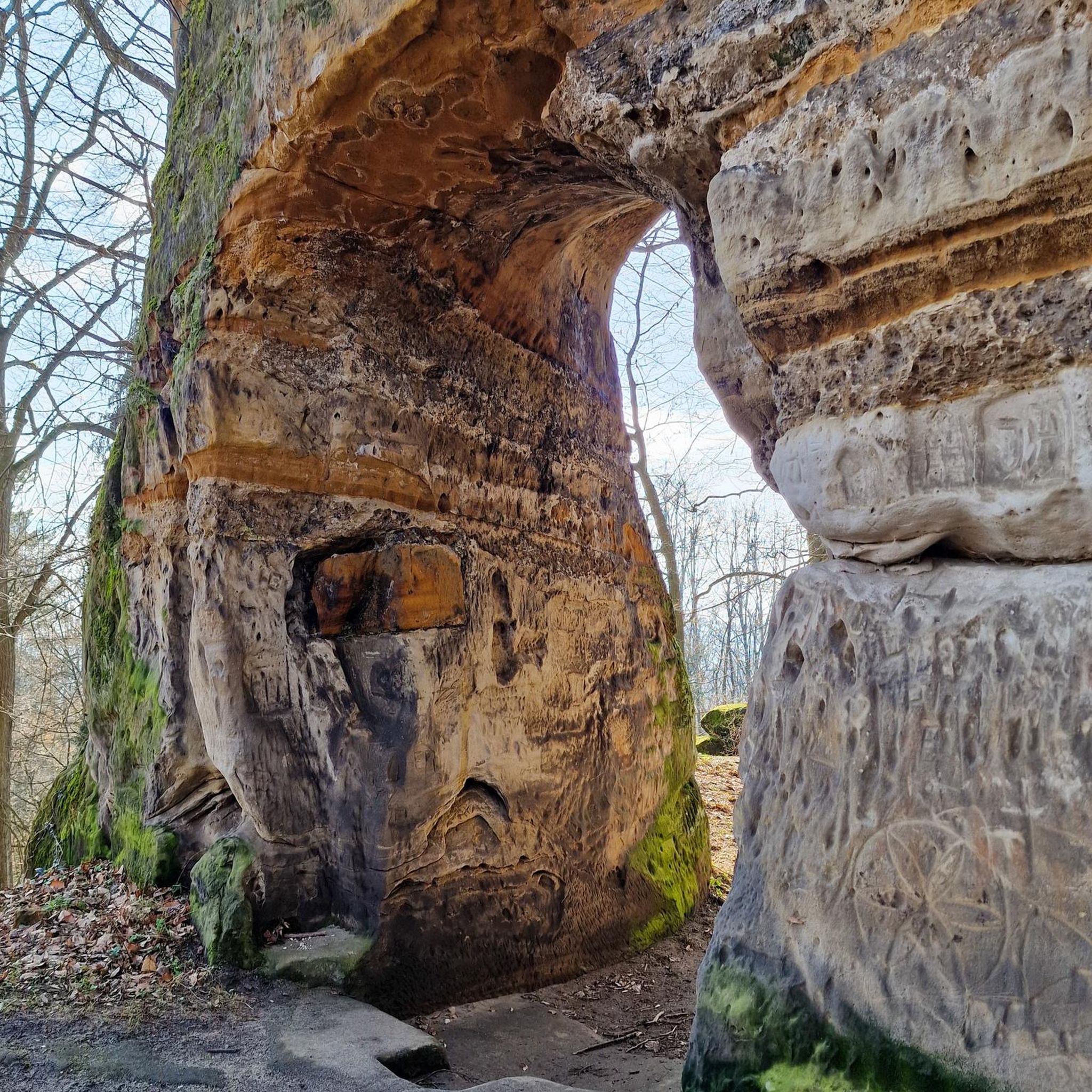
Chameregg Castle Ruins The castle may have been built as early as the 12th century; an iron kingdom of Chameregg is mentioned in a document from 1322, but the castle itself is not mentioned for the first time until 1352. At that time, Konrad von Chameregg was the owner; he came from the highly wealthy Chamerauer family. In the 14th century, the Chamerauers assumed important offices for the Duke of Lower Bavaria/Straubing – the four brothers Peter, Heinrich, Ulrich, and Friedrich were chamberlains, captains, vicars, and city administrators. In 1365, they lost all these high offices for breach of trust and revenue evasion. Whether this was justified is unclear, but they were gradually rehabilitated. Later, however, the family's fortunes declined rapidly; the horrendous expenses for representation and luxury could no longer be covered, and debts and mortgages piled up. In 1446, two unnamed Chamerauers were even executed by Duke Albrecht in Straubing for robbery and murder. Like so many other knights during this period, they had resorted to robber barons. In 1452, the last of the Chamerauers, Peter, died heavily in debt, and his remaining possessions went to creditors. Chameregg passed through many hands, perhaps abandoned decades earlier and falling into disrepair – the new lords had moved to a moated castle in the valley. In the 15th century, the Polling family still appears as owners, but then news of it ceases. The castle was renovated in the 1980s. Essentially, only part of the former keep remains of the small castle. The "halved" tower clearly shows how a medieval keep is constructed: four stories with vaults are clearly visible. The entrance is about 9 meters high. The wall consists of a shell of carefully hewn bossed ashlars on the outside, a rubble stone filling, and smaller, smooth ashlars on the inside. The rooms had an area of only 13 m². As usual, the lowest floor was only accessible from above through a so-called "fear hole." The careful construction suggests that it was built as early as the 12th century. In the northwest corner, traces of the wall of the entrance area can still be found, which was probably protected by a gate tower. The complex was surrounded by a surrounding moat, much of which can still be seen. Source: www.burgenseite.de
2
0

This is a fantastic castle ruin with a great view. The ruin is very impressive and has lots of information boards. There are several hiking trails to this ruin, short or long, anything is possible! In the ruin there are several comfortable places to sit and take a break. There is also a wonderful viewing point with a bench. Access is always possible and free!
0
0
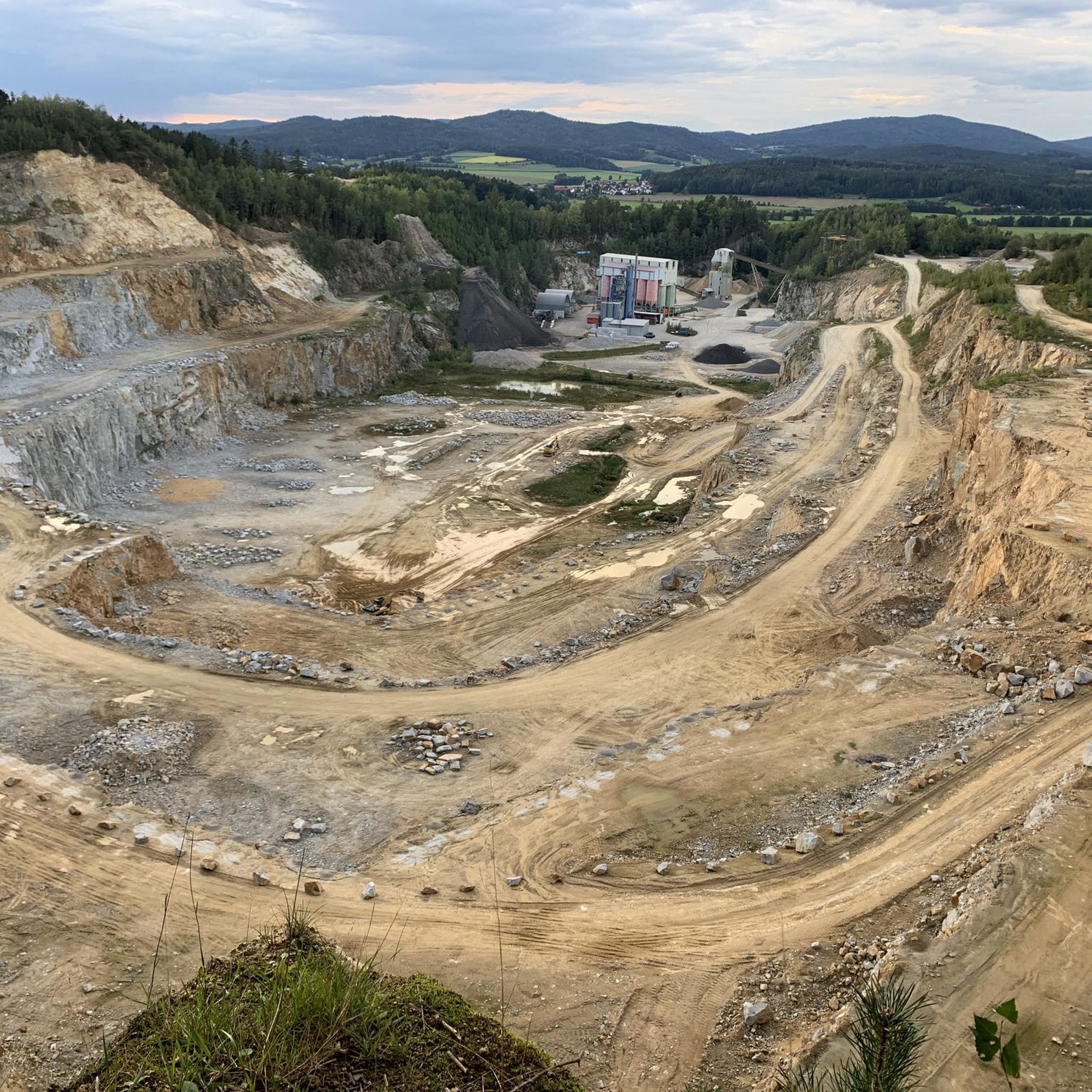
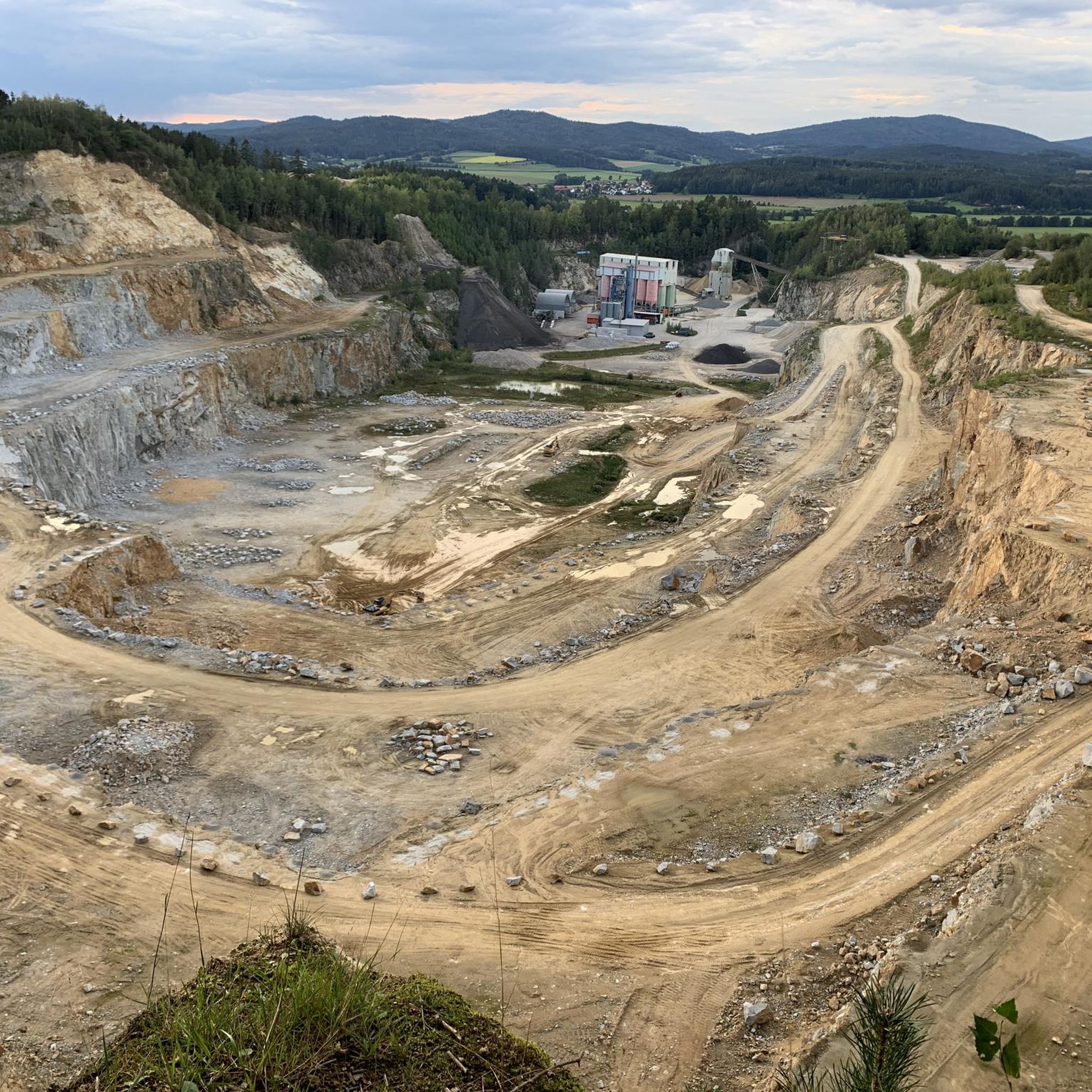
Buchberg Castle Ruins The first representative of the Puchbergs, who can certainly be referred to this place, was Otto I, first mentioned in 1196. The family originally belonged to the Diepoldinger ministeriality, and from 1204 to the Wittelsbacher. Relationships with the Bogeners arose from the widely scattered family property. In 1301, Hildebrand II sold the last remaining share of the castle to Duke Otto III of Lower Bavaria. The focus of the family's possessions now shifted to southern Lower Bavaria. The ancestral castle is said to have been pledged by the dukes to Rudlant Göttlinger in 1320. It was last mentioned in 1331 during the division of Lower Bavaria. It was then possibly used by the Göttlingers as a starting point for raids and destroyed or abandoned by the citizens of Cham. As early as 1347, grazing and usage rights were mentioned on the Buchberg, and in 1470 forests and a former castle. After its abandonment or destruction after 1331, it served as a quarry until recently. The oval complex, with a total length of 150 m and a maximum width of 60 m, is divided into an outer and main castle. The former occupies the highest peak covered with granite blocks at the southern end of the castle hill. To the north-northwest it is secured by a moat up to 12 m wide with an outer rampart, some of which has been preserved. The egg-shaped interior of the main castle measures approx. 50 x 40 m. The lower western part was protected by a ring wall that made clever use of the terrain, a 17 m long section of which has been preserved. The higher part of the castle was surrounded by its own ring wall, some of which can be seen. The southern part of the area was occupied by a large, multi-room building. At the highest point is the base of the keep. To the north-northwest, the main castle is adjoined by a plateau up to 20 m wide. In front of this is a ditch-like structure about 70 m long. It runs into the slope in the east and leaves the access to the main castle free in the west. Overall, the structure of the complex is not easy to understand due to the heavy vegetation. After 1997, the few remaining parts were secured. Source: Extracts from www.ebidat.de
4
0

The Buchberg castle ruins, also known as Schlossberg, are located on a 563-meter-high hill on the Buchberg. The Counts of Bogen built the castle in the 12th century and the Lords of Puchberg joined them later. The castle was destroyed in the 14th century and today only the stump of the keep and the remains of the walls remain.
2
0

Very informative and beautiful castle ruins. The walk is worth it.
0
0
Runding Castle Ruins Otto von Runding is mentioned in 1118 as a ministerial of the Margraves of Cham. Various lines then shared the castle, and Rudiger, who lived on the nearby Haidstein, Adalbert and Adelheid are mentioned several times in documents. From 1300 onwards, however, the family ran into financial difficulties and had to sell more and more parts of the estate, including to the Chamerauers, Zengers and Fraunbergers. While the impoverished Rundingers ultimately had to move to Cham, Heinrich V. Nothafft of Wernberg gradually managed to acquire all parts from 1413 onwards. Heinrich Nothafft was an important man in the governments of the Bavarian dukes and achieved considerable wealth. It was probably also he who had Runding expanded into a large, late medieval castle complex. In the 16th century, the Nothaffts ran into financial difficulties due to guarantees they had provided and had to sell to Ludwig von Eyb. In 1618, Hans Albrecht Nothafft managed to regain possession of the castle through marriage. The castle was plundered and burned down twice by the Swedes during the Thirty Years' War (1633, 1641). In the 16th and 17th centuries, the Nothaffts built Runding into a large castle with stables, utility rooms, and apartments for servants. The Nothafft family got into more and more debts, and by the time of the forced sale in 1829, the family had accumulated a mountain of debt of 300,000 guilders. The new owners ordered the castle to be demolished. It continued to decay until 1992, and only since then have extensive security measures been taken. All that is left of the high medieval castle today is the stump of a residential tower or former keep in the middle on a rock. This tower was the core of the original castle, probably surrounded by a ring wall. Later, the central rock tower was used to build the baroque chapel and the tower was demolished. The two round towers made of large rubble stones, which formed a former gate open to the southeast, may date from the early 14th century. The medieval buildings that are visible today are primarily the palace and the large tower in the northwest, the lower floor of which was also used as a prison. The complex is designed with elaborate defenses in mind: it is surrounded by a completely circular enclosure with corner towers, a deep circular moat and a rampart. Source: Excerpts from www.burgenseite.de
2
0
Frequently Asked Questions
What are some notable castle ruins to visit around Runding?
Beyond the impressive Burgruine Runding, you can explore several other significant ruins. These include Lichteneck Castle Ruins, known for its accessible tower and views, and Schwarzenburg Castle Ruins, one of Bavaria's largest castle ruins. Another historical site is Buchberg Castle Ruins, first mentioned in 1196, where you can still see the stump of the keep and wall remains.
What makes Burgruine Runding significant?
Burgruine Runding is considered the remains of what was once the largest castle complex in the Bavarian Forest, covering approximately 15,000 m². It boasts extensive remains, including a nearly 400-meter-long walkable rampart, and is being developed into an archaeological open-air museum. The site allows visitors to 'experience history' through its well-preserved ruins and informative displays.
Are there castles with good viewpoints in the Runding area?
Yes, several castle ruins offer excellent panoramic views. The elevated position of Burgruine Runding on the 'Schloßberg' provides expansive views of the Further Senke and the Regental. Similarly, the tower at Lichteneck Castle Ruins is freely accessible and offers great views. Schwarzenburg Castle Ruins also provides beautiful views, as does the Ödenturm (Ruins of Chameregg Castle), which overlooks the Regen and Chambtal.
Can I explore the castle ruins freely?
The outdoor facilities of Burgruine Runding are open around the clock and are freely accessible. Information boards are available throughout the site. For other ruins like Lichteneck Castle Ruins, the tower is freely accessible. Some privately owned castles, such as Thierlstein Castle, are not open to the public.
What historical information is available at the castle sites?
At Burgruine Runding, information boards throughout the site detail the original buildings and their functions, covering over 900 years of history. A small exhibition in the old church in Runding village also showcases archaeological findings. For Buchberg Castle Ruins, historical context about its founding in 1196 and destruction in the 14th century is provided.
Are there any legends or stories associated with the castles?
Yes, Burgruine Runding is steeped in legends and ghost stories, adding a mystical element to a visit. Lichteneck Castle Ruins also has a local story about the lords of the castle tricking their enemies, the Hohenbogeners, during a feast.
Is there parking available near the castle ruins?
While specific parking details for every ruin are not provided, Burgruine Runding is generally accessible, and for the Ödenturm (Ruins of Chameregg Castle), the way to the ruin is easy to find by a sign to the nearby inn "Zum Ödenturm," suggesting parking is available in the vicinity.
What is the best time of year to visit the castles around Runding?
The castles, being mostly ruins and outdoor sites, are best visited during pleasant weather. Spring, summer, and early autumn offer comfortable temperatures for exploring. These seasons also provide lush greenery or vibrant fall colors, enhancing the scenic views from the castle sites.
Are the castle ruins family-friendly?
Many of the castle ruins, such as Schwarzenburg Castle Ruins and Ödenturm (Ruins of Chameregg Castle), are categorized as family-friendly. The extensive, walkable ramparts and archaeological open-air museum plans at Burgruine Runding also make it an engaging site for families.
Are there dog-friendly options for visiting the castles?
Yes, Lichteneck Castle Ruins is categorized as dog-friendly, making it a good option for visitors with pets. As many of the sites are outdoor ruins, dogs on a leash are generally welcome, but it's always advisable to check local regulations.
What outdoor activities can I do near these castles?
The Runding area offers various outdoor activities. You can find numerous road cycling routes, such as the 'Chamb Valley Cycle Path' or loops around Lake Höllenstein. There are also gravel biking options, including routes around Lake Blaibach. For runners, several running trails are available, like the 'Running loop from Runding' or routes around Satzdorf Lake. You can explore these and more on the respective guides: Road Cycling Routes around Runding, Gravel biking around Runding, and Running Trails around Runding.
Are there hiking trails near the castle ruins?
While specific hiking trails directly linked to each castle are not detailed, the region around Runding is suitable for walking and hiking. The walkable rampart at Burgruine Runding offers a pleasant stroll. Given the availability of running and cycling routes, it's likely that many paths suitable for hiking can be found connecting or passing by these historical sites. You can find more information on outdoor routes in the area through komoot's guides.
What should I bring for a visit to the castle ruins?
For a comfortable visit, especially to the outdoor ruin sites, it's recommended to wear sturdy shoes suitable for uneven terrain. Bringing water, snacks, and appropriate clothing for the weather is also advisable. If you plan to explore extensively, a camera for the scenic views and a small backpack for essentials would be useful.
Most popular routes around Runding
Most popular attractions around Runding

Get inspired with the komoot mobile app


Explore more
Looking for the best castles somewhere else? Discover other guides around Runding:
