Attractions and Places To See in San Felipe De Puerto Plata - Top 20
Best attractions and places to see in San Felipe De Puerto Plata include a diverse range of historical sites, natural features, and cultural experiences. The city is known for its colonial architecture, Atlantic coastline, and lush mountainous terrain. Visitors can explore 16th-century fortresses, enjoy golden sand beaches, and discover unique cultural landmarks. This region offers a variety of attractions for those interested in history, nature, and local culture.
Best attractions and places to see in San Felipe De Puerto Plata
- The most popular attractions is Fortaleza San Felipe, a historical site that was built in the 16th century to defend against pirates. It now functions as a military museum and offers views of the harbor and Mount Isabel de Torres.
- Another must-see spot is Playa Dorada Near El Pueblito Beach, Puerto Plata, a beach known for its flat sandy expanse and clear waters. It is suitable for swimming and beach volleyball and is part of a larger resort complex.
- Visitors also love Puerto Plata Town Center, the central area of Puerto Plata. It features Victorian architecture, the market square, and unique streets like Umbrella Street and Paseo de Dona Blanca.
- San Felipe De Puerto Plata is known for its historical sites, natural landscapes, and cultural landmarks. The region offers a variety of attractions, from ancient fortresses and scenic beaches to vibrant city centers and unique museums.
- The attractions in San Felipe De Puerto Plata are appreciated by the komoot community, with more than 10 upvotes and over 40 photos shared.
Last updated: July 15, 2026
Fortaleza San Felipe
Highlight • Historical Site
Translated by Google •
Tip by

Puerto Plata Town Center
Highlight • Settlement
Translated by Google •
Tip by
Sign up now to discover places like this
Get recommendations on the best single tracks, peaks, & plenty of other exciting outdoor places.
Sign up for free
Cathedral of San Felipe Apóstol
Highlight • Religious Site
Translated by Google •
Tip by

Playa Dorada Near El Pueblito Beach, Puerto Plata
Highlight • Beach
Translated by Google •
Tip by

Mount Isabel de Torres
Highlight • Summit
Translated by Google •
Tip by
Statue of General Gregorio Luperón
Highlight • Monument
Translated by Google •
Tip by
Umbrella Street, San Felipe Street
Highlight • Monument
Translated by Google •
Tip by

Del Oro Chocolate Factory
Highlight • Structure
Translated by Google •
Tip by
Puerto Plata Cable Car (Teleférico de Puerto Plata)
Highlight • Structure
Translated by Google •
Tip by
Small Cave and Hibiscus Tunnel
Highlight • Cave
Translated by Google •
Tip by

Sign up for free to discover even more attractions in San Felipe De Puerto Plata.
Sign up for free
Already have an account?
Start today with a free account
Your next adventure awaits.
Login or Signup


Tips from the Community

The Cathedral of Saint Philip the Apostle in Puerto Plata (Spanish: Catedral de San Felipe Apóstol), also known as the Cathedral of Puerto Plata and as the Cathedral of Saint Philip the Apostle, is a cathedral of the Catholic Church located at Calle José del Carmen Ariza 36 of the city of Puerto Plata, part of the province of the same name in the north of the island of Hispaniola and the Caribbean nation of the Dominican Republic. The previous wooden church was destroyed by fire in 1863 during the "Dominican Restoration War" (Guerra de Restauración). Construction of the current church began in 1870 under Pedro Tomás de Mena. Reconstruction of the church began in 1929 and was completed in 1956. Reconstruction took longer than expected due to an earthquake in 1946. In 2003, another earthquake damaged the structure, which was fully repaired by 2008. Built in a modern Victorian style, the cathedral is the mother (or main church) of the Diocese of Puerto Plata (Dioecesis Portus Argentarii), which was founded in 1996 by the then Pope John Paul II through the papal bull "Venerabilis Frater" from an area that formerly belonged to the Roman Catholic Archdiocese of Santiago de los Caballeros. It is under the pastoral responsibility of Bishop Julio César Corniel Amaro. Source: Wikipdedia
0
0
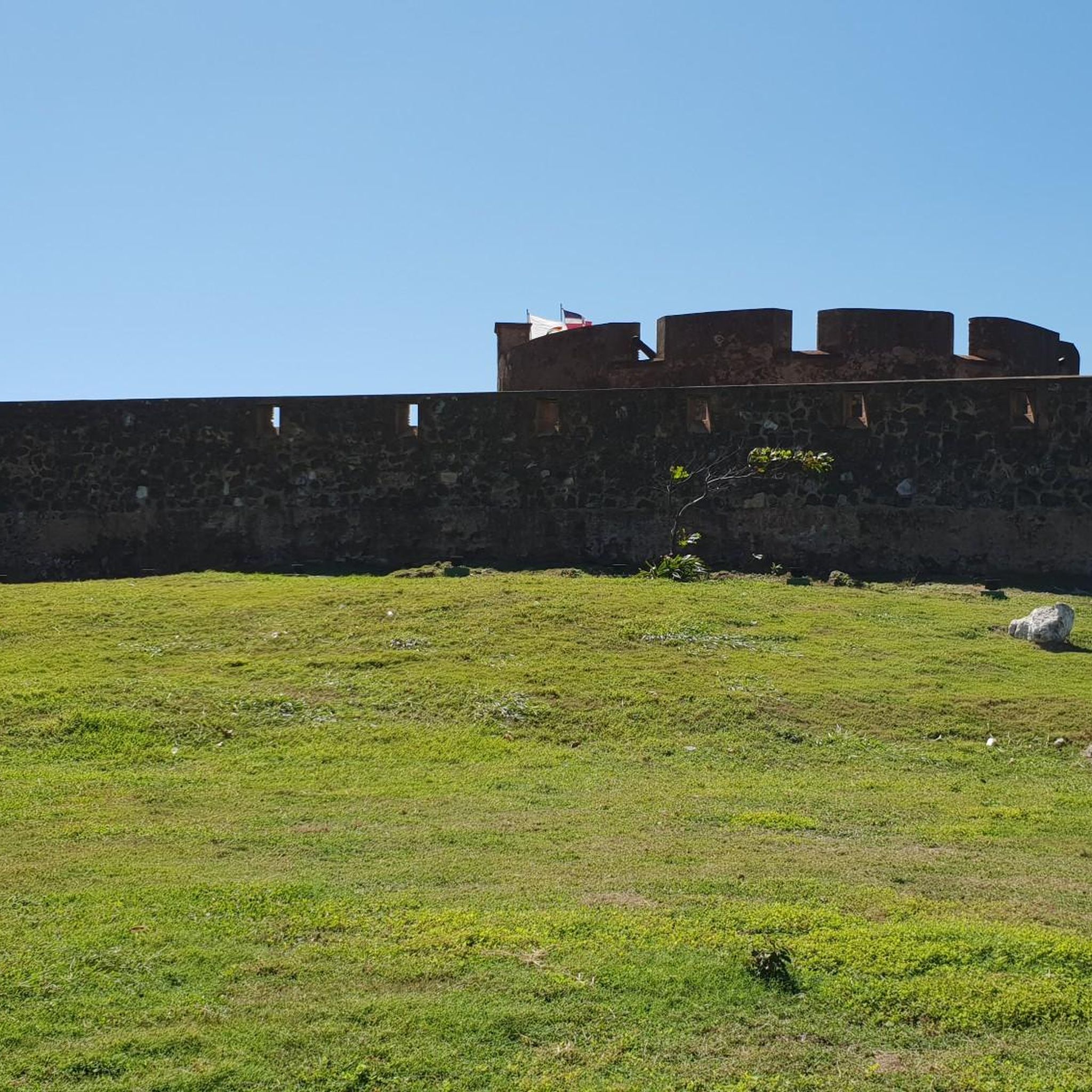
Gold lured the Spaniards to the Caribbean. Even if they rarely found it, at least ports were built where they collected their wealth. This was the case in Puerto Plata, the silver port. But since the precious metal also attracted other people, the threat to Puerto Plata from pirates and corsairs grew with the wealth. When the inhabitants of Puerto Plata finally asked the Spanish court to build a fortress, the Habsburg King Charles V issued the order to build the Fortaleza San Felipe on January 28, 1541. The distance from the "New World" and the empty Spanish treasury alone were enough to delay the execution of his order by 23 years. It was only then, in 1564, that the architect Francisco de Ceballos began construction. However, Ceballos did not live to see its completion. Unfortunately for him, the inscription on a memorial plaque on the outer wall of the fortress names Captain Don Pedro Rengifo as the person who completed the construction in 1577. Military Museum at Fortaleza San Felipe After the fort was used as a prison for a time - for example, the national hero Juan Pablo Duarte was imprisoned here in 1844 - the Dominicans began restoring it in the early 1960s. Today the military museum is housed here and the fortress is considered one of the best-preserved examples of colonial military architecture. However, caution is advised when visiting. At least when we visited, one of the rungs of a tower ladder was broken. Source: Freudenthal
0
0
Gregorio Luperón (* September 8, 1839 in Puerto Plata; † May 21, 1897) was a Dominican military man and state leader. He was the 20th president of the state. Luperón pursued a military career and was a general in the Restoration War from 1863 to 1865. Ulises Francisco Espaillat suggested that he run for president in 1876, but Luperón initially declined. From October 6, 1879 to September 1, 1880, he was interim president. Under his successor Fernando Arturo de Meriño, he eventually became a diplomat in France. Puerto Plata Airport (Aeropuerto Gregorio Luperón) and the Gregorio Luperón High School for Math & Science in New York are named after him. Source: Wikipedia https://en.wikipedia.org/wiki/Gregorio_Luper%C3%B3n
0
0

Was a Dominican military and state leader and the 20th President of the Republic.
4
0
In the middle of the old town on the main square
3
0

Several types of chocolate and cocoa are available here. A video showing the production and history is shown at reception. Tours and tastings of the factory are possible. Unfortunately, it is a bit overpriced. Entry is free.
1
0
A tour of the city is highly recommended. The market square, Umbrella Street and the Paseo de Dona Blanca in its pink paintwork.
1
0
Nice guided tour of the fortress in many languages through headphones. View of the harbor and the mountain Isabel de Torres. Was built in the 16th century to defend against pirates.
4
0
Frequently Asked Questions
What historical sites can I explore in San Felipe De Puerto Plata?
You can delve into history at Fortaleza San Felipe, a 16th-century Spanish fortress that defended against pirates and now serves as a military museum. The city also features the Cathedral of San Felipe Apóstol, and the Gregorio Luperón Museum, which details the life of a national hero.
Where can I experience the local culture and unique architecture?
The Puerto Plata Town Center is rich with Victorian architecture. Don't miss Umbrella Street (San Felipe Street) for its colorful display and photo opportunities, and the vibrant Paseo de Doña Blanca, known as the Pink Street. You can also find numerous murals and art shops throughout the city.
What natural attractions offer adventure and scenic views?
For adventure, visit the Damajagua Waterfalls (27 Charcos), where you can hike, swim, slide, and jump through natural pools. For breathtaking panoramic views, take the Puerto Plata Cable Car up Mount Isabel de Torres, which also features a botanical garden and a Christ the Redeemer replica.
Are there good beaches for relaxation or water sports?
Yes, Playa Dorada Near El Pueblito Beach, Puerto Plata is known for its golden sands and clear waters, perfect for swimming and beach volleyball. Sosua Beach offers calm waters ideal for snorkeling and scuba diving, while Cabarete Beach is a lively spot popular for kiteboarding and surfing.
What outdoor activities or trails are available near these attractions?
San Felipe De Puerto Plata offers various outdoor activities. You can find numerous hiking trails, including the 'Mirador Pico Diego de Ocampo loop' and the 'Fortaleza San Felipe – Del Oro Chocolate Factory loop'. For running, consider routes like 'La Puntilla, Puerto Plata loop'. Mountain biking enthusiasts can explore trails such as the 'Discovery Trail loop'. You can find more details on these and other routes in the Hiking in San Felipe De Puerto Plata, Running Trails in San Felipe De Puerto Plata, and MTB Trails in San Felipe De Puerto Plata guides.
What are some family-friendly attractions in San Felipe De Puerto Plata?
Families will enjoy the interactive experiences at Ocean World Adventure Park, including swimming with dolphins. The Damajagua Waterfalls offer an exciting guided adventure for older children and adults. The Puerto Plata Cable Car ride up Mount Isabel de Torres is also a hit, with its botanical garden at the summit. Additionally, the flat sandy expanse of Playa Dorada is great for a relaxing family beach day.
Where can I find the best panoramic views of the city and coastline?
The most iconic panoramic views are from the summit of Mount Isabel de Torres, accessible via the Puerto Plata Cable Car. You can also get great views of the harbor and Mount Isabel de Torres from Fortaleza San Felipe. The historic Puerto Plata Lighthouse also offers scenic coastal vistas.
Is the Puerto Plata Cable Car accessible for everyone?
The Puerto Plata Cable Car (Teleférico) is designed to be accessible, providing a smooth ride up Mount Isabel de Torres for most visitors. The Umbrella Street is also noted as wheelchair accessible.
Can I learn about local industries like rum or chocolate production?
Yes, you can visit the Macorix House of Rum to learn about the history and process of rum production, a significant part of the region's heritage. The Del Oro Chocolate Factory offers insights into how fine Dominican chocolate is made from organic cocoa beans, complete with samples.
What is the best time of year to visit San Felipe De Puerto Plata?
The dry season, typically from December to May, offers pleasant weather with less rain and comfortable temperatures, making it ideal for exploring outdoor attractions like the Damajagua Waterfalls and beaches. The rainy season, from June to November, can bring more humidity and occasional heavy showers, but attractions remain open, and the landscape is lush.
Are there any unique or underrated attractions to discover?
Beyond the main highlights, consider exploring the Estero Hondo Marine Mammal Sanctuary, a protected lagoon home to the West Indian Manatee. The Cabarete Caves in El Choco National Park offer a glimpse into the area's geological history with impressive stalactites and stalagmites. The vibrant street art found throughout Puerto Plata also provides unique photo opportunities.
How long should I plan to spend at Fortaleza San Felipe?
To fully appreciate Fortaleza San Felipe, including exploring the military museum and enjoying the views of the harbor and Mount Isabel de Torres, plan for approximately 1 to 2 hours. Guided tours with headphones are available in multiple languages to enhance your visit.

Get inspired with the komoot mobile app


Didn’t find what you were looking for?
Are you keen on exploring more awesome places nearby? Browse our guides:
Explore more
Still not found the Highlight you’re looking for? See guides of the top attractions in other regions:
