Attractions and Places To See around Sand Hutton - Top 20
Best attractions and places to see around Sand Hutton, a village in North Yorkshire, offer a mix of historical sites and natural features. The area is known for its historical landmarks, including remnants of ancient churches and significant gateways. Visitors can explore woodlands and various points of interest that highlight the region's heritage. Sand Hutton provides opportunities to discover both man-made structures and natural landscapes.
Best attractions and places to see around Sand Hutton
- The most popular attractions is New River Bridge, Castle Howard Estate, a bridge that is part of the Castle Howard Estate. It is notable for the grassy track running over it and its proximity to the Mausoleum and The Temple of Four Winds.
- Another must-see spot is Walmgate Bar, a historical site and one of York's medieval city gates. This gate still features an upstream kennel and houses a cafe inside, offering seating on different floors and parts of the wall.
- Visitors also love Micklegate Bar, a significant medieval gateway. It served as the primary entrance to the city of York from the South and has historical importance as a focal point for grand events.
- Sand Hutton is known for historical sites, bridges, and natural features. The region offers a variety of attractions to see and explore, from ancient structures to scenic landscapes.
- The attractions around Sand Hutton are appreciated by the komoot community, with more than 110 upvotes and 46 photos shared for the highlights.
Last updated: July 3, 2026
The Shambles, York
Highlight • Historical Site
Tip by

Micklegate Bar
Highlight • Structure
Serving as the primary entrance to the city for those arriving from the South, this historic gate witnessed the passage of numerous reigning monarchs, who adhered to the tradition of seeking the Lord Mayor's permission before entering the city.
Tip by

Sign up now to discover places like this
Get recommendations on the best single tracks, peaks, & plenty of other exciting outdoor places.
Sign up for free
Clifford's Tower
Highlight • Historical Site
Translated by Google •
Tip by

New River Bridge, Castle Howard Estate
Highlight • Bridge
Tip by

Walmgate Bar
Highlight • Historical Site
Translated by Google •
Tip by

Sign up for free to discover even more attractions around Sand Hutton.
Sign up for free
Already have an account?
Start today with a free account
Your next adventure awaits.
Login or Signup
Tips from the Community

Can get busy at times and some of the shops have large queues so be patient but well worth a visit if your in the area
2
0

Along with The Norman House near Stonegate, this is probably one of the oldest surviving buildings in York, and is the only Bar with its Barbican intact. Walmgate Bar consists of a passageway with arches at each end and a rectangular gatehouse of two storeys above. There are bartizans at the angles towards Lawrence Street, and at the rear is a timber-framed projection supported on two stone columns. The barbican, portcullis and wooden inner doors still remain. The Bar is built of magnesian limestone and was heavily restored in 1645–8. Its upper floors have been used by Gatehouse Coffee for a few years now, and were once a bookshop. Walmgate Bar is first mentioned in the mid 12th century. The earliest surviving masonry, the inner arch of the main gate, is of this date.
1
0
If you are going to walk up the Shambles, and if you want to take fabulous photographs, then go as early in the morning as you can. The best view, and the one the internet is littered with, is from slightly north of the junction of the Shambles and the Little Shambles, looking south. The street itself can get insanely overcrowded in the summer, to the point where you struggle to move along the street. Definitely worth seeing, but Stonegate, Petergate and Minster Gates are far more accessible, with better views, the same old buildings and cobbles, and you'll spend less time treading on people's heels.
1
0
Old Norse "mykill" (great) and "gata" (street), the "gate" suffix being very common among York street names. You can also add the heads of Edmund, Earl of Rutland and Richard Neville, 5th Earl of Salisbury to the Bar, and some say that the Duke of York's participation in the Battle of Wakefield is the source of the phrase for remembering the traditional colours of the rainbow, Richard Of York Gave Battle in Vain...
1
0

York is a city in England with a history stretching back to Roman times. And The Shambles is home to one of the most distinctive and best preserved medieval streets in the world! This narrow, winding alley is characterized by overhanging half-timbered houses that almost touch each other on the upper floors. The name "Shambles" comes from the Old English word "shamel", which means something like "slaughterhouse". In the Middle Ages, this was York's main location for butchers. Records indicate that there were up to 25 butcher shops on this street around 1872. Today, there is little to see of them except for a few meat hooks hanging in front of the shops and the wide window sills on which the meat was displayed.
3
0
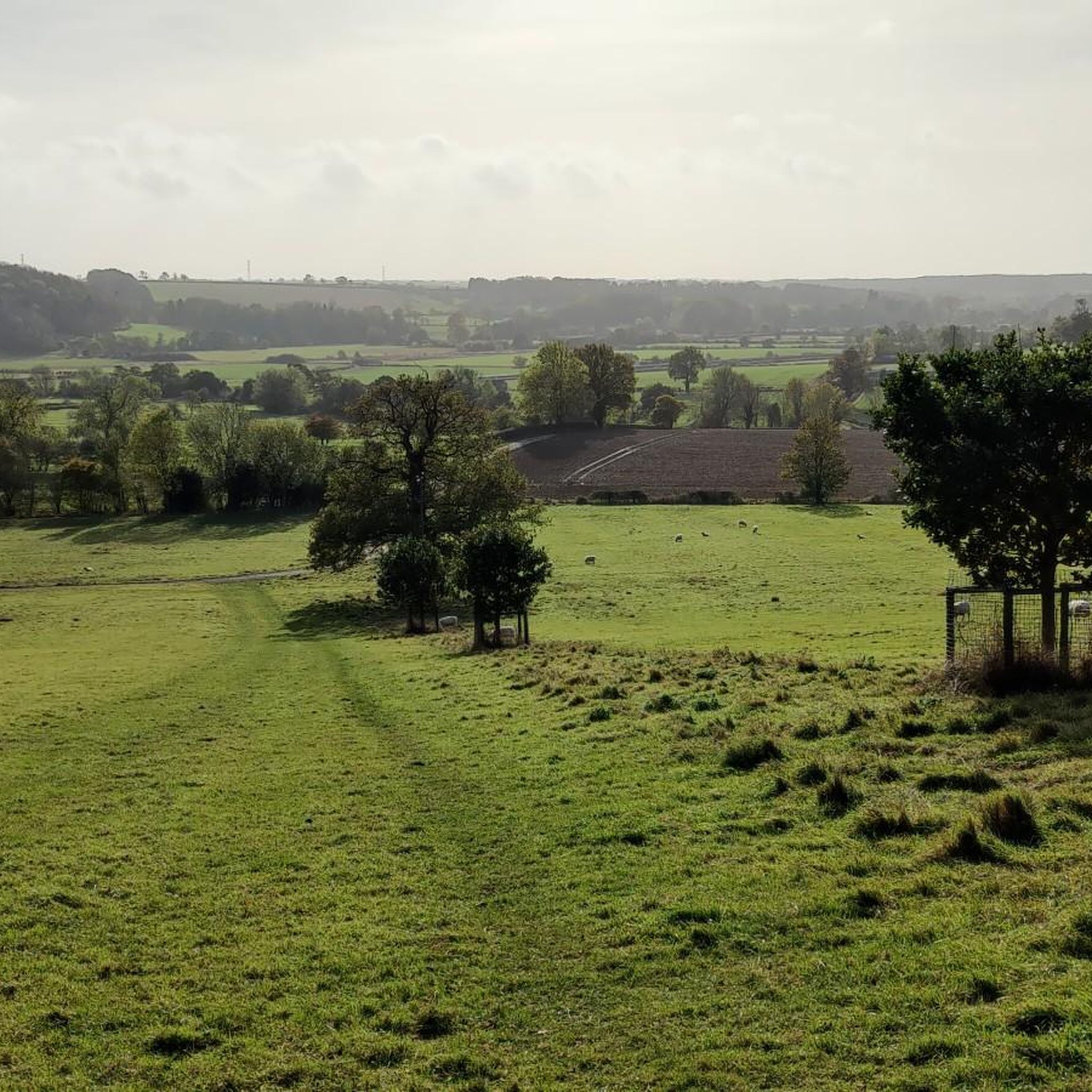
Grassy track over the New River, nice views of the estate and various follies from the bridge. Per historicengland.org: "c1740. By Daniel Garrett for Henry, 4th Earl of Carlisle. Sandstone ashlar. Banded rustication to cutwaters dividing 3 stepped segmental arches each with rusticated voussoirs and a mask keystone to central arch. Niches in tooled architraves with pulvinated friezes and consoles supporting pediments flank the main arch. Brackets support cornice surmounted by low parapet with central balustrade and coping. Ramped approaches have balustrading, rusticated piers to centre, and square-section end piers."
0
0

Micklegate Bar was the most important of York’s four main medieval gateways and the focus for grand events. The name comes from 'Micklelith', meaning great street. It was the main entrance to the city for anyone arriving from the South. At least half a dozen reigning monarchs have passed through this gate and by tradition they stop here to ask the Lord Mayor's permission to enter the city. The lower section of the bar dates from the 12th century, the top two storeys from the 14th. The building was inhabited from 1196. Like the other main gates, Micklegate Bar originally had a barbican built on the front, in this case demolished in 1826. For centuries the severed heads of rebels and traitors were displayed above the gate, the many victims include Sir Henry Purcey (Hotspur) in 1403 and Richard, Duke of York in 1460. The last of the severed heads was removed in 1754.
1
2

Micklegate Bar, the most significant among York's four primary medieval gateways, held a prominent role as the focal point for grand events. Its name, derived from 'Micklelith' meaning 'great street,' aptly reflects its significance. Serving as the primary entrance to the city for those arriving from the South, this historic gate witnessed the passage of numerous reigning monarchs, who adhered to the tradition of seeking the Lord Mayor's permission before entering the city.
3
1
Frequently Asked Questions
What historical sites can I explore directly within Sand Hutton village?
Within Sand Hutton, you can visit St. Mary's Church, built in the 1840s, and the preserved remains of the 12th-century St. Leonard's Church in its churchyard. The village also features the Claxton & Sand Hutton War Memorial and the old gateway to the former Sand Hutton Hall on Hall Drive, offering glimpses into its heritage.
Are there other significant historical landmarks near Sand Hutton?
Yes, the broader area around Sand Hutton is rich in history. You can explore medieval city gates like Micklegate Bar and Walmgate Bar in York, or visit Clifford's Tower, a historic castle keep with a turbulent past. Further afield, the impressive ruins of Kirkham Priory are also worth a visit.
Where can I find natural beauty and woodlands around Sand Hutton?
The Sand Hutton Woodlands, which include Grange Wood (an Ancient Woodland site), offer a great connection to nature. A bridleway passes through White Sike Plantation and along the western edge of Whey Carr Plantation. Additionally, there are numerous fishing pits located both east and west of the village.
Are there opportunities for walking or hiking near Sand Hutton?
Yes, there are several easy hiking routes available. For example, you can find routes like the 'Hiking loop from Stamford Bridge' (5.5 km) or the 'Strensall Common loop from Strensall' (5.4 km). For more options, explore the Easy hikes around Sand Hutton guide.
What cycling routes are available around Sand Hutton?
Sand Hutton is a great base for cycling. You can find road cycling routes such as 'View of York Minster – York Minster loop from Claxton' (44 km) or 'Sand Hutton Village – Scenic Steep Climb loop from Claxton' (52 km). For general cycling, consider routes like 'Great Lake (Castle Howard) – Castle Howard loop from Flaxton' (45.5 km). More details are available in the Road Cycling Routes around Sand Hutton and Cycling around Sand Hutton guides.
Are there family-friendly attractions in the Sand Hutton area?
Yes, several attractions are suitable for families. Clifford's Tower offers a historical experience with great views, and Kirkham Priory Ruins are also considered family-friendly, providing an engaging historical outing.
Can I learn about local heritage through a trail?
Absolutely. The Claxton & Sand Hutton Heritage Trail is an excellent way to explore sites of natural and historic interest across both villages. It covers aspects related to the Walker family of Sand Hutton Hall and the Sand Hutton Light Railway.
Where can I find unique viewpoints or scenic spots?
For scenic views, the new roof deck at Clifford's Tower offers unrivalled panoramas of York's historic skyline. The area around New River Bridge, Castle Howard Estate, is also noted for its beautiful walking opportunities and proximity to the Mausoleum and The Temple of Four Winds.
Are there any hidden gems or lesser-known spots worth visiting?
Beyond the main attractions, consider seeking out the preserved remains of the 12th-century St. Leonard's Church in Sand Hutton's churchyard, supported by metal poles and overgrown with ivy, offering a unique historical glimpse. The old gateway to the former Sand Hutton Hall on Hall Drive also provides a quiet connection to the village's past.
What is the best time of year to visit Sand Hutton?
The best time to visit Sand Hutton generally depends on your preferred activities. Spring and summer offer pleasant weather for exploring the woodlands and heritage trails, while autumn brings beautiful foliage. Historical sites like the churches and the heritage trail are accessible year-round, though some attractions like Kirkham Priory may have limited opening times during the off-season.
What do visitors enjoy the most about attractions near Sand Hutton?
Visitors particularly enjoy the historical depth and scenic beauty. For instance, Micklegate Bar is appreciated for its historical significance as a primary entrance to York, while Walmgate Bar is loved for its unique cafe inside. The New River Bridge, Castle Howard Estate, is noted for its striking appearance and the beautiful walking area surrounding it.
Most popular attractions around Sand Hutton

Get inspired with the komoot mobile app


Explore more
Still not found the Highlight you’re looking for? See guides of the top attractions in other regions:
