Attractions and Places To See around Nicholforest - Top 20
Best attractions and places to see around Nicholforest, a civil parish in Cumbria, England, offer a blend of historical significance and natural beauty. The area is characterized by extensive woodlands and rivers like Liddel Water and Kershope Burn, which form part of the border with Scotland. Visitors can explore sites rooted in its rich Anglo-Scottish border past and enjoy the scenic landscape. Nicholforest provides a tranquil setting for those interested in history and the outdoors.
Best attractions and places to…
Last updated: October 5, 2026
Bewcastle Church and Cross
Highlight • Monument
Translated by Google •
Tip by

Bewcastle Cross in St Cuthbert's Churchyard
Highlight • Religious Site
Translated by Google •
Tip by
Sign up now to discover places like this
Get recommendations on the best single tracks, peaks, & plenty of other exciting outdoor places.
Newcastleton Trails
Highlight • MTB Park
Tip by

Kershope Burn
Highlight • River
The river rises, as Clark's Sike, in a marshy area in Kielder Forest Northumberland …
Tip by

St Cuthbert’s Church, Kirklinton
Highlight • Historical Site
Translated by Google •
Tip by
Sign up for free to discover even more attractions around Nicholforest.
Already have an account?
Start today with a free account
Your next adventure awaits.
Tips from the Community

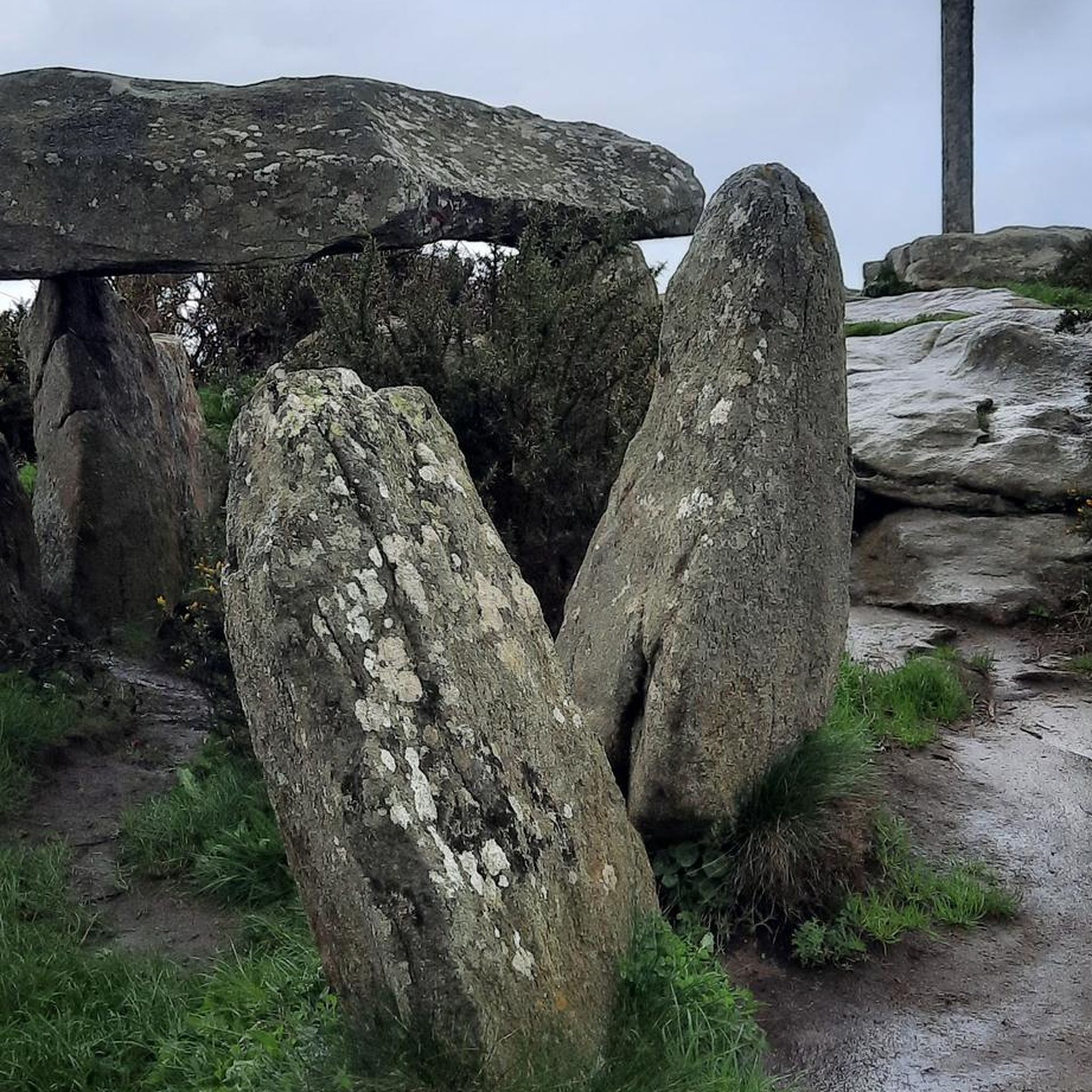
At this small sacred monument, there are several reasons why cyclists should not pass by carelessly, but should linger for a moment: Firstly, the church, together with the surrounding cemetery and the 'Bewcastle Cross' standing on the grounds, form a very harmonious unit. Secondly, when contemplating this cross, one looks far back into history, as its creation is dated to the 7th or 8th century. Thirdly, however – and mainly (!) – the artistic design of the obelisk, which rises to about the lower eaves of the church roof, tapering slightly upwards, is extremely noteworthy ('Amy' and 'Joe' have already described this in their contributions). My personal conclusion: Although the actual cross, which once crowned the obelisk, has long been missing, it is still a noteworthy small sacred monument!
0
0

St Cuthbert Bewcastle Church stands on the foundations of a Roman fort and has roots dating back to the 13th century. Although the current building largely dates from the 18th and 19th centuries, parts of the east chancel are still medieval. The church exudes simplicity and tranquility, with a rectangular plan and a wooden gallery on the west side. Within the church, traces of the Border Reivers' turbulent history can be found, including gravestones bearing names like Armstrong and Routledge.
8
0
St. Cuthbert’s Church in Kirklinton is a characterful village church in north Cumbria, built in 1845 on the site of an older medieval church. The building is constructed of red sandstone with a three-story west tower, featuring battlements, pointed-arch windows, and a 12th-century Norman chancel arch. Inside, you'll find a mix of medieval elements and Victorian details: a vaulted oak roof, stained-glass windows with heraldic motifs from the Dacre-Appleby family, and an Art Nouveau oil lamp set from the Keswick School of Industrial Art. The church also contains funerary monuments from the 17th and 18th centuries, including three aedicules for members of the Appleby family.
8
0
The Bewcastle Cross. This 7th-century Anglo-Saxon cross is one of the oldest and most exquisite in Europe. It still stands in its original location in the church garden and is richly decorated with runes, wickerwork, and Christian iconography. On the west side, you see Christ, John the Baptist with the Lamb of God, and a falconer who may represent John the Evangelist. On the east side, a vine winds upward, populated by mythical and real animals—a symbol of the connection between creation and faith.
10
0
The Kershope Burn is a quiet stream that forms the border between England and Scotland for its entire length. It rises as Clark's Sike in the marshy Hobb's Flow in Kielder Forest, flows past Kershopehead farm, and empties into Liddel Water at Kershopefoot. The burn is a natural boundary, used for centuries as a divide between kingdoms.
1
0
There are several reasons why cyclists should not just pass by this small sacred monument, but rather pause for a moment: Firstly, the church, together with the surrounding cemetery and the "Bewcastle Cross" standing on the grounds, form a harmonious whole. Secondly, contemplating this cross takes one back a long way in history, as its construction is dated to the 7th or 8th century. Thirdly – and most importantly (!) – the artistic design of the obelisk, which rises to approximately the lower eaves of the church roof and tapers slightly towards the top, is extremely remarkable ('Amy' and 'Joe' have already described this in their posts). My personal conclusion: Although the actual cross that once crowned the obelisk has long been missing, it is still a remarkable small sacred monument!
3
0


St Cuthbert’s is a pretty church in the hamlet of Kirklinton. The original Church of St Cuthbert was constructed around 1374 but it was replaced with the present building in 1845. The only surviving feature are the original Norman doors in the west wall.
3
0
Frequently Asked Questions
What historical sites can I explore around Nicholforest?
The area is rich in history, particularly related to its Anglo-Scottish border past. You can visit the Bewcastle Church and Cross, which stands on the foundations of a Roman fort, and the nearby Ruins of Bewcastle Castle, a significant border defense. Other historical landmarks include Stonegarthside Hall, a 13th-century tower house, and the Church of St. Nicholas, rebuilt in the Gothic style in 1866-67.
Are there any ancient monuments to see near Nicholforest?
Yes, a prominent ancient monument is the Bewcastle Cross in St Cuthbert's Churchyard. This 7th-century Anglo-Saxon cross is considered one of the oldest and most exquisite in Europe, richly decorated with runes, wickerwork, and Christian iconography. It stands in its original location and offers a deep dive into early medieval history.
What natural features define the landscape around Nicholforest?
Nicholforest is characterized by its tranquil natural beauty. The parish lies along the Liddel Water and Kershope Burn, both of which form part of the border with Scotland. The landscape is hilly, with streams known for forming several cascades. The area also features extensive, sparsely populated woodlands, much of which is managed for commercial forestry.
Where can I go mountain biking near Nicholforest?
For mountain biking enthusiasts, the Newcastleton Trails are a must-visit. These trails are part of the internationally renowned 7 Stanes network in Scotland, offering both blue and red routes, as well as the Cross Border Trail bridleway. You can find various MTB routes, including the 'Newcastleton Red and Blue Route Loop' and 'Forest Road loop from Newcastleton', by exploring the MTB Trails around Nicholforest guide.
Are there hiking opportunities in the Nicholforest area?
Absolutely. Nicholforest and its surroundings offer several hiking opportunities. You can find trails like the 'Blackburn Falls and Bedda Cleuch loop from Newcastleton' or the 'Newcastleton Woodland Walk'. For more detailed options, refer to the Hiking around Nicholforest guide, which lists various routes with different difficulty levels.
What is the significance of the rivers in Nicholforest?
The rivers in Nicholforest, particularly the Liddel Water and Kershope Burn, are historically and geographically significant as they form part of the border between England and Scotland. The Kershope Burn, for instance, runs its entire length along this border, flowing into Liddel Water at Kershopefoot. These rivers have shaped the landscape and played a role in the region's border history.
Are there family-friendly attractions or activities around Nicholforest?
Yes, several attractions are suitable for families. The Bewcastle Cross in St Cuthbert's Churchyard is listed as family-friendly, offering an engaging historical experience. The Ruins of Bewcastle Castle also provide an interesting historical site for families to explore, set amidst peaceful nature where sheep graze.
What is the history behind Bewcastle Castle?
The Ruins of Bewcastle Castle have a long and turbulent history. Originally built around 1092 on the foundations of a Roman fort, it served as a crucial border defense against Scottish incursions. Destroyed in 1173, it was rebuilt in the 14th century. The castle played a role in conflicts with the Border Reivers and was strategically located on the Maiden Way, a Roman road. Today, its ruins are a powerful symbol of medieval architecture and border defense.
What do visitors particularly appreciate about the attractions around Nicholforest?
Visitors to Nicholforest's attractions appreciate the blend of historical significance and natural beauty. The Bewcastle Church and Cross is noted for its simplicity and tranquility, while the Bewcastle Cross is admired for its artistic design and deep historical roots. The Newcastleton Trails are popular for their well-maintained mountain biking routes and the unique experience of crossing the border between Scotland and England.
Are there any Roman sites accessible from Nicholforest?
While Nicholforest itself is not a Roman site, its proximity to Hadrian's Wall means several significant Roman sites are within reasonable distance. These include Birdoswald Roman Fort, Hare Hill with its well-preserved section of Hadrian's Wall, Lanercost Priory, Banks East Turret, and Pike Hill Signal Tower. Carlisle Castle, a medieval fortress, also has Roman connections as it was built on a Roman site.
What is the best time of year to visit Nicholforest for outdoor activities?
The best time to visit Nicholforest for outdoor activities generally aligns with milder weather. Spring and summer (April to September) offer more pleasant temperatures for hiking, mountain biking, and exploring historical sites. Autumn can also be beautiful with changing foliage, though weather can be more unpredictable. Winters can be cold and wet, making some trails more challenging.
Can I find gravel biking routes near Nicholforest?
Yes, the area around Nicholforest offers gravel biking opportunities. You can explore routes like the 'Kershope Burn Border Crossing – Newcastleton Trails loop from Newcastleton' or longer rides such as the 'Lakeside Way – Kielder Viaduct loop'. For a comprehensive list of routes and their difficulties, check the Gravel biking around Nicholforest guide.

Get inspired with the komoot mobile app


Explore more
Still not found the Highlight you’re looking for? See guides of the top attractions in other regions:
