The best running trails around Bridekirk
4.4
(39)
3,685
runners
286
runs
Jogging routes around Bridekirk offer access to diverse landscapes, from serene countryside to more challenging terrains. The region is characterized by a limestone ridge, the steep valley of the River Derwent, and farmland dotted with woodlands. Joggers can experience expansive views of distant mountains and the sea from various footpaths. The area's proximity to the Lake District National Park provides glimpses of its fells, enhancing the scenic beauty of the running experience.
Best jogging routes around Bridekirk
- The most popular…
Last updated: April 28, 2026
5.0
(2)
84
runners
22.2km
02:20
200m
200m
Hard run. Very good fitness required. Mostly paved surfaces. Suitable for all skill levels.
43
runners
9.97km
01:09
180m
180m
Moderate run. Good fitness required. Mostly paved surfaces. Suitable for all skill levels.

Sign up for free
34
runners
Moderate run. Good fitness required. Mostly paved surfaces. Suitable for all skill levels.
29
runners
8.25km
00:57
130m
130m
Moderate run. Good fitness required. Mostly paved surfaces. Suitable for all skill levels.
21
runners
Moderate run. Good fitness required. Mostly paved surfaces. Suitable for all skill levels.
Get access to more routes and recommendations from other explorers.
Sign up for free
Already have an account?
Our route recommendations are based on thousands of hikes, rides, and runs completed by other people on komoot.
Start today with a free account
Your next adventure awaits.
Login or Signup

Tips from the Community

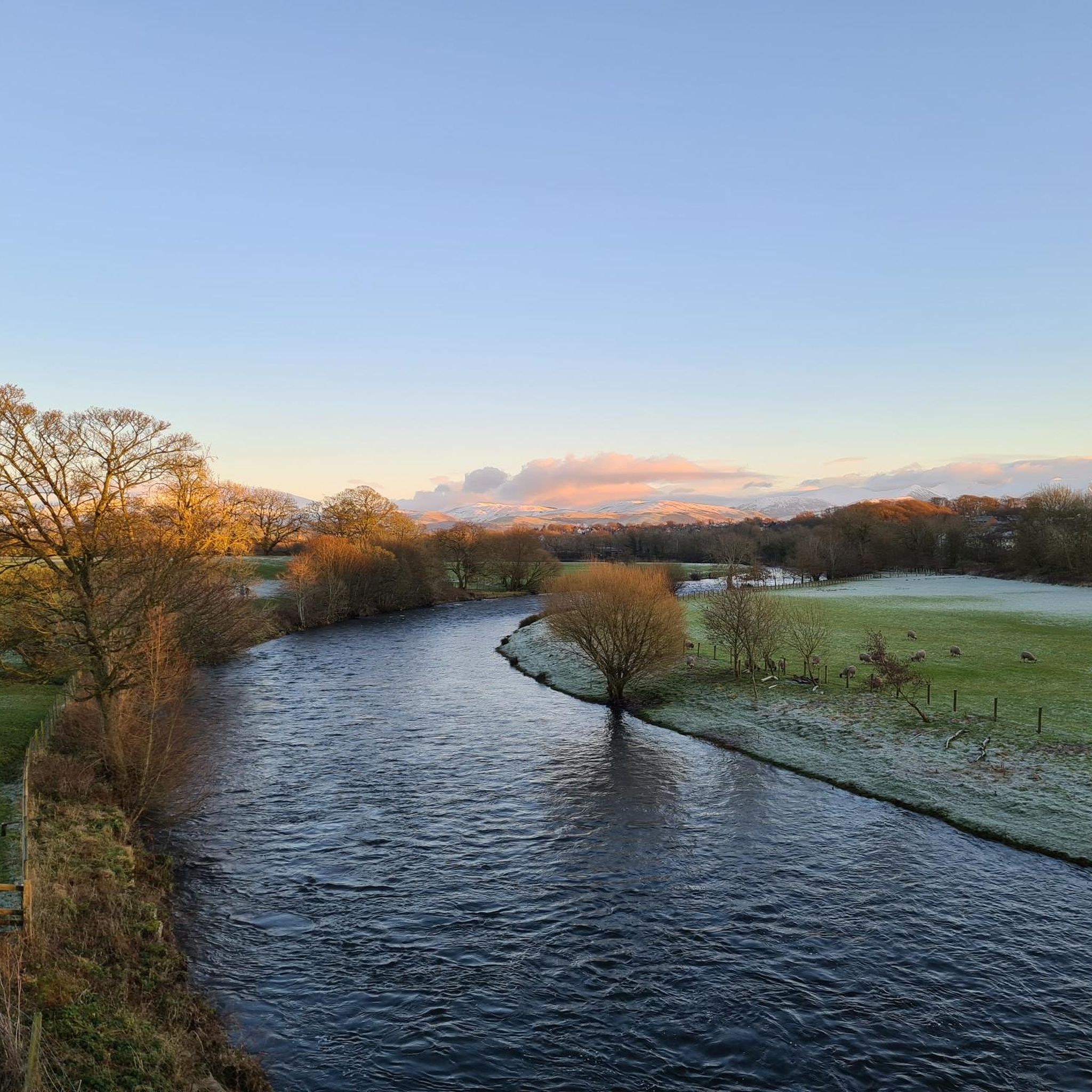
Millers Bridge, also known as Harris Bridge, is a steel pedestrian bridge over the River Derwent in Cockermouth, Cumbria, connecting the northern and southern parts of the city. The original structure was destroyed by severe flooding in 2009, and the bridge was rebuilt in 2010 with modified foundations to address changes in the riverbank caused by erosion. The reopening by HRH The Princess Royal underscored the importance of this connection to the local community. As a functional infrastructure, the bridge not only provides pedestrian access but also views of the surrounding landscape.
9
0
Wordsworth House rises majestically on Main Street in Cockermouth, a charming town on the edge of the Lake District. Built around 1745, the house reflects the understated grandeur of Georgian architecture: a perfectly symmetrical façade of sand-colored bricks, tall rectangular windows with classically framed woodwork, and an ornate yet understated doorway that evokes the sense of order and proportion characteristic of this period. The poet William Wordsmouth was born here in 1770.
9
0

The pre-Victorian centre of old Cockermouth, Market Place is the heart of the old town.
0
0

There is a bumpy, small rock boulder track for maybe a couple of miles at this location. The bumps make the bike vibrate and slow motion down, your arms get well exercised riding through this area
0
0
Millers Bridge, as it is known in Cockermouth (official maps refer to it as Harris Bridge), was reopened in 2010 by HRH the Princess Royal after it had suffered severe damage in the 2009 floods and a section of it collapsed into the River Derwent. Part of the steel bridge had to be rebuilt to fit the new shape of the river banks, which were heavily eroded during the floods and have now been fortified.
0
0
Standing just above the River Cocker and below All Saints Church is Cockermouth Town Hall. Originally built in 1840 as the Wesleyan Methodist Chapel and now Grade II listed, the Georgian building was converted to be used as the Town Hall in 1934. It is now used as a Wedding Venue in the ceremony room.
0
0
Built on a high wooded knoll that formed much of the old town of Cockermouth and is now the east end of the town centre, All Saints is in two ways the high Anglican church in the town. There has been a church here since at least 1395 but an 11th century one was probably there earlier. A new church was built in 1771 as part of the expansion of the eighteenth century old town. That burnt down in 1850 and the current church was built in 1854.
0
0
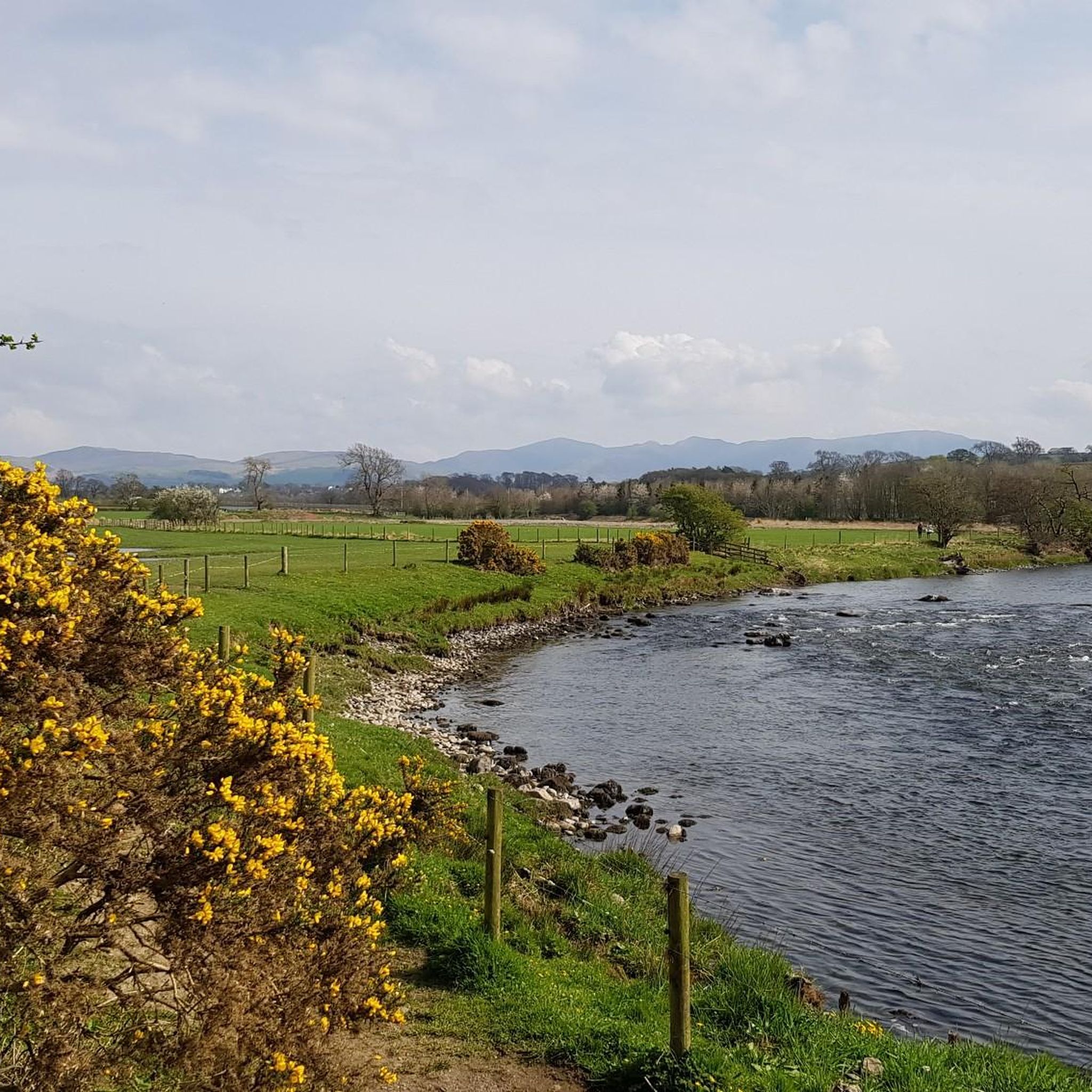
The River Cocker drains Buttermere, Crummock Water and Loweswater as well as all the surrounding fells. It leaves Crummock Water and passes down the Lorton Vale before passing through a gorge into Cockermouth. It joins the River Derwent in the town hence the town’s name.
0
0
Frequently Asked Questions
How many running routes are available around Bridekirk?
There are over 290 running routes around Bridekirk, offering a wide variety of options for different preferences and fitness levels. These include easy, moderate, and difficult trails.
What kind of terrain can I expect on running trails near Bridekirk?
The area around Bridekirk offers diverse terrain, from serene countryside paths to more challenging fell runs. You'll find a mix of mostly paved surfaces, accessible paths, riverside routes along the River Derwent, and trails with significant elevation gain as you approach the Lake District National Park.
Are there easy running routes suitable for beginners in Bridekirk?
Yes, Bridekirk offers a good selection of easy running routes. There are 25 routes classified as easy, providing gentler paths suitable for beginners or those looking for a less strenuous run. These often feature flatter sections and accessible surfaces.
Are there any circular running routes in the Bridekirk area?
Many of the running routes around Bridekirk are circular, allowing you to start and finish at the same point. For example, the Caldron Dub loop from Cockermouth is a popular moderate circular trail. The wider Lake District also offers circular options, such as combining Fellbarrow and Low Fell for impressive views.
What do other runners say about the trails in Bridekirk?
The running routes in Bridekirk are highly rated by the komoot community, with an average score of 4.4 stars from more than 30 reviews. Over 3,700 runners have used komoot to explore the varied terrain, often praising the diverse landscapes and well-maintained paths.
Can I find running routes with scenic viewpoints around Bridekirk?
Absolutely. The region, being close to the Lake District, offers numerous opportunities for scenic views. Highlights like Broom Fell Summit Cairn, Summit shelter at Whinlatter (Brown How), and Binsey Summit provide stunning panoramas that can be incorporated into longer runs or enjoyed as part of a varied outdoor experience.
Are there running trails near water, such as rivers or lakes?
Yes, Bridekirk's location near the River Derwent provides opportunities for scenic riverside jogs on relatively flat paths. Further afield in the Lake District, stunning bodies of water like Buttermere and Crummock Water offer picturesque settings with extensive footpath networks ideal for longer runs.
Are the running trails around Bridekirk dog-friendly?
Many trails in the Bridekirk area and the wider Lake District are dog-friendly, following public footpaths and bridleways. However, it's always recommended to keep dogs under control, especially near livestock, and to check for any specific restrictions on individual routes or in nature reserves. Please ensure you clean up after your dog.
Are there any running routes that pass by notable natural features or landmarks?
Yes, the area is rich in natural features. You can find routes that offer views of prominent fells like Fellbarrow Summit. While not directly on a running route in the guide, the impressive Scale Force Waterfall in the broader Lake District can be a rewarding destination to incorporate into a longer outdoor excursion.
What is the longest running route available near Bridekirk?
One of the longer and more challenging running routes is the Lorton Village Shop – View Towards Buttermere loop from Cockermouth. This difficult trail spans 13.8 miles (22.2 km) and features a notable elevation gain, typically taking around 2 hours 20 minutes to complete.
Are there any running routes that are particularly good for a moderate workout?
For a moderate workout, consider routes like the Hills Wood – Tute Hill loop from Cockermouth. This 6.3-mile (10.1 km) path winds through wooded areas and offers views of the surrounding countryside, providing a good balance of distance and elevation.
Can I find running routes that are relatively flat for a relaxed run?
Yes, for a more relaxed and flatter run, you might enjoy routes along the River Derwent or those within the more immediate countryside around Bridekirk. The The River Cocker in Cockermouth – Millers Bridge (Cockermouth) loop from Cockermouth is a moderate 3.4-mile route with minimal elevation gain, perfect for a gentle jog.
Most popular attractions around Bridekirk

Get inspired with the komoot mobile app


Explore more
Browse the best Running Trails & Routes in other regions.
