Attractions and Places To See around Strathkinness - Top 20
Best attractions and places to see around Strathkinness include historical sites and natural landscapes in North East Fife. This small village, located west of St Andrews, provides a tranquil base with local amenities. The region offers access to a variety of landmarks, natural features, and cultural sites.
Best attractions and places to see around Strathkinness
- The most popular attractions is St Andrews Cathedral Ruins, a historical site that was once Scotland's largest church. These ruins near the sea were…
Last updated: May 4, 2026
St Andrews Cathedral Ruins
Highlight • Historical Site
Tip by

St Andrews Castle
Highlight • Castle
Tip by

Sign up now to discover places like this
Get recommendations on the best single tracks, peaks, & plenty of other exciting outdoor places.
Sign up for free
Morton Lochs Bird Hide
Highlight • Structure
Tip by
Tentsmuir Forest
Highlight (Segment) • Viewpoint
Tip by

St Andrews War Memorial
Highlight • Monument
Translated by Google •
Tip by

Sign up for free to discover even more attractions around Strathkinness.
Sign up for free
Already have an account?
Start today with a free account
Your next adventure awaits.
Login or Signup
Tips from the Community

Saint Andrew, to whom this former church—whose ruins still serve as a picturesque backdrop—was dedicated, belongs to the circle of the twelve apostles whom Jesus Christ called to follow him. However, in biblical accounts, he is usually somewhat overshadowed by his far more famous brother, Saint Peter. The Gospels present the calling of the two brothers in different ways. According to the Gospel of John (John 1:40-42), Andrew is called first (together with another unnamed disciple). Later, he tells his brother that he has found the Messiah. In Scotland, however, Saint Andrew is particularly venerated, as he is the patron saint of the country, and the X-shaped white "St. Andrew's Cross," on which he was executed, forms the Scottish national flag against a blue background. The feast day of Saint Andrew is celebrated on November 30th in all major Christian denominations.
0
0

Admission was free - really worth seeing!
0
0


It's astonishing how "new" the graves, or rather the inscriptions on the gravestones, are, given that the church was abandoned during the Scottish Reformation in the 16th century. There are at least inscriptions from recent years. We set out to find the oldest date possible, although we were far from able to verify all of them. On a wall inscription in the east, toward the old bell tower, we found 1708, and on a nearby gravestone, 1712. We didn't find any older ones, or some were weathered and unreadable.
1
0


St Andrews Cathedral is the ruin of a cathedral in the Scottish town of St Andrews in the council area of Fife. The complex, located near the North Sea shore near St Andrews Castle in the historic centre of St Andrews, was central to the development of the town and its status as the Christian centre of Scotland.[1] Numerous buildings are individually listed and the entire complex is classified as a Scheduled Monument.[2] It is one of the Guardianship Monuments of Historic Scotland.[3] St Andrews Cathedral is not to be confused with the Cathedral Church of St Andrew in Inverness.
1
0
As a memorial to the many dead, such memorials - usually called "war memorials" in English - are still very important today. "Now, Lord, you let your servant depart in peace, as you have said..." says the so-called "Hymn of Simeon" (Luke's Gospel, Chapter 2, Verse 29). However, the people commemorated here did not depart in peace, but became victims of war and tyranny. This is why the term "dead soldiers' memorial" is now sometimes used in German instead of the previously most common "war memorial". However, such a war memorial, which one encounters so often on the road, regardless of nationality, language and name, is always a testimony - still significant and current today - to the horror of war and tyranny. They all have two essential functions, and this for each generation anew: -1- Commemorate and remember the victims -2- Remind people to keep the peace
0
0

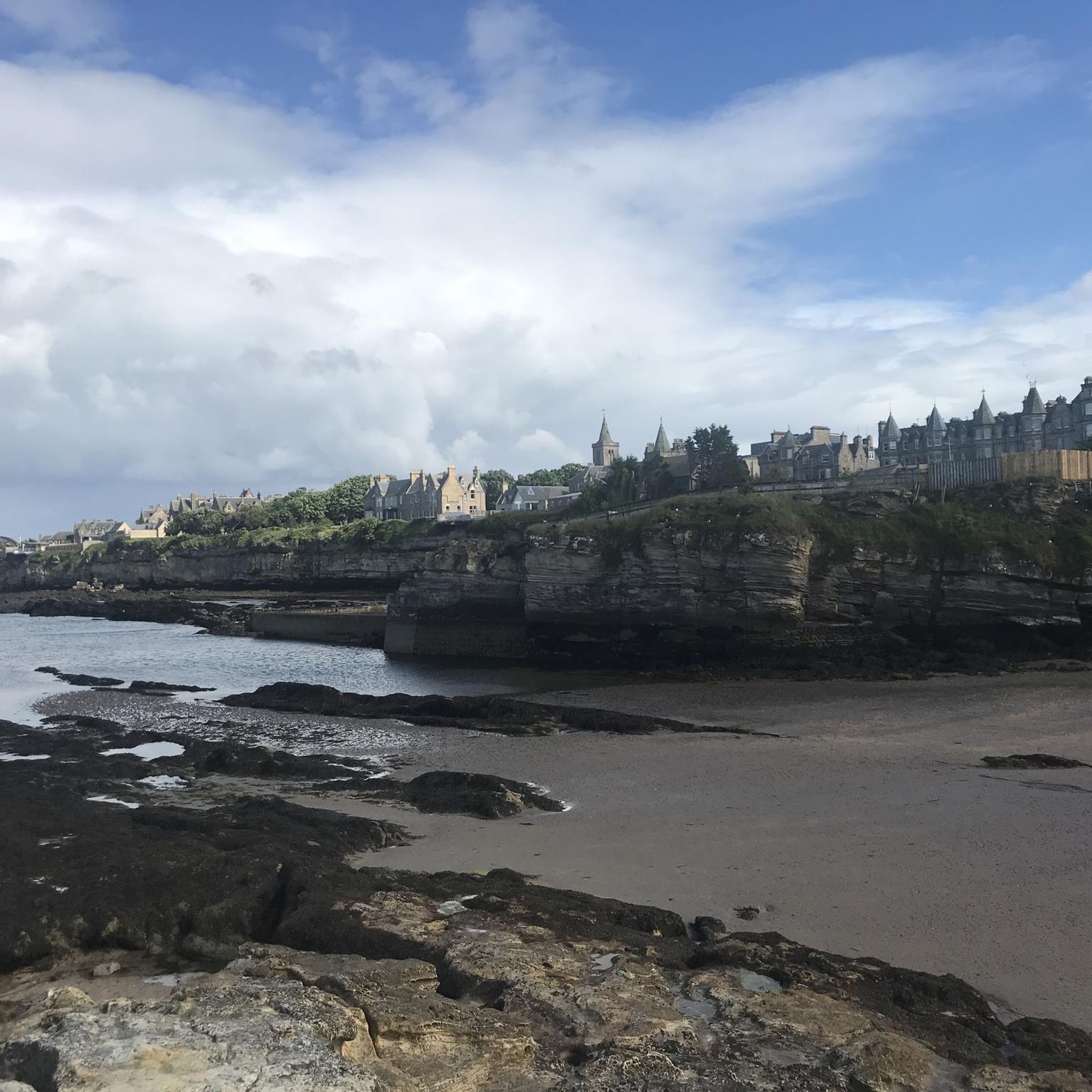
The biggest church ever built in Scotland, the Cathedral of St Andrews is now a fantastic ruin a stone's throw from the sea. Built in 1158, it was the heart of Scotland's Catholicism but fell into disuse after the Scottish Reformation in the 16th century. The ruins are stunning, and well worth exploring.
3
0
Frequently Asked Questions
What historical sites can I explore near Strathkinness?
Near Strathkinness, you can visit significant historical sites such as the St Andrews Cathedral Ruins, once Scotland's largest church and a center of the Medieval Catholic Church. Another notable site is St Andrews Castle, a coastal ruin with a nearly 500-year history as a palace, fortress, and prison. Within Strathkinness itself, the Strathkinness Parish Church has a history dating back to at least 1708.
Are there natural areas for walking and cycling around Strathkinness?
Yes, Tentsmuir Forest is a beautiful natural area situated by the sea, offering paved and gravel tracks ideal for walking and cycling. The wider Fife area also boasts numerous beaches and lakes for outdoor activities.
What family-friendly attractions are available in the Strathkinness area?
For families, Craigtoun Country Park in St Andrews is a popular attraction with various activities and play areas. The St Andrews Aquarium offers an indoor and outdoor experience focused on marine life, suitable for all ages. Many of the natural sites like Tentsmuir Forest and Morton Lochs Bird Hide are also suitable for family outings.
Can I find hiking trails near Strathkinness?
Absolutely. The region around Strathkinness is popular for hiking. You can find various routes, including the 'St Andrews Castle – St Andrews Harbour loop' or the 'Lade Braes Walk – Law Mill Pond loop'. For more detailed options, explore the hiking guide for Strathkinness.
What cycling opportunities are there around Strathkinness?
Cycling is a great way to explore the area. Tentsmuir Forest has excellent paved and gravel tracks. You can find routes like the 'Bike loop from St Andrews' or the 'Tentsmuir Forest – Tayport Heath Gravel Path loop'. For more cycling routes, refer to the cycling guide for Strathkinness.
Are there any unique historical structures to visit, beyond castles and cathedrals?
Yes, you can visit the Tayport Ice House, built in 1852. This unique structure was used for storing locally caught salmon and offers insight into past fishing practices in the region.
Where can I observe wildlife or birds near Strathkinness?
The Morton Lochs Bird Hide, located within Tentsmuir National Nature Reserve, is an excellent spot for birdwatching. It consists of three small lochs important for various waterfowl species, especially wintering wildfowl like teal.
What local amenities does Strathkinness village offer?
Strathkinness village provides a tranquil base with local amenities including two large parks with play areas, a pub with a restaurant, and several bed and breakfasts. There is also a campsite located about a mile towards Pitscottie.
What is the best time of year to visit Strathkinness for outdoor activities?
The region around Strathkinness is enjoyable for outdoor activities throughout much of the year. Spring and summer offer pleasant weather for walking, cycling, and exploring natural areas like Tentsmuir Forest. Autumn provides beautiful scenery, while winter can offer crisp, quiet walks, though some paths might be affected by weather.
Are there any dog-friendly outdoor spaces near Strathkinness?
Many outdoor areas in Fife are dog-friendly. Tentsmuir Forest and the surrounding beaches are popular choices for walks with dogs, though it's always advisable to check local signage for specific rules regarding dogs, especially in nature reserves like Morton Lochs.
What kind of accommodation is available in Strathkinness?
Strathkinness offers several bed and breakfasts for visitors seeking accommodation. Additionally, there is a campsite situated approximately a mile along the High Road towards Pitscottie for those preferring a more outdoorsy stay.
Are there any easy walking routes suitable for all abilities near Strathkinness?
Yes, there are easy walking routes available. For example, the 'St Andrews Castle – St Andrews Harbour loop' is rated as easy. Many paths within Tentsmuir Forest are also relatively flat and accessible, making them suitable for various abilities. You can find more options in the hiking guide for Strathkinness.

Get inspired with the komoot mobile app


Explore more
Still not found the Highlight you’re looking for? See guides of the top attractions in other regions:
