The best MTB trails in Haunstetter Wald
4.6
(2164)
9,099
riders
563
rides
Mountain bike trails in Haunstetter Wald are primarily found within the Augsburg city forest and the larger Augsburg-Western Woods Nature Park. This region is characterized by extensive forests, diverse wetlands, and several lakes and creeks, offering varied terrain for cycling. The landscape includes gravel banks, heathlands, and areas shaped by the Lech River and its tributaries, providing a mix of flat and gently undulating paths. While the elevation gain is generally low, the network of trails caters to different skill…
Last updated: June 27, 2026
11
riders
23.8km
01:17
40m
40m
Easy mountain bike ride. Great for any fitness level. Suitable for all skill levels.
4.7
(11)
47
riders
Easy mountain bike ride. Great for any fitness level. Suitable for all skill levels.

Sign up for free
4.3
(3)
23
riders
32.2km
01:49
100m
90m
Easy mountain bike ride. Great for any fitness level. Suitable for all skill levels.
5.0
(1)
6
riders
36.6km
02:36
300m
300m
Moderate mountain bike ride. Good fitness required. Advanced riding skills necessary.
5.0
(2)
14
riders
45.0km
02:58
230m
230m
Moderate mountain bike ride. Good fitness required. Advanced riding skills necessary.
Get access to more routes and recommendations from other explorers.
Sign up for free
Already have an account?
Our route recommendations are based on thousands of hikes, rides, and runs completed by other people on komoot.
Start today with a free account
Your next adventure awaits.
Login or Signup
Tips from the Community

The original Church of St. John the Baptist was probably the baptismal church of an original parish, as its name suggests. Parts of the tower base date back to the 13th century. Remains of an even earlier building are unknown. In 1747, the church was remodeled in the Baroque style. However, when the nave collapsed at the end of the 19th century, a large portion of the frescoes and stucco decorations were destroyed. From 1953 to 1955, the nave was completely rebuilt. The choir was spared from the nave's collapse.
0
0

What is the current situation in Derching?
0
0


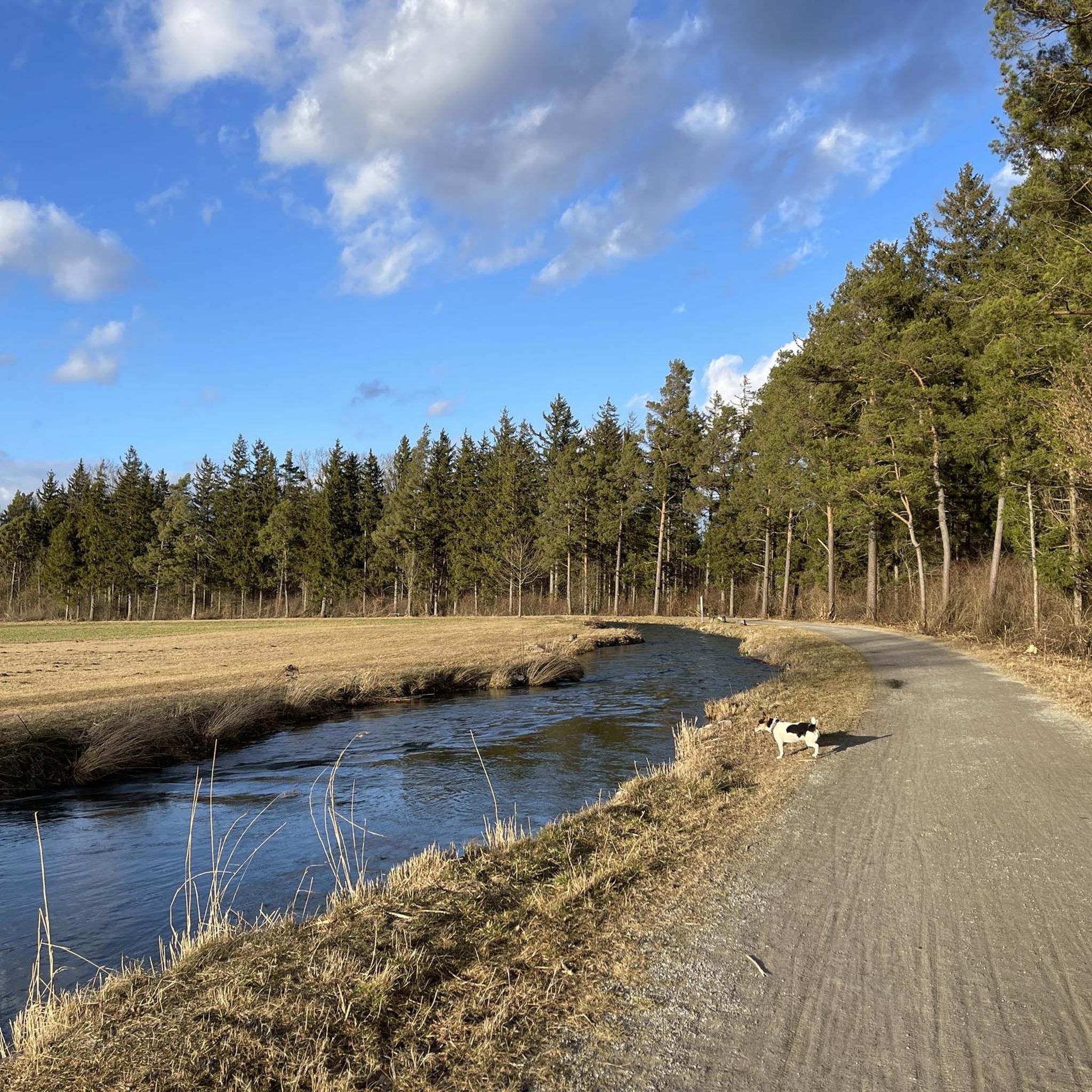
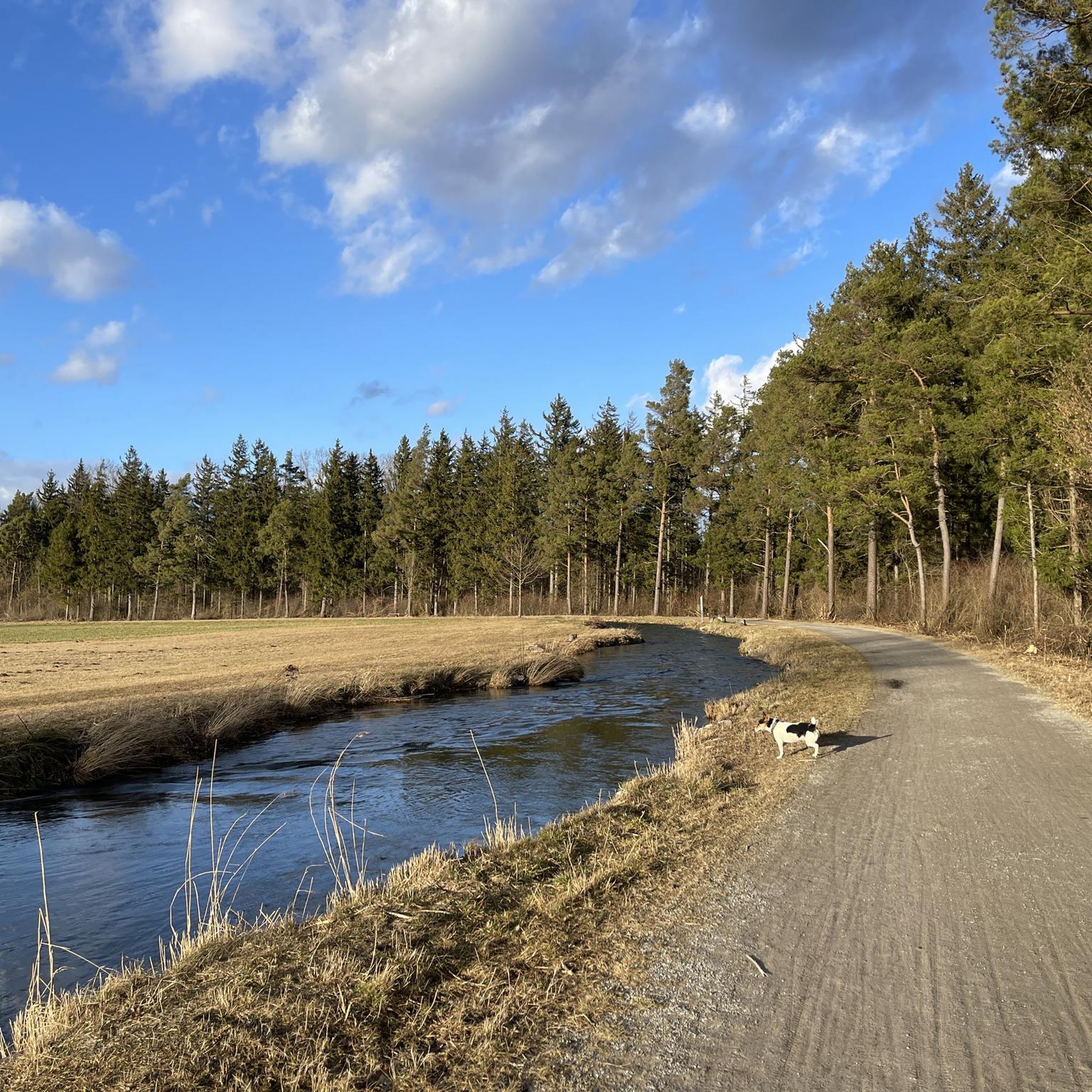
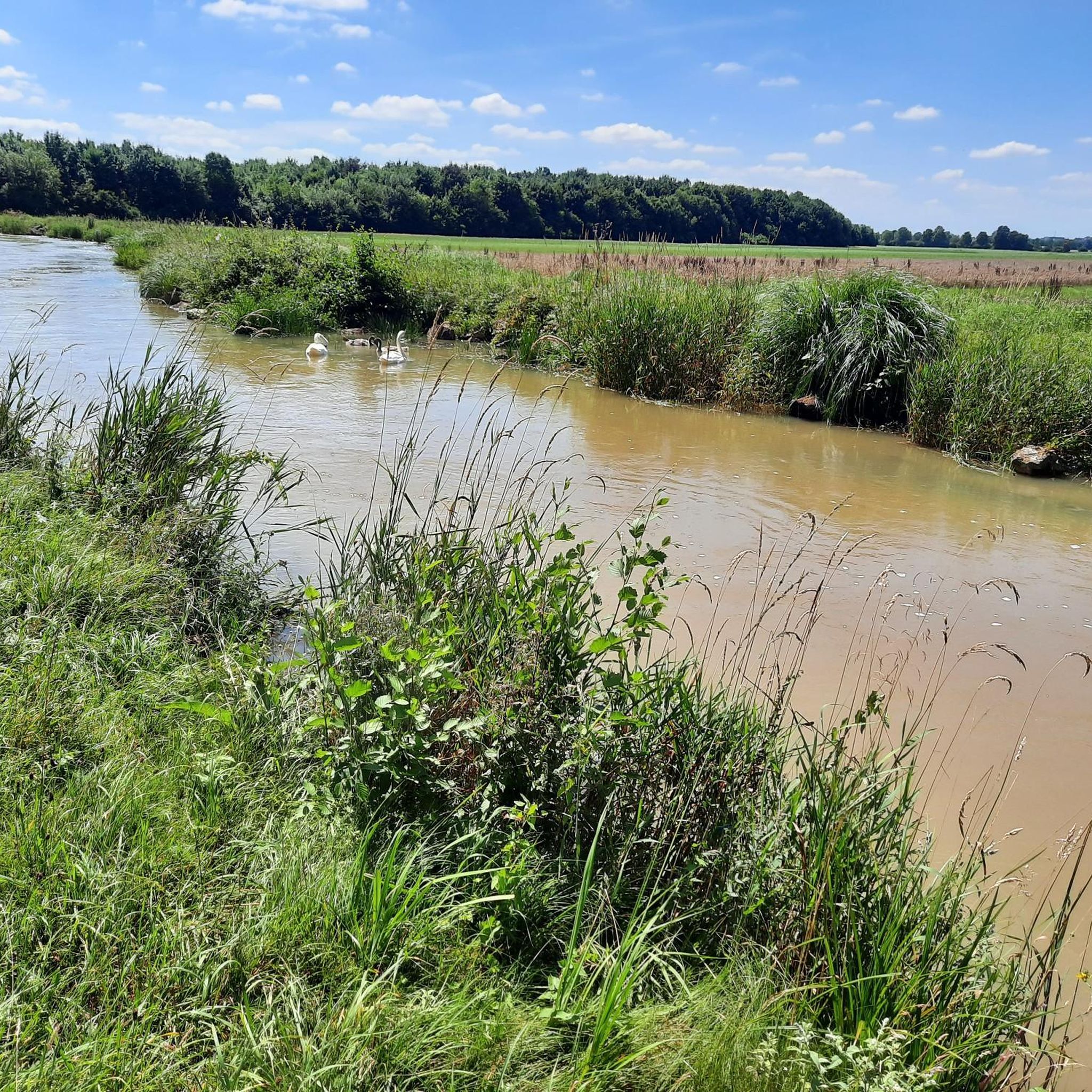
Renaturation of the Lochbach in the Augsburg city forest
1
0

When the trees are gone, it's a really nice, flowing trail.
1
0

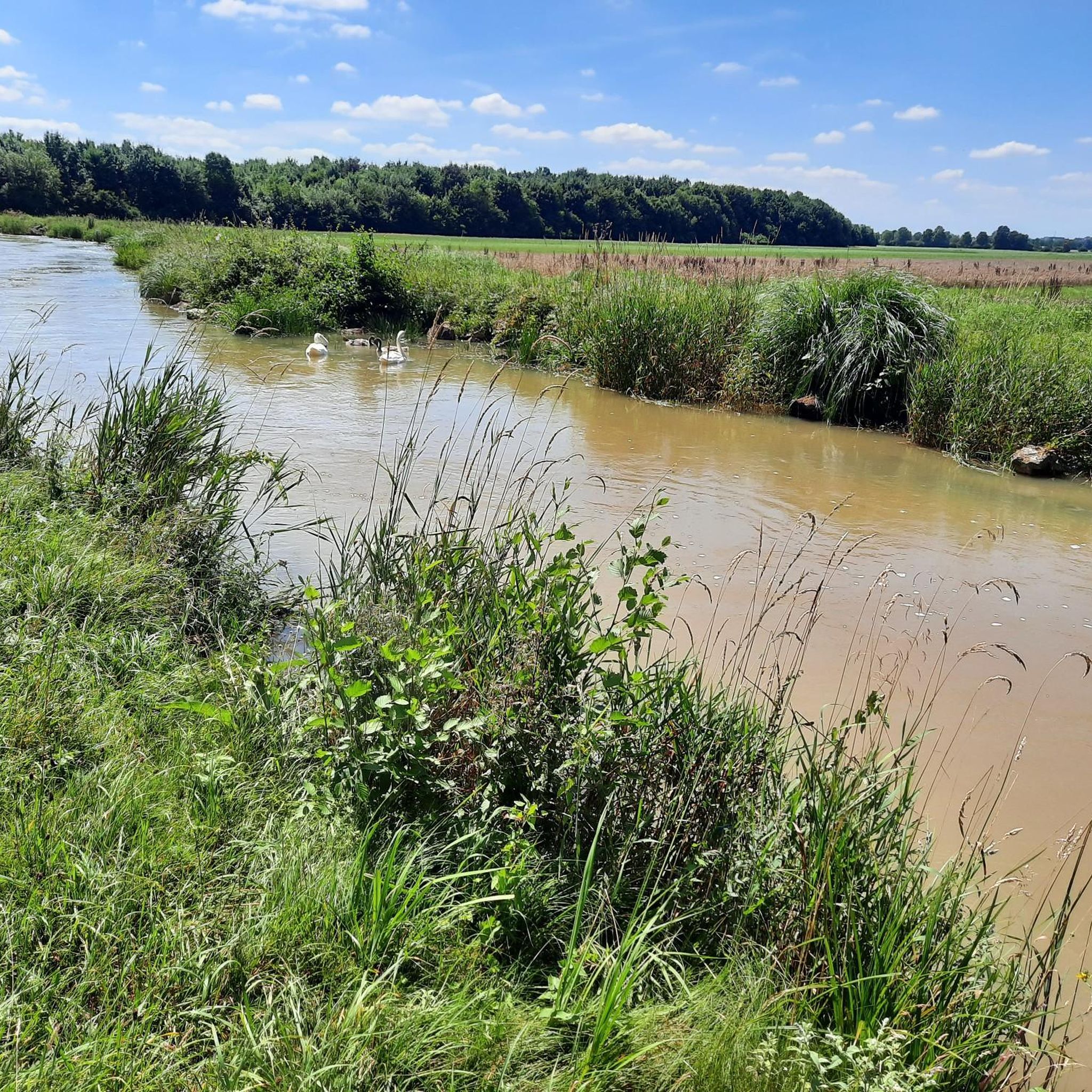
Very overgrown in summer. Good to drive in spring and autumn☺️
0
0

The Schaezler fountain is located at the southern end of the Siebentischanlagen in Augsburg, near the transition to the Siebentischwald. It was built in 1908 in honor of Edmund Freiherr von Schaezler, who financially supported the expansion of the Siebentischanlagen.  The fountain consists of an arched portal about six meters high, which is crowned by a Swiss stone pine. Below the arch there is a wall with a shell limestone basin in front of it. The complex was designed by the Augsburg sculptor Jakob Rehle.  Originally the Schaezler fountain was part of a symmetrically laid out green area with a small oak avenue, which was known as the “Green Basilica”. This design was intended to replicate the floor plan of a church, with the fountain taking the position of the altar. In 2011 the complex was restored to restore this historical concept.  Today the Schaezler fountain serves as a popular excursion destination and invites visitors to linger in the midst of nature. Its historical significance and unique design make it a special place in the Augsburg city area.
1
0
Friedberg, located in the Bavarian-Swabian district of Aichach-Friedberg, looks back on a rich and eventful history. Foundation and Middle Ages: The city was founded in 1264 by Duke Ludwig II the Strict as a border fortress against the free imperial city of Augsburg. The aim was to secure Bavarian interests and control the Lech crossing. However, the strategic location led to tensions with Augsburg, which led to the destruction of Friedberg by Augsburg troops in 1396. Early modern period: In the 16th century, Friedberg experienced an economic boom under Duke Wilhelm IV. The opening of the Taxis postal line Augsburg-Prague around 1526 promoted trade. The city benefited from customs revenues and was given the right to hold weekly markets. In 1568, Duchess Christine of Lorraine chose Friedberg Castle as her widow's residence, which revitalized cultural life. Thirty Years' War and reconstruction: During the Thirty Years' War (1618-1648), Friedberg suffered considerable destruction. After the war, reconstruction began, and the city developed into a center of watchmaking in the 18th century. Friedberg watches gained an international reputation, and gold and silversmiths also contributed to prosperity. 19th and 20th centuries: With secularization in 1803, Friedberg lost its importance as a border fortress. Industrialization brought new economic impulses. During World War II, the city was largely spared destruction. After the war, Friedberg experienced steady growth and developed into a modern city with historical charm. Cultural heritage: The Wittelsbach Castle, originally a medieval castle, was rebuilt in the Renaissance style after a fire in 1541. Today it houses the Wittelsbach Castle Museum, which presents the history of the city and its craftsmanship. Friedberg thus combines historical significance with cultural heritage and is a living testimony to Bavarian history.
1
0
Frequently Asked Questions
How many mountain bike trails are available in Haunstetter Wald?
Haunstetter Wald offers a wide network of mountain bike trails, with over 590 routes available. This includes a diverse range of options, from easy paths to more challenging singletracks, catering to various skill levels.
What are the typical difficulty levels for mountain biking in Haunstetter Wald?
The trails in Haunstetter Wald cater to all skill levels. You'll find approximately 210 easy routes, 357 moderate routes, and 23 more difficult trails. This variety ensures there's something for everyone, from casual riders to experienced mountain bikers.
Are there mountain bike routes suitable for beginners or families in Haunstetter Wald?
Yes, Haunstetter Wald is very family-friendly and offers numerous routes suitable for beginners. Many trails are green-difficulty singletracks, indicating an easy physical rating. An example of a moderate route that can be suitable for those looking to progress is the Beginner-Friendly Forest Trail – Malzenhaus Trail loop from Kissing.
What natural features or attractions can I see while mountain biking in Haunstetter Wald?
The Haunstetter Wald is rich in natural beauty. You can explore diverse forests, heathlands, and wetlands. Notable water features include the Lech River with its distinctive turquoise color, and lakes like Mandichosee, Ilsesee, and Lautersee. You might also encounter various brooks and waterways such as the Lochbach and Mühlbach. Highlights include the Lech River Weir Near Mering and the Riparian Forest at Südlicher Mühlbach and Lochbach.
Are there any waterfalls along the mountain bike trails in Haunstetter Wald?
Yes, the region features several waterways, and you can find a notable Waterfall on the Alter Flossgraben. The Lochbach area is also known for small waterfalls and beaver activity, adding to the natural charm of the trails.
Where can I spot wildlife in Haunstetter Wald?
The diverse ecosystems of Haunstetter Wald, including its forests, wetlands, and heathlands, provide habitats for various wildlife. Beavers are particularly active in shaping the landscape around the creeks and lakes. The heathlands, such as Königsbrunner Heide, are home to rare butterflies, gentians, orchids, and reptiles like sand lizards and smooth snakes.
Are dogs allowed on the mountain bike trails in Haunstetter Wald?
Generally, dogs are welcome on trails in the Haunstetter Wald, especially in the larger Augsburg-Western Woods Nature Park. However, it's always recommended to keep them on a leash, particularly in nature reserve areas or where wildlife is present, to ensure their safety and respect for the environment.
Are there places to eat or drink near the mountain bike trails?
Yes, you'll find options for refreshments. Mandichosee, a popular recreational area, features the Mandichosee Lakeside Restaurant and Marina, which is a great spot to refuel. Kiosks are also available at Mandichosee, offering convenient snacks and drinks.
Is parking available for mountain bikers in Haunstetter Wald?
Yes, there are various parking options available, especially near popular trailheads and recreational areas. For instance, routes like the Lochbach at Mandichosee – Lake Mandicho loop from Waldparkplatz indicate starting points with parking facilities, making access convenient for mountain bikers.
Can I reach the mountain bike trails in Haunstetter Wald by public transport?
The Haunstetter Wald, being part of the Augsburg city forest, is generally accessible by public transport. Augsburg has a well-developed public transport network, and many areas bordering the forest can be reached by bus or tram, allowing you to start your ride without a car.
What do other mountain bikers say about the trails in Haunstetter Wald?
The mountain bike trails in Haunstetter Wald are highly regarded by the komoot community, boasting an average rating of 4.6 stars from over 1,800 reviews. More than 8,900 mountain bikers have explored the area using komoot, often praising the diverse terrain, well-maintained paths, and the tranquil natural environment.
What is the best time of year to go mountain biking in Haunstetter Wald?
The Haunstetter Wald is enjoyable for mountain biking throughout much of the year. Spring and autumn offer pleasant temperatures and beautiful scenery with changing foliage. Summer is also popular, especially around the lakes. While winter riding is possible, trail conditions may vary with snow or ice, so checking local conditions is always advisable.
Are there any loop mountain bike routes in Haunstetter Wald?
Yes, many of the mountain bike routes in Haunstetter Wald are designed as loops, offering varied scenery without retracing your steps. Popular examples include the High drain Augsburg – Kuhsee loop from Königsbrunn and the Lochbach at Mandichosee – Lech Dam 22 loop from Königsbrunn.
Most popular routes in Haunstetter Wald
Most popular attractions in Haunstetter Wald

Get inspired with the komoot mobile app


Explore more
Browse the best MTB trails in other regions.
