The best road cycling routes in Lasy Kijowieckie
4.8
(5)
97
riders
8
rides
Road cycling in Lasy Kijowieckie, a sprawling forest complex in the northern part of Biała Podlaska county, offers routes through extensive woodlands. The terrain is characterized by quiet forest roads that traverse a rich natural environment, providing a tranquil experience away from urban traffic. While dedicated paved cycling infrastructure is not explicitly detailed, existing forest roads can serve as suitable routes for road cyclists. The area's natural features, including diverse flora and fauna, contribute to its appeal for outdoor activities.
…Last updated: July 4, 2026
4.5
(4)
37
riders
32.4km
01:17
90m
90m
Easy road ride. Great for any fitness level. Mostly well-paved surfaces and easy to ride.
5.0
(1)
28
riders
24.7km
01:05
70m
70m
Moderate road ride. Great for any fitness level. Some segments of this route may be unpaved and difficult to ride.

Sign up for free
26
riders
38.3km
01:43
110m
110m
Moderate road ride. Great for any fitness level. Some segments of this route may be unpaved and difficult to ride.
17
riders
22.8km
00:52
50m
50m
Easy road ride. Great for any fitness level. Mostly well-paved surfaces and easy to ride.
17
riders
54.0km
02:11
280m
280m
Moderate road ride. Good fitness required. Mostly well-paved surfaces and easy to ride.
Get access to more routes and recommendations from other explorers.
Sign up for free
Already have an account?
Our route recommendations are based on thousands of hikes, rides, and runs completed by other people on komoot.
Start today with a free account
Your next adventure awaits.
Login or Signup


Tips from the Community

Before organizing your route, be sure to check the ferry times and ticket prices: https://podlasie.siematycze.pl/83-siematycze-przeprawa-promowa-mielnik-zabuze It's worth having cash with you.
3
2

On June 7, 2018, the Holy Trinity Collegiate Church in Janów Podlaski was given the title of Minor Basilica by a Decree of the Congregation for Divine Worship and the Discipline of the Sacraments. The Decree was signed by the Prefect of the Congregation, Cardinal Robert Sarah.
3
0
In 1428, the Grand Duke of Lithuania Vytautas founded and endowed a church in the village of Porchów, which the bishop of Lutsk, Jan Łosowicz, named Janów after himself. Initially, this church was a parish church, then the parish was moved to the Church of St. John and only in 1602, after giving this church to the Dominicans, the parish was moved to the Church of the Holy Trinity. In 1685, Stanisław Witwicki, bishop of Lutsk and Brzeg, founded a seminary at this church. The current brick parish church, construction was started in 1714 by the bishop of Lutsk Aleksander Wyhowski, and completed by bishop Stefan Bogusław Rupniewski and consecrated on November 30, 1735. In 1741, it was raised to the dignity of a collegiate church and in 1818 to the dignity of a cathedral. With the dissolution of the diocese by the Russian government in 1867, it is only a parish church. On the hundredth anniversary of the establishment of the diocese, it was restored to the dignity of a cathedral, by the bull of Pius XI.
3
0
1 V - 2 XI Monday - Friday 10:00-18:00 Saturday - Sunday 8:00-18:00 The Mielnik - Zabuże ferry runs from spring to autumn (the exact start and end dates depend on the water level on the Bug River), ferries run from 8:00 to dusk
3
0
The Mielnik Zabuże ferry crossing is a very good shortcut when going towards Janów Podlaski, it is along the GreenVelo bicycle route
3
0

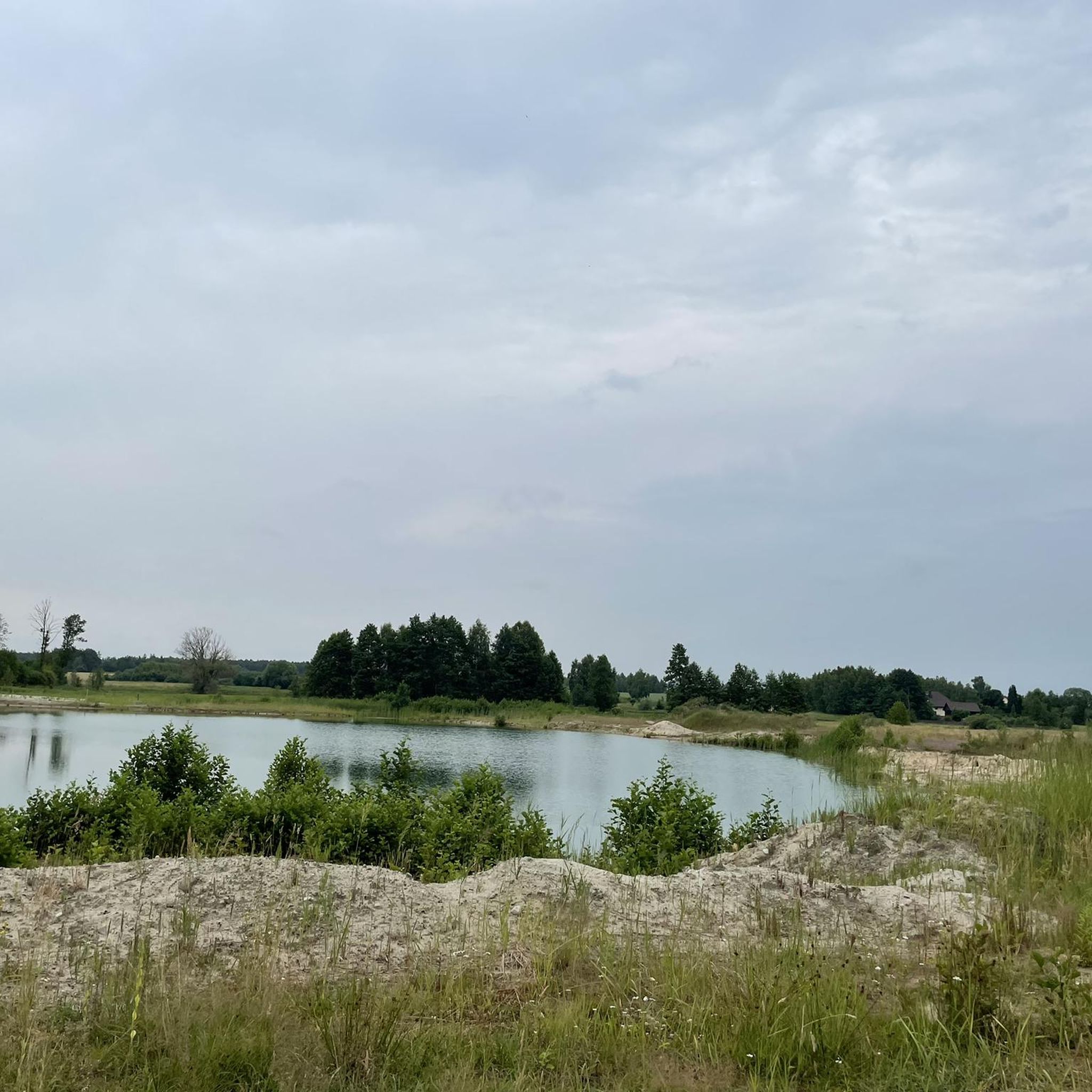
A makeshift beach, the only thing you can do here is rest for a while and move on
0
1
The Minor Basilica of the Holy Trinity in Janów Podlaski is a baroque church, built in 1714–1735, along with a bell tower. In the years 1818–1867 and 1918–1924 it served as the cathedral of the Janów (Podlasie) diocese. The interior of the church contains a sarcophagus and a monument to Adam Naruszewicz (1733–1796), a bishop, poet and historian who spent his last years here. The basilica has a two-tower façade, a three-nave interior and is the site of the Janów Collegiate Chapter. In 2018, the Congregation for Divine Worship and the Discipline of the Sacraments gave it the title of Minor Basilica. On the front of the basilica there is a commemorative plaque in honor of the January 1863 insurgents, residents of Janów Podlaski.
2
0

They have a break during the day. probably 1-3 p.m
1
3
Frequently Asked Questions
How many road cycling routes are available in Lasy Kijowieckie?
Lasy Kijowieckie offers a selection of 6 road cycling routes, catering to various preferences. These routes are primarily through quiet forest roads, providing a tranquil experience.
What is the typical terrain and elevation like for road cycling in Lasy Kijowieckie?
The terrain in Lasy Kijowieckie is generally characterized by quiet forest roads with gentle gradients. While some routes feature moderate elevation gains, such as the Manor in Zabuż – Church of the Holy Spirit loop from Janów Podlaski with over 300 meters of ascent, many offer a more relaxed ride through the rural landscape.
Are there any easy road cycling routes suitable for beginners in Lasy Kijowieckie?
Yes, there is at least one easy road cycling route. The Cicibór Duży loop from Biała Podlaska is an easy 22.8 km (14.1 miles) trail, often completed in under an hour, making it a great option for those new to road cycling or looking for a leisurely ride.
What natural features or wildlife can I expect to see while cycling in Lasy Kijowieckie?
Lasy Kijowieckie is an extensive forest ecosystem rich in biodiversity. Cyclists can enjoy observing diverse wildlife, including various bird species like woodpeckers, redstarts, and even birds of prey such as the golden eagle. Larger mammals like deer, roe deer, and wild boar also inhabit the forests, offering a chance for nature observation during your ride.
Are there any longer or more challenging road cycling routes in the area?
For those seeking a longer ride, the Manor in Zabuż – Church of the Holy Spirit loop from Janów Podlaski is a moderate 58.3 km (36.2 miles) route with over 300 meters of elevation gain, providing a more extended and engaging experience. Other moderate options include the Fundamenty Pałacu loop from Biała Podlaska, which is 29.5 km (18.3 miles).
Are the road cycling routes in Lasy Kijowieckie suitable for families?
While specific family-friendly designations are not provided, the presence of easy routes like the Cicibór Duży loop from Biała Podlaska, with its shorter distance and minimal elevation, suggests that some paths could be suitable for families with older children or those comfortable with road cycling. The quiet forest roads offer a safer environment away from heavy traffic.
What do other road cyclists say about the routes in Lasy Kijowieckie?
The road cycling routes in Lasy Kijowieckie are highly regarded by the komoot community, boasting an average rating of 5.0 stars. Cyclists appreciate the extensive woodlands and the tranquil experience offered by the quiet forest roads, making it an appealing destination for outdoor activities.
Are there circular road cycling routes available in Lasy Kijowieckie?
Yes, all the featured road cycling routes in Lasy Kijowieckie are designed as loops, allowing you to start and finish at the same point. Examples include the Chapel – Dwór Zaścianek loop from Janów Podlaski and the Beach on the Bug loop from Biała Podlaska Wschodnia.
What is the best time of year to go road cycling in Lasy Kijowieckie?
Given its extensive forest ecosystem, Lasy Kijowieckie is likely best enjoyed during spring, summer, and early autumn. These seasons offer pleasant weather conditions for cycling and allow for optimal enjoyment of the diverse flora and fauna. Always check local weather forecasts before your ride.
Is parking available for cyclists near the routes in Lasy Kijowieckie?
While specific parking facilities are not detailed, as the routes often start from towns like Janów Podlaski and Biała Podlaska, it is generally possible to find parking in or near these starting points. It is advisable to check local parking options in these towns before your visit.
Are dogs allowed on the road cycling routes in Lasy Kijowieckie?
The region's extensive forest is home to diverse wildlife, including large mammals. While specific regulations for dogs on cycling routes are not detailed, it is generally recommended to keep dogs on a leash in natural areas to protect wildlife and ensure their safety. Always respect local signage and guidelines.
Most popular routes in Lasy Kijowieckie

Get inspired with the komoot mobile app


Explore more
Browse the best Road cycling routes in other regions.
