The best road cycling routes in Raffa
4.7
(310)
5,833
riders
227
rides
Road cycling routes in Raffa are situated within a forested landscape in the Schwandorf region. The terrain offers a variety of experiences, from flatter sections to moderate climbs, with elevation gains reaching over 600 meters on some routes. This area provides diverse cycling opportunities across its network of paved roads.
Best road cycling routes in Raffa
- The most popular road cycling route is Hammermühle Café & Restaurant – Stone Bridge in Kallmünz loop from Hutberg bei Fischbach, a 51.4…
Last updated: May 8, 2026
4.6
(12)
307
riders
Moderate road ride. Good fitness required. Mostly well-paved surfaces and easy to ride.
4.2
(5)
85
riders
31.3km
01:16
170m
170m
Easy road ride. Great for any fitness level. Mostly well-paved surfaces and easy to ride.

Sign up for free
5.0
(3)
30
riders
Easy road ride. Great for any fitness level. Mostly well-paved surfaces and easy to ride.
20
riders
Moderate road ride. Good fitness required. Mostly well-paved surfaces and easy to ride.
5.0
(1)
22
riders
27.4km
01:09
190m
190m
Easy road ride. Great for any fitness level. Mostly well-paved surfaces and easy to ride.
Get access to more routes and recommendations from other explorers.
Sign up for free
Already have an account?
Our route recommendations are based on thousands of hikes, rides, and runs completed by other people on komoot.
Start today with a free account
Your next adventure awaits.
Login or Signup
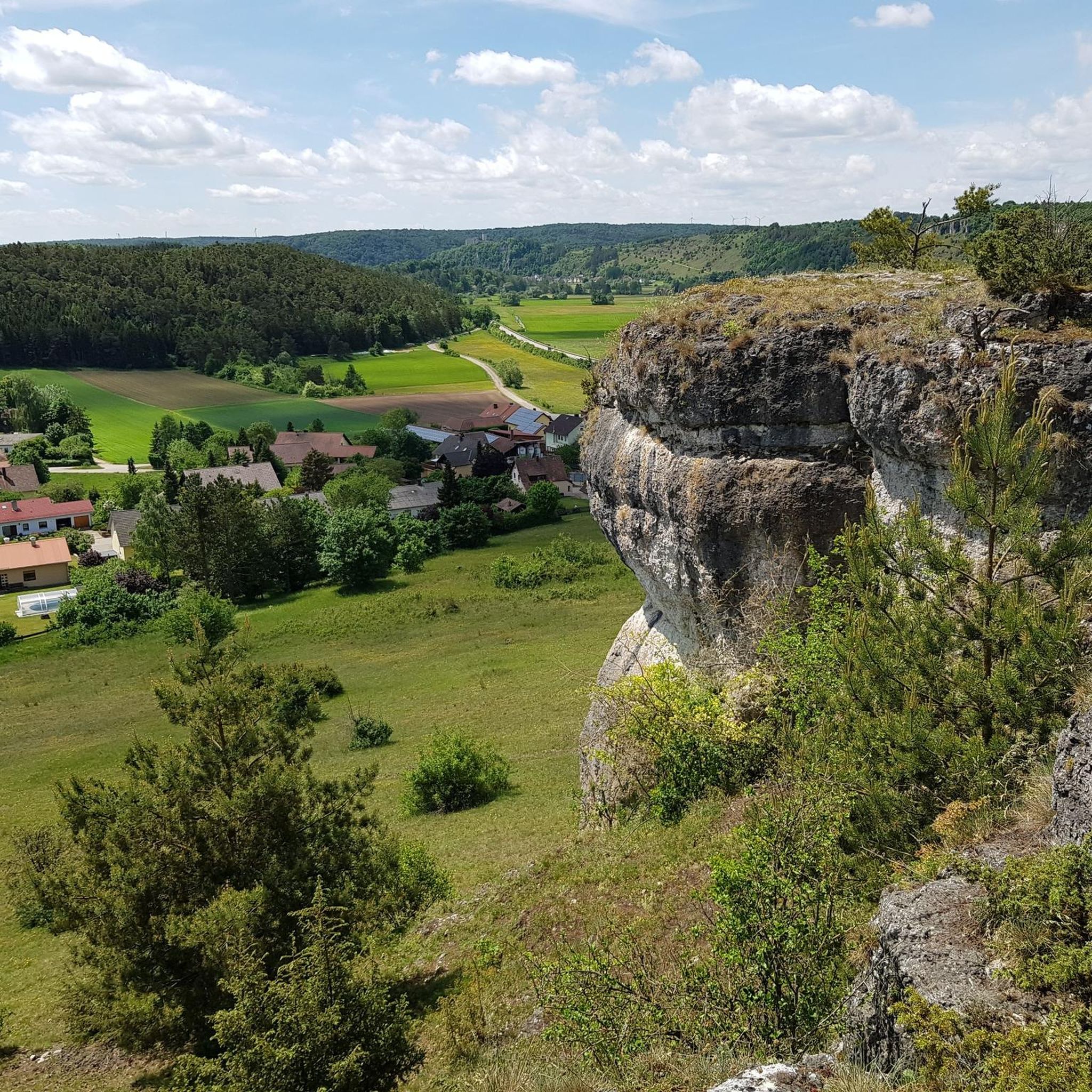
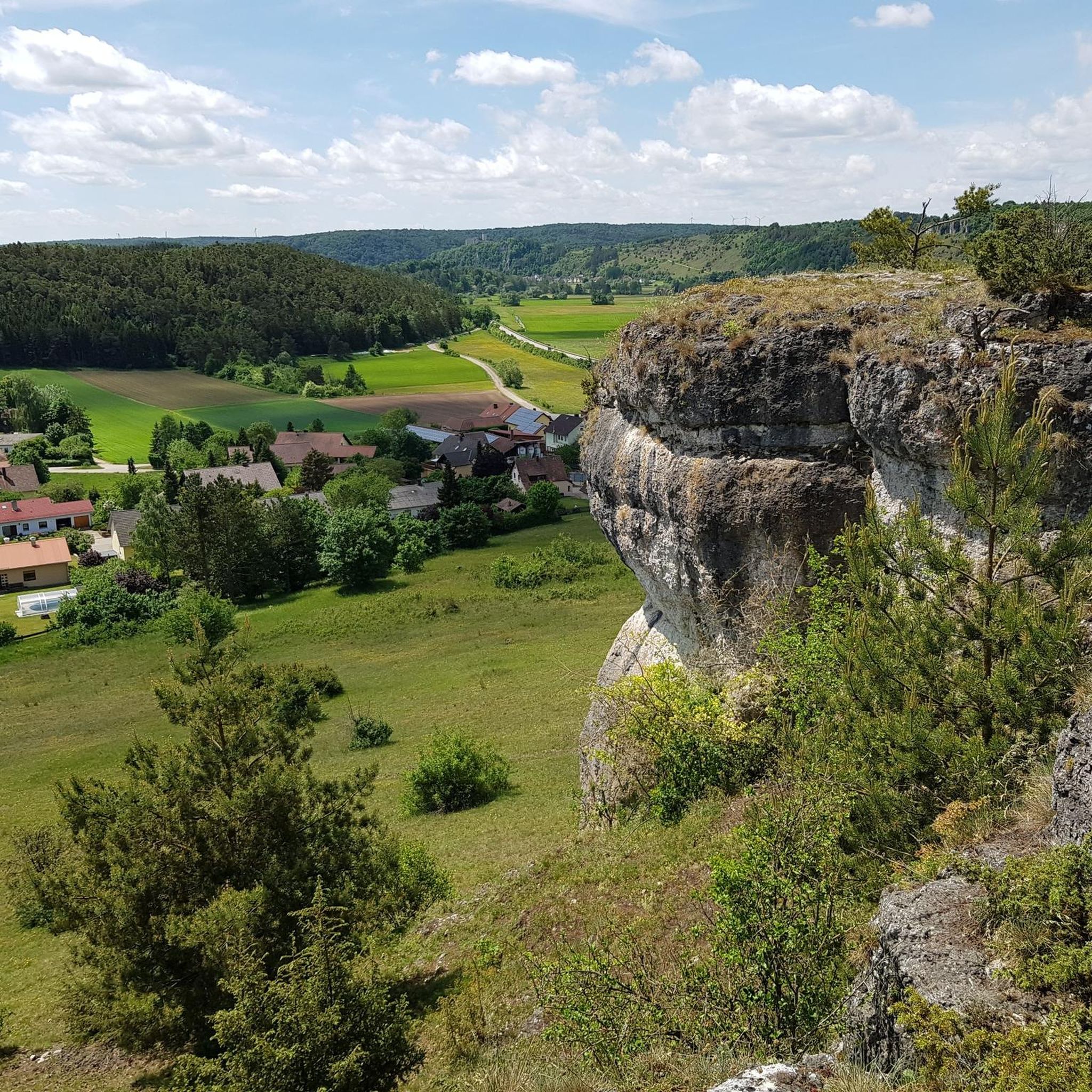
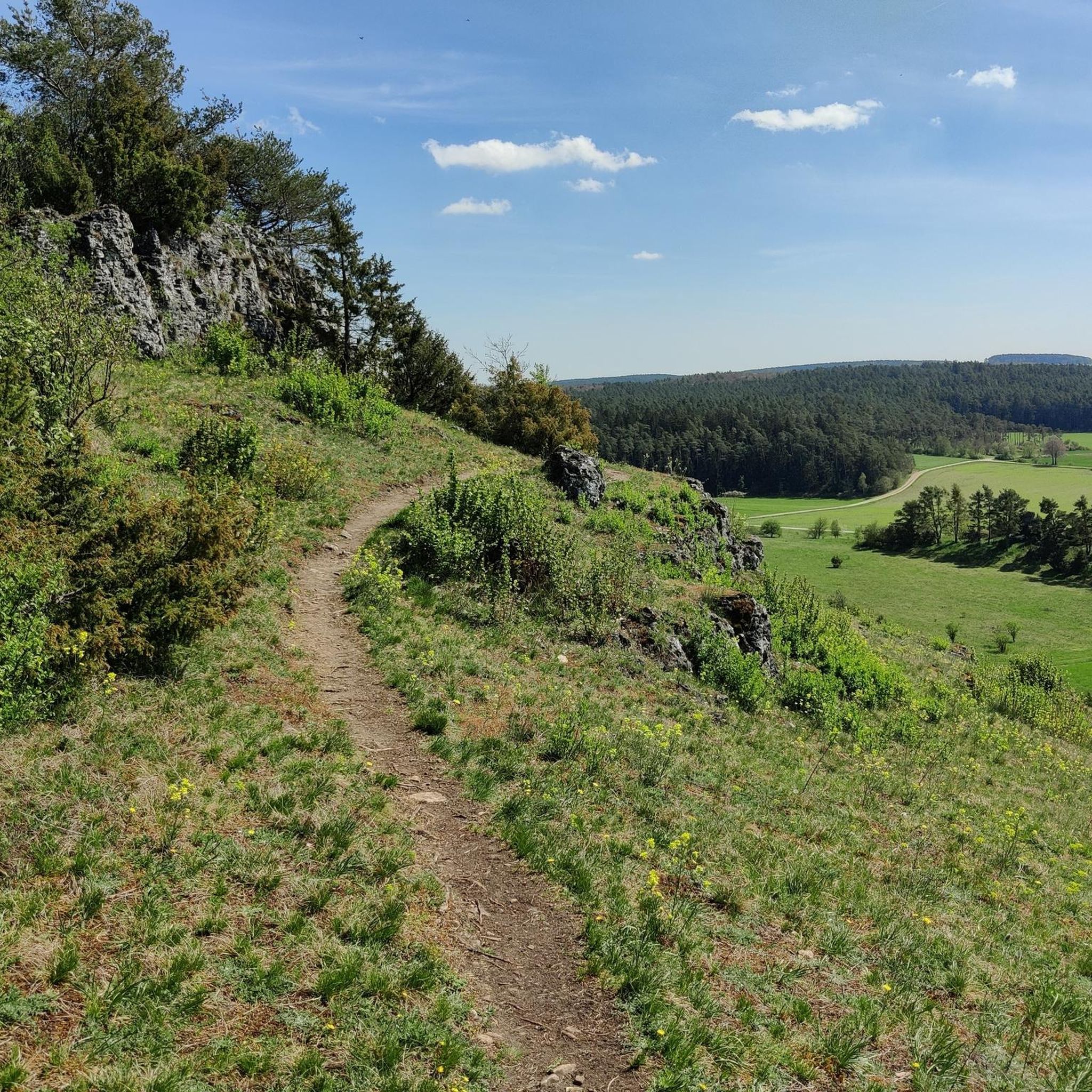
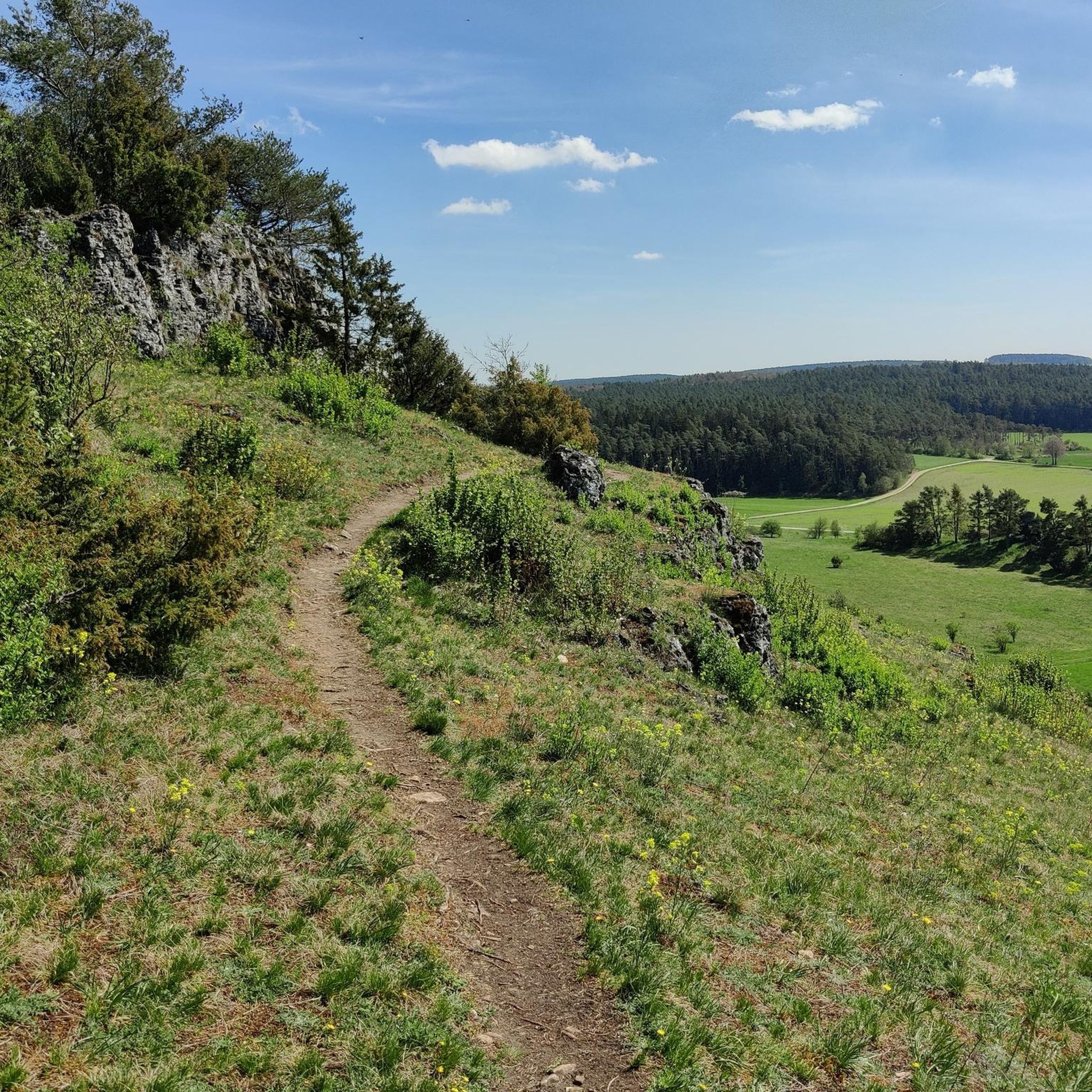

Tips from the Community

Schloß Hirschling The castle is a late medieval, Gothic, gable-end, raised, rectangular, three-story building with a saddle roof, stepped gables, a roof turret, and a St. Dionysius castle chapel, renovated in Baroque style around 1750, on the ground floor of the former tower. The roof turret was built in 1838. The builders of the castle in the 12th century were the lords of Heresing (Hirschling). Rudigerus de Heresingni is documented around 1134, and in 1168 a Hertnit de Hergesingen is mentioned. There is a document from Duke Ludwig the Bavarian dated February 7, 1224, concerning Conrad de Heresing, in which the ministeriale Konrad von Hirschling sells guardianship rights to the Katharinenspital in Regensburg. Further owners were the Hofer von Lobenstein; the first of them was Chalhoch, who appears as a witness to a donation in 1380. He sold Hirschling Castle in 1416 to the district judge of Burglengenfeld, Stephan Hofer. From 1514 onwards, Albrecht Sinzenhofer is mentioned here. In 1559, Hans von Leublfing, a government councilor in Straubing, acquired the property. The Parsbergers followed in 1565. In 1697, Hektor von Vischbach, a Swedish chamberlain and major, came into possession of the castle. Jakob Freiherr von Bazendorf acquired the castle in 1696, demolished the old tower, and had the castle renovated. A marble slab, which depicts the partially fictitious history of the castle in Latin, dates back to him. In 1697, the castle was Baroque-ized by Freiherrn Johannes Jakobus and Maria Katharina Elisabeth Sybille von Bazendorf. Joseph Freiherr von Schneid, lord of Ramspau, bought the castle in 1746. He was followed by the Freiherren von Pfetten (from 1801), in 1932 Eberhardt Hoesch acquired the property, and in 1950 a fundamental renovation of the castle took place, which came into the possession of the Kettenberger family from 1968 onwards. The castle remains in private ownership today. Source: Wikipedia
2
0

We were only passing through, but it looked very inviting.
0
0

Burgstall and Castle in Hirschling
0
0
Chapel of the Crucified Saviour Slightly to the side of federal highway 15 in Hagenau, stands the village chapel "To the Crucified Saviour", probably built in the last third of the 18th century, perhaps in 1771. It belongs to the late Rococo or early Classicism period and is a simple, single-axis, rectangular gable-roof building. The side walls are structured by wide plaster bands; the facade is designed in a Tuscan column order with two pairs of pilasters that support a bulbous beam and frame a slightly protruding basket-arch entrance. A small figure of the Virgin Mary stands in a niche in the gable. The roof has a four-sided wooden turret, whose Angelus bell from 1771 - it was also used as a death bell in the past - could hardly hold its own against the increasing traffic today. The furnishings are modest and nothing remains from the time of construction except for four corner pilasters, which are not uniformly designed but have different capitals. The walls are divided by large segmental arches; while the two windows on the long sides have square plaster frames on the outside, they have falling segmental arches on the inside. During a recent restoration of the chapel, which is owned by the Fischer family, ceiling paintings were discovered under a layer of paint that were not exposed for cost reasons. Source: Churches and chapels in the Regenstauf market
2
0

Beautiful view of the chapel
2
0
Very nice
2
0

The monastery complex also houses Caritas and the Center for Renewable Energies;
1
0

The "house without a roof", as it is officially called, is a cave dwelling that is still in use in the Upper Palatinate town of Kallmünz. The cave dwelling is located north of the Vils at the southern end of the Schlossberg, on which the Kallmünz castle ruins stand. The entrance is set back from Vilsgasse at the foot of a 20-meter-high limestone wall of the Schlossberg, and access leads between the listed residential buildings at Vilsgasse 26 and Vilsgasse 28. The house consists of a natural cave in the dolomite rock, the opening of which is closed off by a plastered wall with a door and windows. Inside there is a hallway, a living room, two storage rooms fitted into rock niches and a historic smokehouse. The oldest known mention of the cave dwelling can be found in a document kept in the land registry archive in Amberg with the year 1707. In the 19th century it was also known as the "house under the rock". In 1908 it was sold to the owner of the blacksmith's shop across the street, and it remains in his family's possession. The last permanent resident left the house in 1937 because he had developed rheumatism due to the damp cave air.
6
0
Frequently Asked Questions
How many road cycling routes are available in Raffa?
Raffa offers a comprehensive network of over 220 road cycling routes. This includes a diverse range of options, with 59 easy routes, 138 moderate routes, and 31 challenging routes, catering to various skill levels.
What is the typical terrain like for road cycling in Raffa?
Road cycling in Raffa is characterized by a forested landscape within the Schwandorf region. You'll encounter a mix of flatter sections and moderate climbs, with some routes featuring elevation gains exceeding 600 meters. The area provides varied cycling experiences across its network of paved roads.
What kind of elevation can I expect on road cycling routes in Raffa?
The elevation on Raffa's road cycling routes varies significantly. For instance, the Hammermühle Café & Restaurant – Stone Bridge in Kallmünz loop from Hutberg bei Fischbach route includes over 670 meters of ascent, making it a moderate challenge. Easier routes, like the Restaurant Eichmühle – Hirschling Castle loop from Ponholz, have gentler elevation changes, around 170 meters of climb.
Are there any notable landmarks or attractions to see while road cycling in Raffa?
Yes, several interesting landmarks and attractions can be found near Raffa's cycling routes. You might encounter the Cross on the Hutberg near Fischbach, or explore the unique Art Forest Garden and the Kunstwaldgarten Raffa Sculpture Park. Other points of interest include the Götz Memorial and the historic Jägerhäusl Hunting Lodge.
What do other cyclists say about road cycling in Raffa?
The komoot community highly rates road cycling in Raffa, with an average score of 4.7 stars from over 300 reviews. More than 5,700 road cyclists have explored the area, often praising the varied terrain, the forested surroundings, and the well-connected routes between local towns like Kallmünz and Burglengenfeld.
Are there any circular road bike routes in Raffa?
Yes, many of the road cycling routes in Raffa are designed as loops, offering convenient circular journeys. Examples include the popular Hammermühle Café & Restaurant – Stone Bridge in Kallmünz loop from Hutberg bei Fischbach and the St. Michael Church, Kallmünz – Hohenfels Castle Ruins loop from Mossendorf.
Are there family-friendly road cycling options in Raffa?
Raffa offers several easy road cycling routes suitable for families or those seeking a less strenuous ride. The Restaurant Eichmühle – Hirschling Castle loop from Ponholz is an easy 19.5-mile (31.4 km) path with gentle elevation changes, perfect for a relaxed family outing.
What are some less crowded road cycling routes in Raffa?
While specific crowd levels can vary, exploring some of the less-trafficked routes can offer a more tranquil experience. Consider routes that venture slightly off the main popular paths, or try cycling during off-peak hours. The komoot community often shares insights on route popularity in their reviews.
Are there options for advanced road cyclists looking for a challenge?
Absolutely. Raffa provides challenging routes for experienced road cyclists. The region's terrain includes significant climbs, with some routes featuring over 600 meters of elevation gain. These routes offer a good test of endurance and skill, often traversing varied landscapes.
What are the typical distances for road cycling routes in Raffa?
Route distances in Raffa vary widely to suit different preferences. You can find shorter rides, such as the Roadbike loop from Burglengenfeld at approximately 27 km (17 miles), or longer, more demanding tours like the Hammermühle Café & Restaurant – Stone Bridge in Kallmünz loop from Hutberg bei Fischbach, which spans over 82 km (51 miles).
Are there any routes that connect local towns in Raffa?
Yes, many road cycling routes in Raffa are designed to connect local towns and villages, allowing you to explore the region's communities. The network offers options that link places like Kallmünz and Burglengenfeld, providing opportunities to experience local culture and amenities along your ride.
Most popular routes in Raffa
Most popular attractions in Raffa

Get inspired with the komoot mobile app


Explore more
Browse the best Road cycling routes in other regions.
