The best running trails in Noitzscher Heide
4.4
(68)
682
runners
58
runs
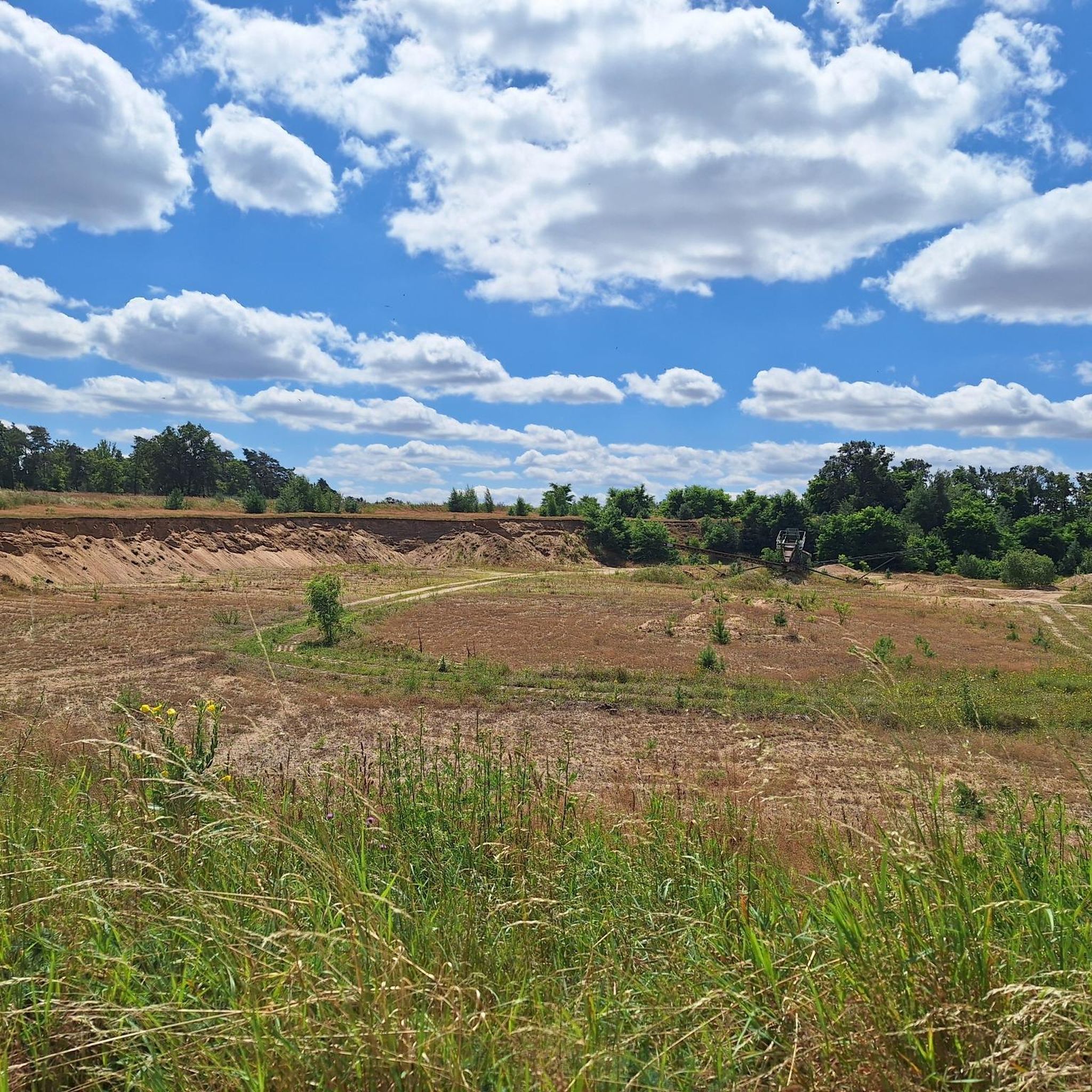
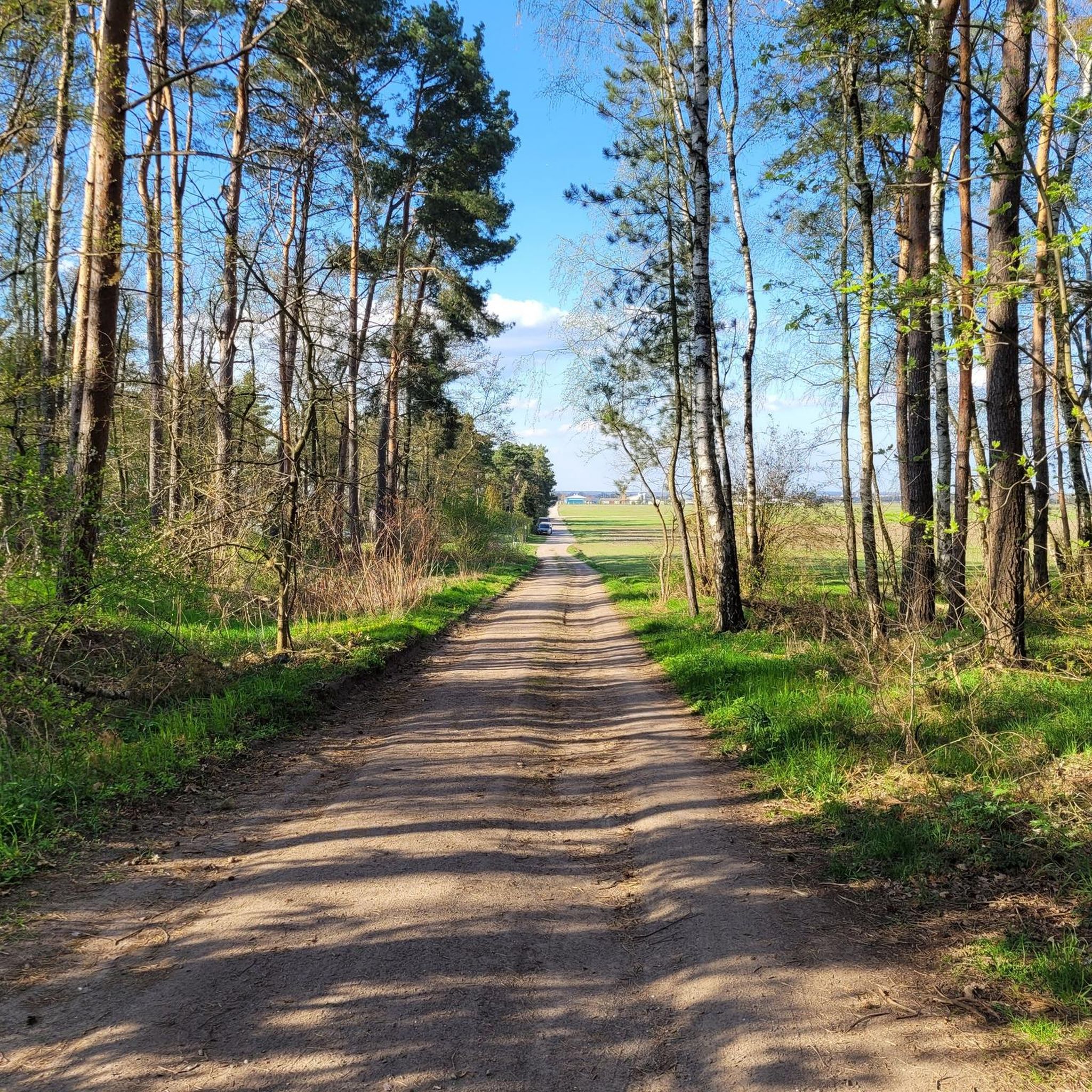
Jogging in Noitzscher Heide offers diverse landscapes shaped by the Ice Age, featuring heathlands, mixed forests, and gentle hills. The region includes pure pine forests, mixed woodlands, and deciduous forests, providing varied scenery for runners. Quiet clearings, moorlands, and small forest lakes add to the natural environment. Noitzscher Heide is also part of the natural river landscape situated between the Mulde and Elbe rivers.
Best jogging routes in Noitzscher Heide
- The most popular jogging route is Alte Mulde Oxbow near…
Last updated: October 14, 2026
5.0
(1)
4
runners
13.3km
01:23
60m
60m
Moderate run. Good fitness required. Mostly paved surfaces. Suitable for all skill levels.
5.0
(1)
6
runners
9.57km
00:59
10m
10m
Moderate run. Good fitness required. Mostly paved surfaces. Suitable for all skill levels.

4.0
(1)
3
runners
7.82km
00:48
10m
10m
Moderate run. Good fitness required. Mostly paved surfaces. Suitable for all skill levels.
4.5
(4)
18
runners
8.48km
00:53
40m
40m
Moderate run. Good fitness required. Mostly paved surfaces. Suitable for all skill levels.
3.0
(1)
11
runners
Moderate run. Good fitness required. Mostly paved surfaces. Suitable for all skill levels.
Get access to more routes and recommendations from other explorers.
Already have an account?
Our route recommendations are based on thousands of hikes, rides, and runs completed by other people on komoot.
Start today with a free account
Your next adventure awaits.

Tips from the Community

The Alte Mulde is also the flow channel for the Schwemsal ditch.
1
0
Very nice view of the Mulde river
2
0
The Düben windmill was originally built in 1840 in Glesien, north of Leipzig. It milled flour until 1960 and ground grain until 1962. Due to the expansion and development of Leipzig/Halle Airport, the listed post mill had to be moved from its original location. The Museum Village Dübener Heide Association took over the windmill in 2000. In 2006, the reconstructed windmill, complete with working machinery, was rebuilt north of the Düben Upper Mill. Source: https://www.muehlen-nordsachsen.de/muehlen/bad-dueben-bockwindmuehle/
3
0
The keep is the oldest building (dating from 1206) in the castle complex. The so-called Witch's Cellar is also located here. Behind it stands the main building, which was built as the administrative seat of the town of Düben and now houses the local history and landscape museum. Next to the main building is the so-called castle warden's cottage, which now contains a small café. All the buildings were extensively renovated between 1997 and 1999. At the foot of the castle is the also restored mill. Source: https://de.wikipedia.org/wiki/Burg_D%C3%BCben
2
0
Düben Castle was also the site of one of the last witch trials in Germany. Tradition tells of a witch's cellar in the castle, torture (which was outlawed in Saxony in 1783), a witch's grave, and a witches' dance floor, among other accounts. During the Seven Years' War, King Frederick II of Prussia stayed at the castle and established the largest supply depot for his army in Saxony there, guarded by 5,000 soldiers. This led to the Battle of Torgau on November 3, 1760, which Frederick II won despite heavy losses. During the Wars of Liberation, from October 10 to 14, 1813, Napoleon established his headquarters at Düben Castle. According to his own account, the uncertainty surrounding the military and political situation there made it the most horrific time of his life. After 1815, the castle, along with the town of Düben, became part of Prussia. The judicial and revenue office, established in the castle in 1780, was dissolved in 1942. After the Second World War, a landscape and local history museum about the town of Bad Düben and the Düben Heath was established by 1953 under the direction of local historian Willy Winkler. Exhibits on the history of the castle and town of Düben, as well as the economic development of the region, are on display. During renovation work in the castle tower in October 2017, a wall frieze by Paul Haffner (1874–1965) was discovered behind loose paint in the interior of the timber-framed upper story. Haffner played a key role in the design of the landscape museum's exhibitions in the early 1950s. In addition to numerous murals and illustrations that aided in understanding the museum's contents, Haffner, who worked in the printing shop of museum founder Willy Winkler, drew the inventory cards for the collection objects, produced many drawings and preparatory works for the museum, and contributed to the scenery painting for the local theater.[1] Due to extensive renovation and reconstruction work, the landscape museum in the castle is currently closed and is expected to reopen to visitors in April 2019. The grounds around the castle, including the ship mill, remain open to the public. Source: https://de.wikipedia.org/wiki/Burg_D%C3%BCben
3
0
Düben Castle was first mentioned in 981 in the chronicle of Thietmar of Merseburg, during the dissolution of the Bishopric of Merseburg, still under its Slavic name "Dibni." The castle's location was advantageous due to the ford across the Mulde River on an old trade route. A Slavic settlement also grew up next to the castle. During the German eastward expansion, Flemish immigrants founded the village of Neumark near the castle around 1200. Later, Frankish and Saxon settlers took over the old Slavic farmsteads, thus forming the town of Düben. In 1017, Düben Castle was owned by Count Albi, who was soon succeeded by Count Frederick of Eilenburg. In connection with the Battle of Welfesholz in 1115, Wiprecht of Groitzsch conquered the castle and from there seized several manor houses in the surrounding area. Margrave Otto the Rich was also imprisoned here for a time. Through an inheritance agreement, the castle came into the possession of the Thuringian Landgraves in 1291, who granted it as a fief to their followers. In 1450, the castle was completely destroyed during a feud between the brothers Frederick and William of Thuringia. From 1530 onward, the castle housed the administrative seat of the Electorate of Saxony's Düben district. The castle gained supra-regional notoriety during the Kohlhase Affair, which began in 1532 with the nobleman von Zaschwitz and the Elector of Saxony and dragged on until 1540 (trials in Düben in 1533). The most famous head of the district was likely Philipp Melanchthon Jr. in 1554. During the Thirty Years' War, on September 15, 1631, King Gustavus Adolphus of Sweden, Elector George William of Brandenburg, and Elector John George I of Saxony formed an alliance here against the Catholic Emperor Ferdinand II and subsequently defeated the imperial troops of General Tilly at the Battle of Breitenfeld. The alliance did not help the town of Düben, which was destroyed three more times (in 1631, 1637, and 1641) by passing mercenary armies. Source: https://de.wikipedia.org/wiki/Burg_D%C3%BCben
3
0
Düben Castle, formerly also called Dibni, Dewin, Diben, Dybin, and Dewen, rises on a small hill on the right bank of the Mulde River. The castle is located directly next to the bridge carrying the B2 highway over the Mulde within the town of Bad Düben (Neuhofstraße 3) in the district of North Saxony. Source: https://de.wikipedia.org/wiki/Burg_D%C3%BCben
3
0
A very nice view of the Mulde river from the Mulde cycle path.
4
0
Frequently Asked Questions
What kind of terrain can I expect when running in Noitzscher Heide?
Noitzscher Heide offers a diverse landscape shaped by the Ice Age, perfect for running. You'll find a mix of heathlands, pure pine forests, mixed woodlands, and deciduous forests. The terrain features gentle hills, quiet clearings, moorlands, and small forest lakes, providing varied and scenic backdrops for your runs. To the north and east, expansive fields and meadows offer additional routes.
Are there running routes suitable for beginners in Noitzscher Heide?
Yes, Noitzscher Heide has several running routes suitable for beginners. Many paths are described as easy to walk and feature wide trails, making them accessible for various fitness levels. Out of nearly 60 routes, 9 are specifically rated as easy, offering a gentle introduction to the area's natural beauty.
How many running routes are available in Noitzscher Heide?
There are over 50 running routes documented in Noitzscher Heide, offering a wide range of options for different abilities and preferences. The komoot community has explored these trails over 600 times, highlighting their popularity.
Are there any circular running routes in Noitzscher Heide?
Yes, many routes in Noitzscher Heide are circular, allowing you to start and finish at the same point. For example, the Alte Mulde Oxbow near Brösa – Mulde River loop from Bad Düben is a popular 13.3 km moderate loop. Another great option is the Kirche – Small Fishing Pond loop from Bad Düben, a relatively flat 9.5 km path.
What are some interesting landmarks or places to see along the running trails?
While running in Noitzscher Heide, you can encounter several interesting spots. The Noitzscher Hütte is a beautiful rest stop with a snack bench, ideal for a break. The Noitzscher Hut in Heidewald Nature Reserve also offers facilities. You might also pass the historic Rotes Haus restaurant, a popular landmark and starting point for many routes.
Is Noitzscher Heide suitable for long-distance running?
Absolutely. While many routes are shorter, the interconnected network of trails allows for longer runs by combining sections. The region's varied landscapes, from forests to open fields, provide an engaging environment for extended distances. An 18 km route is also known to traverse varied forest and open landscapes.
What do other runners enjoy most about the trails in Noitzscher Heide?
The trails in Noitzscher Heide are highly regarded by the komoot community, with an average rating of 4.4 stars from over 60 reviews. Runners often praise the diverse natural beauty, the well-maintained paths, and the peaceful atmosphere. The variety of landscapes, from heathlands to forests and small lakes, is frequently highlighted as a key enjoyment factor.
Are there any places to eat or rest near the running routes?
Yes, the Rotes Haus (Red House) Restaurant is a well-known spot in the area, serving as a convenient starting point with parking and a place to eat. Additionally, the Noitzscher Hütte provides a beautiful rest stop with a snack bench amidst the heath forest, perfect for a break during your run.
Can I bring my dog on the running trails in Noitzscher Heide?
Noitzscher Heide is generally dog-friendly, with its extensive network of forest and heathland trails providing ample space for you and your canine companion. However, it's always recommended to keep dogs on a leash, especially in areas with wildlife or near other visitors, to ensure a pleasant experience for everyone.
Are there specific routes that offer views of water bodies?
Yes, Noitzscher Heide is part of the natural river landscape between the Mulde and Elbe rivers, and features small forest lakes. The Alte Mulde Oxbow near Brösa – Mulde River loop from Bad Düben follows the Mulde River, offering scenic views of the water. Another route, the Kirche – Small Fishing Pond loop from Bad Düben, leads past a small fishing pond.
Where can I park my car when visiting Noitzscher Heide for a run?
The Rotes Haus (Red House) Restaurant is a popular and convenient starting point that offers parking facilities. Many other trailheads throughout the region also provide designated parking areas, making it easy to access the running routes by car.
What kind of wildlife might I encounter while running?
While Noitzscher Heide is a managed forest, it is home to regional wildlife. You might spot deer and hares, and there are traces of wild boar and even wolves. Birdwatchers can also look out for various species such as the Eurasian golden oriole, buzzard, and green woodpecker, adding an element of nature observation to your run.
Most popular routes in Noitzscher Heide
Most popular attractions in Noitzscher Heide

Get inspired with the komoot mobile app


Explore more
Browse the best Running Trails & Routes in other regions.
