The best road cycling routes in Forêt Domaniale De Massonges
4.8
(17)
1,095
riders
207
rides
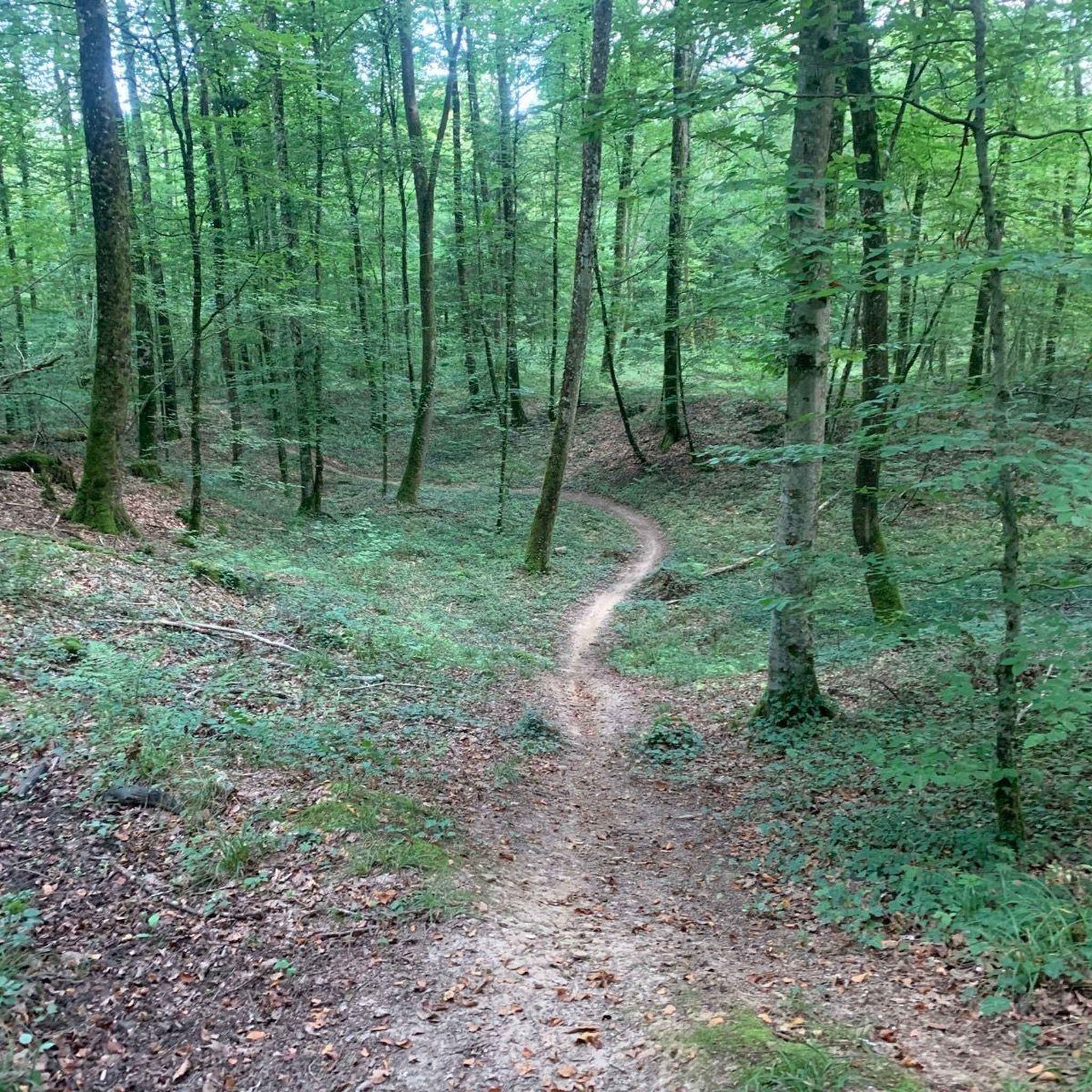
Road cycling in Forêt Domaniale De Massonges offers routes through dense woodlands and rolling terrain. The region, situated near Bar-Le-Duc, features a landscape characterized by forested sections interspersed with open agricultural areas. Roads often follow gentle gradients, providing varied cycling experiences. The area is suitable for exploring on two wheels, with a mix of shaded paths and open stretches.
Best road cycling routes in Forêt Domaniale De Massonges
- The most popular road cycling route is Geru loop from Behonne,…
Last updated: July 5, 2026
7
riders
53.3km
02:22
540m
540m
Moderate road ride. Good fitness required. Mostly well-paved surfaces and easy to ride.
5
riders
32.3km
01:24
300m
300m
Easy road ride. Great for any fitness level. Mostly well-paved surfaces and easy to ride.

Sign up for free
9
riders
31.3km
01:20
160m
160m
Easy road ride. Great for any fitness level. Mostly well-paved surfaces and easy to ride.
3
riders
34.3km
01:29
300m
300m
Easy road ride. Great for any fitness level. Mostly well-paved surfaces and easy to ride.
6
riders
40.7km
01:43
170m
170m
Easy road ride. Great for any fitness level. Mostly well-paved surfaces and easy to ride.
Get access to more routes and recommendations from other explorers.
Sign up for free
Already have an account?
Our route recommendations are based on thousands of hikes, rides, and runs completed by other people on komoot.
Start today with a free account
Your next adventure awaits.
Login or Signup




Tips from the Community

A beautiful church and definitely worth a visit.
1
1

On the site of an old fountain, a monument erected in 1894 by public subscription honors the memory of Barisiens Pierre and Ernest Michaux, inventors and promoters of the pedal velocipede. This monument also marks the entrance to the Bourg district. A chubby child representing the genius of the bicycle, placed in front of a velocipede, extols the invention of the pedal by the Michaux family in 1861, thus allowing the cycle to evolve from the balance bike to the velocipede. Source: https://www.tourisme-barleducsudmeuse.fr/page,fiche-sitlor,produit,754005864
0
0

The monument commemorates to Pierre and Ernest Michaux, the inventors of the velocipede.
1
0


This ancient collegiate church in Gothic style, with some characteristic Renaissance elements, was built between 1315 and 1630. It houses two important works by the Lorraine sculptor Ligier Richier: Christ on the Cross between the Two Thieves and "Le Transi de René de Chalon," depicting the Prince of Orange as a skeleton. It was classified as a historic monument in 1889.
2
0
The church of Saint-Jean, in Bar-le-Duc, is a neo-Byzantine style building with references to the neo-Romanesque style. It was built in two phases, between the 19th and 20th centuries. Since the mid-19th century, the parish of Notre-Dame had an "annex" in the Brasseries district. The idea of transforming it into a church came in 1869. The following year the project was entrusted to the architect Charles Demoget. The result, a neo-Gothic building, was controversial and Demoget was removed from office, making way for Ernest Birglin who designed a new building in neo-Byzantine style. But it was only in 1875, after the creation of a fourth parish under the name of Saint-Jean, that construction of the church began. The first phase of the works lasted until 1880, but only the apse, the choir and the transept were erected. In 1933 the architect Royer opened the second phase of work, with the construction of the nave which lasted until 1939. The façade, however, remained partially unfinished.
2
0

Built from 1903 to 1905 by the Varin-Bernier banking family, the castle, whose exterior architecture and interior decoration mix all styles, represents an example of the historicism and eclecticism in vogue at that time. The building is surrounded by an English-style park.
1
0

When Saint Stephen (Saint-ETIENNE) expressed his vision of the open heaven "But he, filled with the Holy Spirit, looked up into heaven and saw the glory of God and Jesus standing at the right hand of God" (Acts chapter 7 verse 55), people were outraged people care so much about it that they drove him out of town and stoned him. The memorial of Saint Stephen or Stephen, one of the seven first deacons of the early Jerusalem community, is on Boxing Day.
8
0
Frequently Asked Questions
How many road cycling routes are available in Forêt Domaniale De Massonges?
There are over 200 road cycling routes in Forêt Domaniale De Massonges, offering a wide range of options for different skill levels and preferences.
What is the general terrain like for road cycling in Forêt Domaniale De Massonges?
The region features a diverse landscape with dense woodlands, rolling terrain, and open agricultural areas. Roads often follow gentle gradients, providing a mix of shaded paths and open stretches for varied cycling experiences.
Are there easy road cycling routes suitable for beginners or casual rides?
Yes, Forêt Domaniale De Massonges offers 24 easy road cycling routes. An accessible option is the Roadbike loop from Behonne, which is 32.3 km long and provides a pleasant ride through the local countryside.
What kind of routes are available for more experienced road cyclists?
Forêt Domaniale De Massonges has 156 moderate and 24 difficult routes. A popular moderate option is the Geru loop from Behonne, a 63.3 km trail featuring varied forest scenery and open country roads.
Are there any longer road cycling routes for endurance training or extended rides?
Yes, for longer rides, consider the Club outing – Benoîte-Vaux loop from Behonne. This route spans 72.6 km and leads through forested areas and small villages, typically taking around 3 hours and 4 minutes to complete.
What do other road cyclists enjoy most about cycling in Forêt Domaniale De Massonges?
The area is highly rated by the komoot community, with an average score of 4.5 stars from over 20 reviews. Cyclists often praise the region's varied terrain, which includes both dense woodlands and open agricultural plains, offering a good mix of shaded and sunny sections.
Are there circular road cycling routes in the region?
Many routes in Forêt Domaniale De Massonges are designed as loops, allowing you to start and end in the same location. Examples include the Bar-le-Duc – The Ornain loop from Behonne, an easy 34.3 km ride, and the moderate Saint-Louis Chapel – Church of Saint Stephen loop from Fains-Véel, which covers 53.7 km.
What is the best season for road biking in Forêt Domaniale De Massonges?
Given the region's dense woodlands and open agricultural areas, spring and autumn offer pleasant temperatures and beautiful scenery. Summer provides shaded paths, while winter can be challenging due to colder weather and potentially icy conditions.
Are there any routes that pass through villages or offer opportunities to explore nearby towns?
Many routes weave through or near small villages. For instance, the Club outing – Benoîte-Vaux loop from Behonne passes through several small villages, offering glimpses into local life and potential stops.
What are the typical road conditions like for cycling in Forêt Domaniale De Massonges?
The roads generally feature gentle gradients and are suitable for road cycling. You can expect a mix of well-maintained paved surfaces through forested sections and open country roads, characteristic of the region's agricultural landscape.
How many people have explored road cycling routes in Forêt Domaniale De Massonges using komoot?
Over 1000 road cyclists have used komoot to explore the varied terrain of Forêt Domaniale De Massonges, indicating a popular and well-regarded cycling destination.
Most popular routes in Forêt Domaniale De Massonges

Get inspired with the komoot mobile app


Explore more
Browse the best Road cycling routes in other regions.
