The best cycling routes around Grad Pazin
4.4
(242)
2,539
riders
14
rides
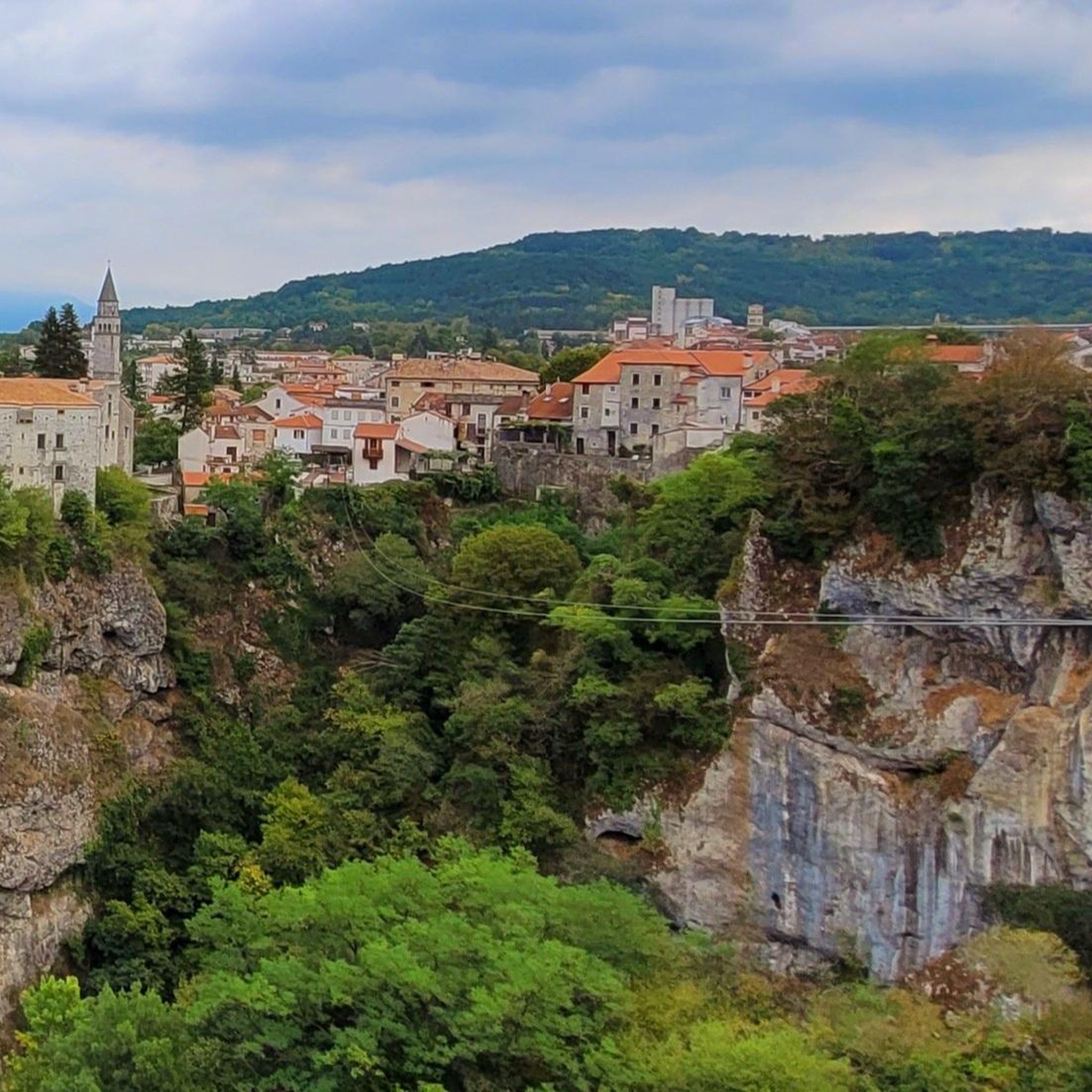
Touring cycling routes around Grad Pazin navigate a diverse landscape in the heart of Istria, Croatia. The region features rolling hills, dense forests, and expansive vineyards, providing varied terrain for cyclists. Key natural features include the dramatic Pazin Abyss and the serene Zarečki Krov waterfall. This area offers a mix of quiet roads, tracks, and both paved and unpaved surfaces, with routes often incorporating significant elevation changes.
Best touring cycling routes around Grad Pazin
- The most popular touring cycling route is Pazin/Pisino d'Istria – Montecuccoli Castle loop from Heki, a 27.1 miles (43.5 km) trail that takes 3 hours 9 minutes to complete, winding through the Istrian countryside.
- Another top favourite among local touring cyclists is Svetvinčenat Town Square – Church of St. Michael, Žminj loop from Pazin, a difficult 31.0 miles (49.9 km) path offering views of historic villages and rural landscapes.
- Local touring cyclists also love the Motovun Tunnel – View of Motovun loop from Heki, a 30.1 miles (48.4 km) trail leading through rolling hills and past scenic viewpoints, often completed in about 3 hours 26 minutes.
- Touring cycling around Grad Pazin is defined by rolling hills, lush forests, and historic villages. The network offers options for various ability levels, from moderate rides to challenging ascents and descents.
- The routes in Grad Pazin are highly rated by the komoot community with an average score of 4.3 stars from over 20 reviews. More than 160 touring cyclists have used komoot to explore Grad Pazin's varied terrain.
Last updated: July 1, 2026
3.5
(6)
47
riders
44.2km
03:15
900m
900m
Hard bike ride. Very good fitness required. Mostly paved surfaces. Suitable for all skill levels.
5.0
(3)
31
riders
49.7km
03:11
570m
570m
Hard bike ride. Very good fitness required. Mostly paved surfaces. Suitable for all skill levels.

Sign up for free
25
riders
49.2km
03:30
920m
920m
Hard bike ride. Very good fitness required. Mostly paved surfaces. Suitable for all skill levels.
5.0
(6)
17
riders
65.6km
04:25
960m
960m
Hard bike ride. Very good fitness required. Mostly paved surfaces. Suitable for all skill levels.
4.3
(3)
8
riders
41.6km
02:51
660m
660m
Hard bike ride. Very good fitness required. Mostly paved surfaces. Suitable for all skill levels.
3.0
(2)
6
riders
31.0km
02:06
390m
390m
Hard bike ride. Good fitness required. You may need to push your bike for some segments of this route.
10
riders
18.9km
01:10
170m
170m
Moderate bike ride. Good fitness required. Mostly paved surfaces. Suitable for all skill levels.
6
riders
80.1km
05:28
1,240m
1,240m
Hard bike ride. Very good fitness required. Mostly paved surfaces. Suitable for all skill levels.
7
riders
59.2km
04:02
960m
960m
Hard bike ride. Very good fitness required. Mostly paved surfaces. Suitable for all skill levels.
3
riders
19.8km
01:26
360m
360m
Moderate bike ride. Good fitness required. Mostly paved surfaces. Suitable for all skill levels.
Get access to more routes and recommendations from other explorers.
Sign up for free
Already have an account?
Our route recommendations are based on thousands of hikes, rides, and runs completed by other people on komoot.
Start today with a free account
Your next adventure awaits.
Login or Signup
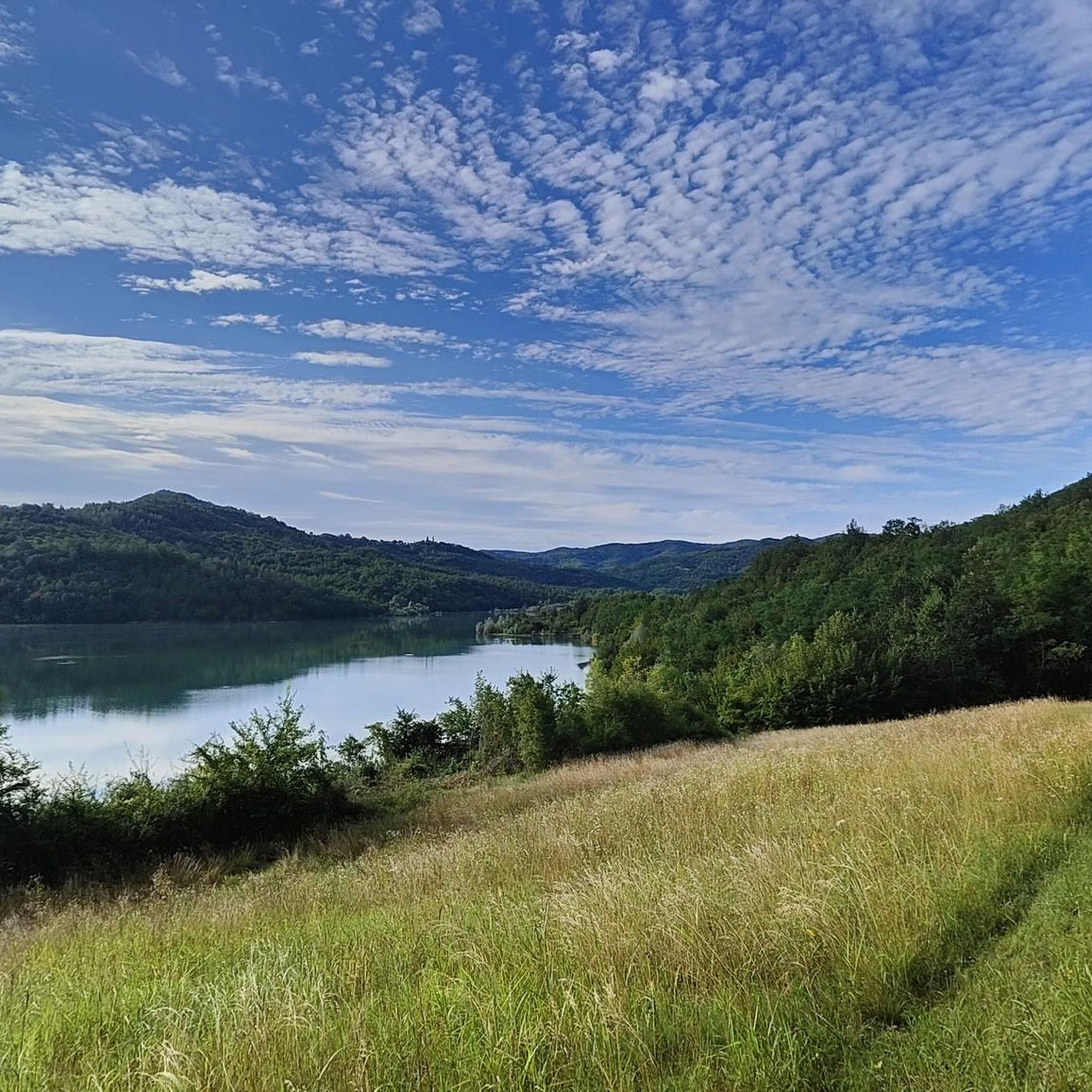
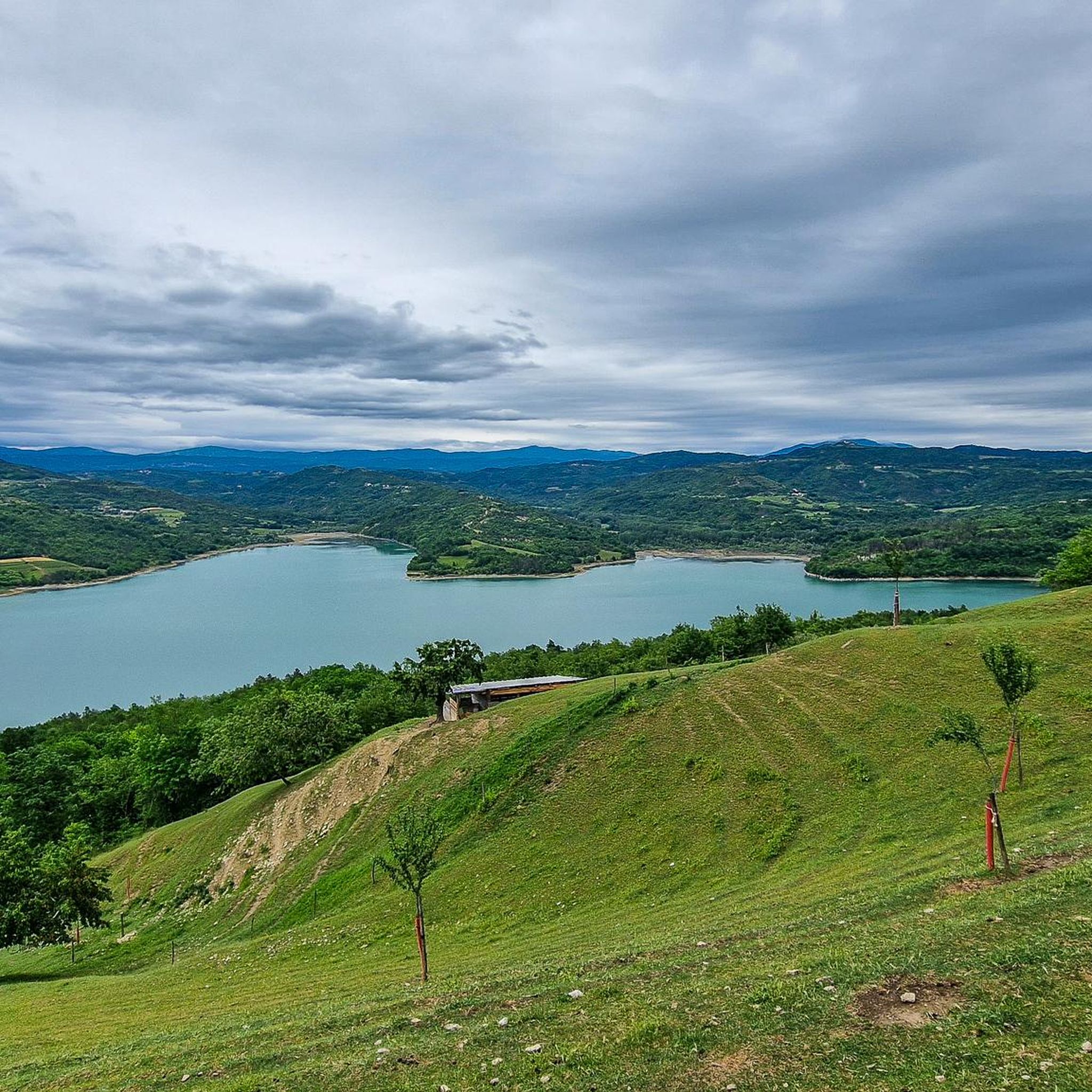
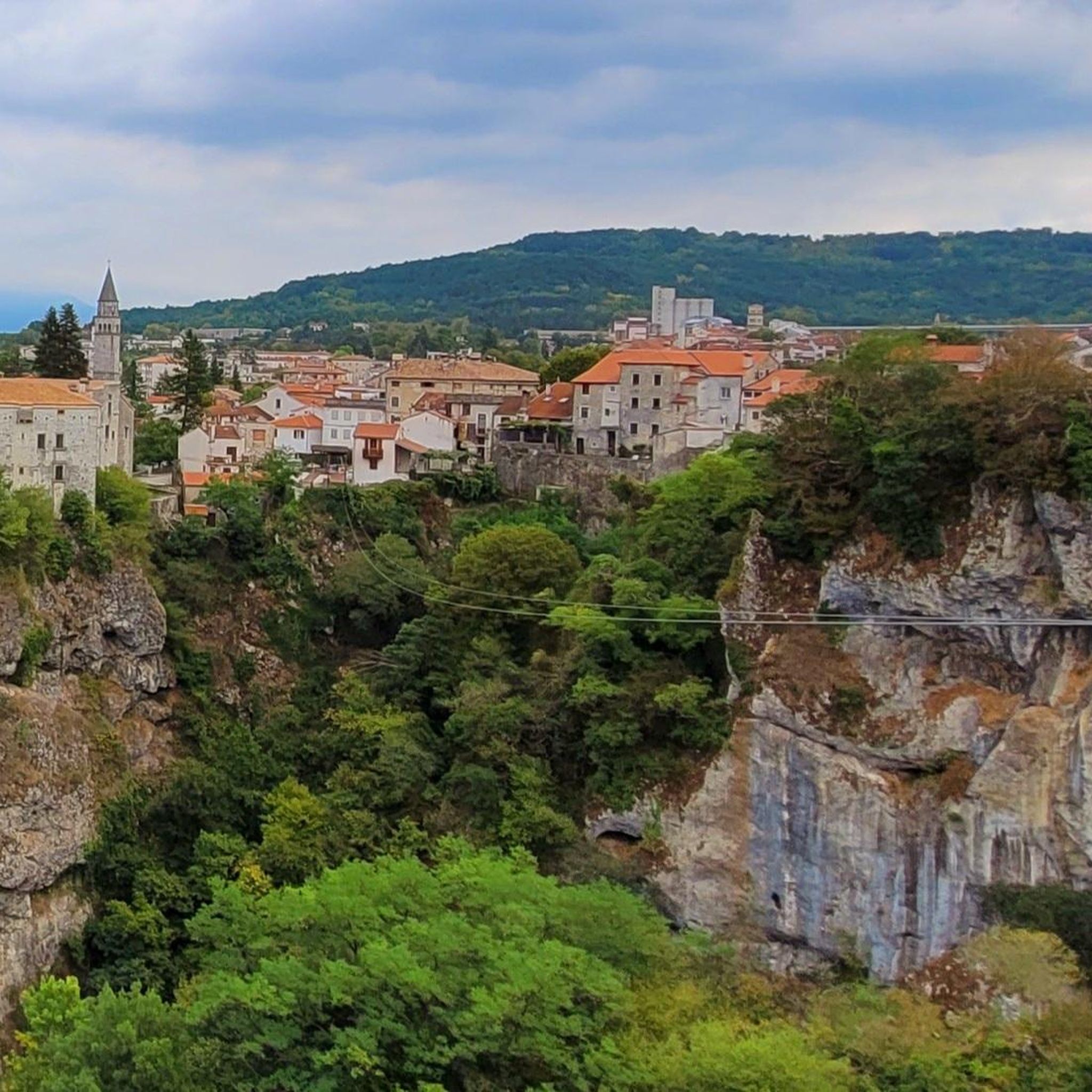
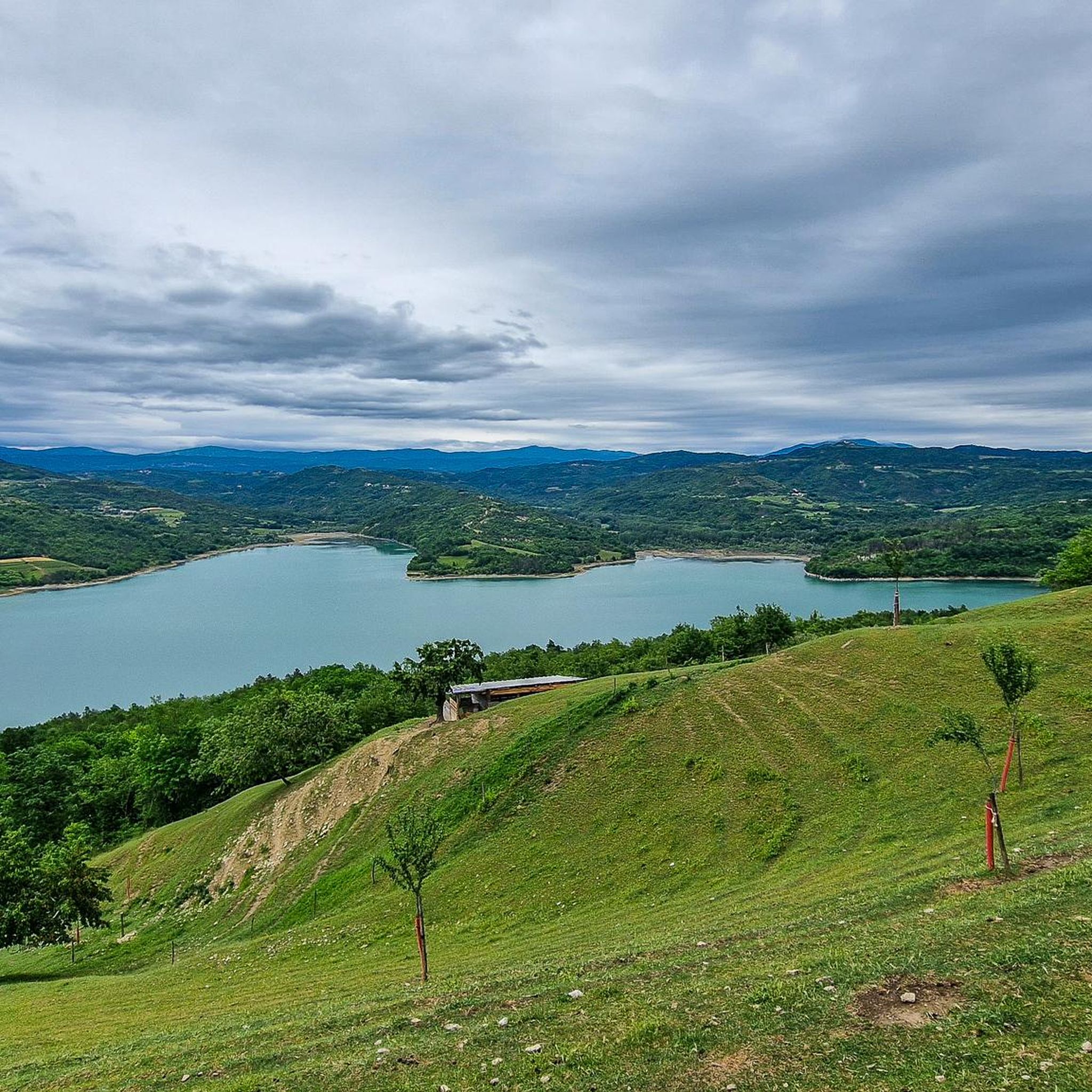

Tips from the Community

In front of the castle there are numerous information boards.
0
0
There are always some small shops in the center.
0
0

The Church of St. Michael in Žminj was built in the 16th century and has been one of the most important religious buildings in the area ever since. It boasts exquisite craftsmanship, with colored stones sourced from a mine in nearby Gradišće.
0
0

Pazin Castle is a well-protected fortress located on the edge of the Pazinčica River ravine, and is also the largest and best-preserved fortress in Istria. It is first mentioned in 983, in the deed of gift by which King Otto II granted the castle to the Bishop of Poreč. Over the next two centuries, the castle changed hands frequently; the daughter of Meinhard von Schwarzenburg, the castle's owner, brought the building as a dowry to the Counts of Gorizia, who owned it until 1374. In the same year, the castle was taken over by the Habsburgs, who, from behind its mighty walls, governed the entire Istrian hinterland, or the County of Pazin. The castle's glory and strength are also evidenced by the fact that it was not conquered during the war against Venice. The inhabitants of Pazin enjoyed considerable autonomy and freedom at that time, unlike the peasants who lived in the surrounding territories. In the 17th century, the castle was purchased by the Marquis Montecuccoli of Modena. The fiefdom remained his property until the mid-19th century, while the fortress remained his until 1945. During World War II, in September-October 1943 and again in April-May 1945, Montecuccoli Castle served as the headquarters of the OZNA (Tito's secret police) and the "People's Tribunals." It also served as a trial site, a place of imprisonment and torture for Istrian Italians. They were then eliminated by being thrown into the sinkhole (foiba) or, more simply, thrown into the ravine of the Foiba stream from the castle windows or the parapets of the square. The remains of the bodies—already battered by the impact with the rock faces and the branches of the vegetation growing on the cliffs—resurfaced a long distance after their underground passage through the Foiba, reaching the sea between Rovinj and Vrsar.
0
0
Located in central Istria, Pazin (Pisino in Italian) is a town of ancient charm, known for its imposing castle overlooking the spectacular karst chasm. Its history begins in 983, when it is mentioned as Castrum Pisinum. The village grew up around the castle, which over the centuries became the seat of the County of Pazin, an important bastion of the Holy Roman Empire. Unlike much of Istria, under Venetian rule, Pazin remained tied to the Austrian Habsburgs for a long time (from 1374 to 1918). After the First World War, it passed to the Kingdom of Italy, then to Yugoslavia in 1945, and finally, since 1991, to independent Croatia. Today, Pazin is considered the historical capital of the Istrian hinterland, also famous thanks to Jules Verne, who set some scenes of his novel Mathias Sandorf here.
0
0
A nice downhill gravel section which, despite its steep slopes (S1), has a smooth surface without any particular difficulties. The only thing to be aware of is that the road is also regularly used by car traffic.
0
0
The Church of St. Catherine was built in 1392 and served as the parish church until 1860. It is Lindar's most famous cultural monument thanks to its unusual and unique fresco, the "Living Cross," located inside. The fresco was painted in 1409, as evidenced by the Glagolitic inscription on the painting, and contains an allegorical depiction of the Crucifixion scene, in which the arms of the cross transform into four living arms. During recent restorations, remains of frescoes depicting the Kiss of Judas were also discovered on the presbytery wall. The façade of the small church features a bell gable without bells, and a portico with Gothic-style openings was added in front of the church. The carved wooden altar dates back to 1770, while the altarpiece dates to the 17th century. www.viaggiatorelento.com
0
0
Frequently Asked Questions
How many touring cycling routes are available in Grad Pazin?
There are over 10 touring cycling routes around Grad Pazin, catering to various skill levels. The komoot community has actively explored 14 routes in the area, with many more possibilities to discover.
Are there easy touring cycling routes suitable for beginners or families?
Yes, Grad Pazin offers routes suitable for less experienced cyclists. For instance, the St. Nicholas Church Tower – Pazin/Pisino d'Istria loop from Pazin is a moderate 11.5-mile (18.5 km) route with less elevation gain, making it a good option for a more relaxed ride.
What are some challenging touring cycling routes in Grad Pazin?
For experienced touring cyclists seeking a challenge, Grad Pazin has several demanding routes. The Labin Old Town – Ascent to Labin loop from Pazin is a difficult 50.7-mile (81.5 km) route with significant elevation changes, offering a strenuous but rewarding experience. Another challenging option is the Oca Side Road Under Učka – Gracišće Village Center loop from Pazin, spanning over 40 miles (65 km) with nearly 1000 meters of ascent.
Are there any circular touring cycling routes around Grad Pazin?
Many of the touring cycling routes in Grad Pazin are designed as loops, allowing you to start and end at the same point. Examples include the popular Pazin/Pisino d'Istria – Montecuccoli Castle loop from Heki, a 27.1-mile (43.5 km) ride, or the Bike loop from Heki Stajalište for a shorter 12.3-mile (19.7 km) option.
What natural attractions can I see along the touring cycling routes?
The routes often pass by stunning natural features. You can cycle near the dramatic Pazin Abyss, where the Pazinčica River disappears underground. Some routes also offer views of the serene Zarečki Krov Waterfalls, a popular spot for relaxation, or the scenic Lake Butoniga, Istria's only freshwater lake.
Are there historical landmarks or charming villages to explore on a bike?
Absolutely. Grad Pazin's routes wind through a region rich in history and culture. You can cycle past the impressive Pazin Castle, Istria's largest and best-preserved medieval fortress. Many paths also lead through quaint, historic villages like Žminj, offering glimpses into local life and architecture. The Svetvinčenat Town Square – Church of St. Michael, Žminj loop from Pazin is a great example, showcasing historic villages and rural landscapes.
What is the best time of year for touring cycling in Grad Pazin?
The region is generally pleasant for cycling from spring through autumn. Spring offers lush greenery and mild temperatures, while autumn provides comfortable weather and beautiful fall foliage. Summer can be warm, but routes through forests or near waterfalls like Zarečki Krov offer refreshing breaks.
Where can I find scenic viewpoints on the touring cycling routes?
Grad Pazin, being in the heart of Istria, is full of scenic vistas. Many routes traverse rolling hills and vineyards, offering panoramic views of the countryside. The Motovun Tunnel – View of Motovun loop from Heki, for instance, is known for leading through rolling hills and past scenic viewpoints, including stunning perspectives of Motovun.
What do other touring cyclists say about the routes in Grad Pazin?
The touring cycling routes in Grad Pazin are highly rated by the komoot community, with an average score of 4.3 stars from over 20 reviews. Cyclists often praise the diverse terrain, the mix of quiet roads and tracks, and the engaging elevation changes that provide a good physical challenge amidst beautiful Istrian landscapes.
Are there options for longer touring cycling adventures?
Yes, Grad Pazin offers routes that extend beyond 30 miles (50 km) for those looking for longer rides. The Boljun – View of the Church on the Hill loop from Pazin is a difficult 36.5-mile (58.8 km) route, providing a substantial journey through varied landscapes.
What kind of terrain can I expect on the touring cycling routes?
The terrain around Grad Pazin is diverse, featuring a mix of quiet paved roads, gravel tracks, and unpaved surfaces. You'll encounter rolling hills, dense forests, and expansive vineyards. Routes often include significant elevation changes, providing engaging rides for various fitness levels.
Most popular routes around Grad Pazin
Most popular attractions around Grad Pazin

Get inspired with the komoot mobile app


Didn’t find what you were looking for?
Check out more Cycling routes throughout Grad Pazin below and find the perfect route in your destination.
Explore more
Browse the best Cycling routes in other regions.
