The best cycling routes around Markušica
5.0
(3)
21
riders
4
rides
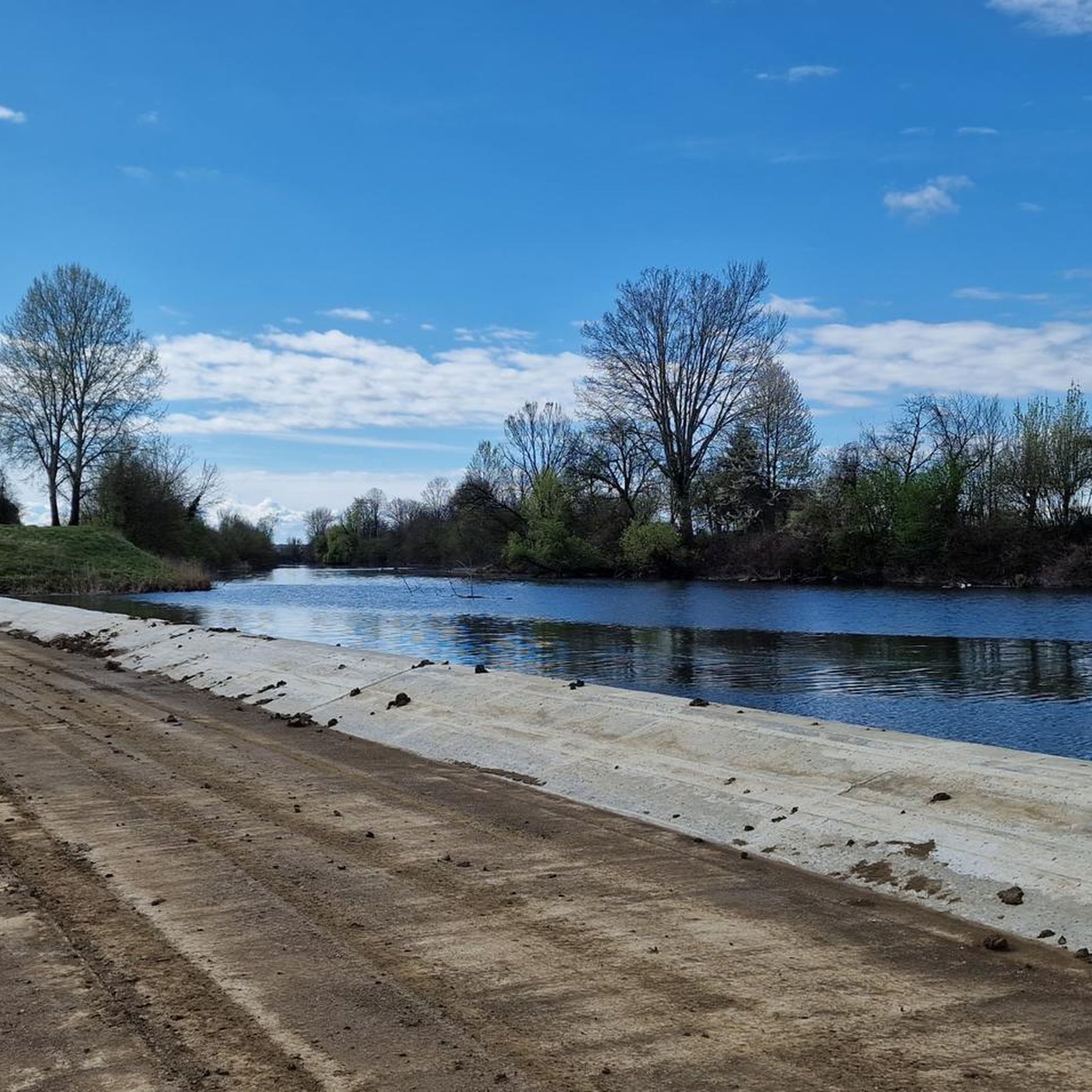
Touring cycling around Markušica offers routes through the characteristic Pannonian landscapes of Vukovar-Srijem County, Croatia. The region features mild elevations, making it suitable for various skill levels. Cyclists can expect to traverse agricultural fields, vineyards, and forested areas, often integrated into regional cycling networks like the Syrmia cycle route. This area provides a pleasant environment for outdoor activities, connecting to the international Danube cycle route.
Best touring cycling routes around Markušica
- The most popular touring cycling route is Vukovar Water…
Last updated: July 1, 2026
5.0
(1)
9
riders
46.5km
02:42
170m
170m
Moderate bike ride. Good fitness required. Mostly paved surfaces. Suitable for all skill levels.
5.0
(2)
8
riders
Easy bike ride. Great for any fitness level. Mostly paved surfaces. Suitable for all skill levels.

Sign up for free
2
riders
51.0km
02:56
160m
160m
Moderate bike ride. Good fitness required. Mostly paved surfaces. Suitable for all skill levels.
2
riders
Easy bike ride. Great for any fitness level. Mostly paved surfaces. Suitable for all skill levels.
Our route recommendations are based on thousands of hikes, rides, and runs completed by other people on komoot.
Start today with a free account
Your next adventure awaits.
Login or Signup
Popular around Markušica
Tips from the Community

It's visible from afar. It commemorates the 1991 massacre.
0
0

Nuštar is an old village in Slavonia. Its history dates back to the Middle Ages (12th century). From the very beginning, the village was inhabited almost exclusively by Croats.
0
0
Beautiful view from the water tower on the Dunav river and the city of Vukovar
0
0
Retkovci is a populated place in the municipality of Ivankovo, Vukovar-Srijem County, Republic of Croatia
0
0
The tower dates back to 1840. The nave was built in 1860 under the patronage of the Khuen family, and the Austrian Emperor Ferdinand I and the parish priest during the construction, Antun Bošnjaković, joined in with the donations. It was significantly damaged during the Homeland War, which was followed by its reconstruction, in which it was extended, and the reconstruction ended in 2003. It houses the organ of G. Peter Titz from 1863, made in Vienna. In them, in the player box, there is also a "psychharmonic", which plays independently of the speakers, and has 1st manual, 4th octaves and 8th registers. The altarpiece was painted by Fridrich Sturm in 1850.
0
0
In 1991, during the battle for Vukovar, the water tower was badly damaged by Serbian forces. It received about 640 enemy missiles and became a symbol of the city's suffering and resistance
0
0
It was erected in honor and memory of all those who gave their lives for a free and independent Croatia. The author of the memorial cross is the Croatian sculptor Šime Vidulin from Pula. The cross was placed in October 1998. It is a gift from the Croatian Navy of the Pula assembly area.
0
0
Frequently Asked Questions
How many touring cycling routes are available around Markušica?
There are 5 touring cycling routes available around Markušica on komoot, offering a variety of experiences through the region's Pannonian landscapes.
What kind of terrain can I expect on touring cycling routes near Markušica?
The terrain around Markušica is characterized by mild elevations, typical of the Pannonian basin. You can expect to cycle through agricultural fields, vineyards, and forested areas, often alongside rivers like the Danube, Sava, Bosut, and Vuka. The routes are generally flat to gently rolling, making them suitable for various skill levels.
Are there any circular touring cycling routes in Markušica?
Yes, many of the touring cycling routes around Markušica are designed as loops. For example, the Vukovar Water Tower – Vukovar Water Tower loop from Vinkovci Bolnica is a popular circular option. The region is also part of the Syrmia cycle route, which is a circular path connecting different parts of Vukovar-Srijem County.
Are the touring cycling routes around Markušica suitable for beginners or families?
Yes, the routes around Markušica are generally suitable for beginners and families due to their mild elevations. There are 2 easy routes available, such as the Sunset View of Banja Lake – Retkovci Village loop from Vinkovačko Novo Selo, which offers scenic views and passes through local villages.
What are the typical distances and elevations for touring cycling routes in Markušica?
The touring cycling routes around Markušica vary in length, with distances ranging from approximately 17 km to 51 km. Elevations are generally mild, with total ascents typically between 40 and 175 meters, reflecting the flat to gently rolling Pannonian landscape.
When is the best time of year to go touring cycling in Markušica?
Markušica experiences a moderate continental climate, making spring and autumn ideal for touring cycling. During these seasons, temperatures are pleasant, and the natural scenery of fields, vineyards, and forests is particularly beautiful. Summer can also be enjoyable, though it may be warmer.
What landmarks or points of interest can I see while cycling near Markušica?
While cycling near Markušica, you can experience the rich agricultural landscapes, including fields and vineyards, and pass through charming settled areas. Some routes may take you near significant regional landmarks like the Vukovar Water Tower, a symbol of Croatian history, or offer scenic views of natural features such as Banja Lake, as seen on the Yellow Building in Vinkovci – Sunset View of Banja Lake loop from Vinkovačko Novo Selo route.
Are there any moderate touring cycling routes for those looking for a bit more challenge?
Yes, there are 3 moderate touring cycling routes available. For instance, the Winterhafen Marina – Secessionist Fountain loop from Vodovod is a 49.9 km route that leads through varied terrain, offering a slightly longer and more engaging ride.
How do other touring cyclists rate the routes around Markušica?
The touring cycling routes around Markušica are highly rated by the komoot community, with an average score of 5.0 stars. Cyclists often appreciate the pleasant environment and varied Pannonian landscapes.
Is it possible to connect to longer, international cycling routes from Markušica?
Yes, Markušica is integrated into regional cycling networks. The Syrmia cycle route, which passes through the area, is an extension of the international Danube cycle route (Eurovelo 6). This allows cyclists to embark on longer tours, exploring the entire Vukovar-Srijem County and beyond along the Danube River.
What are the characteristics of the Pannonian landscapes mentioned for cycling in Markušica?
The Pannonian landscapes around Markušica offer a unique cycling experience characterized by vast agricultural fields, picturesque vineyards, and tranquil forested areas. The terrain is generally flat or gently undulating, providing expansive views and a sense of open space, often with rivers flowing through the scenery.
Most popular routes around Markušica

Get inspired with the komoot mobile app


Explore more
Browse the best Cycling routes in other regions.
