Attractions and Places To See around gmina Dziadowa Kłoda - Top 10
Best attractions and places to see around gmina Dziadowa Kłoda include a variety of natural features, historical landmarks, and cultural sites. The region features a gentle moraine landscape, part of the Wieruszowska Upland and Oleśnica Plain, with more varied terrain in the Twardogórskie Hills to the west. This area offers opportunities for exploring historical architecture and engaging in outdoor recreation.
Best attractions and places to see around gmina Dziadowa Kłoda
- The most popular attractions is Penitential Cross in Kijowice,…
Last updated: July 1, 2026
Stradomia Reservoir Beach
Highlight • Beach
Translated by Google •
Tip by

Penitential Cross in Kijowice
Highlight • Monument
Translated by Google •
Tip by

Sign up now to discover places like this
Get recommendations on the best single tracks, peaks, & plenty of other exciting outdoor places.
Sign up for free
Bierutów Castle Portal with Podiebrad Coat of Arms
Highlight • Castle
Translated by Google •
Tip by
Ruins of the Holy Trinity Evangelical Cemetery Church
Highlight • Historical Site
Translated by Google •
Tip by
Penitential Cross in Ligotka
Highlight • Monument
Translated by Google •
Tip by

Sign up for free to discover even more attractions around gmina Dziadowa Kłoda.
Sign up for free
Already have an account?
Start today with a free account
Your next adventure awaits.
Login or Signup

Tips from the Community

Accessible. Converted to residential use at some point. It looks like a tenement building.
0
0

A great tourist and recreational showcase of the region and an attractive place for lovers of outdoor recreation. A sandy, 300-meter beach allows for pleasant sunbathing. From the separate guarded bathing area there is a gentle descent to the water and children can safely splash around under the watchful eye of parents and lifeguards. During the holiday season, catering points and a water equipment rental (kayaks, water bikes) are open. For those who like to relax close to nature, staying overnight at a campsite - right by the beach - can be a great pleasure. Do you need activity? On the reservoir there are beach volleyball courts, football and basketball courts, two boules tracks, a rope playground for children with a sandbox and plenty of space for other beach games. There are also great conditions for sailing, windsurfing and fishing.
1
0

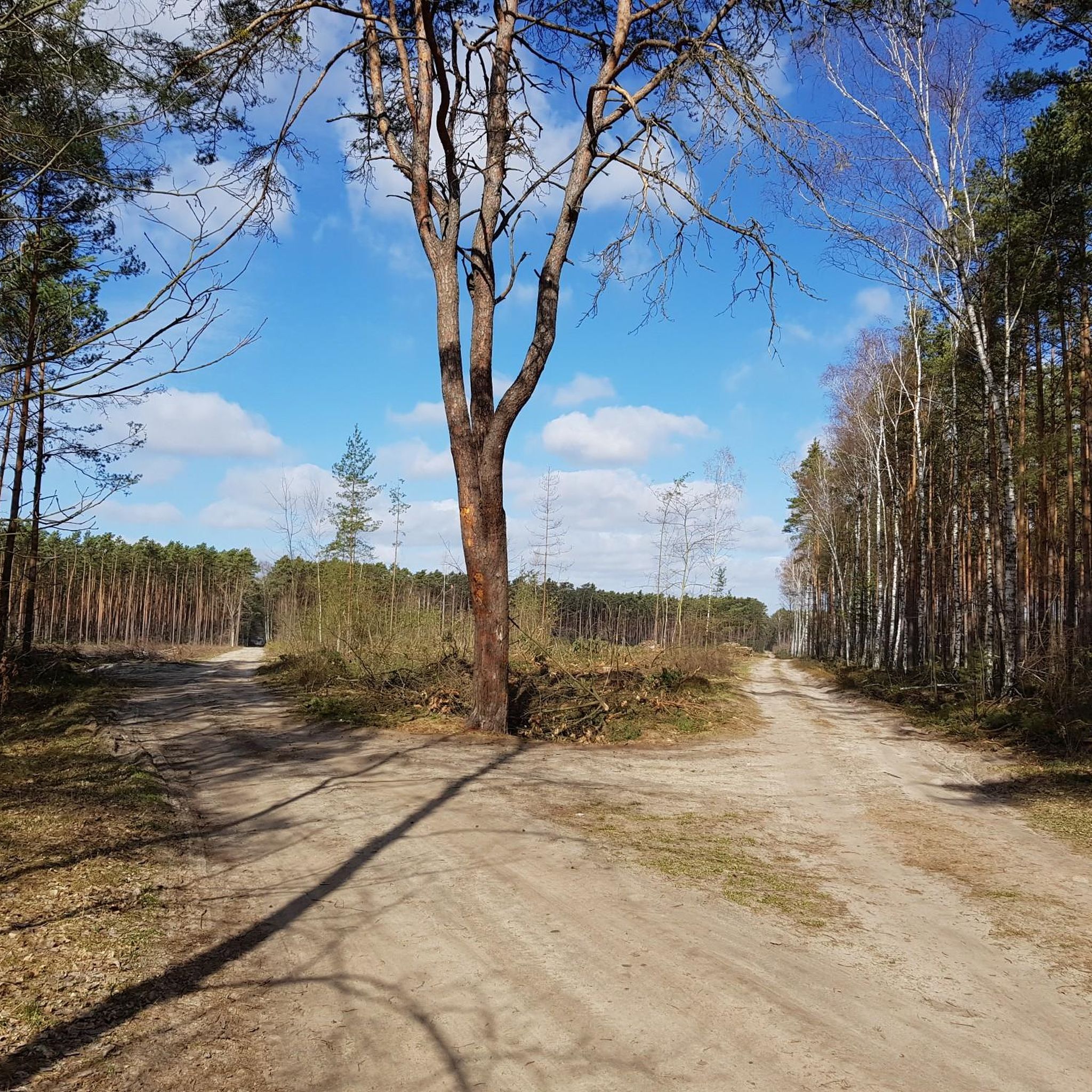
Penitential cross in Kijowice - a granite penitential cross, located in the forest at the crossroads, about 300 m north of the village of Kijowice, located near the town of Bierutów. The cross probably comes from the 14th century, is over 240 cm high (which means that it is the highest penitential cross in Lower Silesia), the arm span is 109 cm and the thickness is 12 cm. The cross was carved out of a uniform granite boulder, the surface of which is decorated with an engraving depicting the crucified Jesus Christ and a figure praying at his feet. Along the entire edge there is a Gothic inscription, probably containing the words of the prayer "Our Father". The cross from Kijowice is characterized by particularly careful workmanship, and it was probably erected by the murderer at the crime scene. The local legend says that a man named Konrad put it on the site of the fratricide. In October 2009, the cross was broken and only a thirty-centimeter shaft remained. The damaged cross was repaired and in spring 2011 it was completely replaced in its former place. After the repair, the cross was set several centimeters higher and was cleaned of dirt.
1
0
The former Evangelical cemetery church of St. Trójcy was built in front of the former Wrocław Gate after the beginning of the Thirty Years' War with the support of Fr. Henryk Wacław Podiebrad. The walls were erected in the years 1622÷8 (according to his own design) by the duke's court bricklayer A. Walter. P Within the next 2 years, master carpenter J. Voyt made the first roof. The church was consecrated in 1631. In 1642 the roof was covered with tiles. After the town fire in 1659, it served as a substitute parish church. At the end of the 17th century (on the order of priest Krystian Ulryk) Polish pastor Tomasz Pluta preached there. 1931 refurbished. 1945 burnt. Currently, the church is a ruin (with only the capital walls preserved) in the city park established after 1945 on the site of the cemetery. Gothic, oriented, made of brick with single-step buttresses interrupting the course of the window cornice. It was erected on the plan of an almost isosceles cross (the western arm is longer by a span) with semicircular arms. The façades are decorated with an eaves cornice made of bricks stacked upright. In ogival recesses, the window openings are much narrower than them. From the west, south and Mon. on the axes of the arms of the cross, there are ogival entrance openings (walled up) and blind windows above them. In the corner of the arms (from the NW) of the 20th-century extension (crematorium?) a high four-sided chimney has been preserved. Once covered with a wooden ceiling. The whole is covered with a multi-slope roof covered with tiles, with a turret at the intersection of ridges.
1
0
The castle was erected at the beginning of the 14th century, probably in 1323, when Henry V the Fat renounced the rights to this part of the Duchy of Wrocław and Bierutów was taken over by the dukes of Głogów and Oleśnica. Previously, there was a wooden and earth stronghold in this place, probably founded in the 13th century by Henry III or Henry IV Probus. At the beginning of the 16th century, the Bierutów castle passed into the possession of the Poděbradczyków family, who until 1534 transformed the austere Gothic stronghold into a Renaissance residence with an arcaded courtyard, later introducing Baroque elements. The next owners were the Schindles. The castle suffered several times and was modernized. Among other things, in 1603 it suffered a fire together with the town and was rebuilt around 1620, then the tower was raised, and soon after it did not resist damage during the Thirty Years' War. After Schindlach, the castle passed into the hands of Kristian Ulryk Wirtenberg, who cared very much about his estate. On his initiative, at the end of the 17th century, a gate was erected, the buildings were raised by one floor and gardens were established outside the castle walls. Despite this, in the 18th century it began to deteriorate, and this condition was deepened in the 19th century. In 1886-1887 the eastern wing was so ruined that it was demolished. After the Second World War, which dealt with the remains quite graciously, offices found their place in the castle, from which the forestry inspectorate operates to this day. The tower from the times of the Poděbrady people, which was added in the early 17th century, has been preserved very well from the castle, square at the bottom and octagonal at the top. Currently, it stands alone, included in a series of perimeter walls, but once it was in one block with the eastern wing of the castle. In addition to the tower, there is also an entrance gate and one of the castle buildings with a decorative portal with the coat of arms of the Poděbrady family. The building has a room with stucco decoration on the second floor.
0
0

good place for rest, open swimming pool during the holiday season, gastronomy, water equipment, beach etc.
1
0

In the village of Ligotka (Ellguth) in the Namysłów commune, on the left side of the road leading from Namysłów to Dębnik, at the crossroads, there is a stone, monolithic crucifix, considered a relic of the old criminal law, i.e. the so-called penance cross. Crosses of this type were once supposed to be erected by the murderer at the scene of his crime as compensation.
4
0
Frequently Asked Questions
What historical sites can I explore in gmina Dziadowa Kłoda?
The region offers several historical points of interest. You can visit the unique Penitential Cross in Kijowice, a 14th-century granite cross with an engraving of Christ. Another significant site is the Ruins of the Holy Trinity Evangelical Cemetery Church, a 17th-century church now preserved as ruins within a city park. Additionally, the Dalborowice Palace Complex, with its ruined palace and landscape park from the 18th-19th centuries, and the Filial Church of St. Giles in Dalborowice (1917) are notable historical landmarks.
Are there any family-friendly attractions or activities in the area?
Yes, Stradomia Reservoir Beach is an excellent family-friendly destination. It features a sandy beach, a guarded bathing area, catering points, and water equipment rental. Children can enjoy a rope playground and sandbox, while families can play beach volleyball, football, or basketball. The reservoir also offers camping facilities.
What outdoor activities are available around gmina Dziadowa Kłoda?
Gmina Dziadowa Kłoda is well-suited for outdoor recreation. You can enjoy cycling and hiking through numerous green areas and forested complexes. The Stradomia Reservoir Beach provides opportunities for swimming, sunbathing, and water sports like kayaking and windsurfing. For more structured activities, explore the various running and cycling routes in the area.
Where can I find cycling routes near gmina Dziadowa Kłoda?
The region boasts several scenic cycling routes. You can find options for both road cycling and touring. For example, there's a route from Syców to the Forest Arboretum, and longer routes like 'Wzdłuż Miłki i Widawy' and 'Skrajem lasu'. You can explore detailed routes and guides for Road Cycling and General Cycling around gmina Dziadowa Kłoda.
Are there any running trails in gmina Dziadowa Kłoda?
Yes, there are several running trails available. You can find routes like the 'Długa Grobla loop from Syców' or the 'Zalew Stradomia loop from Stradomia Wierzchnia'. These trails offer various distances and difficulty levels, suitable for different fitness levels. For more options, check out the Running Trails around gmina Dziadowa Kłoda guide.
What natural features characterize the gmina Dziadowa Kłoda region?
The gmina Dziadowa Kłoda region is characterized by a gentle moraine landscape, forming part of the Wieruszowska Upland and Oleśnica Plain. To the west, you'll find the more varied terrain of the Twardogórskie Hills. Key natural attractions include the Stradomia Wierzchnia Reservoir and the nearby Forest Arboretum them. prof. Stefan Białobok, offering serene natural environments.
What is the Bierutów Castle Portal with Podiebrad Coat of Arms?
The Bierutów Castle Portal with Podiebrad Coat of Arms is a historical remnant of a castle originally erected in the early 14th century. While much of the castle is gone, a well-preserved tower and an entrance gate with a decorative portal featuring the Podiebrady family coat of arms remain. The site reflects centuries of architectural changes, from Gothic to Renaissance and Baroque.
Can I find other penitential crosses in the area besides the one in Kijowice?
Yes, another notable historical monument is the Penitential Cross in Ligotka. Located in the village of Ligotka, this stone, monolithic crucifix is considered a relic of old criminal law, similar to the one in Kijowice, and was traditionally erected at the scene of a crime.
What is the best time to visit gmina Dziadowa Kłoda for outdoor activities?
The region is ideal for outdoor activities during the warmer months, typically from spring through early autumn. This period offers pleasant weather for cycling, hiking, and enjoying water sports at the Stradomia Reservoir Beach. The holiday season, in particular, sees the reservoir's facilities fully operational.
Are there any specific cycling routes that pass by natural attractions?
Yes, a scenic cycling route from Syców leads directly to the Forest Arboretum, passing through Syców's city park and alongside arboretum ponds. This route is approximately 20 km long and offers a pleasant way to experience the region's natural beauty.
What kind of historical buildings can be found in the villages of gmina Dziadowa Kłoda?
Beyond major landmarks, many villages within gmina Dziadowa Kłoda feature various residential houses and farmsteads dating from the late 19th and early 20th centuries. These buildings are recognized as historical objects, offering a glimpse into the region's past architecture and rural heritage.
Most popular routes around gmina Dziadowa Kłoda

Get inspired with the komoot mobile app


Explore more
Still not found the Highlight you’re looking for? See guides of the top attractions in other regions:
