Attractions and Places To See around Kargowa - Top 20
Best attractions and places to see around Kargowa include a blend of historical landmarks, cultural sites, and points of interest. Located in western Poland's Lubusz Voivodeship, the town and its surroundings offer diverse exploration opportunities. Visitors can find historical buildings, railway heritage, and natural viewpoints. The region provides a variety of attractions for those interested in history and outdoor exploration.
Best attractions and places to see around Kargowa
- The most popular attractions is Wolsztyn Steam Locomotive Depot, a man_made_monument…
Last updated: October 18, 2026
Wolsztyn Steam Locomotive Depot
Highlight • Monument
More information: de.wikipedia.org/wiki/Bahnbetriebswerk_Wolsztyn and parowozowniawolsztyn.pl
Translated by Google •
Tip by

Trzebiechów Palace
Highlight • Castle

Sign up now to discover places like this
Get recommendations on the best single tracks, peaks, & plenty of other exciting outdoor places.
Konotop Railway Station Buildings
Highlight • Monument
The history of the Konotop station (formerly Konradsthal) begins with the construction of the …
Translated by Google •
Tip by

End of Kolej na Rower Rail Trail
Highlight • Cycleway
Old railway line to Wolstzyn.
More information: kolejnarower.pl
Translated by Google •
Tip by
Castle in Zabor
Highlight • Castle
Translated by Google •
Tip by
Sign up for free to discover even more attractions around Kargowa.
Already have an account?
Start today with a free account
Your next adventure awaits.

Tips from the Community

The Trzebiechowski palace and park complex in its current form was created between 1876-1901 in the style of French 18th-century residential architecture. The author of the last reconstruction of the palace is the renowned Austrian architect Wiktor Rumpelmayer. Currently, the palace houses an educational center.
0
0

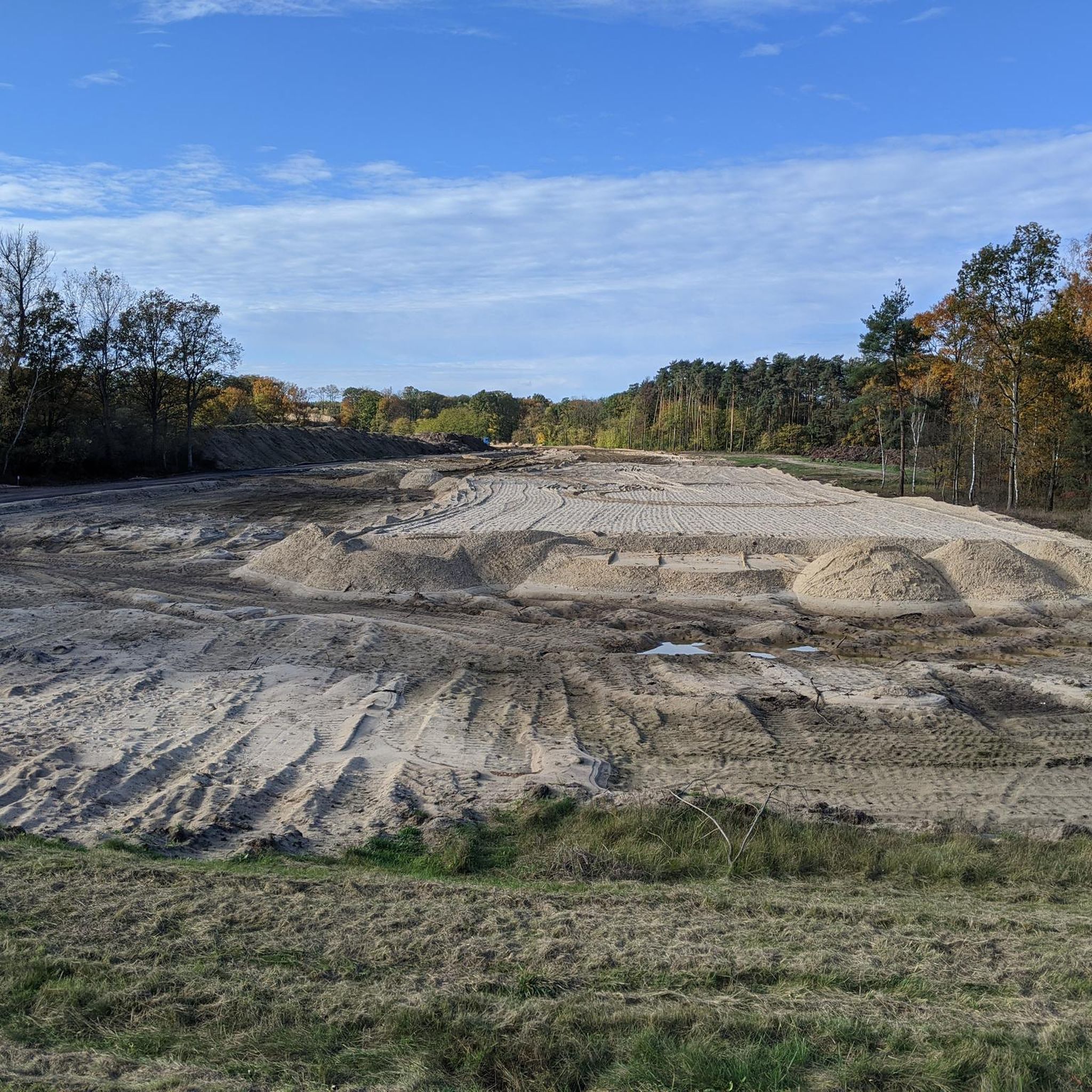
It looks bad. No information that it's the end and what's next. About 4 km past the town of Kolsko in the middle of nowhere. I had a quiet hope to reach Wolsztyn, and indeed I did, but via the national road no. 315. For a moment there is still a path through the forest to the town of Świętno, but no longer asphalt.. In the other direction towards Stypułowa, I reached the town, the settlement of Rudno and lost the marking. Later a storm and the trip was over. Through Nowa Sól, it sometimes leads along a cycle path through the city..
0
0

Overall, it's a shame for Wielkopolska not to have completed such a beautiful route
1
0

Attraction on the ddr route
0
0

It even captivates those who have no interest in railways!
0
0


The Konotop railway station is a small but extremely interesting town on the Lubuskie railway map. The history of the Konotop station (formerly Konradsthal) begins with the construction of the railway line connecting Żagań with Wolsztyn (currently line no. 371). This section, passing through Konotop, was put into service in 1905. The construction of the station was a response to the growing transport needs of the region, which was developing dynamically at that time. The station served both passenger and freight functions, serving the surrounding villages and landed estates. However, the real boom of the Konotop station came in 1908, when the second, transverse railway line was opened, connecting Nowa Sól with Wschowa and Grodziec (line no. 372). Konotop then became an important railway junction, where two significant routes intersected. At that time, the station had an extensive infrastructure: platforms, a station building, warehouses, loading bays and side tracks. After World War II and the annexation of these areas to Poland, the Konotop station, like the entire railway network, came under the management of the Polish State Railways (PKP). For some time, the station continued to perform its functions, handling both passenger and freight traffic. However, over the years, as road transport developed and the railways were restructured, its importance began to decrease. The first stage of the decline was the suspension of passenger traffic on line no. 372 (Nowa Sól – Wschowa) in 1993, and in subsequent years also of freight traffic. Ultimately, this line was dismantled on the Konotop – Nowa Sól section. Passenger traffic continued longer on the main line no. 371 (Żagań – Wolsztyn). Until the beginning of the 21st century, Konotop was still a passenger stop. However, over time, due to the decrease in the number of passengers and cost rationalization by PKP, passenger traffic on the entire line no. 371 was suspended in 2011. The inactive section of line 372 towards Nowa Sól has been adapted into a bicycle path, which gives it new life and contributes to the development of active tourism in the region.
2
0

The Baroque castle (palace) was rebuilt in 1745 and 1957. From the 18th century, it was the property of the Counts of Cosel, then the Princes of Siedlisko: Johann Carl, Prince of Schönaich-Carolath, married to Johanna Wilhelmina, Princess of Anhalt-Köthen, and their younger son Ferdinand (born 1763)[3]. The last owner of the palace before World War II was the second wife of the last German Emperor, Wilhelm II Hohenzollern, Hermina, who lived in the palace until 1922 and after the emperor's death until April 1945. From 1956, the palace housed a tuberculosis preventorium for children, from 1976 - a Children's Sanatorium, and from 1998 - a Centre for the Treatment of Children and Youth. The castle together with the farmstead, which includes: three outbuildings, an outbuilding (currently a school), a stable (currently a hotel), a morgue, a greenhouse, two utility buildings and a park constitute the castle complex. Above the main entrance in the cartouche are the coats of arms: the Schönaich-Carolath family (on the left) and a complication of coats of arms (on the right, including: in the central field of the shield and in the upper right field the coat of arms of Saxony, Count von Schlabrendorf).
0
0
Frequently Asked Questions
What historical landmarks can I explore in Kargowa itself?
In Kargowa, you can visit the historic Town Hall and Market Square, which features a Gothic Revival building from 1745. The Kargowa Palace, with its extensive park, also offers a glimpse into the town's past, having been acquired and expanded by King Augustus II the Strong. Additionally, the Maximilian Kolbe Church, built in the early 19th century, and the Monument to the Heroes of the Greater Poland Uprising are notable historical sites.
Are there any unique cultural or industrial heritage sites near Kargowa?
Yes, a significant site is the Wolsztyn Steam Locomotive Depot, which is unique as the only operational steam locomotive depot in Europe still servicing regular railway lines. It features workshops, machinery, and a small museum. Another interesting site for railway enthusiasts is the Konotop Railway Station Buildings, a former important railway junction from the early 20th century.
Where can I find panoramic views of the area around Kargowa?
For panoramic views, head to the Świętno Observation Tower. This 29-meter high wooden tower is situated on one of the commune's highest points, offering expansive views from its terrace, nearly 114 meters above sea level, over the surrounding natural areas.
What kind of outdoor activities or trails are available near Kargowa?
The area around Kargowa offers various outdoor activities. You can find numerous routes for hiking, gravel biking, and mountain biking. For example, there are easy hikes like the 'Wieża widokowa w Świętnie loop from Świętno' and 'Święte loop from Obra'. Cyclists can explore routes such as the 'Świętno Observation Tower – Bridge Over the Canal loop from Rudno' for gravel biking, or more challenging MTB trails like the 'View of Lake Wolsztyńskie – Promenade on Lake Wolsztyńskie loop from Rudno'. You can find more details on these activities in the easy hikes, gravel biking, and MTB trails guides.
Are there family-friendly attractions around Kargowa?
Yes, the Wolsztyn Steam Locomotive Depot is considered family-friendly, offering an engaging experience for all ages with its active workshops and museum. The Trzebiechów Palace, with its adjoining park, is also freely accessible and can be a pleasant visit for families.
What is the best time to visit Kargowa's attractions?
The region around Kargowa is particularly picturesque in autumn, especially the extensive park adjacent to the Kargowa Palace. Spring and summer also offer pleasant weather for exploring outdoor attractions like the Świętno Observation Tower and enjoying the various hiking and biking trails.
What do visitors enjoy most about the attractions near Kargowa?
Visitors frequently appreciate the unique historical and industrial heritage, particularly the Wolsztyn Steam Locomotive Depot for its active railway history. The panoramic views from the Świętno Observation Tower are also highly rated. The blend of historical sites, railway heritage, and scenic viewpoints offers a diverse and engaging experience.
Are there any castles or palaces to visit in the vicinity of Kargowa?
Beyond Kargowa Palace, you can visit the Trzebiechów Palace, which was built for the Reuss prince couple and is freely accessible, including its park. Another notable historical site is the Castle in Zabor, a Baroque castle with a rich history, though it is currently privately used.
Are there any easy hiking trails suitable for beginners near Kargowa?
Yes, there are several easy hiking trails around Kargowa. Examples include the 'Zamek Sulechowski loop from Sulechów' (7.47 km), 'Sunflower Field loop from Sulechów' (6.04 km), and 'Wanderer's Bench – Natural Monument loop from Wilcze' (5.69 km). These trails are generally suitable for beginners looking for a relaxed outdoor experience. You can find more options in the Easy hikes around Kargowa guide.
Can I find cafes or places to eat near the main attractions?
While specific cafes are not detailed for every attraction, the Town Hall and Market Square in Kargowa, being the heart of the town, is surrounded by residential and commercial buildings, suggesting that local eateries and cafes would be available in this central area. For attractions further afield, it's advisable to check local listings or plan your visit accordingly.
What can I do in Kargowa if it's raining?
If the weather is unfavorable, you can explore indoor historical sites such as the Town Hall in Kargowa or the small museum at the Wolsztyn Steam Locomotive Depot, which provides insight into railway history. The interiors of the Maximilian Kolbe Church also offer a cultural experience.
Are there any hidden gems or less-known outdoor spots around Kargowa?
The Konotop Railway Station Buildings, while historically significant, might be considered a hidden gem for those interested in railway heritage, offering a glimpse into a former important junction. The inactive section of line 372 towards Nowa Sól has also been adapted into a bicycle path, offering a unique way to explore the region's natural areas.
Most popular attractions around Kargowa

Get inspired with the komoot mobile app


Explore more
Still not found the Highlight you’re looking for? See guides of the top attractions in other regions:
