Attractions and Places To See around Strachówka - Top 20
Best attractions and places to see around Strachówka are found in the Masovian Voivodeship of Poland, characterized by its flat terrain and significant forest cover. This municipality offers a blend of natural beauty and historical intrigue, situated in the northeastern part of the Central Masovian Lowland. Approximately 40% of the area is covered by forests, contributing to its favorable climatic conditions and biodiversity. The region provides diverse opportunities for exploration.
Best attractions and places to see around Strachówka
- The most popular attractions is Church of Divine Mercy, a religious building that was originally a 19th-century wooden church. It was moved to its current location in 2009 and consecrated in 2010 after restoration.
- Another must-see spot is Bridge Over the Czarna River and Old Mill Ruins, a historical site featuring a small bridge and the remains of an old mill. This location offers a quiet spot away from traffic.
- Visitors also love Śliże Nature Reserve, a natural monument protecting two overgrowing dystrophic lakes. It is known for its peat bog and a singletrack trail.
- Strachówka is known for its historical sites, natural features, and religious buildings. The area offers a variety of attractions to see and explore, from natural reserves to architectural landmarks.
- The attractions around Strachówka are appreciated by the komoot community, with 32 upvotes and 29 photos shared by visitors.
Last updated: July 1, 2026
Church of Divine Mercy
Highlight • Religious Site
Tip by

Śliże Nature Reserve
Highlight • Natural Monument
Translated by Google •
Tip by

Sign up now to discover places like this
Get recommendations on the best single tracks, peaks, & plenty of other exciting outdoor places.
Sign up for free
Łochów Palace
Highlight • Historical Site
Translated by Google •
Tip by

Cross at the Intersection
Highlight • Monument
Translated by Google •
Tip by

Church of the Immaculate Conception of the Blessed Virgin Mary in Kamionna
Highlight • Religious Site
I managed to find a sexton who opened the entrance for me so I could see what it looked like from the inside, but unfortunately I didn't take any photos (if you also find him, I recommend asking about the history of the church). So you won't always be able to get in, but if you can, I recommend it.
Translated by Google •
Tip by

Sign up for free to discover even more attractions around Strachówka.
Sign up for free
Already have an account?
Start today with a free account
Your next adventure awaits.
Login or Signup


Tips from the Community

The temple was built in 1932 in the village of Wólka Dobryńska, in the Zalesie commune, in the Biała Podlaska district. It was originally named after St. Stanislaus Kostka. The church was built thanks to the efforts of Father Franciszek Michalik. It was designed by the architect Mr. Mazur. The builders of the temple were carpenters Józef Kozerski, Antoni Lewczuk, Wiktor and Antoni Arseniuków, Julian Romaniuk. In 2009, the building was moved by the Arche SA company to its current location. Thanks to the support of the president of this company, Władysław Grochowski, the church was restored. On May 13, 2010, on the Sunday of the Ascension of the Lord, the then bishop of Drohiczyn Antoni Dydycz consecrated the temple, giving it the name of Divine Mercy. During this ceremony, a plaque commemorating the founder was placed in the church.
0
0

The palace and park complex is a 19th-century building commissioned by Count Józef Hornowski. Originally, it was a single-storey building with a columned portico, the construction of which was completed in 1830. During the later expansion, carried out in the years 1852-1854 according to the design and under the supervision of the leading architect of the era, Bolesław Paweł Podczaszyński, two-storey projections and a front portico with cast iron columns were made. The interiors were maintained in the neo-Gothic style typical of the 19th century. https://www.palacifolwarklochow.pl/o-nas/historia-palacu-z-xix Currently a hotel with beautiful grounds!
1
0

19th century manor house, currently a hotel facility with SPA and restaurant. Large recreational area around the manor house.
1
0

here is a historical note: https://www.polskiezabytki.pl/m/obiekt/3478/Lochow/
0
0

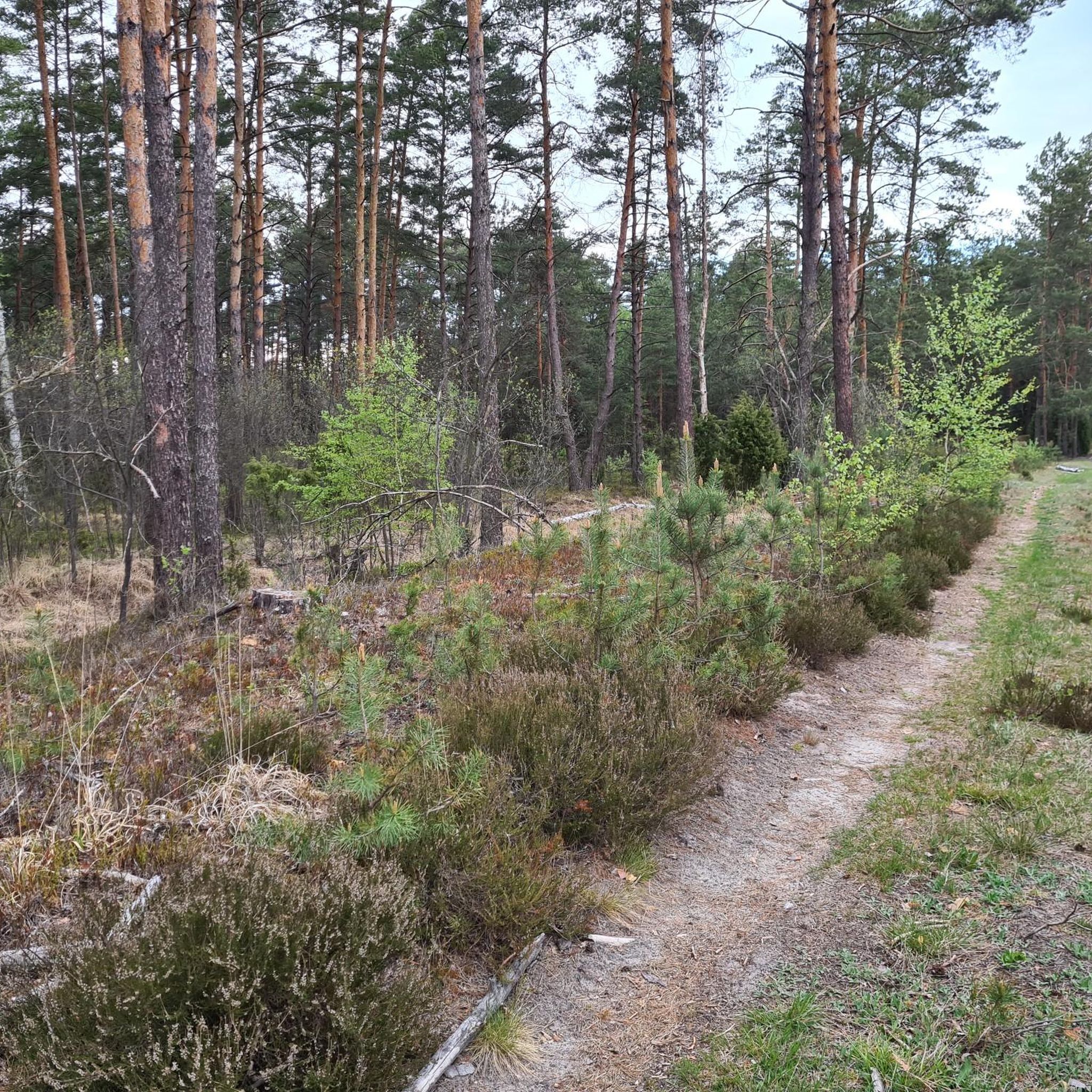
Moderately difficult dirt road, nice lake and forest, before entering the reserve it is worth driving up and seeing the old Jewish cemetery. The prettiest times there are Spring and Autumn. A nice break from the asphalt route.
1
0

A very nice place with its history, although I was surprised that it was in such a small town. I managed to find a sexton who opened the entrance for me so I could see what it looked like from the inside, but unfortunately I didn't take any photos (if you also find him, I recommend asking about the history of the church). So you won't always be able to get in, but if you can, I recommend it.
0
0
Crosses were erected to commemorate an important event or to confirm one's religious commitment. They were built in gratitude for saving a life or receiving grace. They were also boundary markers that marked the end and beginning of a village or as road signs. Karawaks protected against epidemics. In Poland, there is also a custom of erecting crosses by the roads to commemorate tragic deaths in road accidents. Crosses are made of various materials. An example are crosses with Christ cut out of sheet metal. They were mainly created in the period from the second half of the 19th to the mid-20th century.
0
0
Frequently Asked Questions
What natural attractions can I explore in Strachówka?
Strachówka boasts significant natural beauty, including the Śliże Nature Reserve, a peat bog reserve protecting two overgrowing dystrophic lakes, known for its unique flora and fauna. Additionally, the region is home to the Czernik Peat Bogs, a vital habitat for rare species like the bog fritillary butterfly and various birds, as well as protected plants such as round-leaved sundew and bog rosemary. The municipality is also traversed by small rivers like the Osownica, a tributary of the Liwiec, adding to its natural charm.
Are there any historical sites to visit in Strachówka?
Yes, Strachówka offers several historical points of interest. You can visit the Church of Divine Mercy, a 19th-century wooden church that was moved and restored. The Bridge Over the Czarna River and Old Mill Ruins provides a glimpse into the area's past. The region also features a 19th-century Manor House, historically owned by the Sobieski family, great-grandparents of poet Cyprian Kamil Norwid, and local legend suggests the village originated along an ancient 13th-century trade route.
What kind of outdoor activities can I do around Strachówka?
The flat terrain and extensive forest cover in Strachówka make it ideal for various outdoor activities. You can find numerous routes for hiking, running, and gravel biking. For easy walks, explore the easy hikes around Strachówka. If you're interested in running, there are several running trails around Strachówka, including longer routes through natural reserves. Cyclists can enjoy gravel biking routes that take you through forests and past historical sites.
Are there family-friendly attractions in the area?
Yes, several attractions around Strachówka are suitable for families. The Church of Divine Mercy and the Bridge Over the Czarna River and Old Mill Ruins are accessible and interesting for all ages. The Łochów Palace, with its large recreational area, hotel facilities, and restaurant, offers a pleasant outing for families. Additionally, the natural reserves provide opportunities for gentle walks and wildlife spotting, which can be engaging for children.
What is the best time of year to visit Strachówka for outdoor activities?
Spring and Autumn are particularly recommended for visiting Strachówka, especially for enjoying its natural beauty and outdoor activities. The Śliże Nature Reserve is noted to be prettiest during these seasons. The mild weather in spring brings blooming flora, while autumn offers vibrant foliage, making hiking, cycling, and exploring the peat bogs and forests especially pleasant.
Where can I find a quiet spot for a break near Strachówka?
For a peaceful break away from noise, consider visiting the Bridge Over the Czarna River and Old Mill Ruins. This historical site offers a quiet setting by the river, perfect for a moment of tranquility.
Are there any unique religious sites in the Strachówka area?
Beyond the main parish church, you can discover the Church of Divine Mercy, a beautifully restored 19th-century wooden church. Further afield, the Chapel of the Virgin Mary in Mińsk Mazowiecki is a charming, somewhat hidden chapel known for its distinctive colors reminiscent of Santorini architecture.
What kind of terrain can I expect when hiking or cycling in Strachówka?
Strachówka is characterized by its flat and even terrain, situated within the Central Masovian Lowland. This makes it generally accessible for hiking and cycling, with many easy to moderate routes. While some trails, like those in the Śliże Nature Reserve, might be singletrack or dirt roads, significant elevation changes are uncommon, providing a comfortable experience for most outdoor enthusiasts.
Can I find places to eat or stay near the attractions?
Yes, the Łochów Palace complex offers both restaurant facilities and accommodation as a hotel and SPA. This provides a convenient option for dining and staying in a historically rich setting with beautiful grounds.
What wildlife can be spotted in the natural areas of Strachówka?
The Czernik Peat Bogs are particularly rich in wildlife. You might spot rare species such as the bog fritillary butterfly, the greater scaup dragonfly, and the common European viper. Since 2008, a beaver family has also inhabited the area. The peat bogs are also a breeding ground for various birds, including cranes, mallards, garganeys, and solitary snipes.
Are there any specific trails for intermediate hikers or cyclists?
Yes, for those seeking a bit more challenge, the Śliże Nature Reserve features an intermediate singletrack trail. Additionally, some of the running trails and gravel biking routes around Strachówka are rated as moderate, offering a more engaging experience than easy paths.
What is the significance of the 19th-century Manor House in Strachówka?
The 19th-century Manor House in Strachówka holds historical significance due to its past ownership by the Sobieski family at the turn of the 18th and 19th centuries. This family were the great-grandparents of the renowned Polish poet Cyprian Kamil Norwid, adding a notable cultural connection to the site.

Get inspired with the komoot mobile app


Explore more
Still not found the Highlight you’re looking for? See guides of the top attractions in other regions:
