Attractions and Places To See around gmina gmina Narew - Top 20
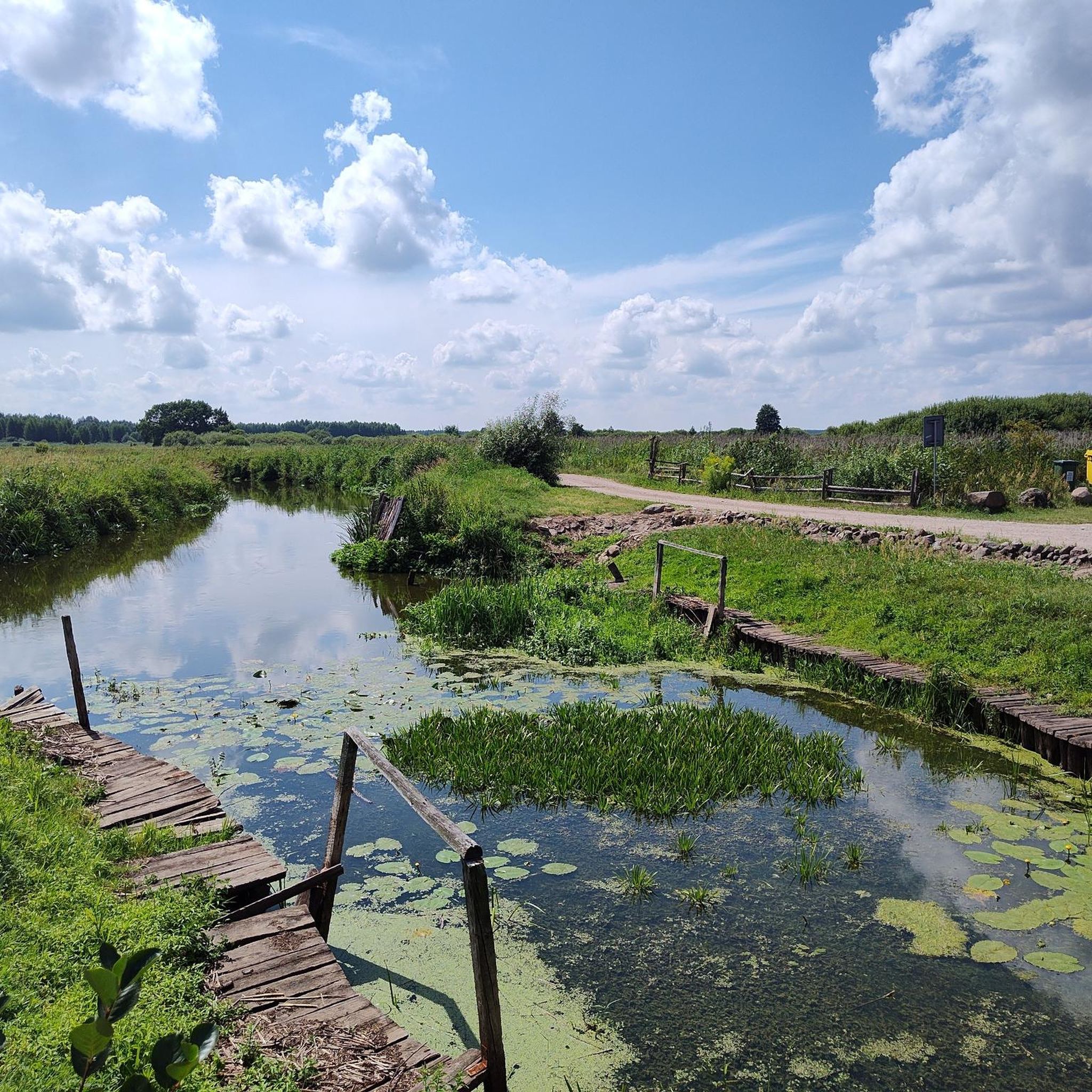
Best attractions and places to see around gmina gmina Narew include a diverse landscape of natural features and cultural heritage in northeastern Poland. The region is characterized by the Narew River Valley, known for its unique braided river system, and is situated between Narew National Park and Białowieża Forest. This area features traditional wooden architecture, historical Orthodox churches, and ancient natural monuments. Gmina Narew offers a range of sites for exploring both its natural environment and its distinct cultural identity.
…Last updated: October 18, 2026
Orthodox Church in Trześcianka
Highlight • Religious Site
Translated by Google •
Tip by

Skit of St. Anthony and St. Theodosius of the Caves, Kudak
Highlight • Religious Site
Translated by Google •
Tip by
Sign up now to discover places like this
Get recommendations on the best single tracks, peaks, & plenty of other exciting outdoor places.
Church of the Exaltation of the Holy Cross in Narew
Highlight • Religious Site
Translated by Google •
Tip by
Orthodox Church of the Nativity of St. John the Baptist in Nowa Wola
Highlight • Religious Site
The first mention of a Uniate church in this place dates back to 1743. Being in poor …
Translated by Google •
Tip by

Dunin Oak
Highlight • Natural Monument
Translated by Google •
Tip by
Sign up for free to discover even more attractions around gmina gmina Narew.
Already have an account?
Start today with a free account
Your next adventure awaits.
Popular around gmina gmina Narew


Other adventures around gmina gmina Narew

Tips from the Community

The current temple, built in 1908, is made of wood in a log construction on a Latin cross plan and has a bell tower and an octagonal turret with an onion dome. Previously, there was a Greek Catholic church that burned down in 1915.
0
0

Unfortunately, by September 2026, practically all the old trees around the church, which "created the atmosphere", have been cut down.
0
0
On Saturdays and Sundays, the church is usually open and available for visits accompanied by a lady from the church choir or the parish priest. Bicycles can be left in a safe place behind the church; you need to go around the fence from the back, there is a second gate and a min. stand for two-wheelers.
1
0

Sacred trail and beautiful Orthodox churches.
0
0

The Church of St. Michael the Archangel in Trześcianka is one of the most recognizable wooden churches in Podlasie, belonging to the Polish Autocephalous Orthodox Church. Built in the second half of the 19th century on the site of an earlier church, it captivates with its vibrant color, distinctive tripartite log structure, and towers topped with onion-shaped domes. The interior is adorned with a three-tiered iconostasis, and a fieldstone fence surrounds the church. In 2015, a thorough renovation of the church was completed, restoring its former splendor.
2
0


The skete is located on the outskirts of the village of Odrynki in the Kudak forest. You can reach the skete by two roads, but only one can be reached by car. It is the only Orthodox skete in Poland (Skete of St. Anthony and Theodosius of Kiev-Pechersk). It was established in 2009 and is part of the Warsaw-Bielsk diocese of the Polish Autocephalous Orthodox Church. The choice of Odrynki as the location for the construction of the skete was related to the fact that there was an Orthodox monastery of the Ascension of the Lord in this town. It was probably established in the first half of the 17th century and was dissolved in 1824. This monastery was subordinate to the monastery of the Holy Spirit in Vilnius. The ceremonial consecration of the skete took place on September 15, 2009. The Divine Liturgy was led by Metropolitan Sawa, who called the creation of the hermitage a "miracle of the 21st century". This day was special and historic, because it was the first Holy Liturgy in 500 years that took place in this very place. cerkiewnarew.pl/skit
3
0
The history of the Orthodox parish in Narew dates back to the early 16th century. The first preserved description of the church dates back to 1772. According to Klirovoi Vedomosti from 1846, the church and rectory were built on one square, and the number of believers in the parish was 2,244 people living in 282 houses. In 1847, the number of believers was already 2,284 people, and the parish church was located in the Bielsk deanery of the Lithuanian-Vilnius diocese. In 1882, construction began on a new wooden church, which was consecrated on May 9, 1885. This temple is still the parish church in Narew. In 1901, the church in Narew was included in the Grodno diocese, and the number of parishioners in 1905 was 3,098 people. In 1913, a stone fence with an entrance gate was erected around the parish church. A severe blow to the parish was the mysterious death of the parish priest, Fr. Prot. Piotr Popławski, who had held this position since 1968. The next tragedy befell the Narew parish on April 12, 1990, on Holy Thursday. During the reading of the 12th Gospel, a fire broke out, which consumed the entire interior of the church. The faithful gathered in the church tried to save what they could from the flames, but most of the church's equipment burned down. One of the parishioners gave his life saving the zaprestolnyj cross, which he had not managed to carry out. The reconstruction of the destroyed church was led by the then parish priest Fr. Teodor Weremiejuk, and then, from 1991, by the new parish priest Fr. Mitrat Bazyli Roszczenko together with the parishioners. They renovated the church in a joint effort, restored the entire interior of the temple, including a new iconostasis and new icons. On September 25, 1994, the renovated church was consecrated by His Excellency Metropolitan Basil. In the same year, a special stylized well for blessing water was built within the parish church. In 2020, the parish church in Narew was thoroughly restored as part of the project "East Slavic cultural heritage - conservation, renovation and digitalization of wooden churches and their furnishings in Małopolska, Podkarpacie, Lublin and Podlasie", which was implemented by the Orthodox Diocese of Lublin-Chełm. cerkiewnarew.pl/historia-parafii
3
0
Frequently Asked Questions
What unique natural features can I explore in Gmina Narew?
Gmina Narew is renowned for the Narew River Valley, often called the 'Polish Amazon,' a unique braided river system perfect for kayaking. It's also situated near Narew National Park, which features educational footbridges for bird observation, and a significant portion of the ancient Białowieża Forest, home to diverse flora and fauna including the European bison.
Are there opportunities for wildlife viewing in Gmina Narew?
Yes, the Narew River Valley and Narew National Park are important sanctuaries for waterfowl and support a diverse array of plant and animal life. The Białowieża Forest, partly within the commune, is a habitat for approximately 400 protected animal species, including the European bison, offering excellent wildlife viewing opportunities.
What kind of outdoor activities and trails are available around Gmina Narew?
The region offers various outdoor activities. You can find numerous cycling routes, including easy loops like 'Camping Narva – Soce – Land of Open Shutters' from Trześcianka, or more challenging ones like 'Footbridge over the Narew – Viaduct over the Narew River loop' from Soce. For mountain biking, trails range from easy to moderate, such as 'Orthodox Church in Trześcianka – Soce – Land of Open Shutters loop'. You can explore more options on the cycling guide, MTB trails guide, and road cycling routes guide.
Is the Narew National Park accessible for visitors?
Yes, Narew National Park features educational footbridges, such as the famous footbridge connecting Waniewo and Śliwno. These include floating piers that allow visitors to cross river beds and access marshy areas, making it accessible for observing the park's unique environment.
Where can I see ancient trees or natural monuments?
You can visit the Dunin Oak, a natural monument estimated to be around 400 years old. This pedunculate oak is a remnant of the Ladzka Forest and was named the European Tree of the Year in 2022, making it a truly impressive sight.
What cultural attractions showcase the region's unique heritage?
The 'Land of Open Shutters' is a captivating cultural landscape encompassing the villages of Trześcianka, Soce, and Puchły, known for their traditional wooden houses with elaborate carvings. You can also visit the Museum of Rural Life in Narew to see old tools and objects illustrating traditional rural life, or the Belarusian Regional Chamber in Skaryszewo, dedicated to showcasing Belarusian culture.
Can I visit historical Orthodox churches in the area?
Absolutely. Gmina Narew is rich in Orthodox heritage. You can follow the yellow-marked Orthodox Churches Trail to see several 19th-century churches, including the iconic Orthodox Church in Trześcianka, known for its vibrant color and three-row iconostasis. Other notable churches include the Orthodox Church of the Exaltation of the Holy Cross in Narew and the Orthodox Church of St. James the Apostle in Łosinka.
Is there a monastic site I can visit in Gmina Narew?
Yes, Gmina Narew is home to the Skit of St. Anthony and St. Theodosius of the Caves, Kudak, located by the Narew River. This is Poland's sole Orthodox monastic hermitage (skit), established in 2009, offering a unique spiritual and historical experience.
What are some notable historical buildings in Narew village itself?
In Narew village, you can visit the historic Baroque wooden Roman Catholic Church dating back to 1755. Beside it stands an 18th-century wooden Bell Tower, one of the few surviving examples of its kind. The Orthodox Church of the Exaltation of the Holy Cross, originally built in 1882 and rebuilt after a fire in 1990, is also a significant historical site.
Are there family-friendly attractions in Gmina Narew?
Many attractions in Gmina Narew are suitable for families. Natural monuments like the Dunin Oak and the educational footbridges in Narew National Park offer engaging outdoor experiences. Historical sites such as the Orthodox Church in Trześcianka and the Church of the Exaltation of the Holy Cross in Narew are also categorized as family-friendly, providing cultural insights for all ages.
When is the best time of year to visit Gmina Narew?
The best time to visit Gmina Narew largely depends on your interests. Spring and summer are ideal for exploring the Narew River Valley and National Park, with lush greenery and active wildlife. The Orthodox Churches, particularly the Orthodox Church in Trześcianka, are often open to visitors during the summer season. Autumn offers beautiful foliage, especially in the Białowieża Forest, while winter can provide unique snowy landscapes for those interested in colder weather activities.
What do visitors particularly enjoy about the attractions in Gmina Narew?
Visitors frequently appreciate the unique natural beauty of the Narew River Valley and the historical significance of the region's Orthodox churches. The Orthodox Church in Trześcianka is praised for its vibrant colors and distinctive architecture, while the Dunin Oak impresses with its ancient grandeur and 'legend.' The peaceful atmosphere of the Skit of St. Anthony and St. Theodosius is also highly valued.
Are there any unique cultural trails to explore in the region?
Beyond the Orthodox Churches Trail, Gmina Narew is also part of the red-marked Podlaskie Stork Trail and the Podlaskie Cultural Trail 'Tree and Sacrum.' These trails offer structured ways to explore the region's natural beauty and cultural heritage, connecting various points of interest.
Where can I find traditional wooden architecture in Gmina Narew?
To experience traditional wooden architecture, visit the 'Land of Open Shutters,' which includes the villages of Trześcianka, Soce, and Puchły. These villages are famous for their distinctive wooden houses adorned with elaborate carvings on windows, gables, and facades, reflecting a unique blend of local and Russian folk architectural styles.
Most popular routes around gmina gmina Narew
Most popular attractions around gmina gmina Narew

Get inspired with the komoot mobile app


Explore more
Still not found the Highlight you’re looking for? See guides of the top attractions in other regions:
