Attractions and Places To See around gmina gmina Drohiczyn - Top 20
Best attractions and places to see around gmina gmina Drohiczyn offers a rich blend of historical, cultural, and natural sites. Situated along the Bug River, the region features significant landmarks, diverse religious architecture, and unique museums. Visitors can explore historical sites and enjoy scenic viewpoints within the Bug Landscape Park. The area provides opportunities for experiencing both heritage and the natural environment.
Best attractions and places to see around gmina gmina Drohiczyn
- The most popular attractions is Korczew Palace, a historical site that was originally built for the Kuczyński family in 1834. This classicist residence now serves as a museum and cultural center, with parts dating back to the rococo period.
- Another must-see spot is Observation Tower by the Ferry in Drohiczyn, a viewpoint. Visitors can expect panoramic views of the Bug River, Castle Hill, and the city from its wooden viewing platform, which also features a telescope.
- Visitors also love Church of St. Nicholas, a religious building and historical site. This classical-style Orthodox church, built in 1792, is located near the market square and houses historic icons.
- gmina gmina Drohiczyn is known for its historical sites, religious architecture, and natural viewpoints. The region offers a variety of attractions to see and explore, from ancient castles to unique museums and river landscapes.
- The attractions around gmina gmina Drohiczyn are appreciated by the komoot community, with 56 upvotes and 61 photos shared by visitors.
Last updated: July 1, 2026
Korczew Palace
Highlight • Historical Site
The oldest part of the palace, i.e. the ballroom with original rococo stucco, dates from that time. Above the central entrance to the hall there is the Ślepowron coat of arms, which was used by the Kuczyński family. This was the place where meetings of the Bar Confederates were held, organized by Leon Kuczyński.
Translated by Google •
Tip by

Church of St. Nicholas
Highlight • Religious Site
The church is located on the market square – Tadeusz Kościuszko Square.
The church represents a classicist style. Built in 1792, funded by Konstancja née Kuczyńska and Jakub Ciecierski, it was dedicated to St. Nicholas, a Uniate church for the Basilian monastery. After the Uniate parish church (also dedicated to St. Nicholas) burned down in 1806, services were moved here. In 1826, it was handed over to the Uniate secular clergy.
In 1839, following the Synod of Polotsk, the church was seized from the Uniates and placed under the jurisdiction of the Orthodox Church by the Russian partitioning authorities. After the fall of the January Uprising, the church was rebuilt around 1870 to give it a more Orthodox appearance. As a result, the exterior was topped with three additional onion-shaped bell towers, while the interior was modified and a new interior was created, including by removing the side altars, organs, and pulpit.
Translated by Google •
Tip by

Sign up now to discover places like this
Get recommendations on the best single tracks, peaks, & plenty of other exciting outdoor places.
Sign up for free
Landowners’ Museum in Dąbrowa
Highlight • Historical Site
At the same time, the museum collected items related to landowner culture in order to introduce visitors to the atmosphere of the mansion from the turn of the 19th and 20th centuries. After four years of very intensive work, on October 1, 2015, the Museum of the Landowners in Dąbrowa was opened, which thus became the third branch of the Regional Museum in Siedlce after the existing branches: the Museum of Firefighting in Kotuń and the Museum of Struggle and Martyrdom in Treblinka.
Since 2015, the Museum of the Landowners in Dąbrowa has been constantly expanding its collections, thus conducting exhibition, research, educational, recreational and tourist activities,
Translated by Google •
Tip by
Church of the Assumption of the Blessed Virgin Mary, Drohiczyn
Highlight • Religious Site
Translated by Google •
Tip by
Observation Tower by the Ferry in Drohiczyn
Highlight • Viewpoint
Translated by Google •
Tip by
Sign up for free to discover even more attractions around gmina gmina Drohiczyn.
Sign up for free
Already have an account?
Start today with a free account
Your next adventure awaits.
Login or Signup

Tips from the Community

The Church of St. Nicholas is an Orthodox parish church in Drohiczyn. It belongs to the Siemiatycze deanery of the Warsaw-Bielsko diocese of the Polish Autocephalous Orthodox Church. The church is located on the market square – Tadeusz Kościuszko Square. The church represents a classicist style. Built in 1792, funded by Konstancja née Kuczyńska and Jakub Ciecierski, it was dedicated to St. Nicholas, a Uniate church for the Basilian monastery. After the Uniate parish church (also dedicated to St. Nicholas) burned down in 1806, services were moved here. In 1826, it was handed over to the Uniate secular clergy. In 1839, following the Synod of Polotsk, the church was seized from the Uniates and placed under the jurisdiction of the Orthodox Church by the Russian partitioning authorities. After the fall of the January Uprising, the church was rebuilt around 1870 to give it a more Orthodox appearance. As a result, the exterior was topped with three additional onion-shaped bell towers, while the interior was modified and a new interior was created, including by removing the side altars, organs, and pulpit.
1
0
The ferry crossing on the Bug River connects its northern bank below Drohiczyn with the southern bank near the village of Bużyska, Korczew commune
1
0
Franciscan Church in Drohiczyn, dedicated to the Assumption of the Blessed Virgin Mary – according to the monastery tradition recorded in 1797 by Father Karol Gaudenty Żero (1743–1802) in his work entitled "Fenix de pulveribus resuscitatus svaviter suam candit modulenam," the Franciscan convent in Drohiczyn was founded by Mikołaj Nassuta, mentioned in 1430 as the starost of Drohiczyn. The monks are said to have settled on a square known as "Narożnik" (Corner). The first endowments for the monks were confirmed in 1407 by Duke Witold Kiejstutowicz, who also provided offerings from the castle. During the reign of Janusz I the Elder, Duke of Mazovia, a wooden monastery and church dedicated to the Assumption of the Blessed Virgin Mary were built in 1409. In 1451, the guardian was Father Jan of Ruda, and in 1470, Father Szymon of Kraków. In the years 1460–1470, funds for the monastery were donated by, among others, the Drohicz court assessor Maciej Miłkowski (d. ca. 1478) and his wife Katarzyna. The Franciscan monastery was burned down by dissenters in 1583, and around 1595, the wooden church burned down. In 1595–1596, it was rebuilt thanks to the efforts of Father Mateusz Studziński, guardian, but in 1601, both buildings were destroyed by fire again. Another wooden Franciscan church was built in 1615 through the efforts of the guardian, Father Bartłomiej Klucziata vel Klimczata, and consecrated on October 4, 1618, by the titular bishop of Argivensis and suffragan of Lutsk, Father Stanisław Udrzycki (d. 1621). During this period, a new monastery building was constructed. In 1657, during the Swedish Deluge, following Misericordiae Sunday, the monastery was destroyed again, and several monks were murdered by Cossack, Transylvanian, and Swedish troops commanded by Magnus Gabriel de La Gardie.
1
0
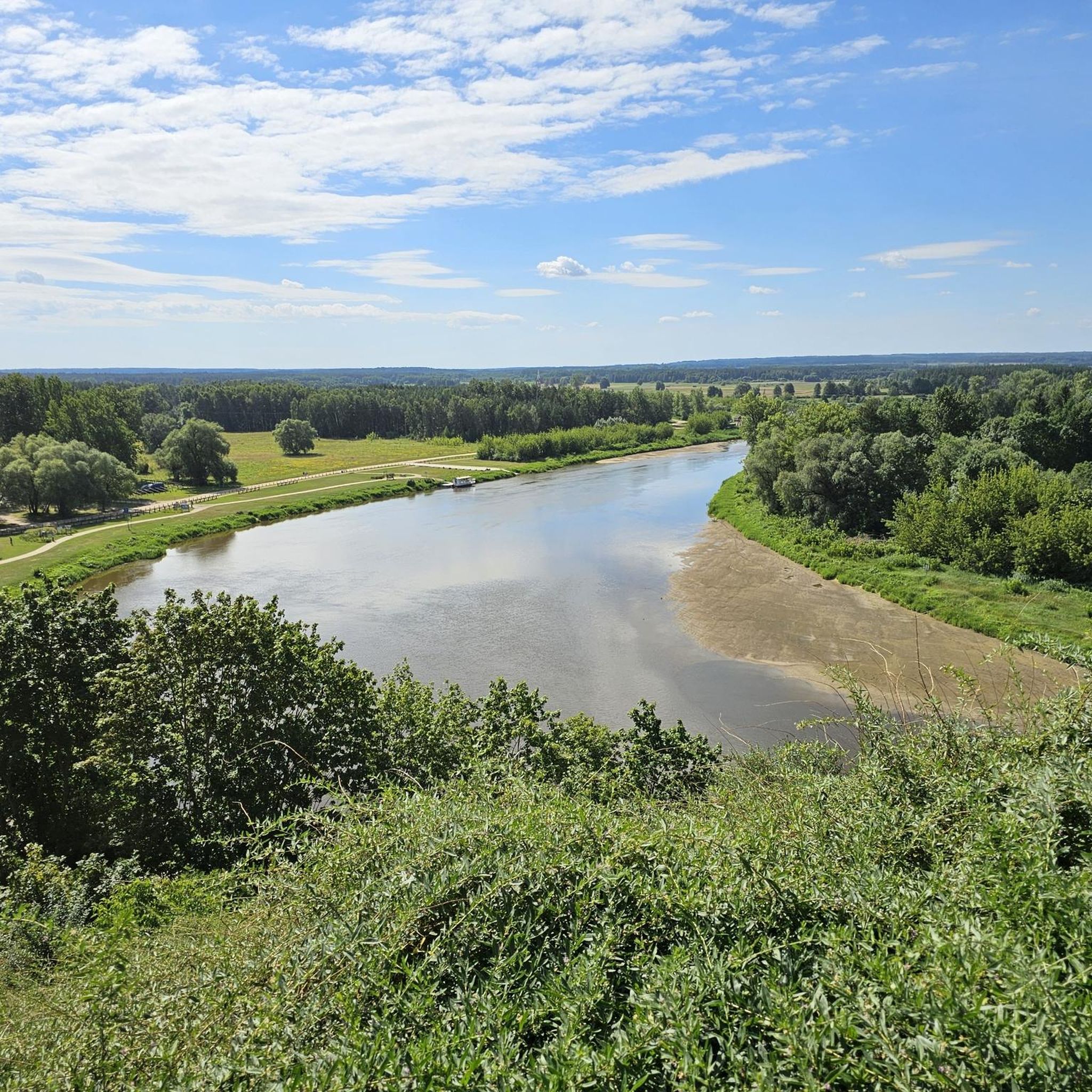
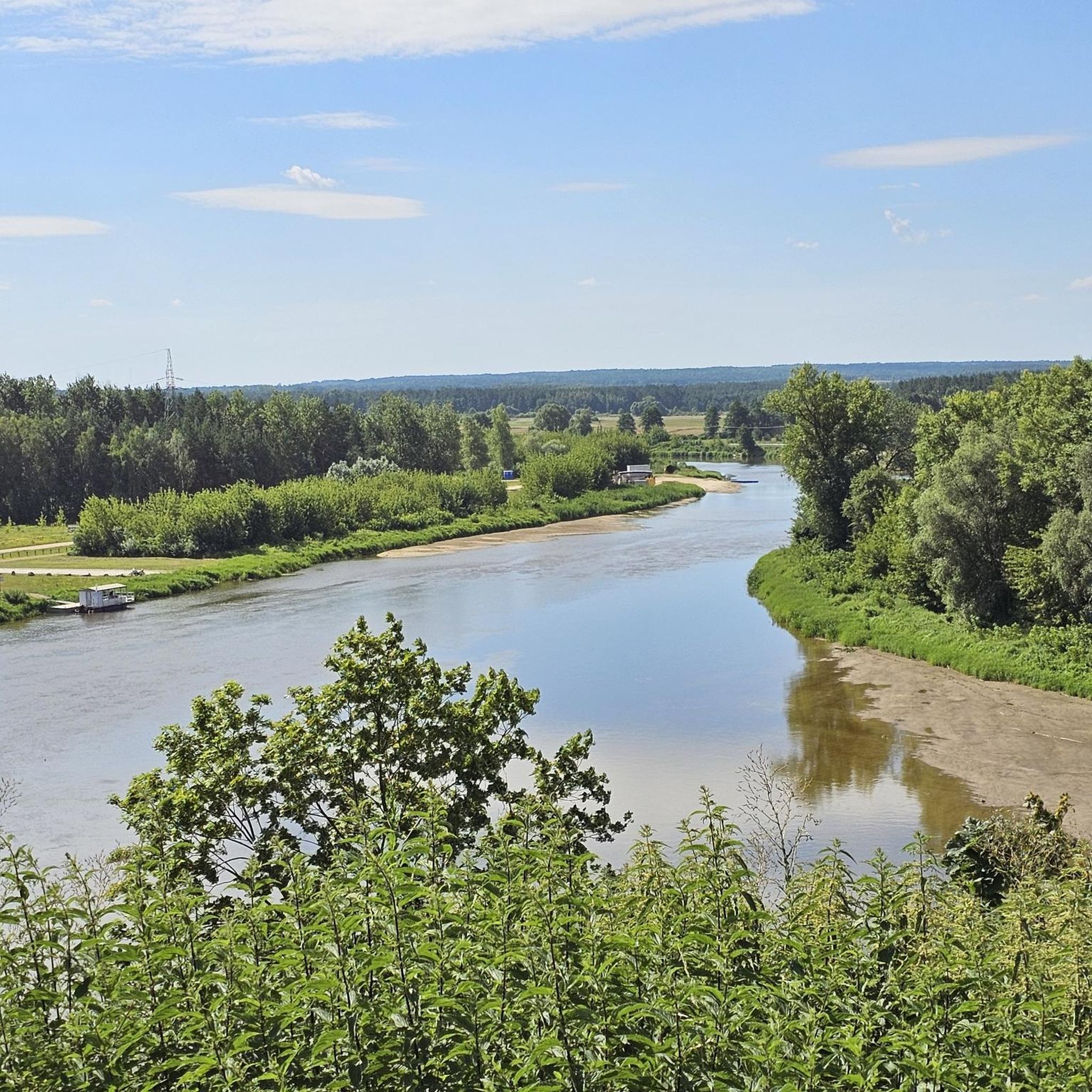
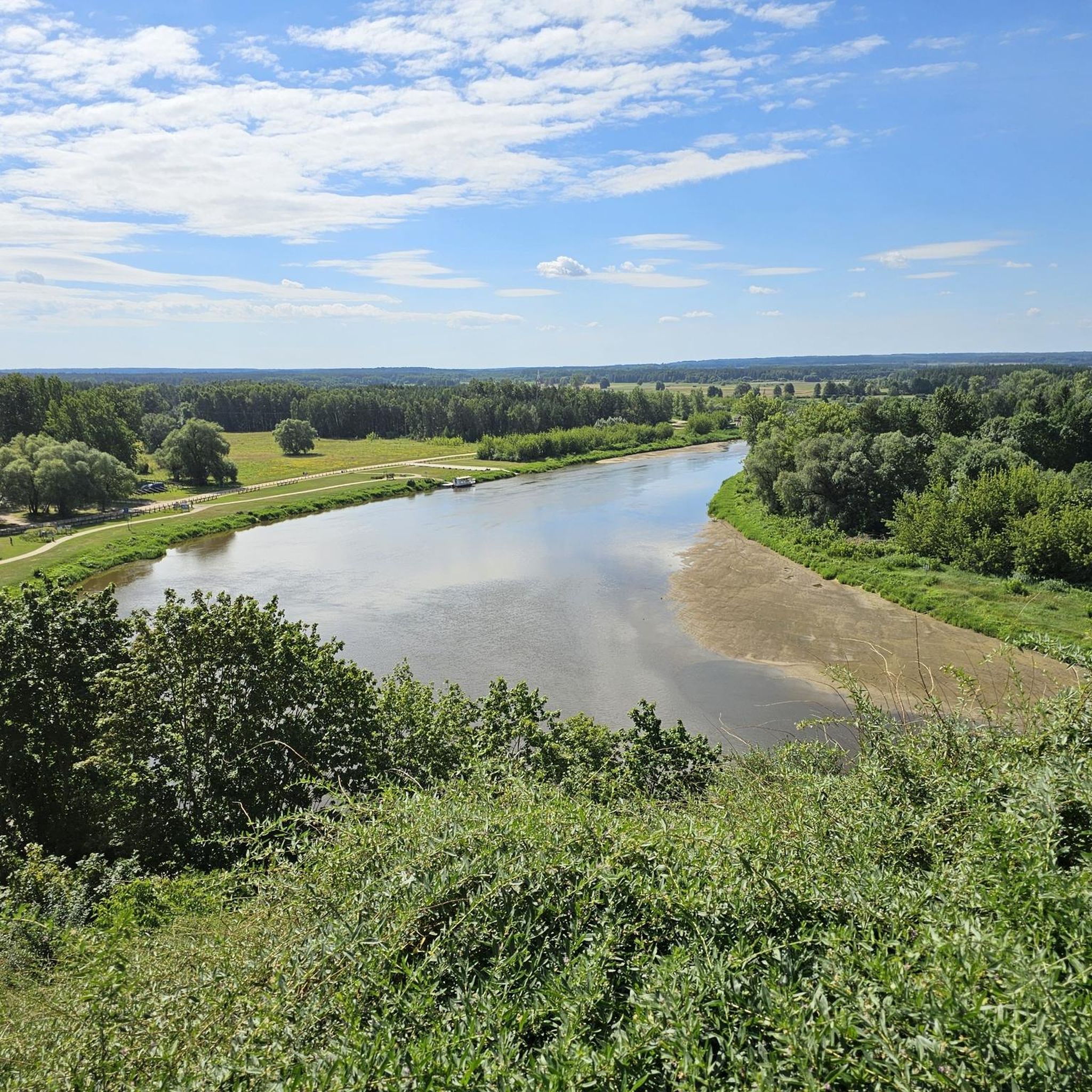
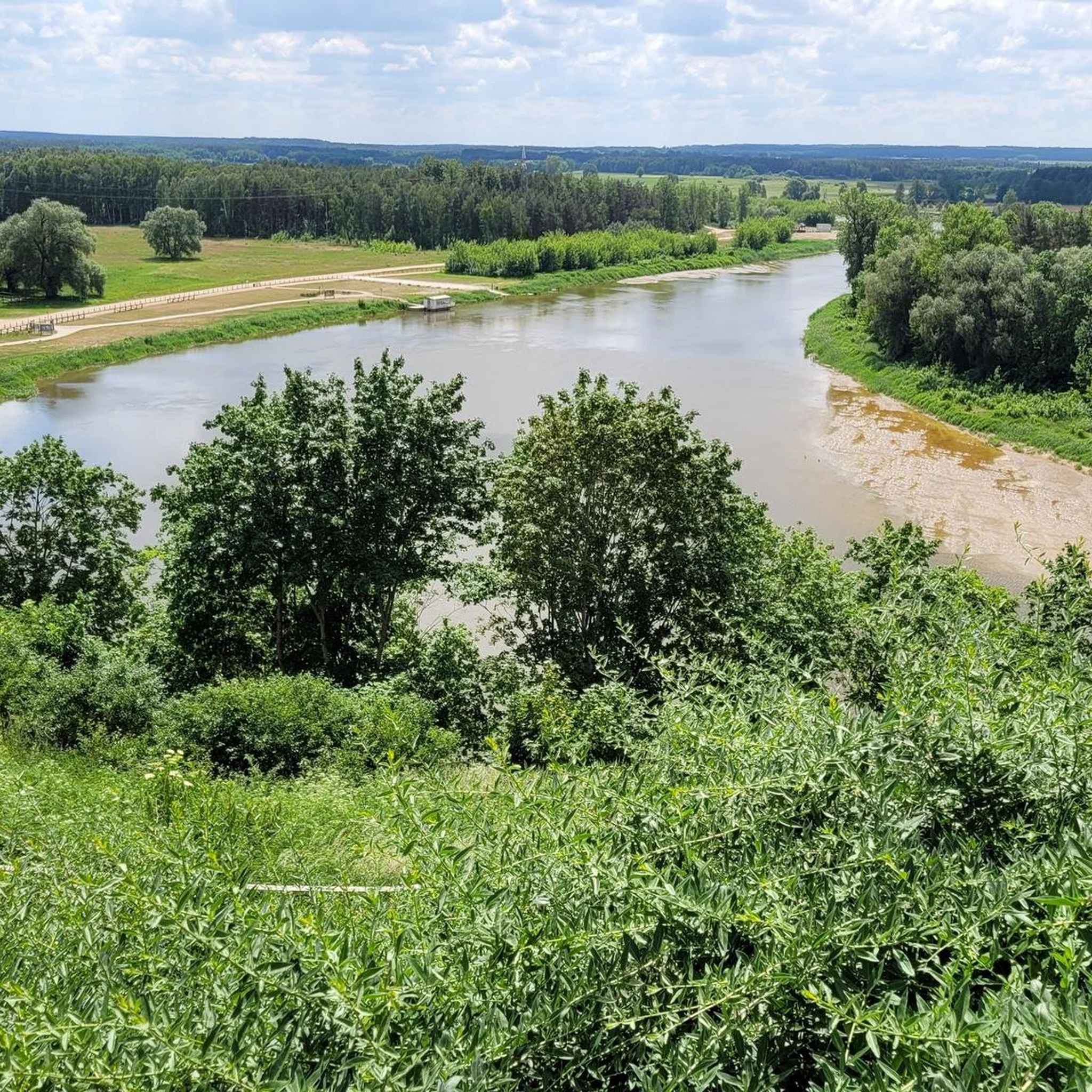
A viewing point overlooking the Bug River and the monastery. A ferry crossing the river is located next to the tower.
1
0
The builder of the Palace in Korczew was Wiktoryn Kuczyński, the castellan of Podlasie and the founder of churches in Drohiczyn, who made a fortune by floating grain to Gdańsk. The manor house in Korczew was supposed to be built for his younger son Leon. The oldest part of the palace, the ballroom with original Rococo stucco, dates from that time. Above the central entrance to the hall is the Ślepowron coat of arms, used by the Kuczyński family. This was where the Bar Confederates' conventions, organized by Leon Kuczyński, took place.
2
0

The palace in Korczew, called the "Siedlce Wilanów", is a classicist residence from 1834, designed by Franciszek Jaszczołd for the Kuczyński family. The building was restored by the Ostrowski-Harris family and currently serves as a museum and cultural center, offering tours of the interiors with original black oak paneling, a ballroom and an orangery. The park surrounding the palace with a linden alley and the Menhir stone is a great place for a walk. For road cyclists, access via asphalt roads is convenient, and there is a restaurant and accommodation available on site at Kuźnia Pałacowa. It is worth taking a bike lock to safely explore the palace grounds and its surroundings.
0
0

The palace can be visited virtually. Walks of the permanent exhibition and two temporary exhibitions were carried out as part of the project entitled: "Creation of open data together with the construction of a technical, technological and coordination base for local governments of the Mazovian Voivodeship". https://muzeumdabrowa.pl/2020/07/wirtualne-zwiedzanie-2/
1
0
A fairly new observation tower in Drohiczyn, right next to the ferry crossing to Ruska Side. A wonderful view of the Bug, Castle Hill and the city.
1
0
Frequently Asked Questions
What historical sites can I explore in Gmina Drohiczyn?
Gmina Drohiczyn offers a rich history. You can visit the impressive Korczew Palace, a classicist residence with rococo elements, which now functions as a museum and cultural center. Another significant historical point is Góra Zamkowa (Castle Hill), offering panoramic views where a medieval castle once stood. For a glimpse into local gentry life, the Landowners’ Museum in Dąbrowa showcases 19th and 20th-century manor culture. You can also explore the site of the 1920 Battle on the Bug River at Frankopol, a place of military historical significance.
Are there any notable religious buildings to visit in Drohiczyn?
Yes, Drohiczyn is known for its diverse religious architecture. You can see the baroque Cathedral of the Holy Trinity, the Baroque Franciscan Church of the Assumption of the Blessed Virgin Mary, and the Baroque Benedictine Church of All Saints. Additionally, the classical-style Orthodox Church of St. Nicholas, built in 1792, is located near the market square and houses historic icons.
What natural features can I enjoy in Gmina Drohiczyn?
The Bug River is a central natural feature, offering picturesque views and opportunities for kayaking and fishing. The entire area lies within the Nadbużański Park Krajobrazowy (Bug Landscape Park), providing a beautiful natural environment for walks and appreciating Podlasie's flora and fauna. You can also find excellent viewpoints like the Observation Tower by the Ferry in Drohiczyn.
Are there family-friendly attractions in Gmina Drohiczyn?
Many attractions in Gmina Drohiczyn are suitable for families. The Korczew Palace and its park, the Landowners’ Museum in Dąbrowa, and the Observation Tower by the Ferry in Drohiczyn are all marked as family-friendly. The unique Muzeum Kajakarstwa (Kayaking Museum) with its collection of historic kayaks, and the Wystawa Starych Motocykli (Exhibition of Old Motorcycles) within the Nadbużański Park Historyczno-Kulturowy, are also engaging for all ages.
What museums are available in the area?
Gmina Drohiczyn hosts several interesting museums. The Muzeum Diecezjalne (Diocesan Museum) in the former Franciscan monastery contains rich collections highlighting the region's past. The unique Muzeum Kajakarstwa (Kayaking Museum) is the only one of its kind in Poland, showcasing over 100 exhibits. You can also visit the Landowners’ Museum in Dąbrowa, which recreates the atmosphere of a 19th-century mansion, and the Wystawa Starych Motocykli (Exhibition of Old Motorcycles) for vintage vehicle enthusiasts.
When is the best time to visit Gmina Drohiczyn?
The region is particularly vibrant during late July and early August when the "Drohiczyn Days" festival takes place, featuring various outdoor events, equestrian and cycling rallies, and family festivals. Spring and autumn offer pleasant weather for exploring historical sites and enjoying the natural beauty of the Bug Landscape Park, with fewer crowds.
Can I go hiking in Gmina Drohiczyn?
Yes, Gmina Drohiczyn offers several hiking opportunities, especially within the Bug Landscape Park. You can find easy trails suitable for beginners, such as the "Loop Drohiczyn" or the "All Saints Church – Church of St. Nicholas loop from Drohiczyn." For more options, explore the Easy hikes around gmina gmina Drohiczyn guide.
Are there opportunities for cycling in the area?
Absolutely. Gmina Drohiczyn is well-suited for cycling, with routes leading along the Bug River and through picturesque villages. You can find easy to moderate cycling tours, such as the "Bug River Near Drohiczyn – Korczew Palace loop from Drohiczyn." For a comprehensive list of routes, check out the Cycling around gmina gmina Drohiczyn guide.
Where can I find panoramic views of the area?
For stunning panoramic views, head to the Observation Tower by the Ferry in Drohiczyn. Its wooden viewing platform offers expansive vistas of the Bug River, Castle Hill, and the town. Góra Zamkowa (Castle Hill) itself also provides excellent natural viewpoints over the river and surrounding landscape.
What unique attractions are there beyond historical buildings?
Beyond its rich history, Drohiczyn boasts some unique attractions. The Muzeum Kajakarstwa (Kayaking Museum) is a one-of-a-kind institution in Poland, dedicated to the history of kayaking. You can also visit the Wystawa Starych Motocykli (Exhibition of Old Motorcycles), featuring dozens of vintage motorcycles. For a historical curiosity, explore the remains of the Molotov Line Bunkers, Soviet fortifications from 1940-1941.
What do visitors particularly enjoy about Gmina Drohiczyn?
Visitors frequently appreciate the blend of historical depth and natural beauty. The panoramic views from the Observation Tower by the Ferry in Drohiczyn and Castle Hill are highly rated. The historical significance of sites like Korczew Palace and the diverse religious architecture also draw considerable interest. The tranquil environment of the Bug River and the opportunities for outdoor activities like cycling and hiking are also popular.
Are there any running trails available in Gmina Drohiczyn?
Yes, if you enjoy running, there are several trails in and around Gmina Drohiczyn. You can find routes of varying difficulty, such as the "Zalew II loop from Siemiatycze" or the "Running loop from Siemiatycze." For more detailed information on distances and difficulty, consult the Running Trails around gmina gmina Drohiczyn guide.
Most popular routes around gmina gmina Drohiczyn
Most popular attractions around gmina gmina Drohiczyn

Get inspired with the komoot mobile app


Explore more
Still not found the Highlight you’re looking for? See guides of the top attractions in other regions:
