Attractions and Places To See around gmina gmina Sępopol - Top 20
Best attractions and places to see around gmina gmina Sępopol include historical landmarks, cultural sites, and natural features. Located in the Warmian-Masurian Voivodeship, the region is characterized by its picturesque lowlands and the Łyna River. Visitors can explore a blend of medieval architecture, significant palaces, and opportunities for water activities. The area offers a diverse range of historical and natural points of interest.
Best attractions and places to see around gmina gmina Sępopol
- The most popular attractions is Drogosze Palace…
Last updated: August 25, 2026
Drogosze Palace
Highlight • Historical Site
Translated by Google •
Tip by

Palace and Estate Galiny (Hotel, Restaurant, and Stud Farm)
Highlight • Historical Site
Translated by Google •
Tip by

Sign up now to discover places like this
Get recommendations on the best single tracks, peaks, & plenty of other exciting outdoor places.
Sign up for free
Church of Christ the King in Sątoczno
Highlight • Religious Site
Translated by Google •
Tip by
LISKI Horse Stud
Highlight • Structure
Translated by Google •
Tip by
Church of Our Lady of the Gate of Dawn in Drogosze
Highlight • Religious Site
Translated by Google •
Tip by
Sign up for free to discover even more attractions around gmina gmina Sępopol.
Sign up for free
Already have an account?
Start today with a free account
Your next adventure awaits.
Login or Signup
Tips from the Community

The church in Sątoczno was erected in the years 1326–1328. The oldest part of the building is the tower, its walls have survived intact since the first half of the 14th century.
0
0

On the river Pisa Północna, in a beautiful and well-groomed garden, stands a palace whose beginnings date back to the Middle Ages. A walk in the garden alone conveys many aesthetic impressions. There is a pond, waterfall, small bridges and plants worth seeing. The garden was created in the 19th century at the instigation of the wife of one of the site owners. From the 15th century until 1945, the land belonged uninterruptedly to the Eulenburg family. Today's neo-baroque form of the palace dates back to 1921. In 1945 the palace was looted, its furnishings destroyed and the last owner taken to Siberia, where he also died. After years of neglect, the palace has been restored and converted into a comfortable hotel. On the opposite side of the palace pond there is a massive commercial development from the turn of the 19th and 20th centuries. This also partly serves hotel purposes. A large building with its clock tower is impressive. The other Vorwerk buildings fulfill the same functions as when they were built - they are used for horse breeding and a farm. There is a riding school in the Vorwerk area. Also worth seeing is a 14th-century Gothic church near the palace.
0
0

The Church of Our Lady of Ostra Brama in Drogosze was finished in 1363 and built in the 14th century, and in the 15th century a sacristy was added. The church underwent a major renovation by Ludwik Rautter in 1593 (new eastern gable and superstructure of the tower topped with a cupola). In 1742, a tomb chapel of the Denhofs was added to the north of the church, on the frontage of which a bust of Bogusław Fryderyk Denhof (the builder of the palace), made by Johann Heinrich Meissner from Gdańsk, was placed. In 1835 the interior of the church (new altar, pulpit) was renovated by Angelika (née Denhof) zu Dohna-Lauck. The interior of the church measures 23.7 m × 7.2 m. Next to the church, there is a baroque presbytery from the 18th century. https://pl.wikipedia.org/wiki/Ko%C5%9Bci%C3%B3%C5%82_Matki_Bo%C5%BCej_Ostrobramskiej_w_Drogoszach
2
0
The palace of the von Dönhoff family in Drogosze (German: Schloss Dönhofstädt) - a palace with a park complex and farm buildings located in the village of Drogosze in the Barciany commune in the Kętrzyn poviat in the Warmian-Masurian Voivodeship. It was built in the years 1710–1714 as the seat of the Prussian noble family von Dönhoff, in the baroque style. One of the three largest, the so-called royal palaces, palaces of East Prussia. In the years 1710–1714 a palace was erected, modeled on the Donhoffs' main residence (not preserved), famous for its beauty and grandeur, in Friedrichstein near Królewiec. Presumably, both buildings were built by the architect Johann von Collas (1678–1753), while the original architectural concept of the palace in Friedrichstein was made by the French architect Jean de Bodt (1670–1745). The completed baroque building was very impressive and became the largest family residence in Masuria and one of the largest in all of East Prussia. Splendor was also added by the function of the so-called royal palace, where traveling monarchs could stay safely and comfortably. https://pl.wikipedia.org/wiki/Pa%C5%82ac_w_Drogoszach https://www.youtube.com/watch?v=gNhm_CC4nhY
4
0
In 1468, the knight Albrecht von Vogt received Sątoczno from the Teutonic Knights as a reward for participating in the war against Poland and Lithuania. After his death, the property was inherited by his daughter, who married the owner of the neighboring estate, Botha von Eulenburg. From his surname, Sątoczno took its former name Leunenburg. In 1526, Valentin Vuge from Elbląg was the parish priest of the local parish belonging to the archipresbytery in Sępopol. At that time, the parish in Sątoczno included the villages of Glitajny, Kałwągi, Wągniki, Błuskajmy, Studzieniec, Słępy and Kaskajmy. Poles probably also lived there, because in 1581 the school teacher received additional remuneration for reading and commenting on the Gospel and the catechism in Polish. In the middle of the 17th century, a diaconate was established here especially for Polish parishioners. Polish deacons taught in Sątoczno until 1697. The church in Sątoczno was erected in the years 1326–1328 on the site of the hillfort established by the Teutonic Order. It was located at the confluence of the Sajna and Gubra rivers. The oldest part of the building is the tower, its walls have survived intact from the first half of the 14th century. There was room for three bells in the belfry. The oldest bell from 1593 has been lost, the second - the largest bell from 1735 - is ringing now in the commune of Borfelde near Hildesheim in Germany. The remaining bell bears the inscription: God to be honored, Christians to be encouraged. In 1848, at the behest of Pastor Simon Jakub Gammel, the carpenter Rockel made an apparent wooden stellar vault over the nave. The western part of the nave is closed by a choir with an organ. It was built in 1745 by Adam Gottllob Casparini, the royal organ builder. They were enlarged in 1898. The organ has a rococo ornamentation. The chancel is separated from the nave by a monumental rainbow arch. The altar is made of wood. It was made in 1824 by the sculptor Bierreichel. In the middle of the presbytery there was a baptismal font made of Italian "Carvara" marble. It was purchased in Królewiec in 1828. [10/12/2014]] The bowl of the baptismal font was filled with a large, brass bowl weighing about 20 kilograms. It dates back to 1580. In 1828, the church's floor was covered with Swedish stone slabs. The courtyard of the church was originally a cemetery, in 1819 a park was established that still serves this purpose. http://encyklopedia.warmia.mazury.pl/index.php/Parafia_pw._Chrystusa_Kr%C3%B3la_w_S%C4%85tocznie
2
0
In the territory of the present-day Warmińsko-Mazurskie Voivodship, historic stud complexes, including those established at the initiative of the state, have survived to this day. They are located, among others in: Liska (commune of Sępopol), Kętrzyn, Braniewo, Kadyny (commune of Tolkmicko) and Rzeczna (commune of Pasłęk). Both warm and cold-blooded horses were bred here - but in smaller numbers. After 1945, most of the studs were transformed into State Farms. In part, the horse breeding traditions were successfully continued, and in the above-mentioned studs it is still the case today. The stud in Liska, which specialized in breeding military horses, can be proud of the oldest horse breeding tradition in this group. It was established as a state stud farm in 1740 after the farm had been purchased by the Kunheim family. Buildings from the turn of the 19th and 20th centuries, including stables and an impressive granary - warehouse, have been preserved to this day. http://encyklopedia.warmia.mazury.pl/index.php/Pa%C5%84stwowe_stadniny_koni_(Liski,_Rzeczna,_K%C4%99trzyn,_Kadyny) https://www.youtube.com/watch?v=sKcrFvuNh-M
3
1

Beautiful gothic church from the 16th century. http://encyklopedia.warmia.mazury.pl/index.php/Parafia_pw._Chrystusa_Kr%C3%B3la_w_S%C4%85tocznie
0
0
Beautiful gothic church from the 15th century. https://pl.wikipedia.org/wiki/Ko%C5%9Bci%C3%B3%C5%82_Matki_Bo%C5%BCej_Ostrobramskiej_w_Drogoszach
0
0
Frequently Asked Questions
What historical landmarks can I explore in Gmina Sępopol?
Gmina Sępopol is rich in history. You can visit the imposing Gothic Church of Christ the King in Sątoczno, built between 1326–1328, which features intact 14th-century tower walls and an organ from 1745. Also, explore the remnants of medieval Defensive Walls in Sępopol, including the preserved "Organistówka" tower. The Drogosze Palace, a grand Baroque residence from 1710–1714, is another significant historical site nearby.
Are there any notable palaces or estates to visit in the area?
Yes, the region features several impressive estates. The Drogosze Palace is a must-see, known as one of East Prussia's largest 'royal palaces'. You can also visit Palace and Estate Galiny, which dates back to the Middle Ages and now functions as a hotel, restaurant, and stud farm with a beautiful garden. Another historical site is the Palace in Judyty, a Neogothic and Classicist structure from 1863, once home to the influential von Kunheim family.
What natural attractions and outdoor activities are available along the Łyna River?
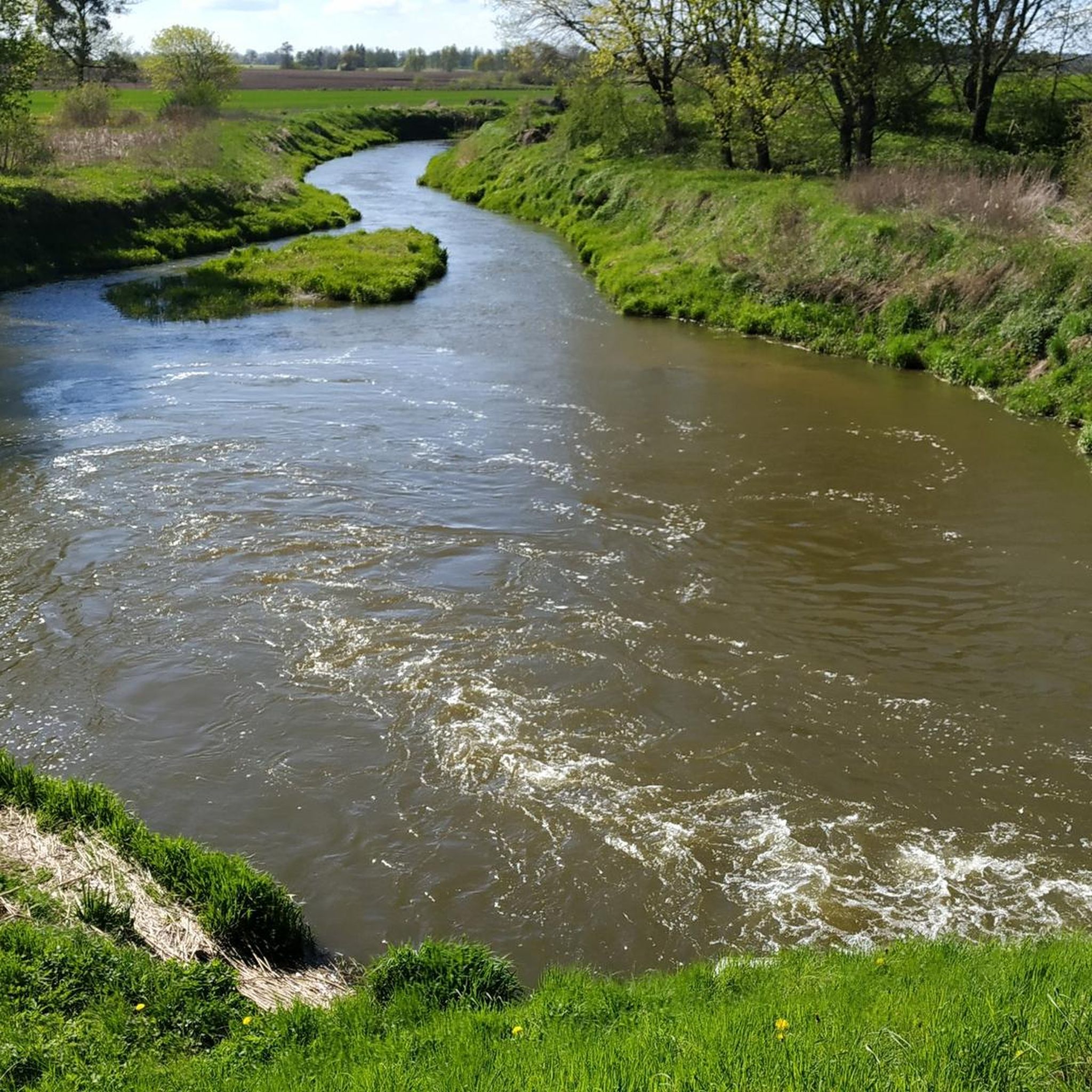
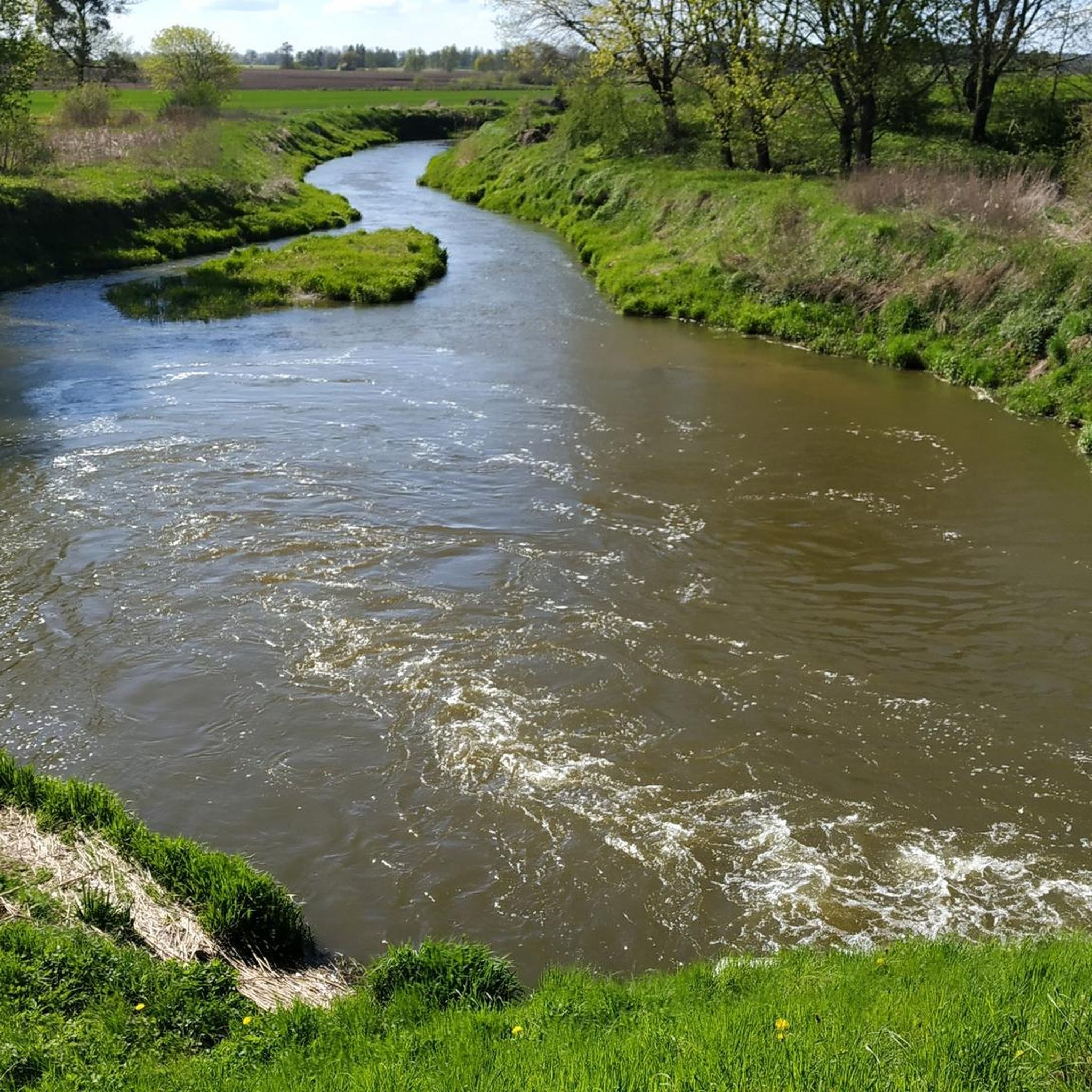
The Łyna River, the largest in Warmia and Masuria, is central to the region's natural beauty. Its calm waters are perfect for kayaking, with boat rentals available in Stopki and Sępopol, and designated rest areas like Masuny. You can also enjoy catamaran trips, or take a sightseeing cruise on the restored "Perła Sępopola" boat, which can even take you towards the Kaliningrad Oblast border.
Are there opportunities for cycling or hiking in Gmina Sępopol?
Absolutely. Gmina Sępopol offers several cycling routes, including the "Dolina rzeki Łyny" (Łyna River Valley) route, which winds through forests on asphalt roads, and the "Pogranicza" (Borderland) trail leading towards the Russian border. For more detailed cycling routes, check out the Cycling around gmina gmina Sępopol guide or the Road Cycling Routes around gmina gmina Sępopol guide. For hiking, routes like the "Galiny Stud Farm loop from Minty" are available, which you can find in the Hiking around gmina gmina Sępopol guide.
What are some unique religious sites in the Gmina Sępopol area?
Beyond the Church of Christ the King in Sątoczno, you can visit the Saint Michael the Archangel Church in Sępopol, a Gothic church with a late Mannerist altar and a viewing terrace on its tower. The Greek Catholic Church of the Nativity of the Blessed Virgin Mary in Ostre Bardo is notable for its complete iconostasis in the Old Prussian style. Also, the Church of Our Lady of the Scapular in Lwowiec is a Gothic defensive church from 1373, known for its stork-nesting tower and an altar depicting scenes from the life of Mary.
Are there any family-friendly attractions in Gmina Sępopol?
Families can enjoy visiting the Palace and Estate Galiny, which includes a stud farm and a well-maintained garden with a pond and waterfall. The LISKI Horse Stud also offers a glimpse into horse breeding traditions with preserved buildings from the 19th and 20th centuries. The natural areas around the Łyna River provide opportunities for gentle walks and outdoor recreation suitable for families.
What are some lesser-known or 'hidden gems' in Gmina Sępopol?
Consider exploring Kaczy Dołek (Wallberg Hill), a historical Prussian stronghold offering scenic views of Sępopol and the Łyna River. The Secession Water Tower in Sępopol, built in 1912, is an architectural point of interest. You can also observe well-preserved 19th-century neoclassical tenement houses on streets like Kościuszki and Moniuszki in Sępopol, offering a glimpse into the town's past.
What do visitors enjoy most about the attractions in Gmina Sępopol?
Visitors appreciate the blend of historical depth and natural beauty. The grand architecture of sites like Drogosze Palace and the serene atmosphere of the Łyna River are frequently highlighted. The well-preserved historical churches and the unique experience of stud farms like Palace and Estate Galiny also receive positive feedback for their charm and historical significance.
Can I find any unique architectural sites in Sępopol town?
Yes, Sępopol town itself offers architectural interest. Besides the Gothic Saint Michael the Archangel Church, you can see the Secession Water Tower, a distinctive structure built in 1912. The town also features well-preserved 19th-century neoclassical tenement houses on streets such as Kościuszki, Moniuszki, and 22 Lipca, and around Plac Spółdzielczy.
Are there any old cemeteries or historical burial sites in the area?
Yes, Sępopol is home to Evangelical-Augsburg and municipal cemeteries that date back to the 19th century, offering a quiet reflection on the town's past. Additionally, Kaczy Dołek (Wallberg Hill) is the burial place of Prince Józef Giedroyć, a Polish insurgent from the November Uprising, adding another layer of historical significance.
What is the best time of year to visit Gmina Sępopol for outdoor activities?
For outdoor activities like kayaking on the Łyna River and cycling, the period from early May through the warmer months is ideal. This allows for comfortable enjoyment of the river and the various cycling routes through the picturesque lowlands and forests.
Most popular routes around gmina gmina Sępopol

Get inspired with the komoot mobile app


Explore more
Still not found the Highlight you’re looking for? See guides of the top attractions in other regions:
