Attractions and Places To See around gmina gmina gmina Morąg - Top 20
Best attractions and places to see around gmina gmina gmina Morąg include a blend of historical sites and natural landscapes in the Warmian-Masurian Voivodeship of Poland. The region features medieval fortifications, Renaissance palaces, and Gothic churches. Visitors can also explore significant natural features like wetlands and several large lakes, offering diverse outdoor experiences. This area provides opportunities to engage with both cultural heritage and scenic environments.
Best attractions and places to see around gmina gmina gmina Morąg
- The most popular…
Last updated: August 25, 2026
Cannons in Front of Morąg Town Hall
Highlight • Monument
Translated by Google •
Tip by

Ostróda Lakeside Promenade
Highlight • Trail
Translated by Google •
Tip by

Sign up now to discover places like this
Get recommendations on the best single tracks, peaks, & plenty of other exciting outdoor places.
Sign up for free
Former Małdyty Manor
Highlight • Historical Site
Translated by Google •
Tip by

Zielona Lock
Highlight • Structure
Translated by Google •
Tip by
St. Bartholomew's Church with Defensive Walls, Miłomłyn
Highlight • Religious Site
Translated by Google •
Tip by

Sign up for free to discover even more attractions around gmina gmina gmina Morąg.
Sign up for free
Already have an account?
Start today with a free account
Your next adventure awaits.
Login or Signup
Popular around gmina gmina gmina Morąg

Other adventures around gmina gmina gmina Morąg

Tips from the Community

you can cross to the other side via a rather narrow bridge (the bike can handle it too), I didn't see any restrictions in this regard
0
0


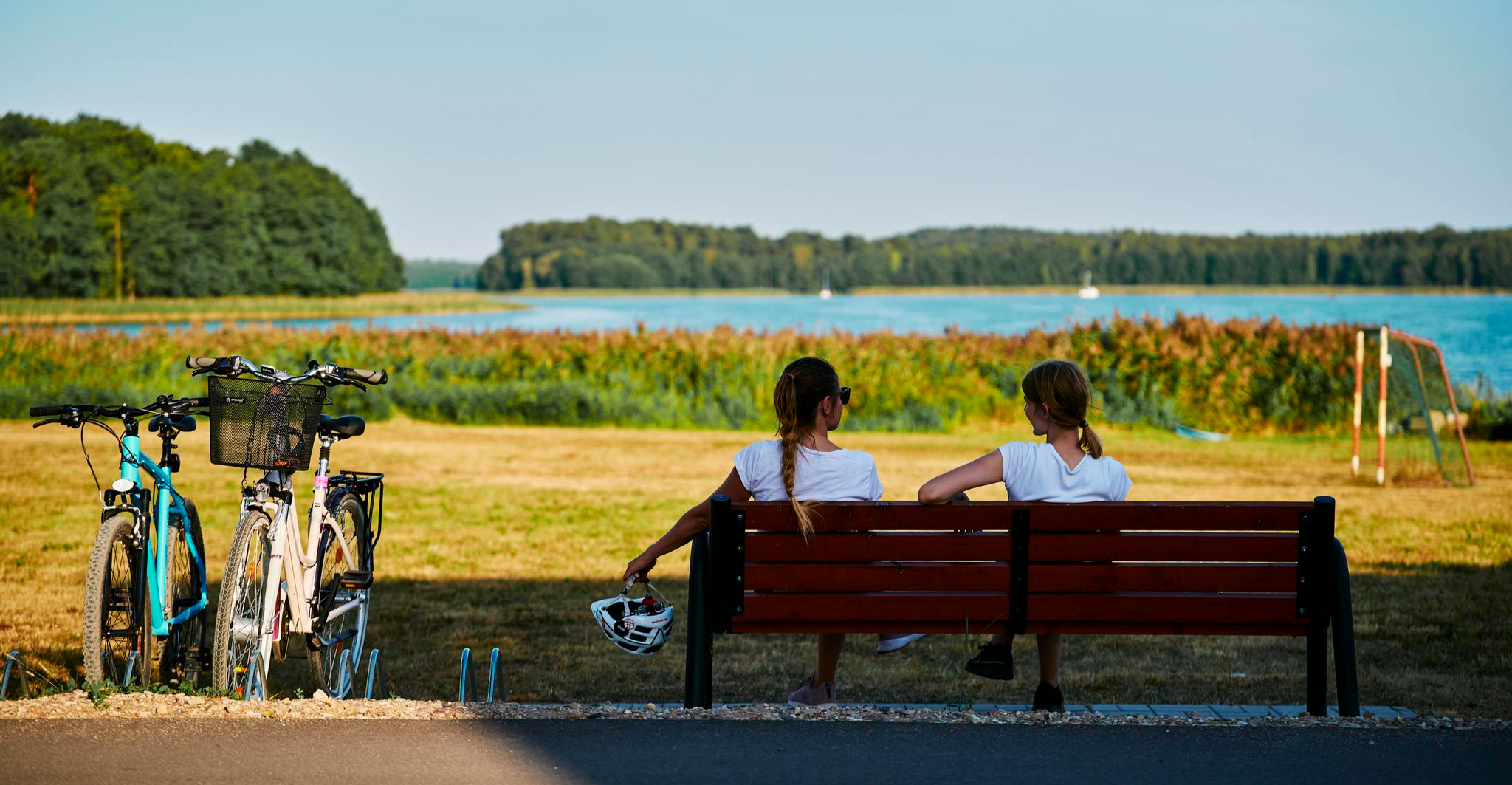
The Ostróda seafront promenade is a beautiful place that offers more than just a path along the water. The wide footpath and cycle path runs right along the shore and opens up new views of the lake, whose surface shimmers in different colors depending on the time of day. As you stroll, you can feel the fresh breeze and enjoy the hustle and bustle of people walking, cycling or simply sitting on one of the benches and enjoying the view. Just a few steps away, the old Teutonic castle towers up, telling its own story. From the masters of the Teutonic Order to Gustav Adolf of Sweden and Napoleon - many famous people have left their mark here. The castle forms an exciting contrast to the modern promenade and is worth a detour to immerse yourself a little in the history of the region. At the pier, you have the opportunity to take a boat trip across the lake district or even to the Elbląg Canal. These tours offer a relaxed opportunity to experience the surrounding nature from a different perspective. The promenade itself is a lively place that invites you to linger, be it for a break by the water or a longer walk along the lake.
0
0

Cannons in front of the town hall in Morąg, cast in 1864 in Liège, Belgium. They were among many cannons used by the French army during the war with Prussia that broke out in 1870. However, the guns were captured by the enemy. The commanders of the victorious Prussian army decided to use excess weapons as monuments. One of the cities where the guns were delivered was Morąg.
0
0
The town hall in Morąg - a Gothic building, built in 1444.
0
0

A monument of sacred art built at the turn of the 19th and 20th centuries using the original northern wall from the 14th century. In 1341, the construction of the church began. Saint Bartholomew the Apostle, which was part of the city fortifications. In 1893, a decision was made to build a new church next to the medieval temple. The new church was built between 1898 and 1901, oriented along the north-south axis. During construction, the Gothic nave was demolished, but its northern wall and the medieval defensive tower, which still served as a bell tower, were preserved. The tower of the old church and the building of the new church were connected through a cloister open to the south with arcades, in order to maintain the symbolic continuity of the sacred function of the site of the medieval temple. The new three-nave church was built in the neo-Gothic style, with a low tower with a clock in the north-eastern corner. Outside the church, on its southern wall, there is a tombstone, which must have once been embedded in the floor of the old church, dedicated to Pastor Elias Lauriskus (1631-1665).
2
0
Zielona Lock - a lock located in the town of Zielona in the Miłomłyn commune. A typical chamber lock with a concrete structure. It was built at the end of the 19th century. Dimensions of the lock: length 34.19 m, width 3.55 m. The difference in water level when locking is 1.89 m. The lock has a single-leaf wooden gate covered with wooden sheathing. The lock chamber, originally wooden, was rebuilt into a concrete one in 1925-1926.
0
0
The town hall is next to the parking lot and in front of it there are two cannons :)
0
0
Frequently Asked Questions
What historical sites can I explore in the Gmina Morąg region?
The region is rich in history. You can visit the impressive Cannons in Front of Morąg Town Hall, which date from the Franco-Prussian War. Explore the Gothic Town Hall itself, which retains its medieval character despite rebuilds. Don't miss the Dohna Palace in Morąg, a Renaissance-style castle now housing a section of the Museum of Warmia and Mazury, including a museum dedicated to philosopher Johann Gottfried Herder. You can also see fragmentary remains of the 14th-15th century Medieval Defensive Walls around Morąg.
Are there any significant natural attractions or wildlife viewing opportunities?
Yes, the Gmina Morąg area offers several natural highlights. The Morąskie Rozlewisko (Morąg Wetlands) southwest of town is a significant natural feature and a haven for water birds, with approximately 150 species nesting there. You can also find a Cormorant Reserve near Morąg Lake, and potentially observe a Beaver Dam near Miłakowo.
What lakes are good for recreation near Morąg?
Several lakes offer recreational opportunities. Lake Skiertąg, northeast of Morąg, is ideal for relaxation and water activities. Approximately 5 km east, Lake Narie is known for its clean water and surrounding summer resorts, where you can rent kayaks, windsurfing boards, and boats. Further afield, Jeziorak Lake, Poland's longest, is popular for sailing and fishing, featuring 20 islands including Wielka Żuława, Europe's largest inland island.
What kind of outdoor activities can I do around these attractions?
The region offers diverse outdoor activities. For hiking, you can explore easy trails around gmina Morąg, such as the loop from Tabórz or the Pier at Kretowiny Beach loop on Lake Narie. Cyclists can enjoy gravel biking routes like the Jezioro Narie loop, or road cycling routes including the Skiertąg Lake to Lake Narie loop.
Is the Ostróda-Elbląg Canal accessible from Morąg, and what makes it unique?
While not directly within Gmina Morąg, the Ostróda-Elbląg Canal is a major regional attraction easily accessible from Morąg. This 19th-century engineering marvel is unique for its system of inclined planes that transport boats overland, making it a world-class monument of hydro-technical equipment. A section from Ostróda to Miłomłyn is even known as the 'Pope's Route'.
Are there any family-friendly attractions in the area?
Many sites in the region are suitable for families. The Cannons in Front of Morąg Town Hall are an interesting historical stop. The Zielona Lock on the Elbląg Canal can be an engaging visit for older children interested in engineering. Additionally, the Morąg Town Park provides a green space for relaxation within the town.
What is the significance of the Teutonic Castle Ruins in Morąg?
The Teutonic Castle Ruins in Morąg represent a significant piece of the region's medieval history. Originally a timber watchtower from around 1280, it was rebuilt as a brick castle between 1331 and 1384 by the Teutonic Order. Although largely demolished in the 19th century, ruins and a later Renaissance manor remain, with ongoing reconstruction efforts. You can learn more about its history on medievalheritage.eu.
What can I expect at the Ostróda Lakeside Promenade?
The Ostróda Lakeside Promenade offers a pleasant experience with a wide footpath and cycle path along the shore of Lake Drwęckie. Visitors can enjoy views of the lake, feel the fresh breeze, and observe local life. Boat trips across the lake district or to the Elbląg Canal are also possible from the pier, and the historic Ostróda Castle is just a short walk away.
Are there any notable churches or religious buildings to visit?
Yes, the Gothic Parish Church of Saints Peter and Paul in Morąg, constructed between the early 14th and early 16th centuries, is a must-see. It features 15th-century murals in the choir, a 13th-century crucifix, a Baroque main altar, and a valuable 18th-century organ. In Miłomłyn, you can visit St. Bartholomew's Church with Defensive Walls, a monument of sacred art with parts dating back to the 14th century.
What is the Former Małdyty Manor, and what is its current use?
The Former Małdyty Manor is a historical site that once served as an administration building for the Maldeuten estate. The original manor house was destroyed, but a renovated building now functions as a hotel and restaurant. It's located near the intersection of two country roads and close to the Oberland Canal, offering a glimpse into 18th and 19th-century architecture.
What are some lesser-known spots or 'hidden gems' in the Morąg area?
Beyond the main attractions, consider exploring the Kretowińska Promenada (Manhattan) in Morąg for a leisurely stroll. The Morąskie Rozlewisko wetlands, while a significant natural feature, might be considered a hidden gem for birdwatching enthusiasts. Also, keep an eye out for the fragmentary remains of the Medieval Defensive Walls around Morąg, which offer a quiet connection to the town's past.
Most popular routes around gmina gmina gmina Morąg
Most popular attractions around gmina gmina gmina Morąg

Get inspired with the komoot mobile app


Explore more
Still not found the Highlight you’re looking for? See guides of the top attractions in other regions:
