Attractions and Places To See around Konin - Top 20
Best attractions and places to see around Konin include a blend of historical landmarks, cultural sites, and natural features. Situated along the Warta River in central Poland, Konin offers visitors insights into its rich past and opportunities for outdoor activities. The region is characterized by its historical significance as a trade route stop and its surrounding glacial lakes. These diverse attractions provide a range of experiences for exploration.
Best attractions and places to see around Konin
- The most popular attractions…
Last updated: October 4, 2026
Town Hall in Konin
Highlight • Monument
Translated by Google •
Tip by

Saint Bartholomew's Church
Highlight • Religious Site
Translated by Google •
Tip by

Sign up now to discover places like this
Get recommendations on the best single tracks, peaks, & plenty of other exciting outdoor places.
Church in Gosławice
Highlight • Religious Site
Showing Translation
Tip by

Napoleon's Arch
Highlight • Monument
Translated by Google •
Tip by
Camaldolese Monastery in Bieniszew
Highlight • Religious Site
Translated by Google •
Tip by

Sign up for free to discover even more attractions around Konin.
Already have an account?
Start today with a free account
Your next adventure awaits.

Other adventures around Konin

Tips from the Community

Church of the Nativity of the Blessed Virgin Mary, belonging to the Camaldolese hermitage The church is located on Sowia Góra, in the middle of the forests of Puszcza Bieniszewska. Its location gives it a very special, hermit-like character. Inside, you can find, among other things, paintings related to the Five Martyr Brothers, relics, and the monks' burial crypt
0
0
It was built in the first half of the 15th century, around 1418–1425. It was consecrated in 1444. The founder was Andrzej Łaskarz, Bishop of Poznań, from Gosławice, along with his nephew Jan z Lichenia. Very interesting Gothic architecture, in a cross plan. It was modeled on the famous temple in Jerusalem.
0
0

It may not be the most beautiful, but it is worth visiting.
0
0
Beautiful, majestic monastery located in the Bieniszew Forest.
0
0
Napoleon's Arch in Ślesin – a triumphal arch located in Ślesin, by the road to Sompolno. The arch was erected by the inhabitants of Ślesin in 1811 or 1812, in honor of Napoleon Bonaparte. The inhabitants hoped that he would pass this way when advancing on Russia. The Emperor presumably did not see the structure.
0
0
St. Bartholomew's Church in Konin (Konin Fara) – parish church of St. Bartholomew in Konin, located at Kościelna Street 1.
0
0
The church was built at the beginning of the 15th century and consecrated in 1444. The founders of the church were the bishop of Poznań Andrzej Łaskarz, born in Gosławice, and his nephew Jan z Lichenia. The building was likely constructed in two phases. The first phase was the responsibility of an anonymous architect, probably brought from Bohemia, Austria, or Hungary. The second phase, in turn, occurred after a break in construction, and was carried out by a workshop from the territories of the Teutonic Order state. The church also houses an octagonal Renaissance baptismal font from the 15th century. In 1771, a fire broke out, partially destroying the church. Subsequent fires occurred in the 19th century, leading to it being renovated twice, once in 1801 and again in 1819. It was then partially rebuilt by the then owners of Gosławice – the Kwilecki family, gaining a Neo-Gothic interior design, the narthex and sacristy were rebuilt, a new turret was erected, and the vault in the presbytery, chapels, and narthex was restored.
0
0

Gothic basilica whose oldest parts—such as the sacristy—date back to the 14th century, built upon even earlier Romanesque foundations . Over the centuries it has been expanded and richly adorned: its interior features Renaissance chapels (notably from 1607), Baroque altars, 17th–18th‑century tombstones, and stained-glass windows and polychromes by Eligiusz Niewiadomski i (the assassin of the first President of Poland, Gabriel Narutowicz) made in the early 20th century. Built primarily of brick with sandstone elements, the church still retains visible external buttresses and decorative features like bronze lion-head door knockers from the 15th century. Officially registered as an immovable heritage monument, it remains a central landmark of Konin both architecturally and spiritually.
0
0
Frequently Asked Questions
What historical landmarks can I explore in Konin?
Konin is rich in history. You can visit the ancient Konin Stone, one of Europe's oldest road signs, located near the 14th-century Saint Bartholomew's Church. The Town Hall in Konin, a classicist building from the late 18th century, is also a notable landmark. Don't miss the Old Synagogue, a restored historic building now hosting cultural events.
Are there any castles or museums in the Konin area?
Yes, in the Gosławice district, you'll find the 15th-century Gosławice Castle, which houses the Regional Museum of Konin. The museum showcases the region's history, including craftsmanship, historical lighting equipment, 19th-century jewelry, and Judaica, with the 'Treasure of Sompolno' as a highlight. An ethnographic heritage park is also part of the museum premises.
What natural attractions are there around Konin?
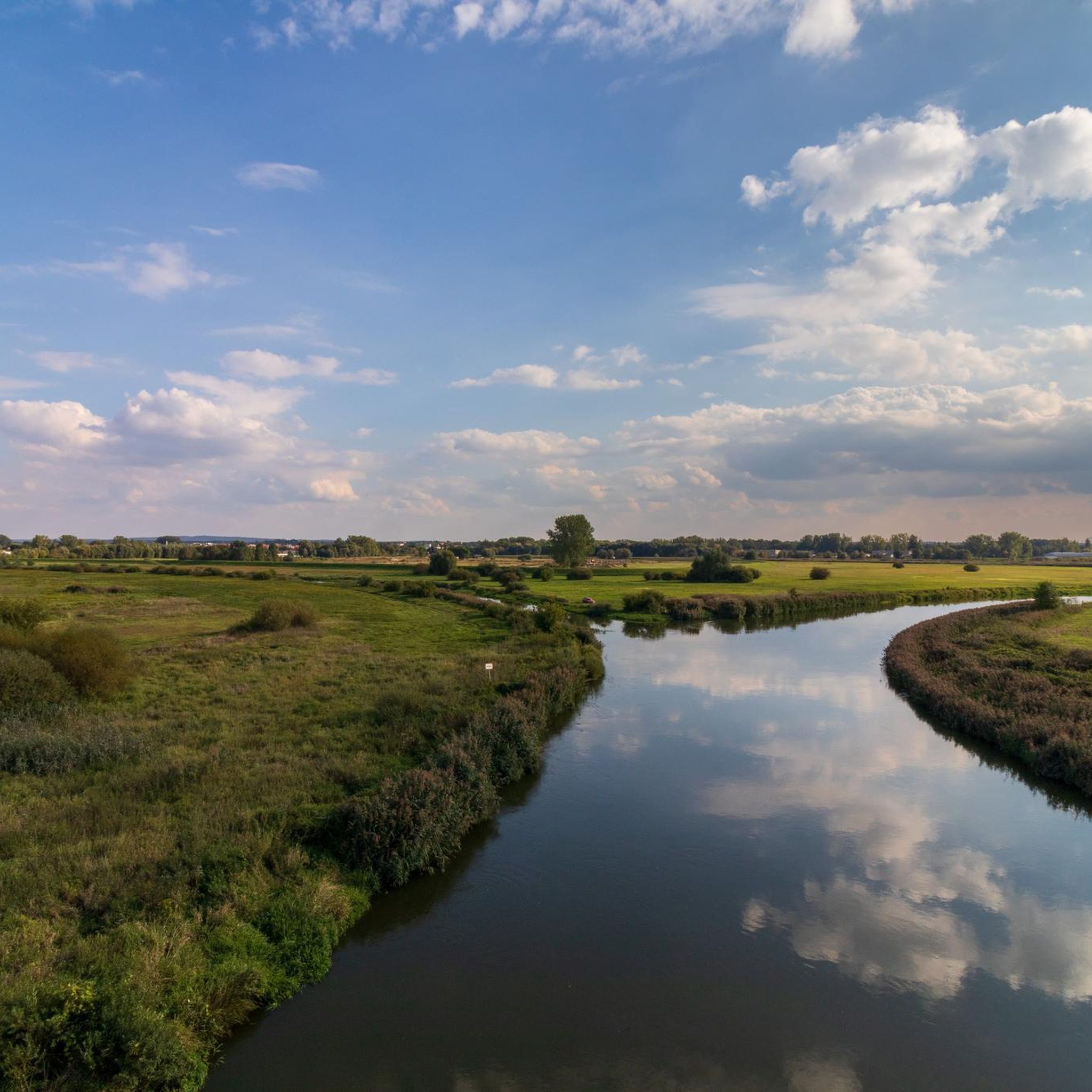
The Warta River flows through Konin, offering scenic views and opportunities for water sports. The region is also known for its glacial lakes, such as Mikorzyn Lake, which are popular for kayaking, motorboating, sailing, and wakeboarding. A unique natural feature is Jezioro Turkusowe (Turquoise Lake), an old mining pit with distinctive blue-green waters.
What kind of outdoor activities can I do near Konin?
Konin and its surroundings are excellent for outdoor activities, especially cycling and water sports. You can rent equipment and enjoy boat cruises at Marina Ślesin on Lake Ślesin. For cycling, there are numerous routes, including those around the lakes and through areas like Bieniszew Forest. You can find detailed cycling routes in the Cycling around Konin, MTB Trails around Konin, and Road Cycling Routes around Konin guides.
Are there family-friendly attractions in Konin?
Absolutely. Marina Ślesin is a great spot for families, offering water equipment rentals and boat cruises on Lake Ślesin. The Obiekt Rekreacyjno-Sportowy "Rondo" also features a family water park. Many historical sites like the Town Hall in Konin and Saint Bartholomew's Church are accessible and offer educational experiences for all ages.
Where can I find a peaceful place for a stroll or relaxation in Konin?
For a peaceful stroll, the Bulwar Nadwarciański along the Warta River offers pleasant views and relaxation spots. The City Park (Frederic Chopin) is another serene urban green space perfect for unwinding. You can also find tranquility at the Monastery of Camaldolese Monks in Bieniszew, located north-west of Konin.
What is the significance of the Konin Stone?
The Konin Stone is a significant historical artifact, dating back to 1151 AD. It is one of Europe's oldest road signs outside the Roman Empire, marking the halfway point between Kalisz and Kruszwica. This sandstone carving is a testament to Konin's historical importance as a trade route stop and can be found near Saint Bartholomew's Church.
Can I visit any unique religious sites near Konin?
Yes, beyond the Gothic Saint Bartholomew's Church and the historic Old Synagogue, you can visit the rural Gothic St. Andrew's Church in Gosławice, known for its unique Greek cross plan. Additionally, the Sanctuary of Our Lady of Licheń, a major pilgrimage site, is located just 10 km north of Konin and attracts many visitors seeking spiritual solace.
Are there any historical monuments related to Napoleon in the area?
Yes, you can visit Napoleon’s Gate in Ślesin. This triumphal arch was built by the inhabitants of Ślesin in 1811 or 1812 in honor of Napoleon Bonaparte, who they hoped would pass through on his way to attack Russia.
What is the Konin Old Town like?
Konin's Old Town is a charming area with cobblestone streets and historic buildings showcasing Gothic, Renaissance, Baroque, and Neoclassical architectural styles. It's a cultural hub that tells the city's story through its preserved structures and atmosphere, offering a glimpse into Konin's rich past.
What makes the lakes around Konin special for water activities?
The lakes around Konin, including Mikorzyn Lake and Lake Ślesin, are part of a natural sequence of glacial lakes. A unique aspect is that some of these waters are warmed by nearby power plants, making them suitable for water adventures even in winter. Marina Ślesin is a prime spot for various water sports.
Are there any archaeological sites to visit near Konin?
Yes, for those interested in archaeology, there is an archaeological open-air museum in Mrówki near Wilczyn. This site offers insights into the rich archaeological heritage of the Konin region.
Most popular routes around Konin
Most popular attractions around Konin

Get inspired with the komoot mobile app


