Attractions and Places To See around Bojanowo - Top 16
Best attractions and places to see around Bojanowo include a blend of historical sites and cultural points of interest. Located in Rawicz County, Greater Poland Voivodeship, the area features a rural landscape with forests and agricultural fields. This region offers opportunities to explore historical architecture and local heritage.
Best attractions and places to see around Bojanowo
- The most popular attractions is Rydzyna Castle, a castle that was originally built in the 15th century and reconstructed between 1970 and 1989. It is considered one of the most preserved Baroque palace complexes in Poland.
- Another must-see spot is Wąsosz Castle, a castle built in the 14th century by the princes of Oleśnica and Głogów. It was rebuilt into a baroque residence in the 18th century.
- Visitors also love St. Catherine of Alexandria Church, Góra, a religious building constructed in the Gothic style between 1457 and 1552. The church was built on a hill and integrated into the city's defensive walls.
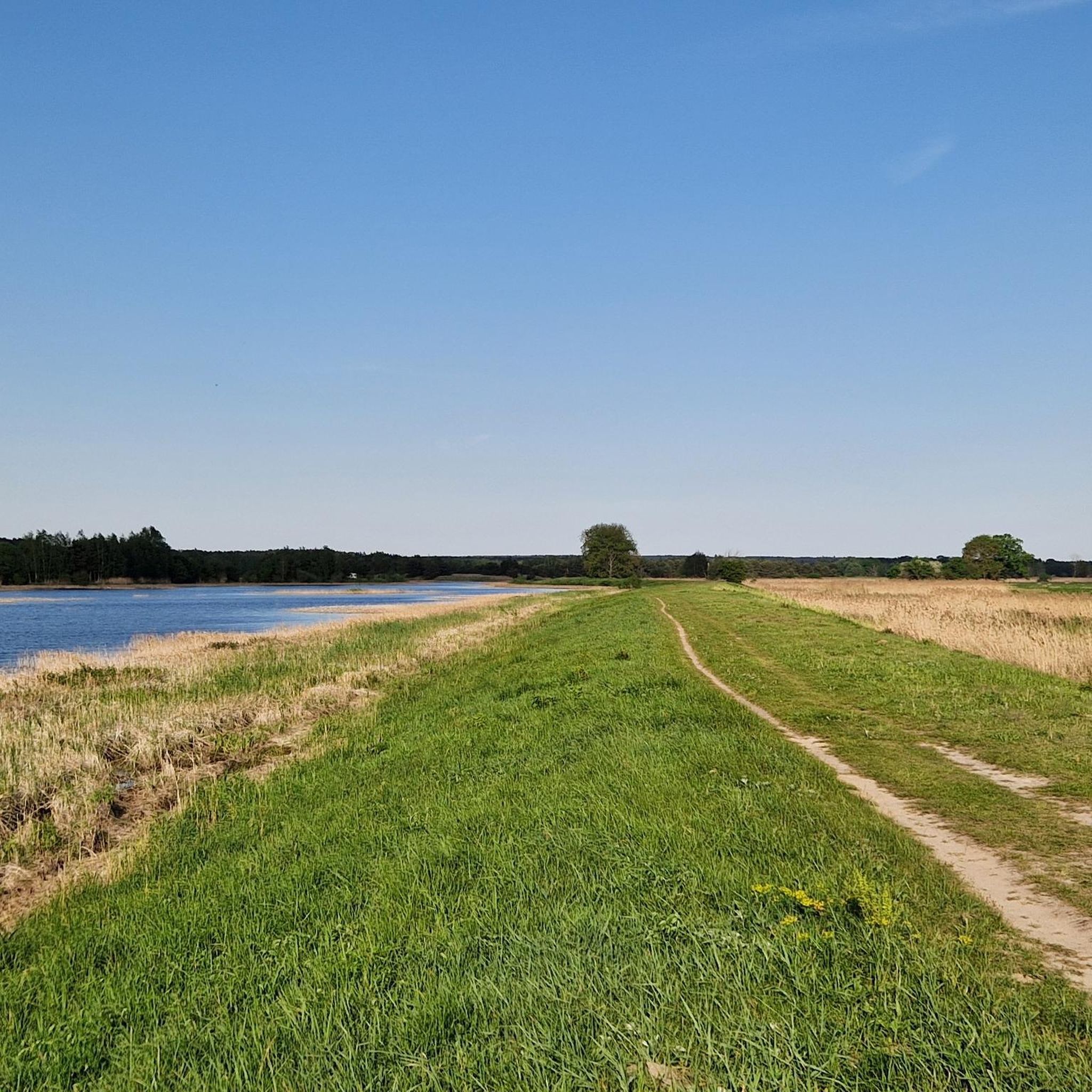
- Bojanowo is known for its historical sites, cultural heritage, and rural landscapes. Visitors can explore castles, churches, and museums, alongside opportunities for cycling through forest paths.
- The attractions around Bojanowo are appreciated by the komoot community, with 49 upvotes and 40 photos shared.
Last updated: May 20, 2026
Rydzyna Castle
Highlight • Castle
Translated by Google •
Tip by

St. Catherine of Alexandria Church, Góra
Highlight • Religious Site
Reconstructions after the fires (18th century): The church was repeatedly destroyed. A fire in 1759 (started by Russian troops) caused significant damage. The reconstruction, during which the church gained Baroque domes on the towers and Baroque interior furnishings (which survive to this day), was completed in 1763.
Translated by Google •
Tip by

Sign up now to discover places like this
Get recommendations on the best single tracks, peaks, & plenty of other exciting outdoor places.
Sign up for free
Głogowska Tower in Góra
Highlight • Monument
Translated by Google •
Tip by

Wąsosz Castle
Highlight • Castle
Translated by Google •
Tip by

Museum of Carpentry and Biskupizna
Highlight • Historical Site
Translated by Google •
Tip by
Sign up for free to discover even more attractions around Bojanowo.
Sign up for free
Already have an account?
Start today with a free account
Your next adventure awaits.
Login or Signup

Tips from the Community

After the great city fire of 1457, construction began on a brick, three-nave church in the Gothic style. This construction, interrupted by subsequent fires (including one in 1478), lasted until the first half of the 16th century (around 1552). The church was built on a hill, integrated into the city's defensive walls. Reconstructions after the fires (18th century): The church was repeatedly destroyed. A fire in 1759 (started by Russian troops) caused significant damage. The reconstruction, during which the church gained Baroque domes on the towers and Baroque interior furnishings (which survive to this day), was completed in 1763.
2
0
The castle grounds are publicly accessible.
0
0
Rydzyna Castle: A Pearl of the Baroque in the Wielkopolska Land The castle in Rydzyna, located in the Wielkopolska Lowlands, is one of the most beautiful and best-preserved Baroque palace complexes in Poland. Its history is a testament to the power and ambition of the magnate families that shaped it over the centuries. The beginnings of the Rydzyna stronghold date back to the 14th century. At that time, it was a medieval defensive castle, built by the Wierzbna family, and later owned by the Rydzyński family. In 1685, Rydzyna was acquired by Rafał Leszczyński, the then Grand Treasurer of the Crown and Voivode of Poznań. He was the one who began a thorough reconstruction of the castle from a Gothic stronghold into a modern, Baroque residence. The works, carried out by the outstanding architect Józef Bellotti, transformed the castle into a four-winged structure with an internal courtyard, surrounded by a moat and bastions. The castle reached its greatest splendor during the reign of Rafał's son, Stanisław Leszczyński, the future King of Poland and father-in-law of the French King Louis XV. Stanisław, although he did not reign long, made Rydzyna an important center of culture and art, gathering valuable collections and hosting distinguished artists. During this period, the castle became a true pearl of Baroque architecture, modeled on French residences. In 1738, after Stanisław Leszczyński's abdication, the castle in Rydzyna fell into the hands of the Sułkowski family. During this period, the castle gained new, Rococo interiors, and other outstanding architects were hired to work on it, including Karol Marcin Frantz and Ignacy Graff. At that time, representative halls were created, such as the Ballroom and the Knights' Hall, richly decorated with stucco and paintings. The Sułkowskis were also patrons of art and science, which contributed to the flourishing of cultural life in Rydzyna. The 19th century brought a decline in the castle's glory. After a fire in 1817, which destroyed part of the interior, the castle never regained its former glory. The Sułkowskis' estate fell into decline, and in 1909 they sold the castle to the Prussian state. The building then served as a school and boarding school. The greatest destruction was brought by World War II. In 1945, during the fighting, the castle was burned down and destroyed again, remaining in ruins for many decades. It was not until the 1970s that a decision was made to comprehensively rebuild the castle. Reconstruction work, carried out with extraordinary attention to detail and based on archival plans, lasted until the 1990s. The castle is currently owned by the Association of Polish Mechanical Engineers and Technicians (SIMP), which adapted it to a conference and hotel center. Rydzyna Castle once again delights with its architecture and interiors, being a living testimony to the rich history of Polish magnates. Numerous cultural events are organised here, and the castle is open to visitors, allowing you to admire its Baroque splendour.
2
0

A very interesting museum run by the next generation of carpenters who have been working here for over 100 years. A carpenter's workshop, the history of the owner's carpentry family, a regional chamber with folk costumes from Biskupizna. Museum of the former bicycle factory. Worth seeing. Entrance ticket PLN 15. Museum website: https://www.facebook.com/p/Muzeum-Stolarstwo-i-Biskupizny-100057196311862/?locale=pl_PL
0
0

The castle was built in the 14th century by the princes of Oleśnica and Głogów, on the site of a former princely stronghold. In 1432 it was besieged by the Hussites, but was not captured. In 1520, the owner was the bishop of Wrocław, Jan Turzo, later it was in the hands of the princes of Legnica. Destroyed probably during the Thirty Years' War. In 1759, plundered by the Austrians, the northern wing with the chapel was demolished. In the 18th century, it was rebuilt into a baroque residence. The last reconstruction took place in 1924. The entrance portal with the Roman year of modernization MDCCCCXXIV dates from this period. The castle is surrounded by a park with monumental trees.
1
0


The original Gothic Rydzyna Castle was built at the beginning of the 15th century and burned down by Soviet troops in 1945 and reconstructed according to old plans between 1970 and 1989 .
5
3
St. Catherine, mentioned in a document in 1302, was completed in its present form in the years 1457-1552 (after the fire of the previous one). Restored after a fire in 1759, it was partially collapsed in the part of the vaults and the western tower in 1963. Rebuilt in 1964-1965, it is an oriented, brick, three-nave, hall building, with a hexagonal end chancel, surrounded by an ambulatory and a wreath of chapels. The central nave in the chancel is slightly narrower and has a pillar on the axis that divides the two halves of the hexagon. The whole is covered with stellar vaults, and the western part is a modern ceiling from 1965. The western façade with a triangular gable is flanked by two unfinished towers in late Gothic forms. The interior has retained its baroque furnishings from the second half of the 19th century. Eighteenth century https://pl.wikipedia.org/wiki/Ko%C5%9Bci%C3%B3%C5%82_%C5%9Bw._Katarzyny_Aleksandryjskiej_w_G%C3%B3rze
0
0
Frequently Asked Questions
What historical sites can I explore in Bojanowo and its immediate vicinity?
In Bojanowo itself, you can visit the historic Market Square, designed in 1638, which retains its historical urban layout. The Neo-Gothic Church, built between 1858 and 1860, is another significant architectural landmark. Just 2 km from downtown Bojanowo, you'll find Pałac Trzebosz, a late Baroque palace from the 18th century.
Are there any notable castles or palaces near Bojanowo?
Yes, the region boasts several impressive castles. The most popular is Rydzyna Castle, an original Gothic castle from the 15th century, reconstructed into one of Poland's best-preserved Baroque palace complexes. Another must-see is Wąsosz Castle, a 14th-century stronghold rebuilt into a Baroque residence. You can also visit Pałac Trzebosz, a late Baroque palace just outside Bojanowo.
What cultural or religious landmarks are worth visiting in the area?
Beyond Bojanowo's Neo-Gothic Church, the region offers several historical religious sites. The St. Catherine of Alexandria Church in Góra is a Gothic brick church built on a hill and integrated into the city's defensive walls. The village church in Gołaszyn, northwest of Bojanowo, dates back to the 14th century.
What kind of outdoor activities can I do near Bojanowo?
The rural landscape around Bojanowo, characterized by forests and agricultural fields, is ideal for cycling tourism. You can find numerous forest paths and roads for exploration. For more structured routes, consider exploring the cycling routes around Bojanowo, which include easy to difficult options. There are also gravel biking routes and running trails available.
Are there any viewpoints or towers offering panoramic views?
Yes, the Głogowska Tower in Góra, a 15th-century defensive tower, has been revitalized and serves as a viewing point since 2018. It offers historical insights and panoramic views of the surroundings.
What are some family-friendly attractions around Bojanowo?
Families can enjoy exploring historical sites like Rydzyna Castle, which often hosts cultural events. The Museum of Carpentry and Biskupizna offers an interesting look into local crafts and history, including a regional chamber with folk costumes and a former bicycle factory museum, making it an engaging visit for all ages.
Where can I find natural features or places for relaxation near Bojanowo?
While large natural water bodies are scarce, the area features numerous ponds and reservoirs, often created from former excavations, which provide fishing opportunities. The Łęg River Dam and Maziarnia Reservoir offer a walking path around the water and scenic views, perfect for a relaxing stroll.
What is the Bojanowo Brewery and can I visit it?
The Bojanowo Brewery is a historic site unique in Rawicz County, having operated for over 140 years. Its production building has largely maintained its original shape, offering a glimpse into the region's brewing heritage. While the guide doesn't specify visitor access, it's a significant local landmark.
What do visitors enjoy most about the attractions around Bojanowo?
Visitors particularly appreciate the rich history and architectural beauty of sites like Rydzyna Castle, often described as a 'Pearl of the Baroque'. The blend of historical sites, cultural heritage, and opportunities for cycling through the rural landscapes are highly valued by the komoot community.
Are there any unique local museums or cultural experiences?
Yes, the Museum of Carpentry and Biskupizna is a very interesting museum run by a family of carpenters with over 100 years of history. It features a carpenter's workshop, the family's history, and a regional chamber showcasing folk costumes from Biskupizna, along with a museum of a former bicycle factory.
What kind of running trails are available near Bojanowo?
There are several running trails around Bojanowo, ranging from moderate difficulty. You can find loops starting directly from Bojanowo, such as the 'Running loop from Bojanowo' (12.1 km and 13.1 km) and the 'Ruiny starego wiatraka loop from Bojanowo' (8.3 km). For more options, explore the Running Trails around Bojanowo guide.
Can I find places for sports or recreation in Bojanowo?
For sports enthusiasts, the Stadion Miejski im. Brunona Wawrzyniaka w Bojanowie is a local stadium located just 1.1 km from Bojanowo. Additionally, the rural landscape provides ample opportunities for cycling and running, with dedicated routes available.
Most popular routes around Bojanowo

Get inspired with the komoot mobile app


Explore more
Still not found the Highlight you’re looking for? See guides of the top attractions in other regions:
