Attractions and Places To See around Złotów - Top 13
Attractions and places to see around Złotów offer a blend of historical sites, cultural insights, and natural landscapes. The town is situated on the Głomia river and surrounded by five postglacial lakes, providing picturesque scenery. Visitors can explore various landmarks and natural features within the region.
Best attractions and places to see around Złotów
- The most popular attractions is Krajna Farmstead in Złotów, a historical site that features an ethnographic exhibition. This includes a traditional Krajna cottage and farm…
Last updated: October 19, 2026
St. Stanislaus Kostka Church, Radawnica
Highlight • Religious Site
Translated by Google •
Tip by

Half-Timbered Church in Osówka
Highlight • Religious Site
Translated by Google •
Tip by

Sign up now to discover places like this
Get recommendations on the best single tracks, peaks, & plenty of other exciting outdoor places.
Krajna Farmstead in Złotów
Highlight • Historical Site
Translated by Google •
Tip by

Route of the Former Jastrowie–Węgierce Railway Line
Highlight (Segment) • Trail
Translated by Google •
Tip by
Saint Hubert's Shrine and Shelters
Highlight • Religious Site
Translated by Google •
Tip by
Sign up for free to discover even more attractions around Złotów.
Already have an account?
Start today with a free account
Your next adventure awaits.


Tips from the Community

Church from 1798. It probably stands on the site of an older temple. In 1893 it was renovated. It was boarded up then, but post-war renovation restored its original appearance.
1
1

The church is very well maintained
2
0

Ethnographic exhibition. Krajna cottage (arcade cottage) with farm buildings (cowshed, barn and forge)
1
0

A small church from 1798 (rebuilt in 2013), with a half-timbered structure, with a tower tucked into the nave, covered with a baroque visor. The historic interior furnishings include: a Rococo altar and a neoclassical pulpit. On the church grounds there is a free-standing bell tower with a bell from 1728.
2
0
The route follows the Jastrowie - Węgierce railway line, dismantled in 1945. The line was dismantled as a result of the blowing up of the bridge on the Gwda River in Jastrowie during the war on January 31, 1945 at 15:55 by retreating units of the German 15th SS Grenadier Division.
0
0

A chapel and large shelters probably used during hunting, but you can also shelter from rain.
0
0
In 1926, the idea of building a church was born among the evangelical population of the village of Radawnica, which received support under the so-called Eastern program. The present-day church was built in the years 1927 - 28 in the historicist style. It had 270 seats. The form of the temple refers to the granite Romanesque village churches preserved in Pomerania. It is clearly embedded in the tradition of churches built by the Settlement Commission. Only the windows were shaped in a modern way. The cornerstone blessing ceremony was held with great pomp on September 7, 1927. Its main intention was to emphasize the presence of the Germans in this Polish village. The community numbered about 500 souls, including the inhabitants of neighboring farms. The site for the construction of the church, separated from the manor park, was donated by its then owner - a German. The construction was carried out by the construction company Radtke from Złotów. After the Second World War, St. the temple was not used. The organ was moved to the Catholic Church under the invocation of st. Barbara, where there was no instrument, and the pews were changed between the churches. The Catholic parish took over the post-evangelical church as an auxiliary and it received the call of St. Stanisław Kostka.
0
0
Frequently Asked Questions
What historical sites can I explore in Złotów?
Złotów is rich in history. You can visit the Church of the Assumption of Our Lady, an early-Baroque parish church from the 17th century, or the Former Evangelical Church of St. Stanislaus Kostka, a classicist design by Karl-Friedrich Schinkel. Don't miss the unique Monument to Piast the Wheelwright, the legendary progenitor of the Piast dynasty, or the classical Działyński Palace with its park complex. The Krajna Farmstead in Złotów also offers an ethnographic exhibition showcasing traditional architecture.
Are there any notable churches or religious buildings to visit in the Złotów region?
Yes, the region features several significant religious buildings. In Złotów itself, there's the early-Baroque Church of the Assumption of Our Lady and the classicist Former Evangelical Church of St. Stanislaus Kostka. Outside the town, you can visit the Half-Timbered Church in Osówka, a charming structure from 1798, or the Saint Hubert's Shrine and Shelters, a chapel nestled within a forest.
Where can I learn about the local history and culture of Złotów?
To delve into the local history and culture, visit the Złotów Land Museum, housed in an 18th-century wattle-and-daub house at 2A Wojska-Polskiego Street. It features rich archaeological, historical, and ethnographic collections. Additionally, the Krajna Farmstead in Złotów provides an ethnographic exhibition showcasing the traditional timber-framed architecture of the Krajna region.
What natural attractions are there around Złotów?
Złotów is surrounded by natural beauty, including five postglacial lakes: Baba, Burmistrzowskie, Miejskie, Proboszczowskie, and Zaleskie. The Głomia River flows through the town, offering canoeing opportunities. For a forest experience, Zwierzyniec Park is a 90-hectare complex with educational trails, an animal enclosure, and an arboretum.
Are there opportunities for hiking or walking in Złotów?
Yes, Złotów offers various hiking and walking opportunities. Zwierzyniec Park has numerous educational trails. For more structured routes, you can explore the Hiking around Złotów guide, which includes easy routes like the "View of Lake Złotowskie – Rybacki Peninsula loop" or the "Złotów Market Square – Złotów Graduation Tower loop".
Can I go cycling in the Złotów region?
Absolutely! The Złotów region is well-suited for cycling, with countless well-marked routes through picturesque landscapes, forests, and lakes. You can find various options in the Gravel biking around Złotów guide, with routes ranging from moderate to difficult, such as the "Sundial With Deer Statue – Krajna Farmstead in Złotów loop".
What lakes are around Złotów and what activities do they offer?
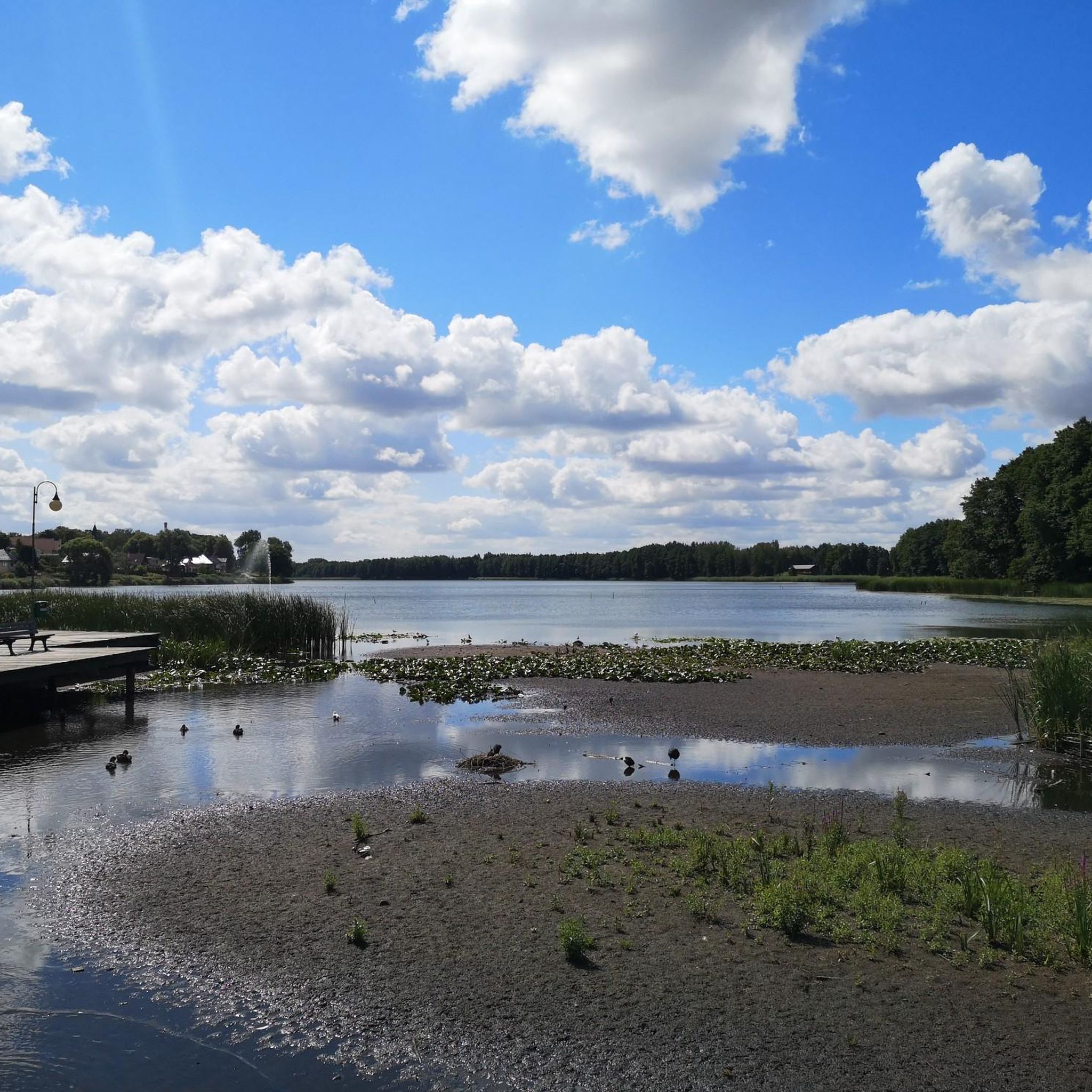
Złotów is surrounded by five lakes: Baba, Burmistrzowskie, Miejskie, Proboszczowskie, and Zaleskie. Lake Miejskie is particularly popular for recreation, featuring a promenade, cafes, an amphitheater, and a disc golf course. The Półwysep Rybacki peninsula on Lake Miejskie often hosts outdoor events.
Are there family-friendly attractions in Złotów?
Yes, Złotów has several family-friendly options. The Krajna Farmstead in Złotów, an ethnographic exhibition, is suitable for all ages. Zwierzyniec Park offers educational trails, an animal enclosure, and an aviary that children will enjoy. The recreational facilities around Lake Miejskie, including the promenade and disc golf, are also great for families.
What unique monuments or architectural landmarks are there in Złotów?
Beyond the historical buildings, Złotów boasts the Monument to Piast the Wheelwright, a unique tribute to the legendary founder of the Piast dynasty. The Town Hall, built in 1914, is notable for the deer statue near it, which rotates and emits sounds daily at noon. You can also find a building at 5 Domańskiego Street with an Art Nouveau facade from 1905.
Are there any remnants of Złotów's past related to railways?
Yes, the area around Złotów features several fascinating ruined railway bridges, which are historical remnants and popular with photographers and history enthusiasts. These include the Ruined Railway Bridge over the Gwda River between Górzna and Jastrowie, and the remains of the Wałcz–Złotów Railway Bridge, both partially destroyed in 1945. The Route of the Former Jastrowie–Węgierce Railway Line is also a historical site.
Where can I experience nature and wildlife near Złotów?
For nature and wildlife, Zwierzyniec Park is an excellent choice. This 90-hectare forest complex includes the Złotów Forest Inspectorate's Center for Ecological and Forest Education, an animal enclosure, and an aviary. The park also features old deciduous trees, including centuries-old monumental pedunculate oaks on Góra Żydowska.
What is the Lapidarium on Góra Żydowska?
The Lapidarium on Góra Żydowska (Jewish Mountain) was established in 2006. It was created from fragments of 143 tombstones discovered during construction work, originating from the former Jewish cemetery in the city. It serves as a poignant historical memorial.
Most popular routes around Złotów

Get inspired with the komoot mobile app


Explore more
Still not found the Highlight you’re looking for? See guides of the top attractions in other regions:
