Attractions and Places To See around Vinhós - Top 20
Best attractions and places to see around Vinhós offers a diverse range of cultural and historical sites, primarily centered around the historic city of Guimarães. This region in northern Portugal provides visitors with insights into medieval history and traditional Portuguese architecture. The landscape features a blend of urban exploration and natural beauty, making it suitable for various interests.
Best attractions and places to see around Vinhós
- The most popular attractions is Palace of the Dukes of Braganza, a castle that served as the residence of the first Dukes of Braganza. This imposing medieval estate is located in the historical center of Guimarães and is well-preserved.
- Another must-see spot is Guimarães Castle Park, a mighty castle complex in a well-restored condition. Dating back to the 10th century, it offers views of the surrounding area and is classified as a national monument.
- Visitors also love Oliveira Square, Guimarães, a historical site known for its rustic stone buildings and charming atmosphere. This square is an ideal starting point for exploring the city's streets and features several landmarks, including the Church of Nossa Senhora de Oliveira.
- Vinhós is known for its historical sites, medieval architecture, and cultural landmarks. Visitors can explore castles, religious buildings, and historic town squares, offering a variety of attractions to see and explore.
- The attractions around Vinhós are appreciated by the komoot community, with over 100 upvotes and 120 photos shared by visitors.
Last updated: July 1, 2026
Palace of the Dukes of Braganza
Highlight • Castle
Tip by

Guimarães Castle Park
Highlight • Castle
Translated by Google •
Tip by

Sign up now to discover places like this
Get recommendations on the best single tracks, peaks, & plenty of other exciting outdoor places.
Sign up for free
Oliveira Square, Guimarães
Highlight • Historical Site
Tip by
Church of the Consolation and the Holy Steps
Highlight • Religious Site
Translated by Google •
Tip by

Church of Our Lady of Mount Carmel - Lar de Santa Estefânia
Highlight • Religious Site
Tip by
Sign up for free to discover even more attractions around Vinhós.
Sign up for free
Already have an account?
Start today with a free account
Your next adventure awaits.
Login or Signup

Tips from the Community

A site well worth seeing. It looks more impressive from a distance than up close.
1
0
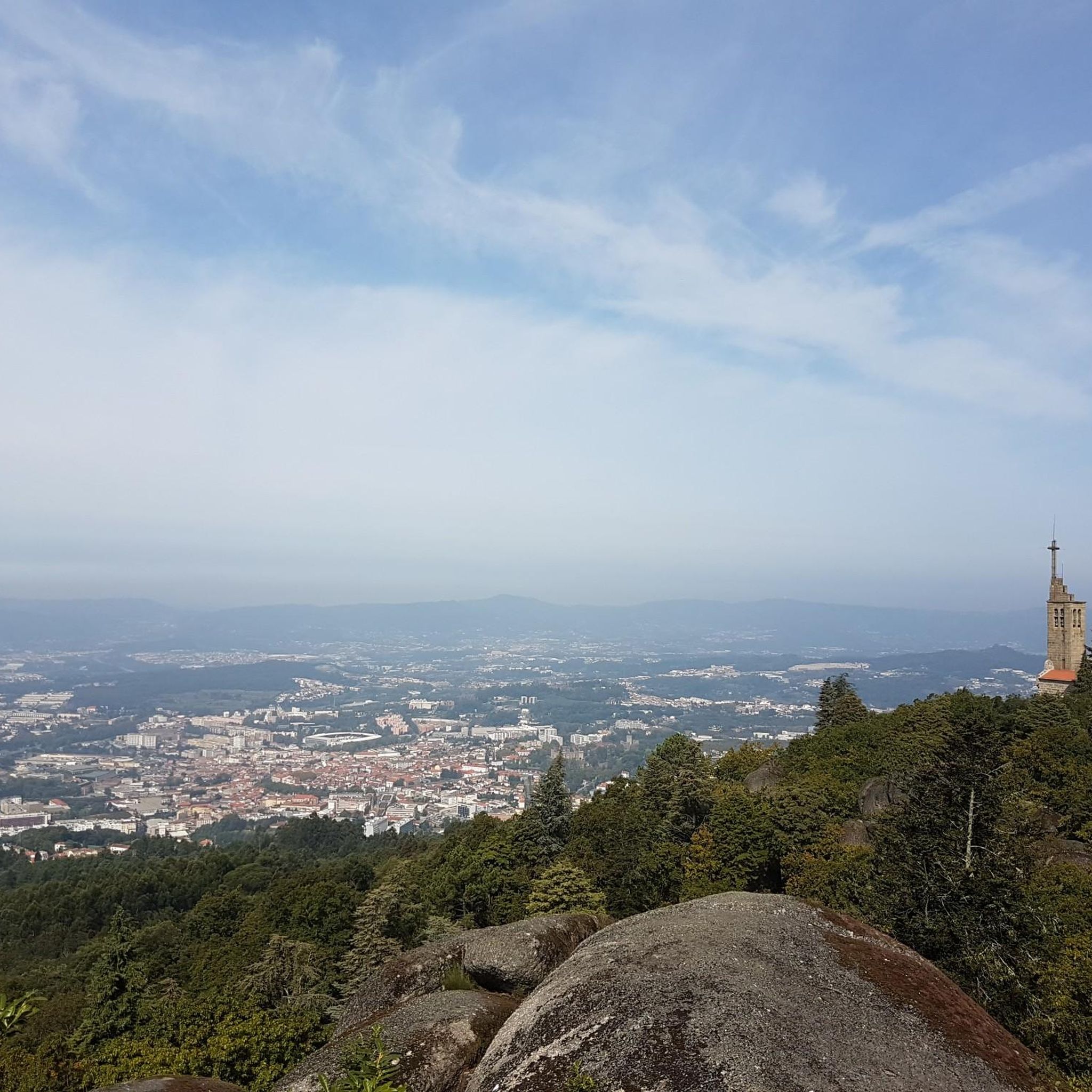
Beautiful view of the church.
1
1

A detailed plan of the complex with explanations can be found here: https://campanha.cmjornal.pt/portugal-monumental/
1
0
The Nonnenkloster Lar de Santa Estefânia is located in the complex of the Church of Nossa Senhora do Carmo. Find the location here: https://explorial.com/de/sights/guimaraes-igreja-nossa-senhora-do-carmo-de/
2
0
Largo da Oliveira Square owes its name to an ancient olive tree that once stood on this site. The still existing fence, with a small replacement tree, bears the year 1342. Surrounded by pretty, typically northern Portuguese houses, the square is the ideal starting point for exploring the city's streets on foot. The square also boasts several interesting landmarks: to the west, a curious little Gothic chapel, Padrão do Salado, dating from the time of King D. Afonso IV, which commemorates the Battle of Salado. There, in 1340, Portuguese and Castilian forces jointly defeated the forces of the Moorish king of Granada. Directly behind it lies the Church of Nossa Senhora de Oliveira (also known as the Colegiada). It is the first Gothic monument built in the Minho region. On the right side of the square, you can still see the former medieval town hall, with a stone sculpture that, according to tradition, represents Guimarães. Below, Gothic arcades lead to Largo S. Tiago, one of the city's most characteristic squares. https://www.visitportugal.com/de/NR/exeres/9FD0C908-905C-4119-8821-A155EC3C4CEB
2
1

The Church and Convent of Our Lady of Mount Carmel (in Portuguese: Igreja e Convento de Nossa Senhora do Carmo), whose construction began in 1685. Originally dedicated to Saint Teresa (in Portuguese: Santa Teresa), it was designed in the Baroque style. Don't forget to take a look at the upper part, which you can reach via a staircase on the right side of the entrance.
2
1
The Palace of the Dukes of Braganza was commissioned by Dom Afonso around 1420—the year of his second marriage to Constança de Noronha. Dom Afonso was the illegitimate son of King João I and acquired the titles of 8th Count of Barcelos, 2nd Count of Neiva, and 1st Duke of Braganza! It is considered a unique architectural example on the Iberian Peninsula!
2
0
Guimarães Castle is the most visited medieval castle in Portugal and one of the most beautiful and important castles in the country. It has been recognized as a National Monument since 1881, a UNESCO World Heritage Site since 2001, and one of the 7 Wonders of Portugal since 2007!
1
0
Frequently Asked Questions
What historical landmarks can I explore around Vinhós?
The region is rich in history, primarily centered around Guimarães. You can visit the impressive Palace of the Dukes of Braganza, a medieval estate that was once home to the first Dukes of Braganza. Nearby, explore the mighty Guimarães Castle Park, a 10th-century complex classified as a national monument. Don't miss Oliveira Square, Guimarães, known for its rustic stone buildings and landmarks like the Church of Nossa Senhora de Oliveira.
Are there any family-friendly attractions in the area?
Yes, several attractions are suitable for families. Both the Palace of the Dukes of Braganza and Guimarães Castle Park offer engaging historical experiences for all ages. Oliveira Square, Guimarães provides a charming atmosphere for a stroll, and the Church of the Consolation and the Holy Steps is also considered family-friendly.
What kind of outdoor activities can I do near Vinhós?
The area around Vinhós offers various outdoor activities, particularly hiking and running. You can find numerous trails, including moderate routes like the 'Palace of the Dukes of Braganza – Salado Monument loop' or the 'Boulder Labyrinth – Penha Sanctuary loop'. For more options, explore the Hiking around Vinhós guide. There are also running trails, such as those around Albufeira de Queimadela, detailed in the Running Trails around Vinhós guide.
Where can I find unique architecture in the region?
Beyond the medieval structures, the broader Fafe region (where Guimarães is located) is known for its unique architecture. You can find grand mansions built by emigrants returning from Brazil in the 19th century, often referred to as 'Brasileiros' architecture. A truly unique example is the Casa do Penedo (Stone House), built between massive granite rocks in the Fafe mountains, blending seamlessly with the landscape.
Are there any natural features or viewpoints to visit?
While the immediate attractions are historical, the surrounding region offers natural beauty. The Church of the Consolation and the Holy Steps offers a viewpoint. Further afield in the Fafe mountains, you can find the Queimadela Dam (Barragem da Queimadela), a tranquil reservoir with a river beach and walking trails. The Serra da Cabreira mountain range also provides scenic landscapes and hiking opportunities, and the Fafe Wind Park offers panoramic views.
What religious sites are notable in the area?
Guimarães features several significant religious buildings. The Church of the Consolation and the Holy Steps, also known as the Church of Our Lady of Consolation, is an imposing temple with beautiful flower fields leading up to it. Another notable site is the Church of Our Lady of Mount Carmel - Lar de Santa Estefânia, a beautiful baroque-style church founded in 1685.
What is the best way to experience the history of Guimarães?
To fully experience the history of Guimarães, start by exploring the historic center, particularly Oliveira Square. From there, visit the Palace of the Dukes of Braganza and the Guimarães Castle Park, which are very close to each other. These sites offer a comprehensive look into the city's medieval past and its role in Portuguese history.
Are there any museums or cultural centers nearby?
While the guide focuses on historical sites, the broader Fafe region offers cultural insights. For motorsports enthusiasts, the Fafe Rally Museum (Museu do Rali) celebrates the history of national and international rallies. In Guimarães itself, the historical sites and architecture serve as open-air museums, showcasing the region's rich heritage.
What do visitors enjoy most about the attractions around Vinhós?
Visitors particularly appreciate the well-preserved medieval architecture and the charming atmosphere of the historic center of Guimarães. The Palace of the Dukes of Braganza and Guimarães Castle Park are highly rated for their historical significance and views. Oliveira Square is loved for its rustic stone buildings and as an ideal starting point for exploration.
Can I find cycling routes near these attractions?
Yes, there are cycling routes available. For example, you can find routes like the 'Guimarães Greenway – Toural Square loop' or routes connecting the Monument to Justice of Fafe with the Queimadela Dam. For a detailed overview of cycling options, refer to the Cycling around Vinhós guide.
Are there any hidden gems or less-known spots to discover?
Beyond the main attractions, consider exploring Aldeia do Pontido, a small, restored stone village in the Minho region that preserves a unique rural spirit. While not directly listed as a highlight, it offers a glimpse into traditional Portuguese life and is a charming, less-traveled spot in the wider Fafe area.
Most popular routes around Vinhós
Most popular attractions around Vinhós

Get inspired with the komoot mobile app


Explore more
Still not found the Highlight you’re looking for? See guides of the top attractions in other regions:
