The best road cycling routes around Duas Igrejas
4.2
(55)
1,598
riders
58
rides
Road cycling routes around Duas Igrejas navigate a landscape characterized by varied terrain, including river valleys and undulating hills. The region features numerous ascents and descents, with some routes offering significant elevation gains. Road cyclists can expect to encounter a mix of open roads and sections passing through rural areas, often connecting local landmarks.
Best road cycling routes around Duas Igrejas
- The most popular road cycling route is Turiz Church – Igreja de Lage loop from Lage, a 40.2…
Last updated: July 4, 2026
18
riders
65.4km
03:06
750m
750m
Moderate road ride. Good fitness required. Some segments of this route may be unpaved and difficult to ride.
4.3
(11)
11
riders
28.3km
01:19
320m
320m
Moderate road ride. Good fitness required. Mostly well-paved surfaces and easy to ride.

Sign up for free
12
riders
73.4km
03:32
1,020m
1,020m
Hard road ride. Very good fitness required. Mostly well-paved surfaces and easy to ride.
11
riders
49.2km
02:22
550m
550m
Moderate road ride. Good fitness required. Mostly well-paved surfaces and easy to ride.
14
riders
41.1km
02:03
580m
580m
Moderate road ride. Good fitness required. Mostly well-paved surfaces and easy to ride.
Get access to more routes and recommendations from other explorers.
Sign up for free
Already have an account?
Our route recommendations are based on thousands of hikes, rides, and runs completed by other people on komoot.
Start today with a free account
Your next adventure awaits.
Login or Signup

Tips from the Community


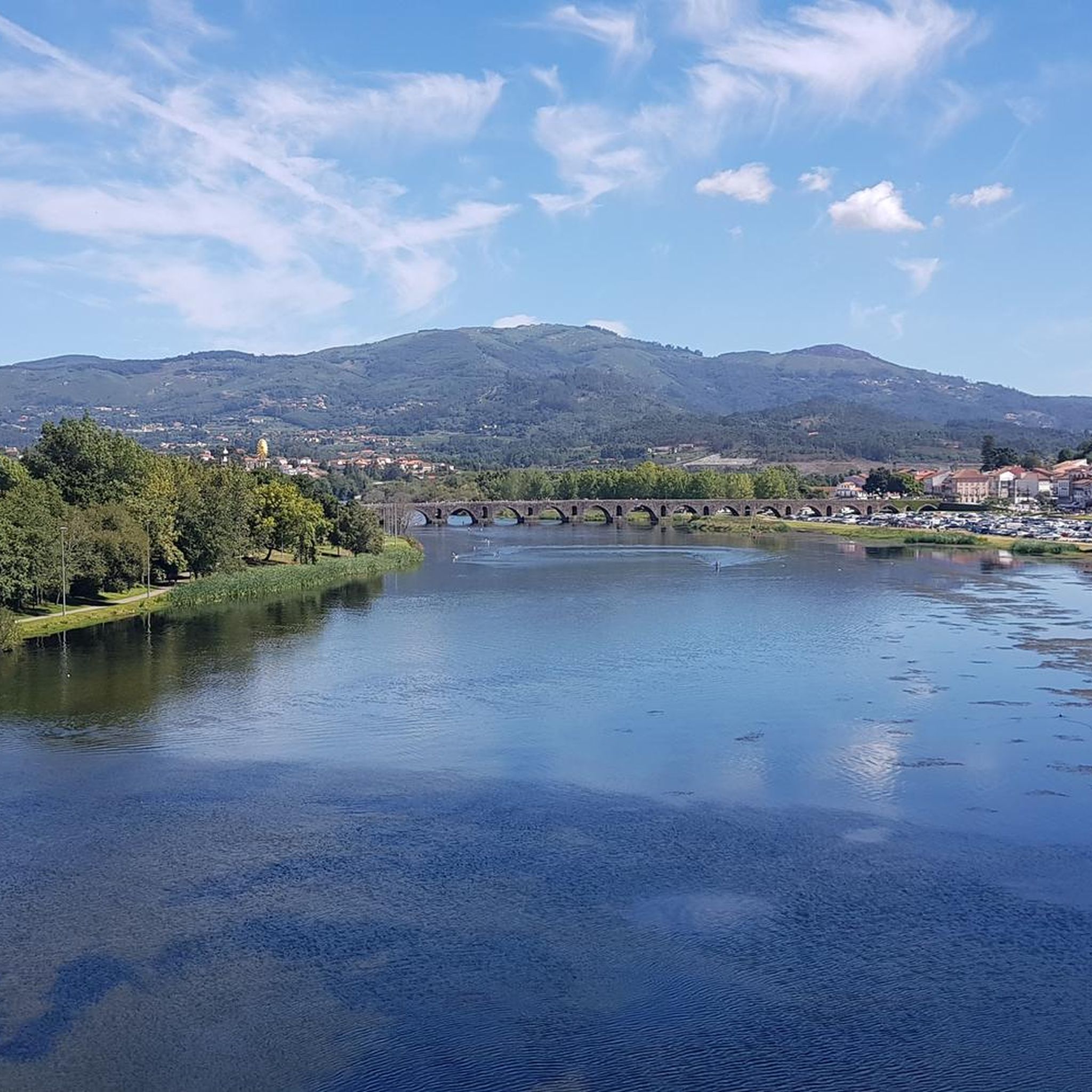
Historical Context Origin of the name: The town of Ponte de Lima, the oldest in Portugal, derives its name from the bridge that crosses it. Way of St. James: The bridge is an important crossing point on the Portuguese Way of St. James. Legend: The legend of the Lima River, which runs under the bridge, tells that the Romans believed it to be the river of forgetfulness, which would have given rise to the myth that people who crossed it would forget their past lives.
2
0
The bridge that gives the Lima Bridge its name is actually a combination of two structures: a Roman section, built in the 1st century, and a medieval section, expanded in the 14th century. It crosses the Lima River and is one of the town's most emblematic monuments. Characteristics of the bridge Roman section: The remaining Roman section consists of five arches, and its construction is linked to the military road that connected the cities of Braga and Astorga. Medieval section: The medieval portion of the bridge is larger and was built to connect to the Roman section, extending the structure over the river. Material: The bridge is built of granite, using the Roman technique of "quadratum" and "vittatum" masonry.
2
0

A city bathed by the Lima River, with walking trails in the area and good food.👍🥾🇵🇹
1
0

The Ponte das Tábuas de Balugães (Bridge of the Tábuas of Balugães) is a discreet jewel on the Portuguese Way to Santiago. It spans the serene Neiva River with an elegant trestle arch and boasts a wealth of history: it was mentioned in documents dating back to 1135, likely still made of wood, as the name suggests. The current stone structure is believed to have emerged around the 16th century. Nearby, a small river beach welcomes locals and travelers from around the world, all with the same goal: to dive in, cool off, and let themselves be carried away by the calm rhythm of the Neiva River's waters.
2
0

The Cathedral of Braga, the oldest archdiocese in Portugal
3
0

The Cathedral of Braga (Portuguese: Sé de Braga) is one of the most important monuments in the city of Braga in the north of Portugal. As the seat of the Archbishop of Braga, it is the oldest cathedral in Portugal and is one of the most important buildings in the country due to its history and artistic significance[1]. It offers a rich mix of architectural and artistic styles.
1
0

The Cathedral of Braga (Portuguese: Sé de Braga) is one of the most important monuments in the city of Braga in the north of Portugal. As the seat of the Archbishop of Braga, it is the oldest cathedral in Portugal and is one of the most important buildings in the country due to its history and artistic significance[1]. It offers a rich mix of architectural and artistic styles.
3
1
Frequently Asked Questions
How many road cycling routes are available in Duas Igrejas?
There are over 60 road cycling routes around Duas Igrejas, offering a diverse range of experiences for cyclists. These routes are highly rated by the komoot community, with an average score of 4.3 stars from over 50 reviews.
Are there road cycling routes suitable for beginners in Duas Igrejas?
Yes, Duas Igrejas offers some routes suitable for beginners. While the region is known for its varied terrain, there are options with manageable elevation changes. For example, the Chapel of Senhor dos Aflitos – Igreja de Lage loop from Lage is a moderate 17.6-mile (28.3 km) path that provides a balanced ride through the countryside.
What kind of terrain can I expect on road cycling routes around Duas Igrejas?
Road cycling routes around Duas Igrejas navigate a landscape characterized by varied terrain, including river valleys and undulating hills. You can expect numerous ascents and descents, with some routes offering significant elevation gains. Routes often feature a mix of open roads and sections passing through rural areas, connecting local landmarks.
Are there challenging road cycling routes for advanced cyclists?
Absolutely. Duas Igrejas offers several challenging routes for experienced cyclists. For instance, the Oleiros Wall – Guia Park loop from Lage is a difficult 44.8-mile (72.0 km) trail with over 1,000 meters of elevation gain, providing a demanding ride through the region's terrain.
What are some scenic viewpoints or attractions along the road cycling routes?
Many routes offer scenic views of the river valleys and rolling hills. You can also discover historical and cultural landmarks. Notable attractions in the wider area include the Roman Bridge of Ponte de Lima, the Old Jail Tower, and the Monument to the Legend of the River Lethes. These points of interest can be incorporated into your rides.
Are there any loop road cycling routes in Duas Igrejas?
Yes, many of the road cycling routes in Duas Igrejas are designed as loops, allowing you to start and end at the same point. Examples include the popular Turiz Church – Igreja de Lage loop from Lage and the challenging Oleiros Wall – Guia Park loop from Lage.
What is the best time of year for road cycling in Duas Igrejas?
The region generally offers pleasant conditions for road cycling from spring through autumn. Summer can be warm, but the varied terrain and proximity to rivers can provide some relief. Spring and early autumn often provide ideal temperatures and less crowded routes.
Are there cafes or places to refuel along the road cycling routes?
While specific cafes are not listed for every route, the routes often pass through rural areas and connect local landmarks, including villages and towns where you can typically find local establishments to refuel and rest. Planning your route with komoot allows you to identify potential stops.
How do road cycling routes in Duas Igrejas compare to those around Penafiel?
Duas Igrejas offers a distinct road cycling experience characterized by its river valleys and undulating hills, often connecting local churches and chapels. While both regions in Portugal offer great cycling, Duas Igrejas provides a unique blend of moderate to difficult routes with significant elevation changes, making it a great choice for those seeking varied terrain and scenic rural landscapes.
What do other road cyclists enjoy most about road cycling in Duas Igrejas?
The komoot community highly rates the road cycling in Duas Igrejas, with an average score of 4.3 stars. Cyclists often praise the varied terrain, the scenic views of river valleys and rolling hills, and the opportunity to explore rural areas and local landmarks. The network offers options for various ability levels, from moderate to difficult.
Is there parking available near the road cycling trails in Duas Igrejas?
Parking availability can vary depending on your chosen starting point. Many routes begin in or near villages and towns where public parking is generally available. When planning your route with komoot, you can often identify suitable parking locations near the start of your tour.
Most popular routes around Duas Igrejas
Most popular attractions around Duas Igrejas

Get inspired with the komoot mobile app


Explore more
Browse the best Road cycling routes in other regions.
