Attractions and Places To See around Azinhal - Top 8
Best attractions and places to see around Azinhal include a collection of historical sites, fortified villages, and ancient structures. This region is characterized by its rich past, featuring well-preserved fortifications and medieval settlements. Visitors can explore sites that played significant roles in Portuguese history, particularly during border conflicts and Napoleonic Wars. The landscape often includes remnants of ancient defenses and traditional architecture.
Best attractions and places to see around Azinhal
- The most popular attractions is Almeida Castle, a castle…
Last updated: July 2, 2026
Almeida Castle
Highlight • Castle
Translated by Google •
Tip by

Castelo Mendo Historic Village
Highlight • Historical Site
Translated by Google •
Tip by

Sign up now to discover places like this
Get recommendations on the best single tracks, peaks, & plenty of other exciting outdoor places.
Sign up for free
Historic Village of Almeida
Highlight • Historical Site
Translated by Google •
Tip by
Leomil
Highlight • Settlement
Translated by Google •
Tip by
Old Bridge Over the Côa River
Highlight • Bridge
Translated by Google •
Tip by
Sign up for free to discover even more attractions around Azinhal.
Sign up for free
Already have an account?
Start today with a free account
Your next adventure awaits.
Login or Signup
Popular around Azinhal
Tips from the Community

Almeida stands on the plateau like a table set for history: "Al-Mêda" was the name given to it by the Arabs. Previously, it had been a Lusitanian, Roman, and then Christian fort, conquered in 1190 and definitively Portuguese in 1297. Around the medieval castle grew the town, still marked by the Puerta do Sol. After the Restoration, the town transformed into a veritable war machine: the six-pointed star-shaped fortress, with bastions, ravelins, and underground galleries that served as both shelter and prison. It was the scene of decisive battles, devastated by the explosion of 1810 and contested in the liberal wars, always rising from the ruins.
3
0
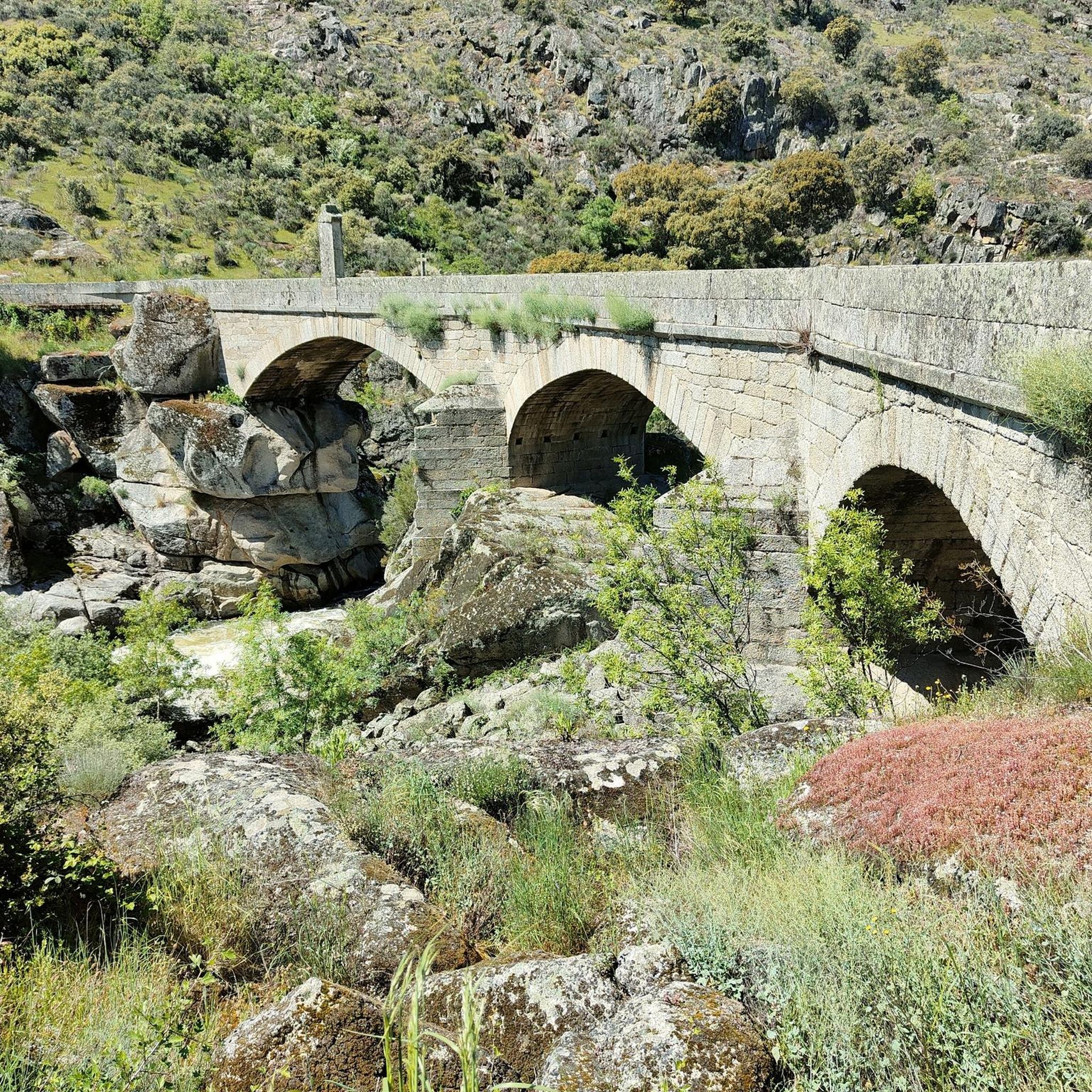
For centuries, crossing the Côa Valley was only possible via two bridges: the São Roque Bridge and this one, the Ponte Grande, the gateway to Almeida. Built in the 17th century and renovated in the 19th century, the Ponte Grande was forever linked to the Battle of the Côa in 1810, when the Portuguese-British forces resisted the third Napoleonic invasion. Today, the bridge remains a silent guardian of that memory.
3
0
Leomil was born in the 9th century, when the king awarded the warrior Leodmiro for his fights against the Moors. From the 13th century onward, it became the only Portuguese commandery of the Order of Roncesvalles, in Navarre, which administered it for six centuries. From chickens and wheat paid in rent to vast estates spread across the country, Leomil prospered under this unique rule. Today, few inhabitants remain, and agriculture continues to mark the rhythm of this village where markers bearing the initials "RV" (Roncesvalles) still survive, a living memory of the ancient order.
2
0
Castelo Mendo is a historic village with medieval roots, marked by two walls: the oldest, dating from the 12th century, surrounds the old town with its castle and the church of Santa Maria; the second, built by King Dinis in the 14th century, protected the Gothic suburb. The site was a living border between Portugal and León until the Treaty of Alcanices (1297), guarding strategic passages over the Côa River. At the entrance, two Vetón bellows, stone figures in the shape of wild boars, recall even more remote origins. Classified as a Property of Public Interest since 1984, Castelo Mendo today stands as a rare testament to the border region's history and Portuguese medieval splendor.
2
0

The Almeida Fort, originally founded as a castle in the 12th century, is one of the best-preserved fortifications in Portugal. It played an important role throughout its history, particularly during the Napoleonic Wars. It was heavily damaged during the Siege of Almeida in 1810 but was later rebuilt. The star fort is known for its bastions and deep moats, which were once intended to provide protection against invaders.
3
1
Castelo Mendo is surrounded by a fortified wall with six medieval gates. Two wild boar sculptures stand to the left and right of the main entrance. The simple stone houses originally consisted of two floors. The ground floor housed livestock, while the upper floor served as a residential building. The extremely narrow streets made it relatively easy to defend the town, which was repeatedly a battlefield during the wars in which Portugal participated, especially against Spain.
2
2

The bridge over the Rio Côa dates from the 17th century. and was in the 19th century. renewed.
2
2

If you walk around the wall you have a nice view and you get an impression of the defenses.
1
0
Frequently Asked Questions
What historical sites can I explore around Azinhal?
The region around Azinhal is rich in history, featuring several significant historical sites. You can visit Almeida Castle, one of Portugal's best-preserved fortifications known for its role in the Napoleonic Wars. Another must-see is the Historic Village of Almeida, a star-shaped fortress with bastions and underground galleries. Don't miss Castelo Mendo Historic Village, a medieval site that guarded strategic passages over the Côa River.
Are there any family-friendly attractions near Azinhal?
Yes, the Historic Village of Almeida is considered family-friendly. Its impressive star-shaped fortress, bastions, and underground galleries offer an engaging experience for all ages, allowing families to explore a significant piece of Portuguese history together.
What natural features can I discover around Azinhal?
Azinhal is surrounded by a tranquil, agricultural landscape with low hills covered in carob, olive, and almond trees. The village also overlooks the scenic Guadiana River, which forms the border with Spain. Nearby, you can explore the salt pans of the Reserva Natural do Sapal de Castro Marim e Vila Real de Santo António, an important wetland known for salt extraction and birdwatching.
What kind of outdoor activities can I do near these attractions?
The quiet roads around Azinhal, winding through agricultural landscapes, are ideal for cycling. There are several road cycling routes available, ranging from easy to difficult. For example, you can find routes like the 'Castelo Mendo Historic Village loop from Castelo de Castelo Mendo' or longer rides connecting Almeida and Castelo Rodrigo. You can find more details and routes in the Road Cycling Routes around Azinhal guide.
What is Azinhal known for locally, beyond historical sites?
Azinhal itself is known for its authentic rural Portuguese life, local gastronomy, and handicrafts. You can find regional sweets like the distinctive Azinhal pastry cake made with cinnamon and fennel, as well as products featuring almonds, figs, honey, and carob. Traditional Algarve goat's milk cheese and basketry are also local specialties. The village hosts the Azinhal Museum, showcasing traditional practices and agricultural activities.
Are there any cultural events or festivals in Azinhal?
Yes, Azinhal hosts the Terra de Maio Festival at its Multipurpose Center. This event celebrates Algarve traditions, gastronomy, and local products such as Castro Marim's famous Flor de Sal and Algarve wines. It also features handicrafts, animal shows, and Portuguese music, offering a vibrant glimpse into local culture.
Where can I see panoramic views of the region?
For breathtaking panoramic views, head to Castro Marim Castle, located in the vicinity of Azinhal. From its imposing 13th-century fortifications, you can enjoy expansive vistas of Castro Marim, the shimmering salt flats, the bridge connecting Portugal and Spain, and even Ayamonte across the border.
What is the significance of the Old Bridge Over the Côa River?
The Old Bridge Over the Côa River, built in the 17th century, was historically one of only two crossings over the Côa Valley and served as a gateway to Almeida. It is forever linked to the Battle of the Côa in 1810, where Portuguese-British forces resisted the third Napoleonic invasion, making it a silent guardian of that memory.
What is unique about Castelo Mendo Historic Village?
Castelo Mendo Historic Village is unique for its medieval roots and its role as a living border between Portugal and León, guarding strategic passages over the Côa River. It features two sets of walls, with the oldest dating from the 12th century. At its entrance, you can see two ancient Vetón bellows, stone figures in the shape of wild boars, hinting at even more remote origins.
What can I expect to see in the historic town of Vila Real de Santo António?
Vila Real de Santo António, a historic town near Azinhal, was rebuilt after the 1755 earthquake with an architectural style inspired by Lisbon. Its main square, Praça Marquês de Pombal, features an obelisk erected in 1776 and is surrounded by significant 18th-century architectural monuments, including a church, the town hall, and the former guard house.
What is the Azinhal Museum about?
The Azinhal Museum, located within the Centro Multiusos do Azinhal, offers insights into the region's heritage. Through video and exhibitions, it highlights traditional practices, local characteristics such as bread and cheese cycles, and agricultural activities indigenous to the area, providing a glimpse into authentic rural life.
What is the history behind Leomil?
Leomil originated in the 9th century and became the only Portuguese commandery of the Order of Roncesvalles for six centuries. This unique rule led to its prosperity, with markers bearing the initials 'RV' (Roncesvalles) still surviving today as a living memory of the ancient order and its agricultural past.
Most popular routes around Azinhal

Get inspired with the komoot mobile app


Explore more
Still not found the Highlight you’re looking for? See guides of the top attractions in other regions:
