Attractions and Places To See around Maxial - Top 20
Best attractions and places to see around Maxial, a civil parish within Torres Vedras, Portugal, offer a blend of natural beauty and historical landmarks. The region is primarily defined by the Serra de Montejunto Protected Landscape, which features diverse ecosystems and geological formations. Visitors can explore sites of cultural significance and enjoy panoramic views. This area provides opportunities to discover historical ruins and natural features.
Best attractions and places to see around Maxial
- The most popular attractions is Chapel of…
Last updated: July 1, 2026
Chapel of Our Lady of the Snows (Ruins)
Highlight • Religious Site
Translated by Google •
Tip by

Montejunto Rural Campsite
Highlight • Rest Area
montejunto.pt/parque-de-campismo-rural-da-serra-de-montejunto
Translated by Google •
Tip by
Sign up now to discover places like this
Get recommendations on the best single tracks, peaks, & plenty of other exciting outdoor places.
Sign up for free
Picnic Area of Serra de Montejunto
Highlight • Rest Area
Translated by Google •
Tip by
Castelo de Torres Vedras
Highlight • Castle
Translated by Google •
Tip by

Pragança Village
Highlight • Settlement
Translated by Google •
Tip by
Sign up for free to discover even more attractions around Maxial.
Sign up for free
Already have an account?
Start today with a free account
Your next adventure awaits.
Login or Signup

Tips from the Community

The castle of Torres Vedras is an important part of Portuguese history. It was a strategic point in the fight against the Moors and later against Napoleon. The castle was conquered in 1147 by Afonso Henriques, the first king of Portugal.
2
0
Today I was lucky and was able to visit the ruins as well.
2
0

Castelo de Torres Vedras is an imposing medieval fortress, with a history that dates back to Roman times and a significant role in the Napoleonic Wars (as part of the Lines of Torres Vedras). The castle represents an important historical heritage. If you want to stop here for a break you can explore its ancient walls and enjoy panoramic views of the city and the surrounding landscape.
0
0
The castle is not that great
4
0
Castle complex was closed, I would have liked to have seen it
4
0

At this location at the top of the Serra de Montejunto, also known as "Torre" due to the various antennas that were installed there, is the Chapel of Our Lady of the Snows, which may have been built in the 13th century and remodelled and expanded during the 16th century and later. Inside, the altars covered with 17th century tiles and the altarpiece of the main altar, from the 18th century, stand out. Next to the Chapel of Our Lady of the Snows, are the ruins of what is considered to be the first Dominican Convent in Portugal, built in the 12th century and abandoned after the extinction of the religious orders, and is currently in ruins. Also nearby are the ruins of the Royal Ice Factory, classified as a National Monument. Here, in the 18th century, the Dominican monks took advantage of the climatic and geological conditions and opened large tanks connected by narrow passages, one part for the production of ice and the other for its preparation, storage and conservation. The ice was later transported to Lisbon, to supply the court and the café at Terreiro do Paço, later known as Martinho da Arcada (Fernando Pessoa's Café)
2
0

The Nossa Senhora das Neves Chapel, located at the top of the Serra de Montejunto, has been a place of pilgrimage since the medieval period, prior to the construction of the first Dominican monastery in the 13th century.
1
0
The Serra de Montejunto picnic area is next to the Interpretation center and a little further from the campsite. Nearby there is a small bar and toilets.
3
0
Frequently Asked Questions
What historical sites can I explore near Maxial?
The area around Maxial is rich in history, particularly on the Serra de Montejunto. You can visit the Chapel of Our Lady of the Snows (Ruins), a pilgrimage site since medieval times. Nearby are the ruins of the first Dominican Convent in Portugal and the fascinating Real Fábrica do Gelo (Royal Ice Factory) Ruins, where Dominican monks produced and stored ice for the Lisbon court in the 18th century.
Are there good viewpoints in the Maxial area?
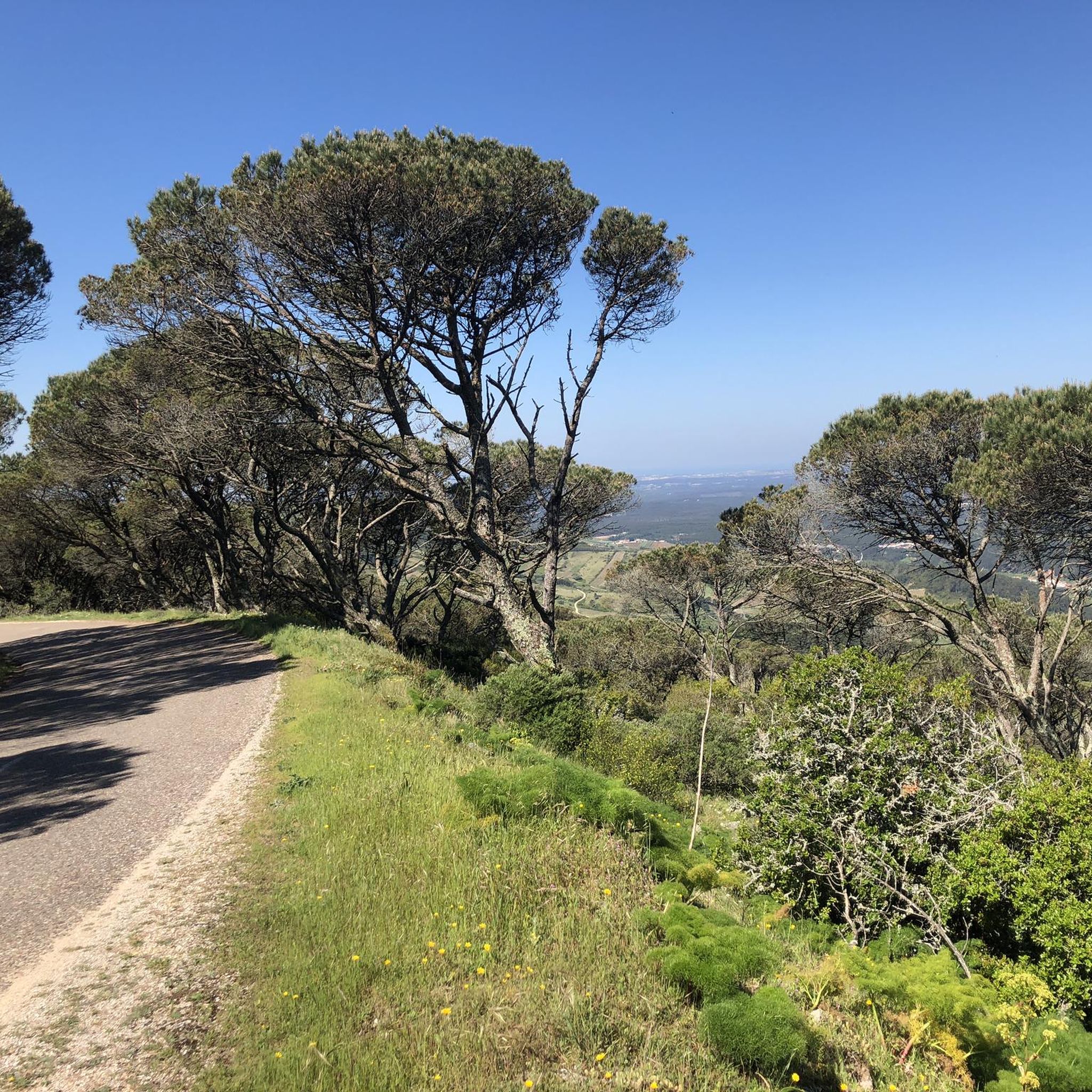
Yes, the Serra de Montejunto offers several excellent viewpoints. The Serra de Montejunto Watchtower, a former forest watch station, provides expansive panoramas of the region north of the Serra. From the Chapel of Our Lady of the Snows, you can also enjoy vast views over the Oeste Geopark, extending to the sea and the Berlengas islands.
What outdoor activities are available around Maxial?
The Serra de Montejunto Protected Landscape is ideal for outdoor activities. You can enjoy hiking, mountain biking, and exploring diverse ecosystems. For specific routes, check out the guides for Hiking around Maxial and MTB Trails around Maxial.
Are there family-friendly places to visit near Maxial?
Absolutely. The Picnic Area of Serra de Montejunto is a great option, located in chestnut woods with tables, a small bar, toilets, and a playground. The Montejunto Rural Campsite also offers facilities suitable for families, including shaded areas and an Environmental Interpretation Centre.
Where can I go hiking near Maxial?
The Serra de Montejunto is a prime location for hiking. You'll find trails ranging from easy to difficult. For an overview of routes, explore the Easy hikes around Maxial guide or the more comprehensive Hiking around Maxial guide, which includes challenging trails like the 'Trail of Vila Verde dos Francos'.
What is the Serra de Montejunto Protected Landscape known for?
The Serra de Montejunto Protected Landscape is renowned for its rich biodiversity, featuring over 400 plant species and around 75 bird species, including rare ones like the Bonelli's eagle. It's also characterized by unique Jurassic limestone formations, where you can find ammonite fossils, remnants of ancient tropical seas.
Can I camp near the attractions in Maxial?
Yes, the Montejunto Rural Campsite is located in the heart of the Montejunto mountain range. It provides shaded areas, facilities for up to 90 people, and amenities like a bar, tourist reception center, and an Environmental Interpretation Centre, making it a convenient base for exploring the area.
What unique historical structures are there on Serra de Montejunto?
Beyond the well-known chapel, the Serra de Montejunto hosts the ruins of what is considered the first Dominican Convent in Portugal, dating back to the 13th century. Additionally, the Real Fábrica do Gelo (Royal Ice Factory) Ruins, classified as a National Monument, showcase an ingenious 18th-century ice production and storage system used by the monks.
What kind of trails are available for mountain biking near Maxial?
For mountain biking enthusiasts, there are various trails around Maxial, primarily in the Torres Vedras area. You can find routes like the 'Bridge over the Sizandro River – Sizandro River Mouth loop' or the 'Forte da Feiteira – Linha do Oeste Railway loop'. More details are available in the MTB Trails around Maxial guide.
What is the best time of year to visit Maxial for outdoor activities?
The Serra de Montejunto is enjoyable year-round, but spring and autumn offer pleasant temperatures for hiking and exploring. Summers can be warm, while winters are generally mild, making it suitable for outdoor activities, though some trails might be wet after rain.
Are there any religious landmarks worth visiting?
Yes, besides the prominent Chapel of Our Lady of the Snows (Ruins), you can also visit the 13th-century Chapel of Saint John the Baptist, also located on Serra de Montejunto. A mass is held there annually on June 24th in honor of Saint John.
What makes the Serra de Montejunto special for nature lovers?
The Serra de Montejunto is a protected landscape offering a unique natural experience. It's a haven for birdwatching, with numerous species nesting there, and its diverse flora includes about 15% of mainland Portugal's plant species. The geological formations, including Jurassic limestone, add to its natural appeal.
Most popular attractions around Maxial

Get inspired with the komoot mobile app


Explore more
Still not found the Highlight you’re looking for? See guides of the top attractions in other regions:
