The best cycling routes around Mosteiros
5.0
(1)
18
riders
6
rides
Touring cycling routes around Mosteiros, located on the western coast of São Miguel Island in the Azores, traverse a landscape shaped by volcanic activity. The region features dramatic coastlines, black sand beaches, and natural pools formed from lava flows. Cyclists can explore routes that wind through lush vegetation and offer views of the iconic Mosteiros Islets and the nearby Sete Cidades caldera. The terrain varies from paved roads suitable for all skill levels to more challenging unpaved segments with significant…
Last updated: June 27, 2026
5.0
(1)
3
riders
20.0km
01:14
220m
220m
Moderate bike ride. Good fitness required. Mostly paved surfaces. Suitable for all skill levels.
5
riders
50.8km
03:13
590m
600m
Hard bike ride. Very good fitness required. Mostly paved surfaces. Suitable for all skill levels.

Sign up for free
3
riders
48.8km
03:25
900m
900m
Hard bike ride. Very good fitness required. Mostly paved surfaces. Suitable for all skill levels.
2
riders
66.3km
04:21
940m
940m
Hard bike ride. Very good fitness required. Mostly paved surfaces. Suitable for all skill levels.
2
riders
Hard bike ride. Very good fitness required. Mostly paved surfaces. Suitable for all skill levels.
Our route recommendations are based on thousands of hikes, rides, and runs completed by other people on komoot.
Start today with a free account
Your next adventure awaits.
Login or Signup
Popular around Mosteiros


Tips from the Community

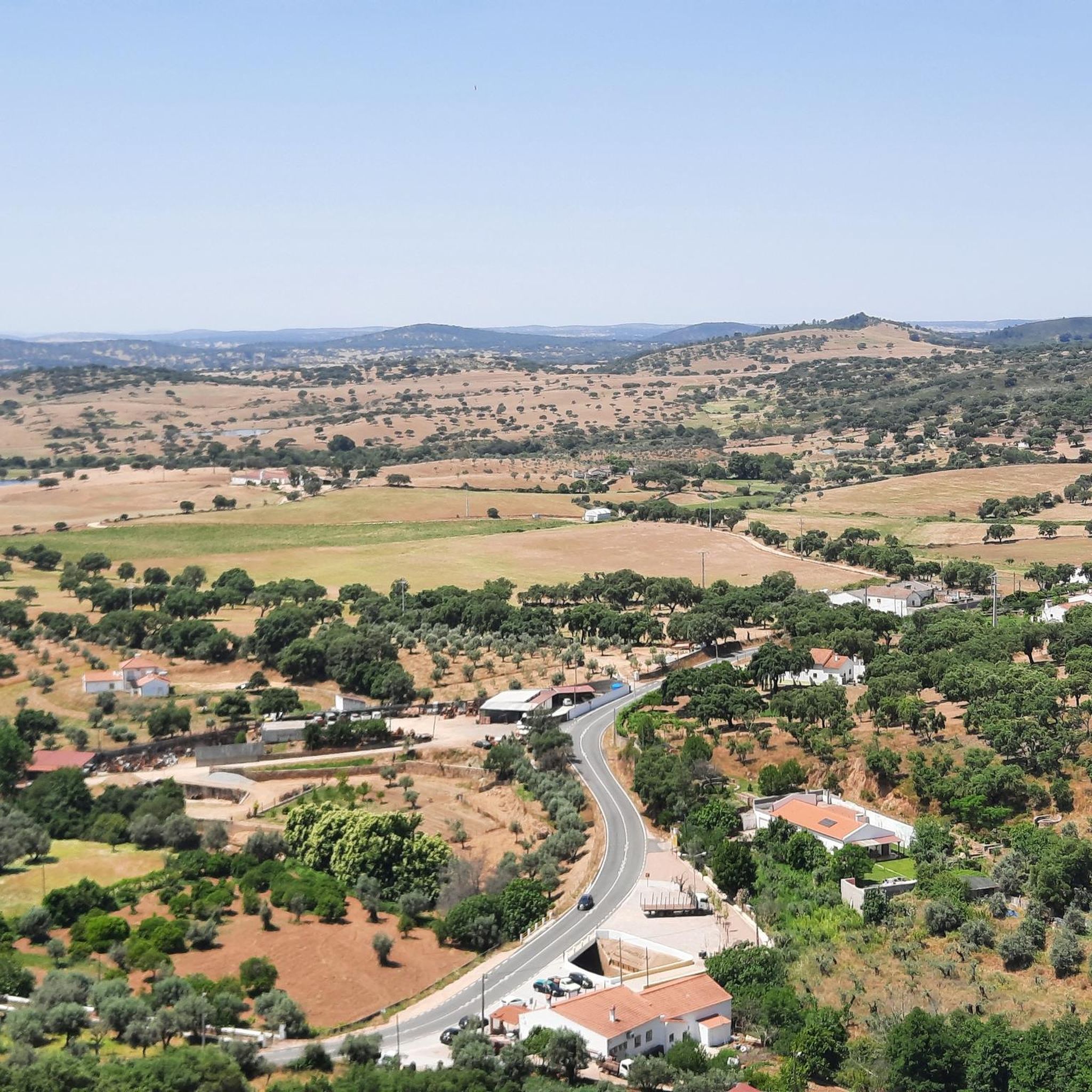
If you're traveling from Marvão or Castelo de Vide to Spain, this is the highlight, so stop and enjoy it!
0
0

The castle was founded by King D. Dinis in 1290, with the aim of defending the Alentejo border. Originally, it had an imposing structure with a double ring of walls, twelve towers and eight gates. Over the centuries, it lost part of its structure to the growth of the city, but it remains a National Monument. The Keep is the best-preserved part of the original complex. Inside, there is a museum that you can visit.
1
0

Portalegre is a historic town in the Serra de São Mamede near the Spanish border, known for its medieval strategic role and rich religious and architectural heritage. It became a city in the 16th century under King João III. Today, it blends baroque charm with cultural landmarks like the Tapestry Museum and José Régio’s House-Museum.
0
0
The Castle of Portalegre is a medieval Portuguese castle located in the town of Portalegre. Positioned on a high point overlooking the old town, it stands out for its dark walls contrasting with whitewashed houses. Historically, it served as a key defense on the frontier with Castile.
1
1


The City of Ammaia is the most important Roman ruin in the Northern Alentejo region. Set in the Natural Park of Serra de São Mamede, in São Salvador de Aramenha, near the town of Marvão, the ruins cover almost 25 metric acres. The Roman City of Ammaia was only rediscovered in the last century. It has since been excavated and investigated by scientists from around the world. It is now a museum site. For years the Roman remains were thought to be a villa, but only at the beginning of the last century did one begin to realize that what was buried in the Valley of Aramanha was an actual lost Roman city. Built from scratch in the first century AD, it was a city with a forum, baths and temples over the next three hundred years. The city suffered after the collapse of Rome on the Peninsula in the 3rd century. By the time of the Moorish invasion the 9th century, the remaining residents fled to high hills of Marvão - easy to defend in a time of chaos. Ammaia's stones served to build other places, walls and monuments. The bridge would stand until the 1980s. Pillaged, looted for stone, and buried until at the beginning of the twentieth century the existence of a large city in that area was forgotten. In the 1950s the first excavations were carried out and in recent decades the scope was also intensified, which also was helped by new technologies.
2
0
Located very close to the pretty town of Marvão, in the heart of the Alentejo, in the heart of the Serra de S. Mamede Natural Park, the ruins of the Roman city of Ammaia are located in an area of great beauty, attesting to its great heritage. In 1995, archaeological excavations began on the site, uncovering around 3,000 m2, although it is believed that the original area of the city was around twenty hectares. The curious thing about these ruins is that in the 5th and 9th centuries they suffered the effects of a cataclysm that buried the lower part of the urban area, thus belonging to one of the few cities of the empire that, probably due to natural effects, remained preserved and on which no other urban developments were developed throughout history. It is thus possible to study the entire urban fabric of a Roman city, highlighting important structures such as the “podium” of a temple probably from the 1st century, and the existence of public baths, as well as other domestic structures. There is a “site museum” on site, the Ammaia City Monographic Museum, which shows the daily life of the population that lived here, as well as the various objects found and inventoried here, including one of the most important collections of Roman glass in the Iberian Peninsula. A large part of the area occupied by the ruins is located on land owned by the Ammaia City Foundation, whose primary objective is to study, restore and preserve this important National Monument.
3
0
One of the few places with water at the top of São Mamede. In years with little rainfall, it can dry out in the summer.
2
0
Frequently Asked Questions
What kind of terrain can I expect on touring cycling routes around Mosteiros?
The touring cycling routes around Mosteiros feature a diverse landscape shaped by volcanic activity. You'll encounter dramatic coastlines, black sand beaches, and natural pools formed from lava flows. The terrain varies from paved roads suitable for all skill levels to more challenging unpaved segments with significant elevation changes. Expect lush vegetation and panoramic views of the coast and the iconic Mosteiros Islets.
Are there any circular touring cycling routes available?
Yes, there are circular touring cycling routes available. For example, the Telephone Booth of L'Espérance – Serra de Monte Novo loop from Mosteiros is a moderate 12.4-mile (20.0 km) route that offers views of the volcanic landscape and coastal features, starting and ending near Mosteiros.
What are the difficulty levels of touring cycling routes in Mosteiros?
The routes around Mosteiros cater to various fitness levels. You can find moderate routes, such as the Telephone Booth of L'Espérance – Serra de Monte Novo loop from Mosteiros, which is 12.4 miles (20.0 km) long with over 200 meters of elevation gain. There are also more challenging routes in the wider region, like the Colorful Portalegre – Portalegre Castle loop from Portalegre, which is 31.2 miles (50.2 km) with nearly 600 meters of elevation gain, and the Portalegre Castle – São Mamede Trail loop from Portalegre, a 40.8-mile (65.7 km) route with over 950 meters of climbing.
What natural features or landmarks can I see while cycling in Mosteiros?
While cycling in Mosteiros, you'll encounter stunning natural features. The routes often provide views of the dramatic volcanic coastline, black sand beaches, and the iconic Mosteiros Islets. You can also explore natural pools carved from lava flows, such as the Poço da Pedra (Caneiros Natural Pools). The area is rich in lush vegetation, and you might spot various bird species, especially during winter months.
Are there any viewpoints along the cycling routes in Mosteiros?
Yes, the volcanic terrain and coastal setting of Mosteiros offer several scenic viewpoints. The Lomba do Vasco viewpoint provides excellent views of the Mosteiros Islets and the parish. Many routes also offer panoramic views of the coast and the nearby Sete Cidades caldera, including the stunning twin lakes, Lagoa Azul and Lagoa Verde, from points like Vista do Rei.
What is the best time of year to go touring cycling in Mosteiros?
Mosteiros, like the rest of the Azores, benefits from a mild climate, making it suitable for cycling throughout much of the year. However, for the most pleasant conditions, spring (April-June) and early autumn (September-October) generally offer comfortable temperatures and less rainfall, ideal for exploring the diverse landscapes.
Can I rent bikes in Mosteiros or the surrounding area?
Yes, to make exploring the hilly terrain more accessible, electric bike rental and guided e-bike tours are available, particularly around the Sete Cidades area, which is close to Mosteiros. These options allow cyclists to enjoy the diverse landscapes and reach areas that might otherwise be challenging.
What do other touring cyclists say about the routes in Mosteiros?
The touring cycling routes around Mosteiros are highly rated by the komoot community, with an average score of 5.0 stars from over 2 reviews. Cyclists often praise the unique volcanic landscapes, the stunning coastal views, and the variety of terrain that caters to different skill levels.
Are there any family-friendly cycling options in Mosteiros?
While the guide highlights more moderate to difficult routes, the region offers diverse cycling experiences. Some routes are mostly paved and suitable for all skill levels, requiring up to two hours and less elevation gain, which can be more family-friendly. E-bike rentals also make the hilly terrain more accessible for families.
Are there opportunities for wild swimming near the cycling routes?
Yes, Mosteiros is known for its natural pools carved from lava flows, such as the Poço da Pedra, also known as Caneiros Natural Pools. These crystal-clear, volcanic pools are a major draw and offer excellent opportunities for wild swimming, providing a refreshing break during or after a cycling tour.
What kind of vegetation and wildlife can I observe while cycling?
The area around Mosteiros is rich in lush vegetation, including endemic species typical of the Azores. It's also a notable spot for birdwatching, especially during winter months. Cyclists might spot rare species such as black cormorants, great reed warblers, ospreys, and black-winged stilts, adding to the natural beauty of the rides.
Are there any mountain biking trails in the Mosteiros area?
For those seeking more adrenaline, Mosteiros is also home to renowned mountain biking trails. 'Pedra Queimada,' located on the highest peak of Mosteiros, is described as a must-do, featuring a mix of bike park elements and natural features known for its flow and jumps. Another notable trail is 'Túnel.'
Most popular routes around Mosteiros
Most popular attractions around Mosteiros

Get inspired with the komoot mobile app


Explore more
Browse the best Cycling routes in other regions.
