The best walks and hikes around Alagoa
4.5
(61)
239
hikers
16
hikes
Hiking around Alagoa features a diverse landscape, including historic cobbled roads, rural paths, and forested areas. The region offers varied terrain with moderate elevation changes, suitable for exploring the natural and cultural heritage. Trails often traverse through agricultural lands and provide views of the surrounding countryside.
Best hiking trails around Alagoa
- The most popular hiking route is Serra de São Paulo Trail (PR1), a 6.6 miles (10.6 km) trail that takes 3 hours 6 minutes to complete. This route…
Last updated: August 18, 2026
4.8
(28)
85
hikers
10.6km
03:06
290m
290m
Moderate hike. Good fitness required. Easily-accessible paths. Suitable for all skill levels.
4.0
(1)
15
hikers
8.85km
02:33
210m
210m
Moderate hike. Good fitness required. Easily-accessible paths. Suitable for all skill levels.

Sign up for free
4.0
(1)
16
hikers
8.82km
02:33
220m
220m
Moderate hike. Good fitness required. Easily-accessible paths. Suitable for all skill levels.
4.3
(3)
17
hikers
11.9km
03:21
240m
240m
Moderate hike. Good fitness required. Easily-accessible paths. Suitable for all skill levels.
4.5
(2)
10
hikers
Moderate hike. Good fitness required. Easily-accessible paths. Suitable for all skill levels.
Get access to more routes and recommendations from other explorers.
Sign up for free
Already have an account?
Our route recommendations are based on thousands of hikes, rides, and runs completed by other people on komoot.
Start today with a free account
Your next adventure awaits.
Login or Signup

Tips from the Community

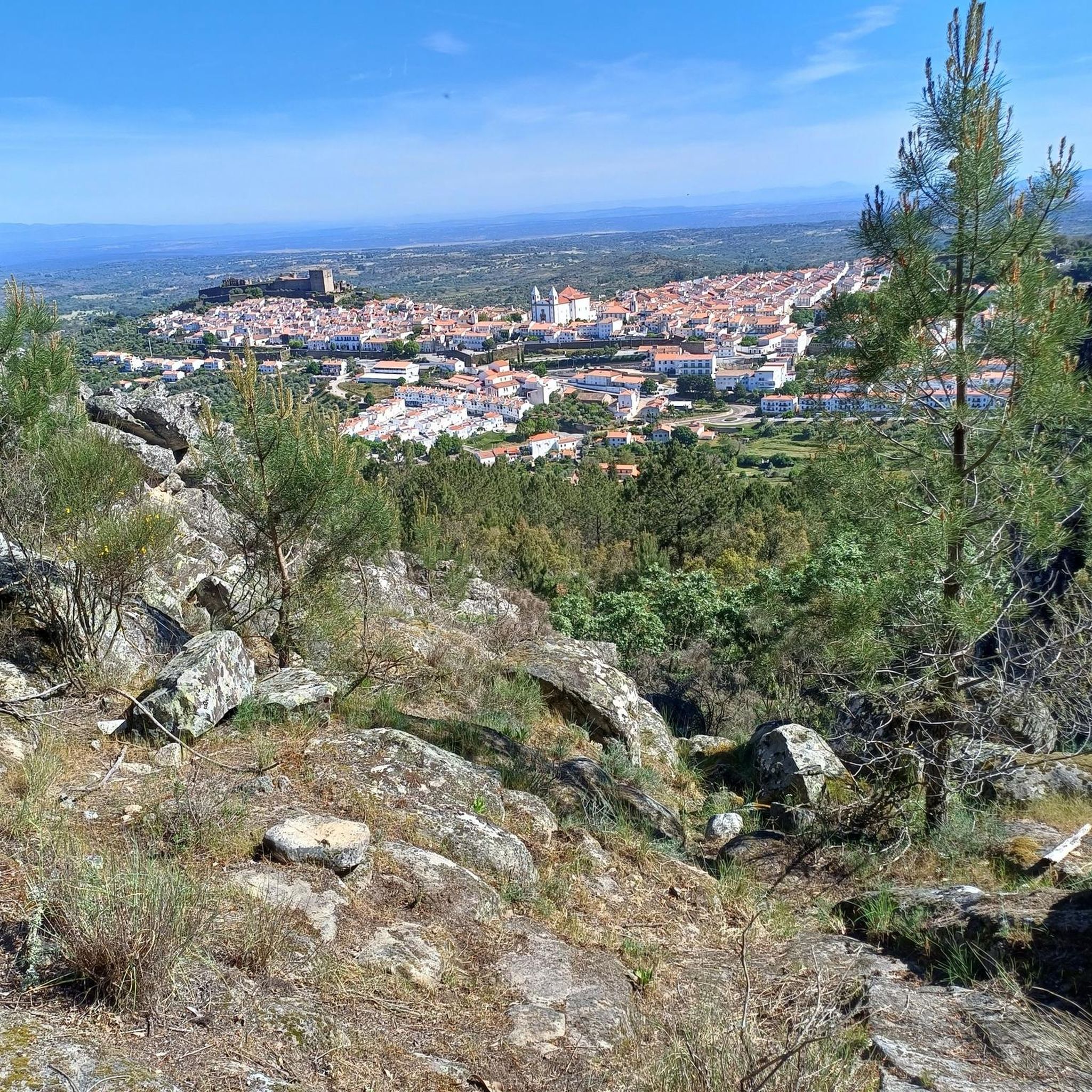
Far in the northeast of Alentejo lies Castelo de Vide, just a few kilometers from the border with Spain. The town is often called Cidade branca (white city), which is primarily due to the pretty whitewashed houses of the town. The highlight of the town (besides its great location in the Parque Natural da Serra de São Mamede) is the 14th-century Castelo de São Roque. From the castle, you have a fantastic view of the old town. Other sights in Castelo de Vide include the old Jewish quarter with the oldest synagogue in Portugal and the numerous churches and chapels of the town.
3
0
Castelo de Vide Castle, locally known as Castelo de Vide Castle, is located in the town of the same name in the Alto Alentejo region of Portugal. When the settlement and castle of Castelo de Vide were founded is unknown, but they were first mentioned in 1232, when it was in Portuguese hands. Afonso III of Portugal donated the town and castle, along with the towns and castles of Arronches, Marvo, and Portalegre, to one of his young sons, also called Afonso, around 1272. ... ...The destruction caused during the last two Spanish wars led to the abandonment of Castelo de Vide's fortifications in 1823, after which it fell into disuse... https://www.castles.nl/castelo-vide-castle Due to the small, insignificant castle and access restrictions, we decided not to visit the actual castle.
2
0
Construction of the Church of Santa Maria da Devesa began in 1789 on the site of a small chapel of the same name, founded in 1311 by Loureno Pires and his wife. It was completed around 1873. It is a large temple, perhaps the largest in the Alto Alentejo. The invocation to Santa Maria da Devesa is unique in our country, and it may be related not only to its location, which... https://castelodevide.pt/2000/igreja-de-santa-maria-da-devesa
2
0
On October 7, 1861, King Pedro V visited Castelo de Vide and called the town the "Sintra of the Alentejo." It was the monarch's last visit, as he died a month later. In honor of this visit, the residents erected a statue of the king, which was placed in the center of the square. He was the last king to visit Castelo de Vide.
2
0
Built in the 14th century, it is one of the oldest churches in Castelo de Vide. It belonged to the Order of Malta and was a commandery of nuns from Estremoz, who presumably founded the church. After several renovations over the centuries, it features Gothic and Baroque architecture. It consists of a single nave and a rectangular choir with a bell tower and sacristy. The main altarpiece is Baroque.
3
0
Imposing building in which the Centro de Dia senior center is located
2
0
It is the seat of the city administration of Castelo de Vide in the Alto Alentejo region.
1
0
A side gate into the Vila of Castelo de Vide
1
0
Frequently Asked Questions
What types of landscapes can I expect to see while hiking in Alagoa?
Alagoa offers a diverse range of landscapes depending on the region. In Minas Gerais, Brazil, you'll find lush remnants of the Brazilian Atlantic Forest within the Mantiqueira Mountains, including parts of the Serra do Papagaio State Park, characterized by fresh water draining from the mountains. If you're in the Azores, Portugal, expect stunning views of verdant mountains, dramatic basalt cliffs meeting the sea, and unique geological formations like the Alagoa da Fajãzinha lagoon, a 'fajã' bordered by a pebble beach.
How many hiking trails are available in Alagoa?
There are over 15 hiking trails documented around Alagoa, offering a variety of experiences for different skill levels. The komoot community has explored these routes over 200 times.
What is the general difficulty level of hiking trails in Alagoa?
The trails in Alagoa primarily feature moderate difficulty. Out of the 15 available routes, 12 are rated as moderate, 2 are difficult, and there is 1 easy trail, making it suitable for a range of hikers from beginners to those seeking a challenge.
Are there any circular hiking routes in Alagoa?
Yes, Alagoa features several excellent circular routes. Popular options include the Medieval Cobbled Road loop from Carreiras and the Medieval Cobbled Road loop from Castelo de Vide, both of which explore historic paths and rural landscapes.
What historical or cultural sites can I explore while hiking in Alagoa?
The region around Alagoa is rich in history. You can explore the historic town of Castelo de Vide, visit the Dom Pedro V Square within the town, or discover the ancient Roman City of Ammaia. Many trails, like the Medieval Cobbled Road loops, directly traverse these historic areas.
What do other hikers enjoy most about the trails in Alagoa?
The trails in Alagoa are highly rated by the komoot community, with an average score of 4.5 stars from over 50 reviews. Hikers often praise the combination of historic cobbled roads, peaceful rural paths, and forested areas, as well as the scenic views of the surrounding countryside and cultural heritage.
Are there any easy trails suitable for beginners or families?
Yes, there is at least one easy trail available for those looking for a less strenuous walk. While specific family-friendly designations vary, routes with lower difficulty are generally suitable for beginners or families with children. The Baías da Agualva PR2TER trail in the Azores is noted as an easy, linear trail taking about 2 hours.
What are some notable viewpoints or natural features to look for?
In the Azores, the View of Castelo de Vide from Senhora da Penha offers panoramic vistas. The Miradouro de Alagoa provides stunning views of basalt cliffs and the Atlantic. In Brazil, the Mantiqueira Mountains and the Serra do Papagaio State Park offer expansive natural beauty and diverse ecosystems.
What is the best time of year to go hiking in Alagoa?
For Alagoa in Minas Gerais, Brazil, the dry season (typically May to September) offers more comfortable hiking conditions with less rain. For the Azores, Portugal, late spring to early autumn (May to October) generally provides the most stable and pleasant weather for exploring coastal and mountain trails, though the climate is mild year-round.
Are there any longer, more challenging hikes in the Alagoa region?
Yes, for those seeking a longer and more challenging experience, routes like the Castelo de Vide – Church of Saint John loop from Castelo de Vide cover over 11 km with moderate elevation changes. There are also two trails rated as 'difficult' within the region for experienced hikers.
Can I find trails that lead through forested areas?
Yes, hiking around Alagoa includes routes that traverse forested areas. In Minas Gerais, Brazil, you'll find significant remnants of the Brazilian Atlantic Forest. Even in the Azores, trails often pass through areas with endemic vegetation, providing a refreshing natural environment.
Most popular attractions around Alagoa

Get inspired with the komoot mobile app


Explore more
Browse the best Hikes in other regions.
