Attractions and Places To See around Irivo - Top 12
Attractions and places to see around Irivo, a locality in Penafiel within Portugal's Porto District, offer a mix of cultural sites and natural landscapes. The area serves as a base for exploring both local features and broader regional attractions. It is characterized by its proximity to the Douro River and other natural elements, alongside historical and religious landmarks.
Best attractions and places to see around Irivo
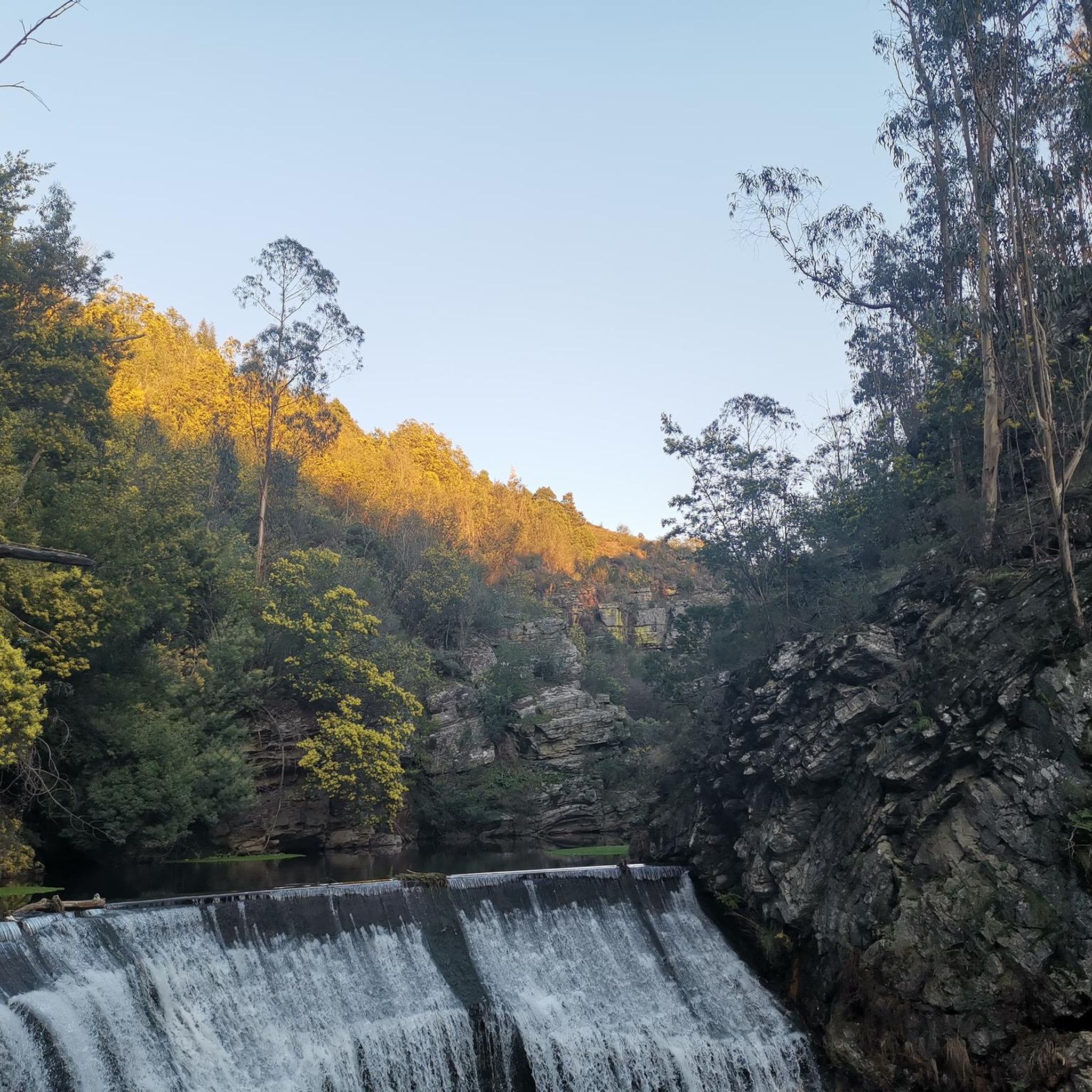
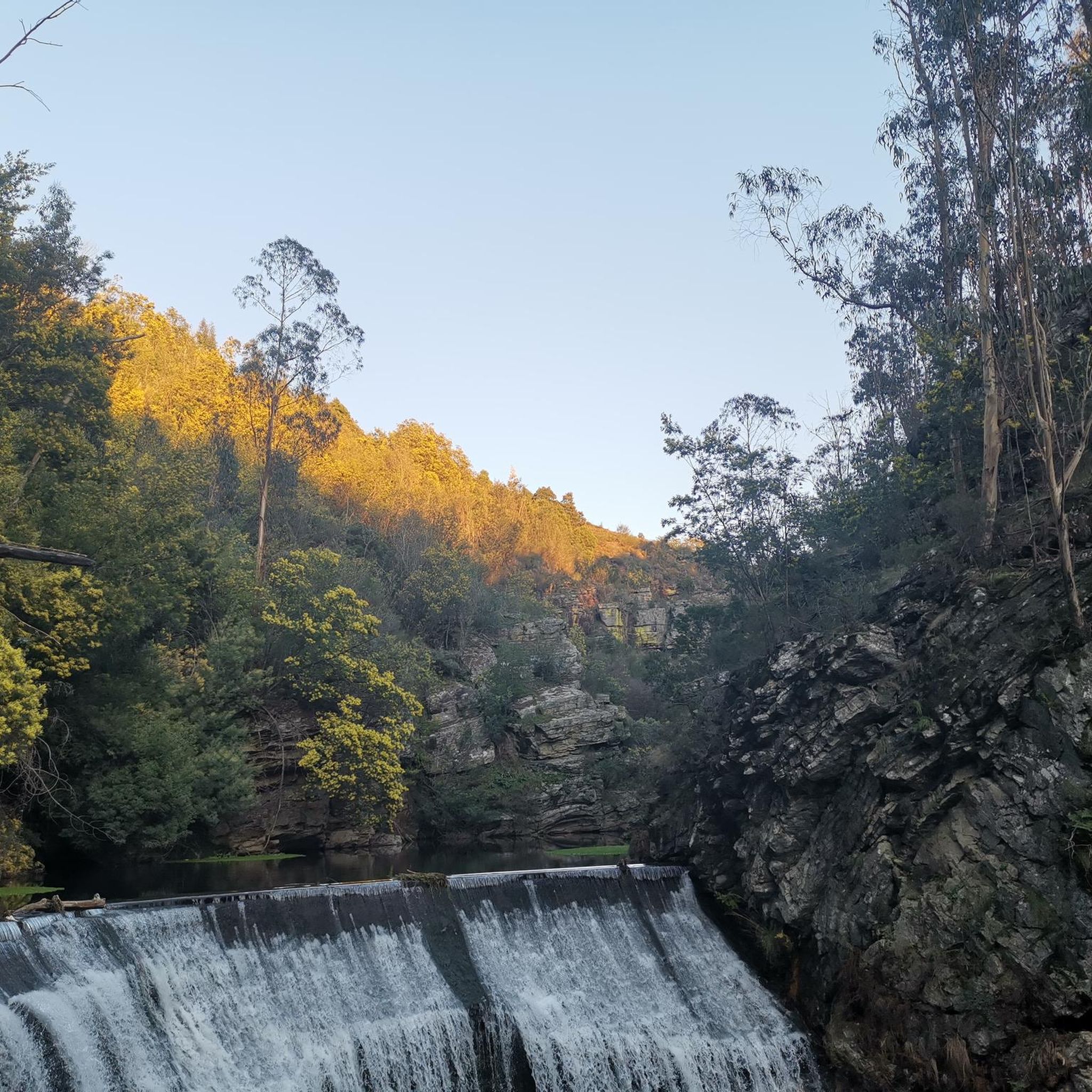
- The most popular attractions is Senhora do Salto Waterfall, a waterfall that features…
Last updated: July 1, 2026
Senhora do Salto Waterfall
Highlight • Waterfall
Translated by Google •
Tip by

Pedra do Monte de Marecos
Highlight • Natural Monument
Translated by Google •
Tip by

Sign up now to discover places like this
Get recommendations on the best single tracks, peaks, & plenty of other exciting outdoor places.
Sign up for free
João’s Tavern
Highlight • Pub
Translated by Google •
Tip by
Tower of Aguiar de Sousa Castle
Highlight • Castle
Tip by

Monastery of Saint Peter of Ferreira
Highlight • Religious Site
Tip by
Sign up for free to discover even more attractions around Irivo.
Sign up for free
Already have an account?
Start today with a free account
Your next adventure awaits.
Login or Signup



Tips from the Community

You can enjoy some good ham sandwiches accompanied by a nice cold beer.
1
0
Religious architecture, dating from the 17th, 19th, and 20th centuries. Rectangular parish church composed of a nave and chancel, with sacristy and bell tower, having two transept arms added at the end of the 20th century. It has interior wooden roofs, gabled and with beams in the nave and coffered ceilings in the chancel, sparsely illuminated by windows in the right side facade of the chancel body. It has a 20th-century bell tower, with three registers and round-arched windows. Main facade with a gable, with three axes of openings, composed of a portal and two large windows, all rectilinear. Facades with pilastered quoins and concrete frieze finishes. Interior with a high choir resting on stone corbels, accessed from the annex, with side chapels and facing pulpits. A triumphal arch with a perfect vault, resting on Tuscan piastras, flanked by Mannerist carved altarpieces. Chancel with a central stepped platform, where the main altarpiece stands, reusing elements of Mannerist carving. A church of 17th-century foundation, of which the original structure and some openings in the sash form are maintained, profoundly remodeled in the 20th century, with the construction of the annexes, the transept, and the creation of the bell tower, this one quite tall, with three registers. The main façade and the bell tower are covered with patterned tiles. Inside, the side altarpieces, of erudite Mannerist structure, stand out, profoundly altered with the 20th-century restoration, with the reform of the finialço and the execution of new altar tables. The Epistle side altarpiece, dedicated to Our Lady of Fatima, stands out for its high-quality carving. It retains its preparatory layer and, through its structure and decorative grammar, reveals a transitional style, datable to the late 18th and early 19th centuries. It features profuse phytomorphic decoration, a scalloped back panel, but also includes urns at the top of the Corinthian columns, adorned with festoons, revealing Neoclassical elements. The main altarpiece, recently gilded, showcases the use of twisted columns, a late 17th-century style, with archivolts in a national Baroque style altarpiece structure. Also noteworthy is the Crucified altarpiece, a Neo-Baroque revivalist piece with a concave structure, possessing several Neoclassical influences, notably the urns at the top and the faux marble effect on the columns.
0
0
It has great climbing walls with some roofs and many routes, a spectacular place to climb
0
0

This C12 Romanesque church used to be a part of a larger monastic complex run until C15 by the Order of the Canons Regular of Saint Augustine. The main and side portals are certainly very impressive, so are the sculptures found all around the building, but the most striking feature must be the partially preserved funerary galilee in front, with two bay bell tower. https://www.rotadoromanico.com/en/Monuments/monastery-of-saint-peter-of-ferreira/
0
0
This quadrangular tower, with a stunning 360° view to the Sousa River valley and surrounding hills, is all that remains of a castle built around C9 as a part of the Kingdom of Asturias' defensive network. It was besieged in 995 by Almanzor, the famous military leader from the Caliphate of Córdoba. The castle was a seat of various territorial units between C11 and C13, stretching all the way from Porto to Penafiel. It was abandoned at the end of C13. To reach the tower you have climb a steep stone path but after the initial brutal ramp it eases off and the path turns to concrete. It's well worth the effort :) https://www.rotadoromanico.com/en/Monuments/tower-of-the-castle-of-aguiar-de-sousa/
0
0


the beginning to the brenha although off the road, turns out to be a lot of road with the hill right there next. the ideal will be to mark an intermediate point in the mount of Marecos. to create a longer route on the return of the ring mark another intermediate point to the left of Rans.
1
0
Frequently Asked Questions
What natural attractions can I explore around Irivo?
The area around Irivo is rich in natural beauty. A prominent natural attraction is the Senhora do Salto Waterfall, which features impressive climbing walls and serves as a viewpoint within a gorge. Another notable natural monument offering panoramic views is Pedra do Monte de Marecos. Additionally, the Douro River, along with the local Rivers Sousa and Cavalum, are significant natural features in the region.
Are there any historical or religious sites worth visiting near Irivo?
Yes, Irivo and its surroundings offer several historical and religious sites. The Monastery of Saint Peter of Ferreira is a 12th-century Romanesque church known for its impressive portals and partially preserved funerary galilee. You can also visit the Tower of Aguiar de Sousa Castle, a quadrangular tower that is all that remains of a 9th-century castle, offering a stunning 360° view. The broader region is also known for its charming churches and lively public squares.
What kind of outdoor activities can I do near Irivo?
Irivo is a great base for outdoor activities. You can find various routes for cycling, running, and hiking. For cycling, consider routes like the 'Louredo da Serra Trail' or the more challenging 'Crasto – Menir de Luzim loop'. Hikers can explore trails such as the 'Senhora do Salto Waterfall – Bust of Pioarium Alves Corrica loop'. You can find more details on these and other routes in the dedicated guides for Cycling around Irivo, Running Trails around Irivo, and Hiking around Irivo.
Are there hiking trails suitable for different skill levels around Irivo?
Yes, there are hiking trails for various skill levels. For easier walks, you might enjoy routes like the 'Senhora do Salto Waterfall – Bust of Pioarium Alves Corrica loop from Aguiar de Sousa' or the 'View of Nossa Senhora do Salto – Senhora do Salto Waterfall loop from Aguiar de Sousa'. More moderate options include the 'Bust of Pioarium Alves Corrica – Senhora do Salto Waterfall loop' and the 'Vinha Capela Vineyard loop'. For a comprehensive list, check the Hiking around Irivo guide.
What do visitors particularly enjoy about the attractions around Irivo?
Visitors appreciate the diverse offerings around Irivo, from the natural beauty of waterfalls and viewpoints to the historical significance of ancient monasteries and castle ruins. The Senhora do Salto Waterfall is particularly popular for its climbing opportunities and scenic views. The Monastery of Saint Peter of Ferreira is admired for its Romanesque architecture and historical depth. The komoot community has shared over 15 photos and given more than 40 upvotes to the attractions in the area, highlighting their appeal.
Are there family-friendly attractions or activities in Irivo?
While specific family-friendly attractions are not detailed, the natural landscapes around Irivo, such as the Douro River and local parks, offer opportunities for family outings. Exploring the Senhora do Salto Waterfall or the viewpoints like Pedra do Monte de Marecos can be enjoyable for families who appreciate nature. The nearby Piscinas Municipais de Penafiel also offers recreational swimming opportunities.
What are the options for dining or refreshments near the attractions?
For refreshments and local flavors, you can visit João’s Tavern, where you can enjoy ham sandwiches and a cold beer. Approximately 3 km north of Irivo, the Mercado da Terra offers local produce and a vibrant atmosphere. The broader region is also known for its cafes and pubs, providing various options for dining and relaxation after exploring the attractions.
Is there public transport available to reach attractions around Irivo?
Irivo has its own railway stop, which can be a convenient option for reaching the locality. For specific attractions, it's advisable to check local transport schedules or consider driving, as many natural and historical sites might be more accessible by car. Parking availability near attractions should be checked locally.
What is the best time to visit Irivo and its attractions?
The Porto District, where Irivo is located, generally enjoys a mild climate. Spring and autumn are often ideal for visiting, offering pleasant temperatures for outdoor activities like hiking and cycling. Summer can be warm, perfect for enjoying the Douro River or local swimming facilities. Winter is milder but may have more rainfall, though historical sites remain accessible year-round.
Are there any unique local landmarks or points of interest in Irivo itself?
Within Irivo, the commune's coat of arms features a memorial arch, suggesting a local landmark of historical or cultural significance. The Irivo Railway Stop is also a point of interest for those curious about local infrastructure. The area is characterized by charming churches and lively piazzas, reflecting the local culture. Nearby, you can find the Palacete da Granja and Capela São Simão, adding to the local charm.
Can I find cycling routes near Irivo?
Absolutely! Irivo is a great starting point for cycling adventures. You can find routes like the 'Louredo da Serra Trail' for a moderate ride, or more challenging options such as the 'Crasto – Menir de Luzim loop from Perozelo' and the 'Memorial of the Hermitage – Quintandona Schist Village loop from Irivo'. For a comprehensive list of routes and their difficulties, refer to the Cycling around Irivo guide.
Are there any hidden gems or less-known spots to discover?
While not explicitly labeled as 'hidden gems' in the data, exploring the smaller churches and public squares in the broader area around Irivo, beyond the main highlights, can lead to charming discoveries. The local Mercado da Terra, about 3 km north, offers an authentic glimpse into local life and produce, which might be considered a less-trafficked point of interest for visitors.
Most popular routes around Irivo

Get inspired with the komoot mobile app


Explore more
Still not found the Highlight you’re looking for? See guides of the top attractions in other regions:
