The best walks and hikes around Balazar
4.7
(148)
648
hikers
10
hikes
Hiking around Balazar offers trails through a tranquil, rural landscape characterized by pastoral and agricultural scenery. The area features vineyards and fields, providing a traditional Portuguese countryside setting. The Este River crosses the region, contributing to the fertile lands and offering opportunities for riverside walks. Balazar's terrain is generally gentle, with moderate elevation changes suitable for recreational walking.
Best hiking trails around Balazar
- The most popular hiking route is Dom Zameiro Bridge – Water mills on the Rio Ave loop…
Last updated: October 12, 2026
5.0
(2)
9
hikers
Moderate hike. Good fitness required. Easily-accessible paths. Suitable for all skill levels.
5.0
(1)
4
hikers
Moderate hike. Good fitness required. Easily-accessible paths. Suitable for all skill levels.

4
hikers
11.9km
03:13
160m
160m
Moderate hike. Good fitness required. Easily-accessible paths. Suitable for all skill levels.
4.8
(4)
8
hikers
14.3km
03:55
220m
220m
Moderate hike. Good fitness required. Easily-accessible paths. Suitable for all skill levels.
5.0
(1)
4
hikers
9.98km
02:49
200m
200m
Moderate hike. Good fitness required. Easily-accessible paths. Suitable for all skill levels.
Get access to more routes and recommendations from other explorers.
Already have an account?
Our route recommendations are based on thousands of hikes, rides, and runs completed by other people on komoot.
Start today with a free account
Your next adventure awaits.

Tips from the Community


In Arcos, the highlight is its charming Romanesque bridge: the Ponte de São Miguel de Arcos, or simply Ponte de Arcos. It's estimated that this medieval bridge's origins date back to the 12th century. After years of supporting road traffic, it was freed from that burden in 2018 and is now pedestrian-only. A peaceful crossing with centuries of history beneath your feet.
1
0
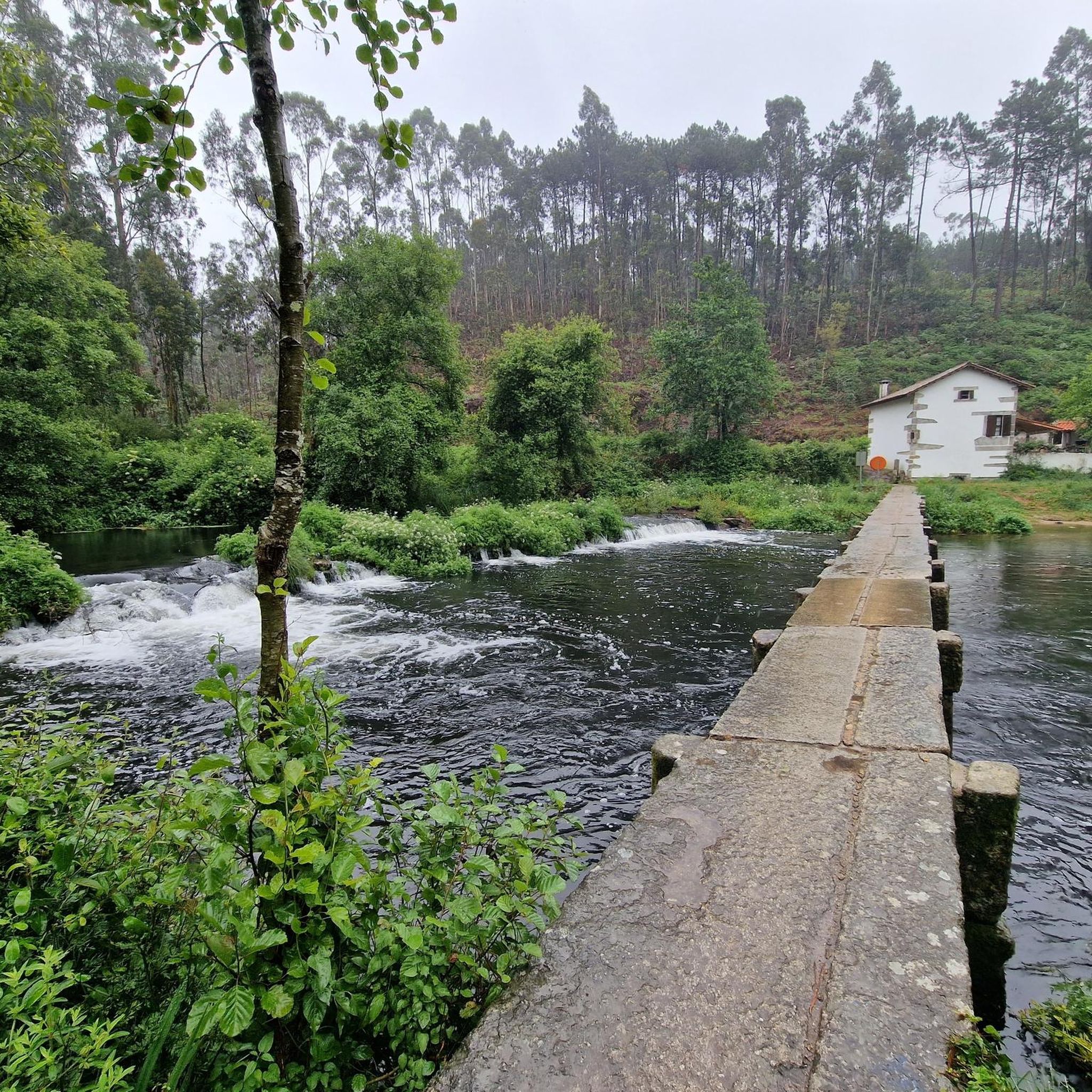
The Dom Zameiro Bridge crosses the Ave River in a bucolic setting of vineyards and fields, connecting the parishes of Bagunte and Macieira da Maia. Although reminiscent of Roman architecture, its origins date back to the 12th or 13th centuries. Part of the old Via Veteriz, the medieval road that connected Porto to Barcelos and Esposende, it continues to welcome pilgrims today, with a small resting place. Windmills and a rural house complete the serene picture of a place where time seems to slow down.
1
0


Unique place with excellent landscape and tranquility
1
0

In the parish of Santa Eulália de Arnoso, municipality of Vila Nova de Famalicão, at the foot of the hill commonly known as Santa Baia. near the Ponte do Olhoiro bridge, which crosses a rocky stream, there is a cave that the people, since ancient times, have named - Buraco do Scout. The Hole of the Looker is a subterranean path that is approximately a quarter of a league up to the Palhares hill, where there used to be a Moorish castle, and by the way, stones and bricks from the castle can still be found there. "But Jesus! It was a long time ago: I heard him tell my mother (may God speak in his soul) that her father already told him Now, as I was saying, there lived in this parish, in the times of the pagans and the Moors, a farmer who had a herd of oxen that he sent to graze there at the foot of the Hole of the Lookout. One of the cows came from the hill, always fuller than the others, but what he admired was that the cow had a calf, and when she went to court she never brought milk. The farmer suspected that they were taking him out that way, and, after that, he went to look out and saw that the cow had entered the Hole in the Hole, and when she was already far away, he ran after her and even grabbed her tail. . The cow went and went, going under the subterranean, and when it got there to the foot of the hill Palhares, began to graze in a meadow of rich grass. Meanwhile, the Moors and many Moors appeared, who said nothing to the farmer, who was blessed by what he saw... One of the Moors went to milk the cow, but the farmer never untied himself from the tail, if he wasn't enchanted there. The cow, after grazing until it was satisfied, left and the farmer followed her, still tied up, and when he got home he told his wife everything, but he was so haggard that after three days he died. That's how it became known that there are Moorish and enchanted Moorish people in the Hole of the Lookout; much wealth and even golden bells, which the little man (God rest his soul) saw inside. Even today, no young man, even if he is a bully, dares to spend the night near the Hole of the Lookout because bad things and sorcery stop there. Source: Abílio de Magalhães Brandão
2
0
Protohistoric settlement with Roman and Medieval occupation. It has an elongated shape Northeast-Southwest, with a central enclosure delimited by a wall and, in connection with the spur, a defensive reinforcement consisting of two ditches and a slope. Towards the Northwest and Southeast, there are some platforms. Archaeological excavations carried out between 1983 and 1987 reveal a continuous occupation between the 19th and 19th centuries. 5 . IV BC. and the sec. I of our Era. The walls and the various excavated domestic structures, as well as the abundant ceramic and metal loot attributable to the end of the 17th century. I BC / beginning of the century. I AD are revealing of the great dynamism that Castro das Ermidas achieved in the final phase of Castro culture. (Other names: Palhares, Ermidas, Monte de Palhares, Hermitages)
1
0
One of the first news concerning Amoso dates from 1077, confirming the existence of the parish of Santa Eulália. Implanted in a low and marshy place, the Church of the former monastery of Arnoso has a location that is not common in the Portuguese Romanesque and that could have been one of the causes of the reduction of the its constructive program. Although it is not possible to confirm its place of origin, the date of 1156 is inscribed on the tympanum of the south portal. Another epigraph, now detached, was removed during the restoration work carried out by the DGEMN from the outer face of the north wall. of the nave, next to the first buttress. Its original position seems to confirm the date of one of the phases of the Romanesque construction: | 124. The walls of the most eastern portion of the nave are lined with blind arcades, as they were initially intended for the transept, indicating a program designed for the construction of a temple on a larger scale. At the head, the figurative sculpture stands out, whose meaning seems to be that of struggle, tension and threat, pointing to the presence of evil forces and to the permanent struggle between man and evil entities.
1
0
Frequently Asked Questions
How many hiking trails are available around Balazar?
Balazar offers a selection of over 10 hiking trails, primarily featuring moderate routes through its tranquil, rural landscape. These trails are well-regarded by the komoot community, with an average rating of 4.8 stars.
What kind of terrain can I expect on hikes in Balazar?
Hikes in Balazar predominantly feature gentle, pastoral, and agricultural scenery, with paths winding through vineyards and fields. The terrain is generally mild, with moderate elevation changes, making it suitable for recreational walking. You'll also find riverside paths along the Este River and the Rio Ave.
Are there circular hiking routes in Balazar?
Yes, many of the trails in Balazar are designed as loops, allowing you to start and end at the same point. An example is the Dom Zameiro Bridge – Water mills on the Rio Ave loop from Macieira da Maia, which is a moderate 11.2 km route.
Are there family-friendly hiking trails in Balazar?
Balazar's gentle terrain and pastoral landscapes make it ideal for family-friendly walks. Most routes are moderate, but their relatively low elevation changes and scenic agricultural settings are suitable for families looking for a pleasant outdoor experience. The Saint Michael of Arcos Bridge – Church of Saint Peter of Rates loop from Junqueira is a moderate 9.7 km path connecting local landmarks.
What interesting landmarks or natural features can I see while hiking in Balazar?
While hiking in Balazar, you can explore historical bridges and traditional water mills, particularly along routes like the one featuring Dom Zameiro Bridge. The region's agricultural fields, vineyards, and the Este River itself are prominent natural features. Nearby attractions include the Dom Zameiro Bridge and the Church of Saint John the Baptist of Vila do Conde.
When is the best time of year to go hiking in Balazar?
The best time to hike in Balazar is typically during spring and autumn when the weather is mild and pleasant, and the agricultural landscapes are vibrant. Summer can also be enjoyable, though it might be warmer. Winter offers a different, quieter charm, but some paths might be muddier.
Are there options for longer hikes in the Balazar area?
Yes, for those seeking a longer experience, the Arnoso Monastery – Castro da Ermida loop from Nine is a notable option. This moderate trail spans 15.1 km, leading through historical sites and agricultural fields, and typically takes around 4 hours to complete.
Can I bring my dog on hikes in Balazar?
Balazar's rural environment is generally welcoming for dogs. When hiking with your dog, it's always recommended to keep them on a leash, especially near agricultural fields or livestock, and to carry waste bags to maintain the cleanliness of the trails.
What do other hikers enjoy the most about hiking in Balazar?
The area is highly rated by the komoot community, with an average score of 4.8 stars from over 100 reviews. Hikers often praise the tranquil, pastoral landscapes, the well-maintained paths, and the opportunity to experience traditional Portuguese countryside away from more crowded areas.
Are there any challenging hikes near Balazar for experienced hikers?
While Balazar itself offers predominantly moderate trails through gentle terrain, its strategic location provides access to more challenging options. For experienced hikers seeking rugged paths and panoramic vistas, the nearby Serra do Marão mountain range is a short drive away, offering more demanding routes.
Are there opportunities for riverside walks in Balazar?
Yes, the Este River crosses the Balazar area, and the Rio Ave is also nearby, providing excellent opportunities for riverside strolls. These paths often feature lush greenery and offer a peaceful setting, such as the routes that pass by the traditional water mills on the Rio Ave.
Most popular routes around Balazar
Most popular attractions around Balazar

Get inspired with the komoot mobile app


Explore more
Browse the best Hikes in other regions.
