Attractions and Places To See around Quinta Do Conde - Top 20
Best attractions and places to see around Quinta Do Conde. This region in the Setúbal area of Portugal offers a combination of natural landscapes and cultural sites. It is situated near the Serra da Arrábida, providing access to diverse natural surroundings. The area features historical sites and natural formations, reflecting its authentic Portuguese character.
Best attractions and places to see around Quinta Do Conde
- The most popular attractions is Windmills of Serra do Louro, a man_made_monument that features several windmills, both old and new, along a trail. These windmills were historically significant for processing cereals.
- Another must-see spot is Lapa de Santa Margarida Cave and Chapel, a cave that combines a natural grotto with a chapel. Access is via a narrow path with over 200 steps to sea level, revealing a site of cultural heritage.
- Visitors also love Formosinho Peak, the highest point in the Serra da Arrábida at 501 meters above sea level. This summit offers challenging climbs and expansive views across the region.
- Quinta Do Conde is known for its natural features like mountain ranges and caves, alongside cultural sites such as archaeological ruins and historical estates. Visitors can explore a variety of attractions, from ancient Roman industrial complexes to wine museums.
- The attractions around Quinta Do Conde are appreciated by the komoot community, with 43 upvotes and 25 photos shared by users.
Last updated: August 11, 2026
Windmills of Serra do Louro
Highlight (Segment) • Monument
Tip by

Formosinho Peak
Highlight • Summit
A very tough climb, an even tougher descent... Not accessible to everyone...
Translated by Google •
Tip by

Sign up now to discover places like this
Get recommendations on the best single tracks, peaks, & plenty of other exciting outdoor places.
Sign up for free
Lapa de Santa Margarida Cave and Chapel
Highlight • Cave
Tip by

Fountain of the Stunned
Highlight • Monument
Tip by
Casa Museu José Maria da Fonseca
Highlight • Historical Site
Translated by Google •
Tip by
Sign up for free to discover even more attractions around Quinta Do Conde.
Sign up for free
Already have an account?
Start today with a free account
Your next adventure awaits.
Login or Signup
Tips from the Community

These were the "mills" of old, moved by the wind, heavy granite millstones, transformed wheat seeds into flour from which delicious bread was made, which "satisfied" the hunger of those who had little to eat.
1
0

Don't miss the opportunity to sign the summit book. The summit book is located in the small plastic container with the green lid, covered with a stone.
2
0
Built in the 19th century, the house was restored in 1923 by the Swiss architect Ernesto Korrodi. The visit to the museum begins with a brief explanation of the company's history, followed by a guided tour of the old wine cellars – and, of course, you can also participate in a tasting at the end.
3
1


The chapel was probably built in the 17th or perhaps 18th century, as a place of Christian worship that, most likely, succeeded other previous cults, namely those related to water or even initiation rites linked to the idea of the rebirth of the soul.
4
0
Lapa de Santa Margarida is a natural grout at the base of Arrábida Mountain, where a small altar was erected. The access is done by a narrow path, with over 200 steps, until the sea level. Inside there is a Christian altar with some images and candles. The image of Saint Margaret was initially in this chapel, thus having given her name to this place.
4
0
At the top of the Serra do Louro stand the windmills which, in the not so distant past, were an important industry for processing cereals. The force of the wind hits the open sails, turning an axle, which in turn transmits the rotation to a limestone stone that rotates on another fixed one. These stones, called "millstones", receive the cereal grains between them, transforming them into flour.
6
0
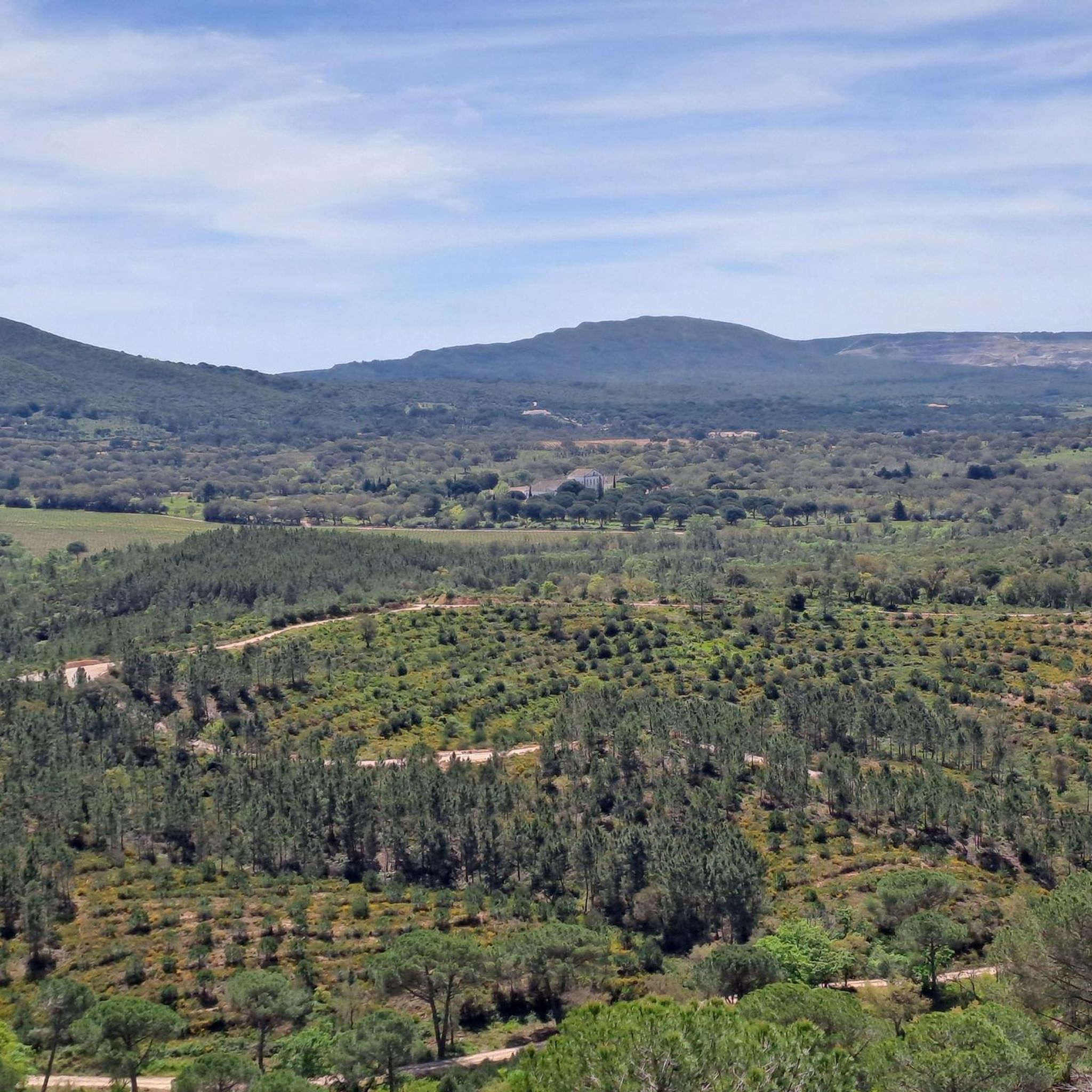
This linear route runs along the northern and southern slopes of the Serra da Arrábida up to Portinho da Arrábida, passing through the highest point of the mountain range, Alto do Formosinho, marked with a geodesic marker at 501 metres. This route, which is of the highest level of difficulty, is the closest to mountaineering conditions, due to the steep incline and the characteristics of the terrain. It is one of the most charismatic routes in the region, due to its connection to the first settlements of Arrábida (Castelo dos Mouros rock formation) and the ancient pilgrimage candles of devotion to Our Lady of Arrábida, which are still maintained, due to the challenge of reaching the peak, through dense vegetation, areas of gravel and rock climbing, and also through the endless landscapes that connect the Sado estuary to the Tagus and the border between Finisterra and the ocean.
3
0
Frequently Asked Questions
What natural attractions can I explore near Quinta Do Conde?
The region offers diverse natural beauty. You can visit Formosinho Peak, the highest point in the Serra da Arrábida, offering expansive views. Another unique spot is the Lapa de Santa Margarida Cave and Chapel, a natural grotto with a chapel accessible via over 200 steps to sea level. The Serra da Arrábida itself is known for its towering limestone cliffs and clear waters, ideal for hiking and photography.
Are there any historical sites or cultural landmarks to visit?
Yes, Quinta Do Conde is rich in history. Explore the Windmills of Serra do Louro, which were historically important for processing cereals and offer beautiful views. The Archaeological Site of Creiro showcases a Roman industrial complex for fish salting, dating back to the 1st century. You can also visit the Casa Museu José Maria da Fonseca, a family-owned Portuguese wine producer established in 1834, offering insights into the region's winemaking tradition.
What kind of outdoor activities can I do around Quinta Do Conde?
The area is excellent for outdoor enthusiasts. You can find various routes for cycling, gravel biking, and mountain biking. For example, there are challenging MTB trails like the 'Moinhos por Baixo Trail' or moderate cycling routes such as the 'Peru Trail loop from Quinta do Conde'. You can explore more options on the dedicated guides for MTB Trails around Quinta Do Conde, Gravel biking around Quinta Do Conde, and Cycling around Quinta Do Conde.
Are there challenging hikes or climbs in the area?
Absolutely. Formosinho Peak, the highest point in the Serra da Arrábida, is known for its very tough climb and descent, often described as being close to mountaineering conditions due to steep inclines and rocky terrain. The access to Lapa de Santa Margarida Cave and Chapel also involves a challenging path with over 200 steps.
What are some family-friendly attractions near Quinta Do Conde?
While many natural sites are suitable for families, the Casa Museu José Maria da Fonseca offers guided tours that can be an engaging experience for families interested in local culture and winemaking history.
What is the best time of year to visit Quinta Do Conde attractions?
The Setúbal region, including Quinta Do Conde, generally enjoys a mild climate. Spring (April to June) and early autumn (September to October) are often ideal for visiting, as the weather is pleasant for outdoor activities like hiking and exploring historical sites, and the landscapes are vibrant.
Are there any viewpoints offering panoramic scenery?
Yes, several attractions provide stunning views. The Windmills of Serra do Louro offer beautiful vistas. For expansive, endless landscapes connecting the Sado estuary to the Tagus, a climb to Formosinho Peak is highly rewarding. The Lapa de Santa Margarida Cave and Chapel also provides a unique viewpoint at sea level after descending the steps.
What kind of historical significance do the attractions hold?
The region's attractions offer a glimpse into various historical periods. The Archaeological Site of Creiro reveals a Roman industrial complex from the 1st century. The Windmills of Serra do Louro highlight the area's agricultural past. The Lapa de Santa Margarida Cave and Chapel has a history of Christian worship, likely succeeding older cults.
What do visitors enjoy most about the attractions around Quinta Do Conde?
Visitors appreciate the blend of natural beauty and historical intrigue. The challenging climbs and rewarding views from Formosinho Peak are highly praised. The unique combination of a natural grotto and a chapel at Lapa de Santa Margarida Cave and Chapel is also a favorite, offering both geological interest and cultural heritage. The historical significance of sites like the Windmills of Serra do Louro and the Roman ruins at Creiro also draw significant interest.
Are there any coastal or beach attractions nearby?
While Quinta Do Conde itself is inland, its proximity to the Serra da Arrábida means you're not far from beautiful coastal areas. The Serra da Arrábida is known for its clear emerald-green waters, making it popular for swimming and snorkeling. Bicas Beach in Meco is also mentioned as a serene setting for a leisurely afternoon.
Can I learn about local Portuguese traditions through these attractions?
Yes, you can. The Casa Museu José Maria da Fonseca offers a deep dive into the region's winemaking traditions, a significant part of Portuguese culture. The historical context of the Windmills of Serra do Louro also reflects past agricultural practices.
Most popular attractions around Quinta Do Conde

Get inspired with the komoot mobile app


Explore more
Still not found the Highlight you’re looking for? See guides of the top attractions in other regions:
