Attractions and Places To See around Moura Morta e Moura Morta e Moura Morta e Vinhós - Top 20
Best attractions and places to see around Moura Morta e Moura Morta e Moura Morta e Vinhós include historical landmarks, cultural sites, and natural features within the municipality of Peso da Régua, Portugal. The region is characterized by its connection to the Douro River, offering river views and pedestrian bridges. Visitors can explore traditional mills, ancient irrigation systems, and lush meadows along the Vidoeiro river. This area provides a blend of historical heritage and natural beauty.
Best attractions and places…
Last updated: July 1, 2026
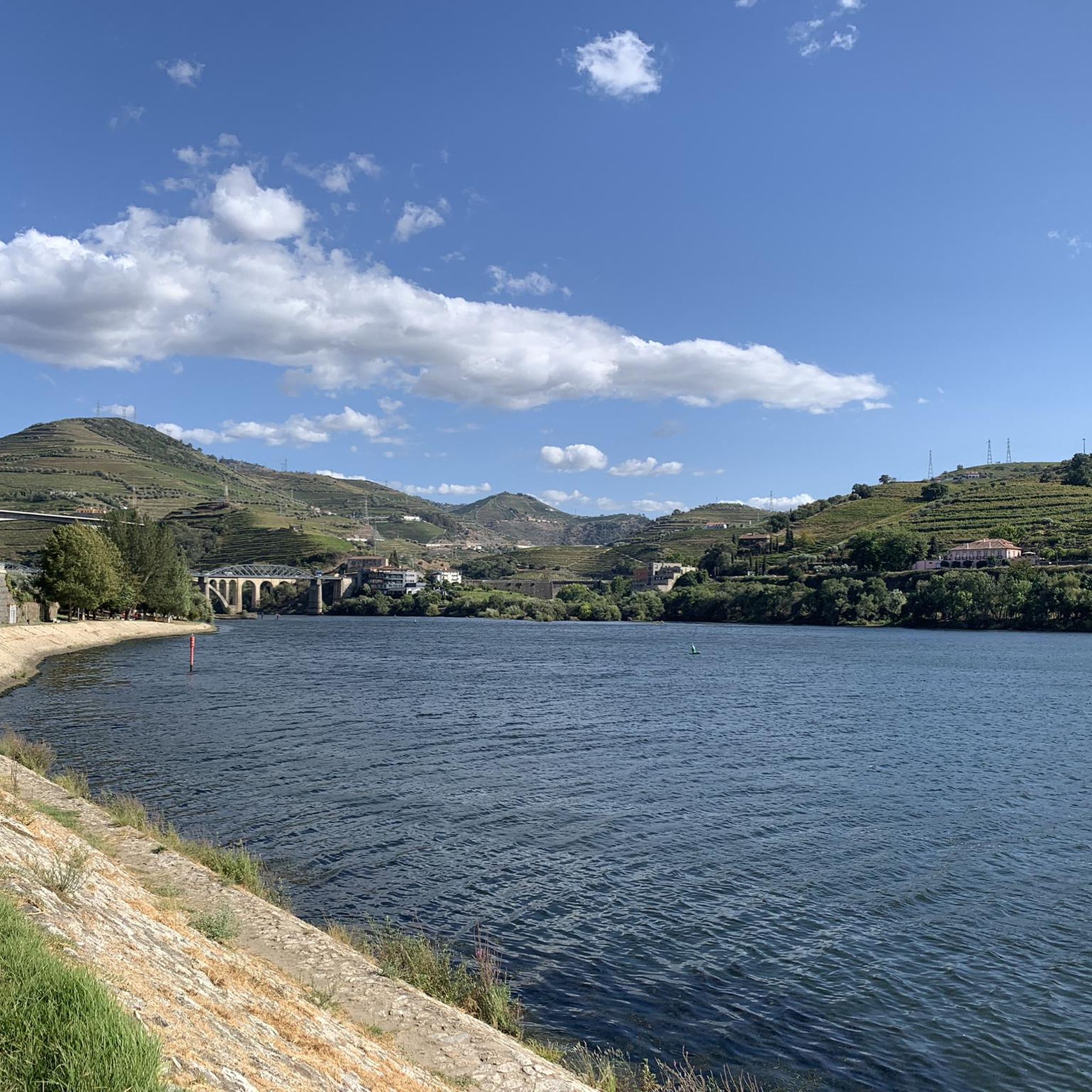
Douro River cruise dock, Peso da Régua
Highlight • Rest Area
Translated by Google •
Tip by

Régua Pedestrian Bridge
Highlight • Bridge
Translated by Google •
Tip by

Sign up now to discover places like this
Get recommendations on the best single tracks, peaks, & plenty of other exciting outdoor places.
Sign up for free
Casa do Douro (House of the Douro)
Highlight • Monument
Translated by Google •
Tip by

Monument to Gago Coutinho and Sacadura Cabral
Highlight • Monument
Translated by Google •
Tip by
Régua and the Douro River
Highlight • River
Translated by Google •
Tip by
Sign up for free to discover even more attractions around Moura Morta e Moura Morta e Moura Morta e Vinhós.
Sign up for free
Already have an account?
Start today with a free account
Your next adventure awaits.
Login or Signup
Popular around Moura Morta e Moura Morta e Moura Morta e Vinhós

Road Cycling Routes around Moura Morta e Moura Morta e Moura Morta e Vinhós

Cycling around Moura Morta e Moura Morta e Moura Morta e Vinhós
Hiking around Moura Morta e Moura Morta e Moura Morta e Vinhós

Running Trails around Moura Morta e Moura Morta e Moura Morta e Vinhós

MTB Trails around Moura Morta e Moura Morta e Moura Morta e Vinhós
Tips from the Community

This highlight is located in Peso da Régua and NOT in Lisbon. Please don't be confused by the misleading comment below. The same goes for the numerous photos, none of which belong here.
2
0

A worthwhile museum, which scores points despite/or because of its very minimalist presentation of the subject matter. At the end, enjoy a port wine on the terrace of the museum's café.
1
0
The bridge is really well-made. The view from the bridge is beautiful, even though there's still a lot that could be done with the buildings at the end.
2
0

The Casa do Douro was established in 1932 as the Douro Winemakers' Union Federation. Its headquarters, dating from 1944, with its exterior clad in polished granite, was designed by Portuguese architect José Porto. Inside, noteworthy are the stained-glass window by painter Lino António and the grand hall, with three central crystal chandeliers, shaped like clusters and weighing over a ton, as well as the Pombaline marker identified with the number 1. When the Douro region was first demarcated, 331 granite markers were placed. The Pombaline markers (so named because the demarcation was designed by the Marquis of Pombal) are all different and share the word Feitoria (vinho de feitoria, synonymous with better-quality wine) and the year (1758 or 1761). At the time, wines were classified according to their quality and destination. The best wine, known as Vinho de Feitoria, was sent to England; Vinho de Embarque was exported to Brazil; and Vinho de Ramo was sold in Portugal. The stained glass window of the Casa do Douro, by painter Lino António, encapsulates the entire dynamic of the Douro Demarcated Region. It covers an area of 50m2 and forms a triptych. In the center panel, we see three large figures. The central figure represents the Casa do Douro and holds a scroll that reads "... Casa do Douro, decree 21,883, November 1932." This means that the government, through the aforementioned Decree-Law, created the Union Federation of Winegrowers of the Douro Region in November 1932, now known as Casa do Douro.
1
0
The monument to Gago Coutinho and Sacadura Cabral in Lisbon was erected in honor of their joint crossing of the South Atlantic route by air. Coutinho and Cabral were the first to complete this journey. They flew from Lisbon to Rio de Janeiro, Brazil, in 1922. Gago Coutinho's account of the flight, along with other documents, was declared a UNESCO World Heritage Site in 2010. You can see the monument to the two adventurers in the Belém district, just a few meters from Lisbon's landmark, the Torre de Belém. It is a remarkable replica of the aircraft used in the successful Atlantic crossing.
1
2
In honor of the fearless Portuguese aviators, responsible for the first crossing of the South Atlantic, connecting Lisbon to Rio de Janeiro.
3
0
The Casa do Douro was founded in 1932 as a cooperative association of Douro winegrowers. This house, built in 1944, is the original home.
3
0

Thank you for sharing the spectacular photos.👍
0
0
Frequently Asked Questions
What historical sites can I explore in Moura Morta e Vinhós?
The region is rich in history. In Moura Morta, you can visit the Casa do Douro (House of the Douro), which was the original home of the Douro winegrowers' cooperative. Other significant historical sites include the ruins of the Casa da Ordem de Malta, Câmara, and Cadeia, the 18th-century Casa da Comenda, the Ponte Medieval de Cavalar, and the Centenary Cross. Along the Vidoeiro river, you can also find an Old Roman Bridge and traditional mills.
Are there any natural attractions or scenic spots in the area?
Yes, Moura Morta e Vinhós offers several natural highlights. You can enjoy the lush
Lameiros da Moura Morta
, meadows sustained by ancient irrigation techniques, which are home to diverse flora. The Douro view offers stunning perspectives of the Douro River. In Vinhós, the 'Fraga da Ermida' is a rocky outcrop known as a nesting site for golden eagles.What outdoor activities are available near these attractions?
The area provides various outdoor activities. For hiking, you can explore trails like the PR 4 – Trilho dos Lameiros. There are also several running trails, including those around Fraga da Ermida. If you enjoy cycling, you'll find numerous road cycling routes that offer challenging rides through the Douro Valley.
Are there family-friendly attractions in Moura Morta e Vinhós?
Absolutely. The Régua Pedestrian Bridge is a great family-friendly option, offering a safe and wide pathway to cross the Douro River with views of other bridges. The general area around Régua and the Douro River is also considered family-friendly, with opportunities for boat trips and enjoying the riverside promenade.
Can I find any easy hiking trails around Moura Morta e Vinhós?
Yes, there are several easy hiking options. For example, you can take an easy hike that loops from Godim, passing Régua and the Douro River and the Régua Pedestrian Bridge. Another easy option is the loop from Peso da Régua along the Régua Riverside Promenade to the Casa do Douro (House of the Douro).
What is the significance of the Douro River in this region?
The Douro River is central to the region's identity and economy. It's renowned for its connection to port wine cultivation, with the Alto Douro wine region being a UNESCO World Heritage site. The river serves as a starting or ending point for boat trips, and its landscape is characterized by terraced vineyards. You can experience its importance firsthand from the Douro River cruise dock in Peso da Régua.
Where can I learn about the local wine culture?
The best place to delve into the local wine culture is the Casa do Douro (House of the Douro). This historic building, established in 1932 as a cooperative association of Douro winegrowers, features a significant stained-glass window depicting the region's dynamic and houses one of the original Pombaline markers from the 18th-century demarcation of the Douro wine region.
Are there any ancient or medieval structures to visit?
Yes, the area boasts several ancient and medieval structures. In Moura Morta, you can find the Ponte Medieval de Cavalar and an Old Roman Bridge along the Vidoeiro river. The Santuário da Senhora da Ouvida is surrounded by 'mamoas,' funerary monuments dating back to the late Bronze Age, indicating ancient spiritual significance.
What is the 'Lameiros da Moura Morta' and can I visit it?
The Lameiros da Moura Morta are lush meadows that have been cultivated for centuries using an ancient irrigation technique called 'rega de lima.' This method keeps them submerged year-round, protecting them from frost and fostering significant biodiversity, including specific orchids and wild lilies. You can experience their natural beauty and heritage by walking the PR 4 – Trilho dos Lameiros.
Is Moura Morta e Vinhós accessible for visitors with mobility needs?
Some attractions in the area are wheelchair accessible. The Régua Pedestrian Bridge is designed to be accessible, offering a wide and safe path. The Douro River cruise dock in Peso da Régua is also listed as wheelchair accessible, allowing visitors to enjoy river experiences.
What is the best time of year to visit Moura Morta e Vinhós?
The Douro region, including Moura Morta e Vinhós, is beautiful throughout much of the year. Spring (April-May) offers blooming landscapes, while autumn (September-October) is ideal for experiencing the grape harvest and vibrant fall colors. Summers can be hot, but river activities are popular. Winters are milder but some trails might be less accessible.
What cultural or religious sites are important in the area?
The region has several important cultural and religious sites. The Igreja Matriz (main church) in Moura Morta and the Igreja Matriz in Vinhós (constructed in 1739) are notable. The Santuário da Senhora da Ouvida is a significant site for Christian pilgrimage and faith, with ancient roots evidenced by nearby Bronze Age 'mamoas'.
Are there any unique viewpoints of the Douro River?
Yes, the area offers several excellent viewpoints. The Douro view provides stunning perspectives of the river as it flows through the Alto Douro wine region. Additionally, the Régua Pedestrian Bridge offers unique views of the Douro and the other bridges crossing it.
What is the legend behind the name Moura Morta?
The name 'Moura Morta' (Dead Moorish Woman) is rooted in a local legend. It is said that a Moorish princess was killed here by the Knights Templar because she refused to renounce her faith. This legend adds a layer of mystique to the village's historical narrative.
Most popular routes around Moura Morta e Moura Morta e Moura Morta e Vinhós

Get inspired with the komoot mobile app


Explore more
Still not found the Highlight you’re looking for? See guides of the top attractions in other regions:
