Attractions and Places To See around Wolfsthal - Top 20
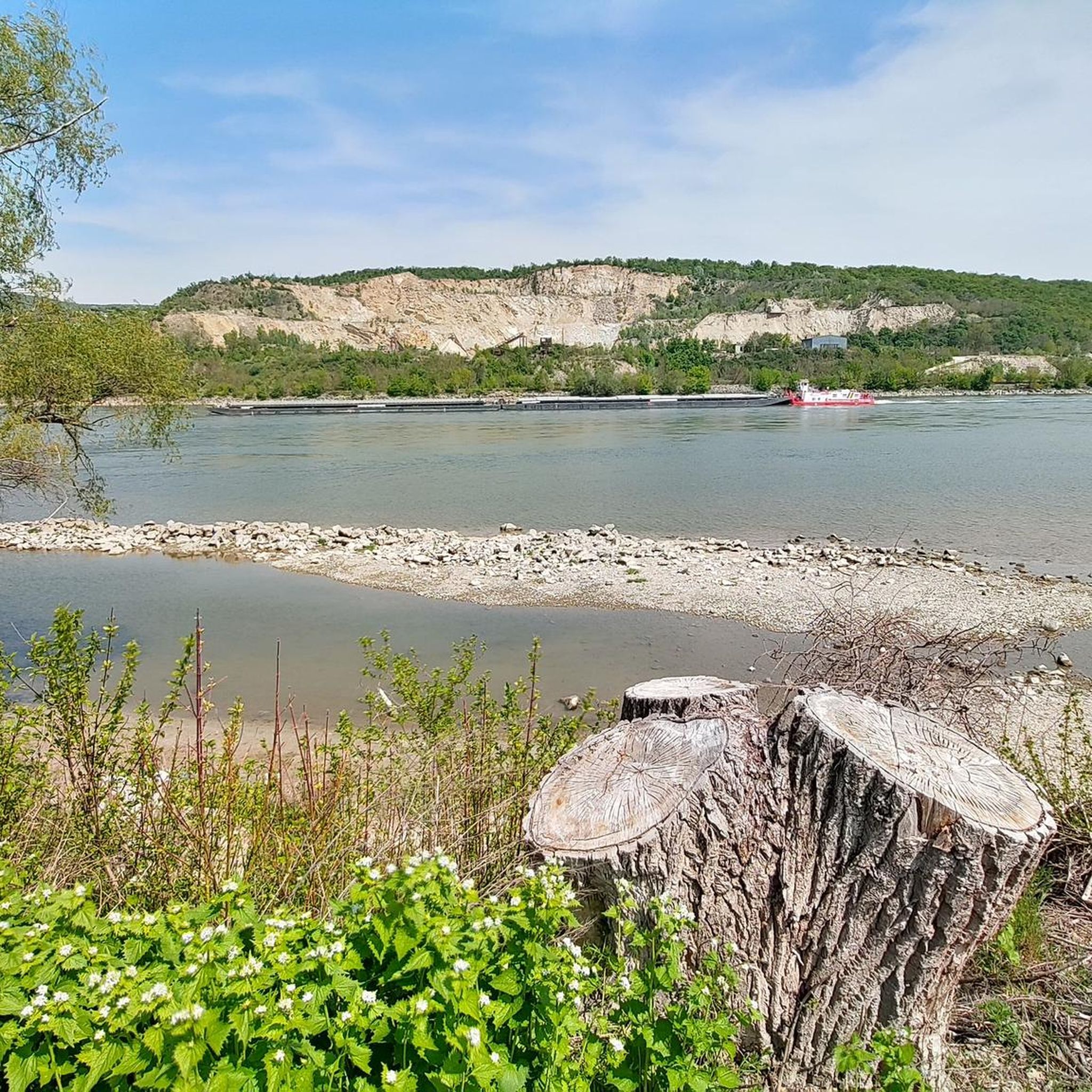
Best attractions and places to see around Wolfsthal include historical landmarks, natural features, and cultural sites. This municipality in Lower Austria is situated between the Danube River and the wooded hills of Königswarte and Schafberg. The area offers a blend of fields, vineyards, and forests, providing opportunities for hiking and cycling. Wolfsthal also serves as a base for exploring nearby Bratislava, located just 4 kilometers away.
Best attractions and places to see around Wolfsthal
- The most popular attractions is Freedom…
Last updated: August 17, 2026
Bratislava Castle
Highlight • Castle
Translated by Google •
Tip by

UFO Observation Tower
Highlight • Viewpoint
Translated by Google •
Tip by
Sign up now to discover places like this
Get recommendations on the best single tracks, peaks, & plenty of other exciting outdoor places.
Sign up for free
Freedom Cycling Bridge (Cyklomost Slobody)
Highlight • Bridge
Translated by Google •
Tip by

St. Martin's Cathedral, Bratislava
Highlight • Religious Site
The Gothic three-aisled church from the 15th century is considered the coronation church of the Hungarian kings.
The three-aisled Gothic cathedral of Bratislava was …
Translated by Google •
Tip by

Maximilian Fountain (Roland Fountain), Bratislava
Highlight • Monument
Maximilian's Fountain / Roland's Fountain
The Maximilian Fountain was built in 1572 in the Austrian stonemason's workshop of Andreas Lutringer, with financial support from the Hungarian King Maximilian II.
Translated by Google •
Tip by
Sign up for free to discover even more attractions around Wolfsthal.
Sign up for free
Already have an account?
Start today with a free account
Your next adventure awaits.
Login or Signup

Tips from the Community

Brings fun & joy while cycling by!
1
0

The late Gothic St. Martin's Cathedral in the heart of Bratislava impresses with its striking tower, delicate pointed arches, and ornate gargoyles. Once the coronation site of Hungarian kings, the interior captivates with colorful stained glass windows and Baroque Rococo details. A quick detour here is worthwhile—especially for photos with a view of the Old Town and Castle Hill.
6
0

St. Martin's Cathedral is the oldest and most important church in Bratislava. It is located on the edge of the Old Town below the castle and served as the coronation church of Hungarian kings for centuries. Its tower, with its golden St. Stephen's Crown, is particularly striking.
6
0

You should definitely go up, enjoy the view and eat and drink something 👌🏻 the trip up costs 11.20 euros
0
0

Whoever is up here in the UFO should go to the toilet and then to the counter.
2
0

Maximilian Fountain / Maximiliánova fontána, Bratislava / Pressburg Maximilian's Fountain / Roland's Fountain The Maximilian Fountain was built in 1572 in the Austrian stonemason's workshop of Andreas Lutringer, with financial support from the Hungarian King Maximilian II. However, the fountain is better known as the Roland Fountain. It consists of a massive circular basin with a diameter of 9 meters. In the center of the basin stands a 10.5-meter-high column, on which stands a statue of a knight in armor; it is said that this is Roland, a legendary defender of the city's rights. Others believe it to be the statue of Maximilian II. To this day, a legend is associated with the fountain. The knight usually faces the Town Hall. But exactly once a year, when the clock strikes midnight on New Year's Day, he turns and leans towards the former town hall, in honor of the twelve councilors who gave their lives long ago to save the city. It is also said that he comes to life on Good Friday. On this occasion, he even moves in broad daylight, brandishing his sword Durandal in all four cardinal directions to show the city that it still enjoys his protection. However, it is said that he can only be seen by Bratislava natives, specifically those citizens with pure hearts who have never harmed anyone. Text / Source: Ministry of Tourism and Sport of the Slovak Republic, Bratislava / Pressburg https://www.visitbratislava.com/de/setzt/maximilians-brunnen-rollands-brunnen/
14
0
St. Martin's Cathedral, Bratislava / Pressburg The Gothic three-aisled church from the 15th century is considered the coronation church of the Hungarian kings. The three-aisled Gothic cathedral of Bratislava was built on the site of an earlier Romanesque church from 1221, which was dedicated to the Holy Saviour. It was here that Ludwig van Beethoven performed his work Missa solemnis for the first time in Pressburg in 1835. A few years later, in 1884, Franz Liszt also conducted a Hungarian coronation mass here. The cathedral is without doubt one of the largest and best preserved Gothic religious buildings in Bratislava. Its construction began at the beginning of the 14th century, on the site where a Romanesque church had previously stood. Many masters were involved in the extension and expansion, including those who built St. Stephen's Cathedral in Vienna. The most famous include Hans Puchsbaum and Anton Pilgram. The temple was consecrated in 1452, but it did not take on its final form until 1510. The 18th century saw another reconstruction in the Baroque style, which was again carried out by the most talented artists. The last change in the Gothic style followed in the middle of the 19th century. The cathedral can be admired in this form more or less to this day. Text / Source: Touristinfo Bratislava / visitbratislava.com https://www.visitbratislava.com/de/setzt/die-kathedrale-des-heiligen-martin/
16
0

Maximilian's Fountain, also known as Roland's Fountain, is one of the oldest and most famous fountains in Bratislava. It is located on the Main Square, which is the heart of the old town. The fountain was built in 1572 by order of the Hungarian King Maximilian II. as a public well, which was to serve as a source of water for the city's residents and at the same time as protection against fires. The construction of the fountain was designed and built by the stonemason Andreas Lutringer, who incorporated elements of the Renaissance style into the design, which was very popular at the time. The fountain has a simple but elegant design. The dominant feature is the statue of a knight on top, who is often associated with the legendary knight Roland, the protective patron of city rights. Therefore, the fountain is often referred to as Roland's Fountain. The knight holds a sword and shield, which symbolizes justice and the defense of the city. Overall, the fountain has a round base, from which several steps rise, and a main pillar with a knight in the middle. Stone tanks are set on the edge to collect water. The fountain has been renovated several times, while its basic form has always been preserved. Maximilian's Fountain is surrounded by several legends. One of them says that the statue of the knight rotates around its axis every midnight to bow to the city as a sign of respect. Another legend says that the knight jumps off his pedestal if the city is in danger and defends it from enemies. The fountain had a practical purpose, but over time it also became a place for social gatherings and a symbol of the city. Over the centuries, it has witnessed many historical events, including markets, festivals, and major city celebrations. Today, Maximilian's Fountain is not only an important historical monument, but also a popular meeting place for locals and tourists. It is surrounded by a number of historic buildings, restaurants and cafes, which adds to its atmosphere and attractiveness.
5
0
Frequently Asked Questions
What natural features can I explore around Wolfsthal?
Wolfsthal is nestled between the Danube River and the wooded hills of Königswarte and Schafberg. You can explore the pristine natural landscapes of the Donau-Auen National Park, enjoy the fields, vineyards, and forests, or visit Austria's easternmost mountain, Königswarte, which offers scenic views from its observation tower.
Are there historical landmarks to visit in Wolfsthal itself?
Yes, Wolfsthal has a rich history. You can visit the ruins of Pottenburg Castle, which date back to between 955 and 1025. The local Pilgrimage Church, extended in the 17th century from its original Romanesque form, also holds significant historical importance. The village itself was first documented in 1083.
What family-friendly attractions are available near Wolfsthal?
For families, the Königswarte mountain features a deer enclosure and a 22-meter-high observation tower with panoramic views. In nearby Bratislava, the Bratislava Castle houses various exhibitions, and the UFO Observation Tower offers a unique experience with its panoramic views. Bratislava Zoo is also a great option for families.
Can I find hiking trails suitable for different skill levels?
Yes, the area around Wolfsthal offers a variety of hiking trails. You can find easy hikes like the "Pottenburg Castle Ruins – Königswarte Observation Tower loop from Wolfsthal" or the "Danube view – Beautiful view of the UFO loop from Karlova Ves." For more challenging options, consider the "Hainburger Au Trail – Röthelstein Castle Ruins loop from Wolfsthal" or the "View of the Landscape loop from Wolfsthal." More details can be found in the Hiking around Wolfsthal guide.
What cycling routes are there around Wolfsthal?
Wolfsthal is situated directly on the Danube Cycle Path, offering excellent cycling opportunities. A popular route is across the Freedom Cycling Bridge (Cyklomost Slobody), a 500-meter-long bridge over the March river. Other routes include the "Bratislava Castle – UFO Observation Tower loop from Wolfsthal" and the "Danube Riverside Path, Hainburg." Explore more in the Cycling around Wolfsthal guide.
Are there any accessible attractions for visitors with mobility needs?
Yes, several attractions are noted for their accessibility. The Freedom Cycling Bridge (Cyklomost Slobody) is wheelchair accessible. In Bratislava, the Maximilian Fountain (Roland Fountain) and St. Martin's Cathedral are also listed as wheelchair accessible.
What are the best viewpoints to experience scenic vistas?
The Königswarte mountain offers a 22-meter-high observation tower with expansive views. In Bratislava, the UFO Observation Tower provides wonderful panoramic views of the castle, old town, and Danube. Bratislava Castle itself also offers great vantage points over the city.
What cultural sites are worth visiting in the area?
Beyond Wolfsthal's Pilgrimage Church, nearby Bratislava offers significant cultural sites. These include Bratislava Castle, which houses various exhibitions, and St. Martin's Cathedral, a Gothic church that served as the coronation church for Hungarian kings. The historic Old Town of Bratislava is also rich in cultural heritage.
Is Wolfsthal a good base for exploring nearby cities?
Absolutely. Wolfsthal's location, just 4 kilometers from the city center of Bratislava, Slovakia, makes it an excellent starting point for day trips. A direct bus connection facilitates travel to Bratislava, where you can visit attractions like Bratislava Castle, the Old Town, and St. Martin's Cathedral.
What do visitors particularly enjoy about the attractions here?
Visitors frequently praise the scenic views from the UFO Observation Tower and the historical significance of Bratislava Castle. The Freedom Cycling Bridge (Cyklomost Slobody) is highly recommended by cyclists for its unique crossing over the March river. The blend of historical sites, natural beauty, and opportunities for outdoor activities is a major draw.
What is the best time of year to visit Wolfsthal for outdoor activities?
The region's fields, vineyards, and forests offer romantic hiking routes and tranquil getaways, making spring, summer, and early autumn ideal for outdoor activities like hiking and cycling. The Danube Cycle Path is accessible all year round, but warmer months provide the most comfortable conditions for exploring.
Where can I see the Danube River up close?
Wolfsthal is nestled directly on the Danube River, providing ample opportunities to experience it. You can cycle along the Danube Cycle Path, which runs through the area, or explore parts of the Donau-Auen National Park, which borders the river. There are also various viewpoints offering vistas of Europe's second-longest river.
Are there any castle ruins to explore near Wolfsthal?
Yes, you can explore the Pottenburg Castle Ruins, which are a significant historical landmark in Wolfsthal, dating back to the 10th and 11th centuries. Additionally, the impressive Bratislava Castle, though largely reconstructed, has origins as a 10th-century settlement castle and offers a deep dive into the region's past.
Most popular attractions around Wolfsthal

Get inspired with the komoot mobile app


Explore more
Still not found the Highlight you’re looking for? See guides of the top attractions in other regions:
