Top 11 Castles around Griffen
Best castles around Griffen, Austria, are often found amidst the region's distinctive limestone mountains and offer a blend of historical architecture and natural features. The area is characterized by its dramatic landscapes, providing panoramic views from elevated castle sites. Griffen is notable for its medieval castle ruins, such as Burgruine Griffen, which is perched atop a 130-meter-high Schlossberg. This location uniquely combines historical exploration with access to a prehistoric dripstone cave within the mountain.
Best castles around Griffen
- The most…
Last updated: July 1, 2026
Neudenstein Castle
Highlight • Castle
wehrbauten.at/ktn/kaernten.html?/ktn/neudenstein/neudenstein.html
Translated by Google •
Tip by

Thürn Castle
Highlight • Castle
Translated by Google •
Tip by

Sign up now to discover places like this
Get recommendations on the best single tracks, peaks, & plenty of other exciting outdoor places.
Sign up for free
Rabenstein Castle Ruins
Highlight • Castle
Translated by Google •
Tip by

Weißenegg Castle
Highlight • Castle
Translated by Google •
Tip by

Griffen Castle Ruins
Highlight • Castle
Translated by Google •
Tip by

Sign up for free to discover even more castles around Griffen.
Sign up for free
Already have an account?
Start today with a free account
Your next adventure awaits.
Login or Signup
Popular around Griffen
Sunny adventures on the Southern Alps Panorama Trail
Gentle peaks with a guaranteed view —Welcome to the Lavanttal
Cycling around Griffen
Road Cycling Routes around Griffen
MTB Trails around Griffen
Hiking around Griffen
Running Trails around Griffen
Gravel biking around Griffen
Mountain Hikes around Griffen


Tips from the Community


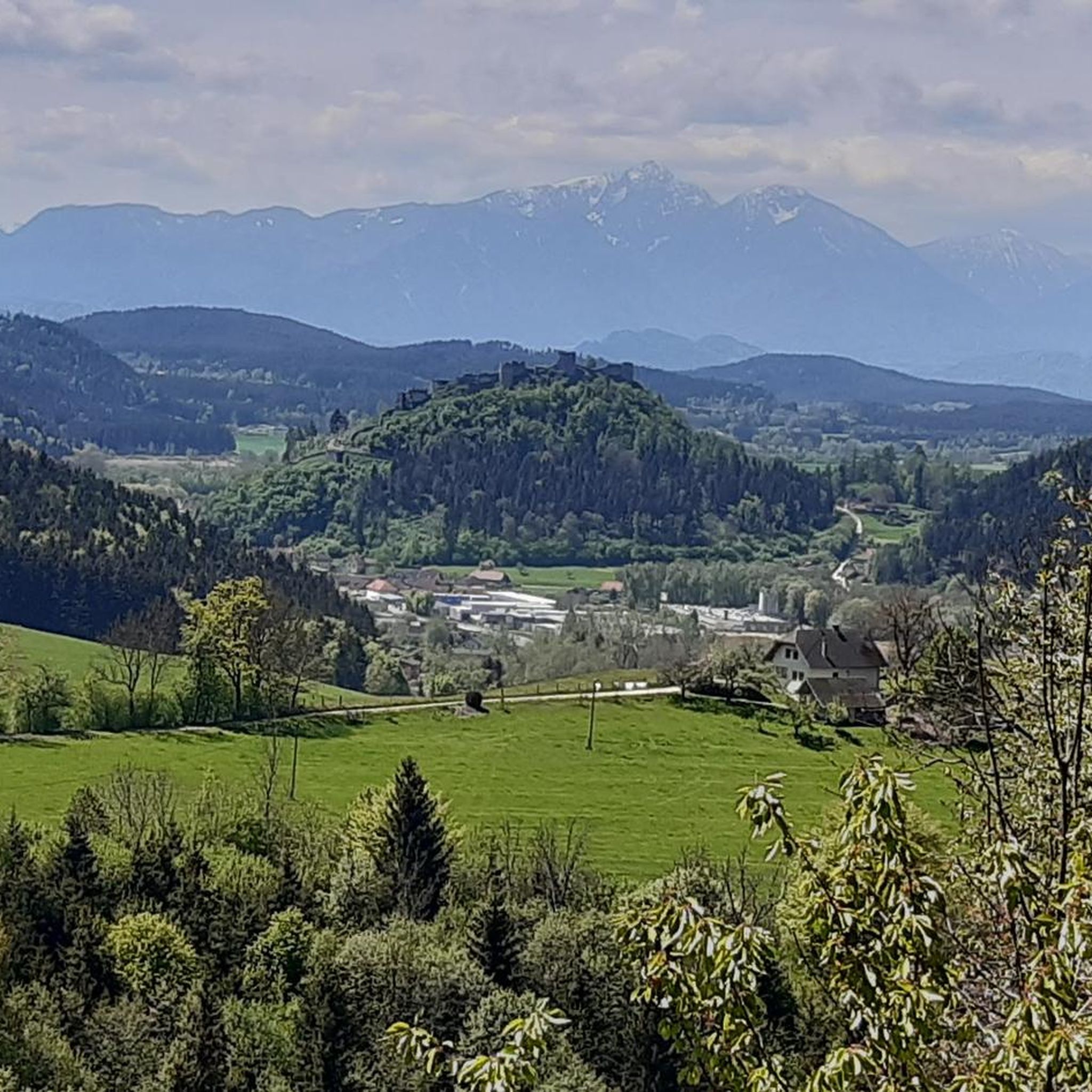
Beautiful view over Griffen and the surrounding area.
1
0

Rabenstein Castle was built in the 12th century to protect the St. Paul Monastery in the Lavanttal. After a fire in 1636 it fell into disrepair, so that today only ruins can be seen.
4
0

At the entrance to the stalactite cave you will find a sign describing all three ascent options to Griffen Castle
1
0
There were a total of four castles with the name Weißenegg in the Austrian provinces, of which the castle near Ruden was probably the ancestral castle of the Weißeneggers. The oldest known descendant of the Weißenegger family is said to have been Wülfing von Wizzeneck, who is said to have lived around 1120. The castle was first mentioned in a document in 1243 as dominus de Wizenekke. Dietmar von Weißenegg, a ministerial of the diocese of Bamberg, appears several times in documents between 1244 and 1263. In the 13th and 14th centuries, the Weißeneggers were an important noble family in Carinthia, they provided several bishops and were also active in the military. From the year 1300 Weißenegg was the seat of a district court, which also included Ruden. In 1332 the property was sold to the Lords of Walsee. Eberhard von Walsee († 1363), who had no descendants, inherited the castle and dominion from his cousins Ulrich and Hermann I von Cilli. The Counts of Cilli stayed on Weißenegg until 1425, then Hermann II von Cilli exchanged Weißenegg and Hartneidstein with the bishopric of Bamberg for the lordship of Mauthenberg (Hohenmauthen/Muta). Weißenegg remained in Bamberg until 1759, when the diocese sold its estates in Carinthia to the Austrian Empire. The castle was already deserted at this point. In 1775 Maximilian Thaddäus Freiherr von Egger acquired the castle, which from then on remained in the possession of his descendants for over a century. In 1885 the barons Ferdinand and Karl Helldorf bought the property, and in 1936 the extensive forests with the ruins passed to the Leitgeb family of industrialists from Kühnsdorf, who are still the owners today.
6
0
This castle is located high above the Drau - west of Völkermarkt - and allows a magnificent view of the immediate surroundings and the Karawanken. King Duke Heinrich allowed the Land Marshal Konrad von Aufenstein to build a castle in 1329, which was called "Neydenstein Castle" in old documents. It was later converted into a chateau on the spot, renovated in the 16th century and given a Baroque touch in the 17th century. The arcaded courtyard also dates from this period.
3
0
Is privately owned. From there you have a beautiful view of the Seidendorfer Au
2
0

In 1329, Duke Heinrich IV of Carinthia granted the governor of Carinthia Konrad III von Auffenstein the hill below St. Ulrich with permission to build a castle here. This makes it one of the few castles whose origins are accurately documented. Because his sons conspired with the Wittelsbachers and Luxembourgers against the Habsburgs, the family lost their possessions as early as 1368. Neudenstein became sovereign and was then loaned or pledged to ministers or financiers. The most important were Jörg Hollenburger 1438, Heinrich von Himmelberg 1485 and Christoph Plumegger, who had the high north wing added to the late Gothic house around the middle of the 16th century.
3
0
Frequently Asked Questions
What types of castles can I explore around Griffen?
The Griffen region offers a diverse range of castles, from well-preserved structures to atmospheric ruins. You'll find medieval complexes like Thürn Castle, which showcases architectural changes over centuries, and dramatic ruins such as Rabenstein Castle Ruins, known for its unique views.
Are there castles around Griffen that offer both historical and natural attractions?
Yes, Griffen Castle Ruins is a prime example. Perched atop a 130-meter-high limestone mountain, it combines medieval history with a fascinating natural wonder: the Griffen Dripstone Cave, which is embedded within the Schlossberg mountain beneath the castle. The cave features ancient stalactites and evidence of prehistoric human activity.
Which castles offer the best panoramic views of the Carinthian landscape?
Many castles in the region are strategically located for stunning views. Griffen Castle Ruins, situated on the Schlossberg, provides extensive open views. Similarly, Rabenstein Castle Ruins offers a unique perspective from its castle walls, and Neudenstein Castle overlooks the Völkermarkt reservoir.
Can I visit the Griffen Dripstone Cave near the castle ruins?
Yes, the Griffen Dripstone Cave is a distinctive feature located within the Schlossberg mountain, directly beneath Griffen Castle Ruins. It is illuminated for tours and offers a glimpse into both geological and prehistoric history, with archaeological finds dating back approximately 30,000 years. You can find more information about the cave on Visit Carinthia's website.
Are there hiking trails to the castles around Griffen?
Yes, many castles are accessible via hiking trails. For instance, a hiking trail leads up the Schlossberg to Griffen Castle Ruins. You can find various running and walking routes that incorporate these historical sites. Explore running trails around Griffen, including one that loops around Griffen Castle Ruins, on our Running Trails around Griffen guide.
What is the best time of year to visit the castles in Griffen?
The best season to visit the castles around Griffen is generally during the warmer months, from spring to early autumn. This allows for comfortable exploration of the outdoor ruins and hiking trails. The panoramic views are particularly stunning on clear days during these seasons. While winter walks can be atmospheric, some paths might be more challenging due to snow or ice.
Are there any castles near Griffen known for their unique historical background?
Weißenegg Castle has a rich history, first mentioned in 1243 and serving as the ancestral castle of the Weißeneggers, an important noble family in Carinthia. It changed hands many times, including belonging to the Counts of Cilli and the bishopric of Bamberg, before becoming deserted and eventually acquired by the current owners. Its long history reflects centuries of regional power struggles.
Can I combine a castle visit with cycling in the Griffen area?
Absolutely. The region around Griffen is popular for cycling. For example, Neudenstein Castle, also known as the 'Black Castle,' stands above the Drau cycle path, making it a great stop during a bike tour. You can find various cycling routes in the area, including options for gravel biking and road cycling.
What are the accessibility considerations for visiting Griffen Castle Ruins?
The climb to Griffen Castle Ruins is via a steep footpath, requiring sturdy footwear and moderate fitness. While accessible to the public, it is not suitable for wheelchairs or those with significant mobility challenges. Parking is available, and there are multiple ascent options to the castle.
Are there family-friendly activities or trails near the castles?
While specific 'family-friendly' categories aren't always listed for individual castles, the combination of historical exploration and natural surroundings often appeals to families. The Griffen Dripstone Cave, for instance, offers an engaging experience for children. Many of the hiking and walking trails around the castles, such as those found in our Running Trails around Griffen guide, can be enjoyed by families depending on their fitness level.
Where can I find accommodation or dining options near the castles in Griffen?
Griffen and its surrounding towns offer various accommodation and dining options. For example, the Rabensteiner Inn is located right next to Rabenstein Castle Ruins, providing both dining and overnight stays. You'll find cafes, pubs, and restaurants in the main town of Griffen and nearby villages to complement your castle visits.
Most popular routes around Griffen
Most popular attractions around Griffen

Get inspired with the komoot mobile app


Explore more
Looking for the best castles somewhere else? Discover other guides around Griffen:
