Attractions and Places To See around Lanzendorf - Top 20
Attractions and places to see around Lanzendorf include a blend of historical landmarks, cultural sites, and natural features. This Lower Austrian municipality provides a tranquil setting with picturesque natural surroundings, featuring babbling brooks and spacious paddocks. The area offers a family-friendly environment suitable for relaxed excursions. This guide covers 20 hidden gems, including significant historical and recreational sites in the broader region.
Best attractions and places to see around Lanzendorf
- The most popular attraction is Upper Belvedere Palace, a…
Last updated: August 16, 2026
Prater Main Avenue
Highlight • Cycleway
Translated by Google •
Tip by

View of the Freudenau Power Plant
Highlight • Bridge
18.09.2018 - The size of the power plant is …
Translated by Google •
Tip by

Sign up now to discover places like this
Get recommendations on the best single tracks, peaks, & plenty of other exciting outdoor places.
Sign up for free
Upper Belvedere Palace
Highlight • Castle
The unique ensemble with the two palaces, the Upper and Lower Belvedere, and the extensive garden is one of the most beautiful baroque buildings in the …
Translated by Google •
Tip by

Karlskirche (St. Charles Church), Vienna
Highlight • Religious Site
Translated by Google •
Tip by

Lusthaus, Vienna
Highlight • Historical Site
Translated by Google •
Tip by
Sign up for free to discover even more attractions around Lanzendorf.
Sign up for free
Already have an account?
Start today with a free account
Your next adventure awaits.
Login or Signup

Tips from the Community

St. Charles Church (Karlskirche) is one of Vienna's most striking Baroque churches and is located on Karlsplatz in the 4th district. It was built between 1716 and 1737 by Johann Bernhard Fischer von Erlach and later by his son, Joseph Emanuel Fischer von Erlach. Commissioned by Emperor Charles VI as thanks for surviving the plague, it is dedicated to Saint Charles Borromeo. Architecturally, St. Charles Church combines Baroque splendor with Neoclassical and Byzantine elements. Particularly striking are the two tall columns on the facade, reminiscent of Trajan's Column in Rome, and the large dome with its impressive frescoes inside. A spacious square lies in front of the church, now a popular meeting place, and behind it stretches a small pond that picturesquely reflects the building in summer. St. Charles Church is not only an architectural masterpiece but also a center for concerts and cultural events, making it an important Viennese landmark.
8
1

Belvedere Museum Vienna | 300 years of the Belvedere In 2023, the Belvedere will celebrate the 300th anniversary of its construction. The summer residence of Vienna's most famous general, Prince Eugene of Savoy, was built over a period of ten years: in 1723, the complex was finally completed with the completion of the Upper Palace. Conceived from the outset as a place of art, the Belvedere was to remain so for the next 300 years - first as a place for the presentation of Prince Eugene's art collection, then as an exhibition space for the imperial art collections as one of the first public museums in the world - accessible with free admission from 1777. Another milestone was the founding of the Modern Gallery in 1903 in the Lower Belvedere. Text / Source: Belvedere, Prinz Eugen-Straße 27, 1030 Vienna https://www.belvedere.at/300-jahre-belvedere
16
2
History of the Belvedere The unique ensemble with the two palaces, the Upper and Lower Belvedere, and the extensive garden is one of the most beautiful baroque buildings in the world. In the 18th century, the Austrian general Prince Eugene of Savoy commissioned the respected baroque architect Johann Lucas von Hildebrandt to build a summer residence. After Prince Eugene's death, Maria Theresa acquired the entire complex and made the Upper Belvedere the exhibition venue for the imperial collections - and thus one of the first public museums in the world. The Marble Hall offers an incomparable view of Vienna, where important historical events took place. The Lower Belvedere, originally Prince Eugene's home, hosts glamorous exhibitions. The modern pavilion of Belvedere 21 by architect Karl Schwanzer is the setting for contemporary art. Text / Source: Belvedere, Prinz Eugen-Straße 27, 1030 Vienna https://www.belvedere.at/geschichte-belvedere
17
1

The Karlsplatz with its parks, fountains and Karlskirche is a beautiful combination of architecture and history.
7
1
The upper entrance to the castle and the public castle park is beautiful and exudes classic K&K charm.
9
1

Great facility with a botanical and an alpine garden!
8
1
The whole square in front of the church with the fountain and the water surface is cool. Reflections. You have to see it, I didn't expect it to be so beautiful.
7
1
St. Charles Church (Karlskirche) is a rectoral church incorporated into the Order of the Knights of the Cross with the Red Star. The church is dedicated to St. Charles Borromeo (feast day November 4). From 1783 to 1918, it served as the patronal parish church of the Emperor and has been administered by the Knights of the Cross with the Red Star from Prague since 1783. Only from 1959 to 1976 was it administered by the Premonstratensians from Geras Abbey, and from 1989 to 2000, when administration was taken over by the Personal Prelature of Opus Dei, there were temporary interruptions. The parish of St. Charles Borromeo, founded in 1783, was dissolved on December 31, 2016, and its territory was divided between the parish of Our Lady of the Good News and the parish of St. Roch and Sebastian. Since January 1, 2017, St. Charles Church (Karlskirche) has been a rectorate church, which continues to be served by the Canons Regular of the Holy Cross with the Red Star. https://www.erzdioezese-wien.at/karlskirche
17
2
Frequently Asked Questions
What historical landmarks can I explore in Lanzendorf and the surrounding area?
Lanzendorf offers several historical sites, including a Former Mill in Unterlanzendorf dating back to the 16th century and an 18th-century Wayside Shrine. In Oberlanzendorf, you can find a Former Castle from the 17th century. Nearby, Maria-Lanzendorf is home to the impressive Pilgrimage Church of Maria Lanzendorf, known for its rich art treasures, and the beautiful Calvary of Maria-Lanzendorf, depicting Christ's Passion within grottos.
Are there any natural features or scenic spots to enjoy around Lanzendorf?
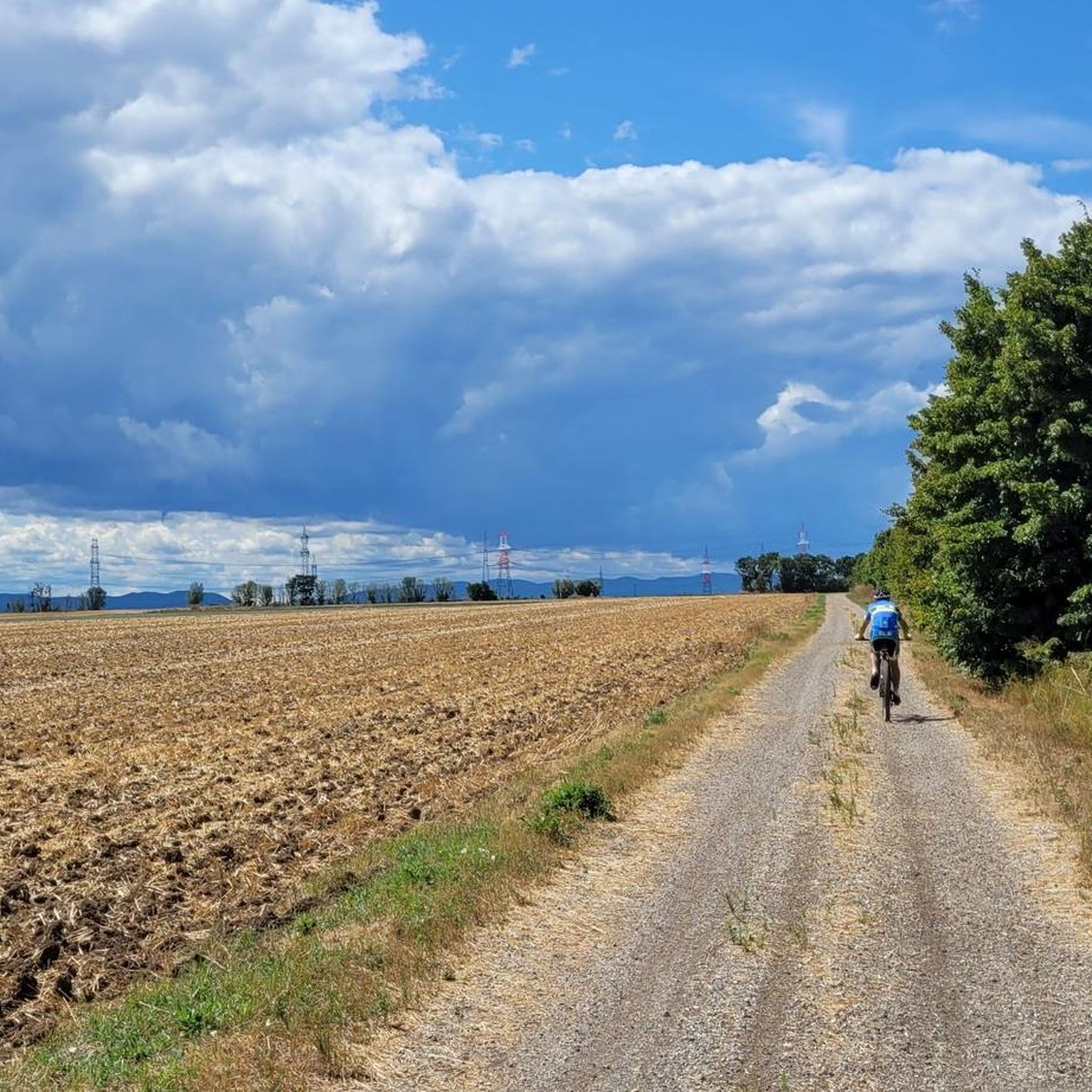
Yes, Lanzendorf is nestled in picturesque natural surroundings with babbling brooks and spacious paddocks. A popular natural feature is the Triestingau Cycle Path, which offers a serene route along the river through floodplain landscapes, ideal for cycling and hiking. While not directly in Lanzendorf, the Prater Main Avenue in Vienna provides a significant green space for outdoor activities, and the Freudenau power station offers views of the Danube.
What outdoor activities are available near Lanzendorf's attractions?
The region around Lanzendorf is excellent for outdoor activities. You can find numerous routes for hiking, cycling, and gravel biking. For hiking, explore trails like the 'Liesingbach River – City Hiking Trail 7 loop from Oberlaa' or the 'Hiking loop from Maria-Lanzendorf'. Cyclists can enjoy routes such as the 'Werkskanal Viaduct – Triestingau Cycle Path loop from Lanzendorf-Rannersdorf'. For more options, check out the dedicated guides for hiking, cycling, and gravel biking around Lanzendorf.
Are there family-friendly attractions in the Lanzendorf area?
Yes, several attractions are suitable for families. The natural surroundings of Lanzendorf, with its babbling brooks and paddocks, provide a tranquil, family-friendly environment. The Prater Main Avenue is a popular spot for families to stroll, run, or cycle. The Freudenau power station is also considered family-friendly, offering an interesting look at power generation. Additionally, the Upper Belvedere Palace, while a historical site, is also listed as family-friendly.
What is the best time of year to visit Lanzendorf for outdoor activities?
Lanzendorf's natural surroundings and cycle paths are enjoyable throughout the warmer months. Spring and autumn offer pleasant temperatures for hiking and cycling along routes like the Triestingau Cycle Path. The Prater Main Avenue is also popular year-round for runners and cyclists, even illuminated for evening use.
Are there any attractions near Lanzendorf that are wheelchair accessible?
Yes, the Freudenau power station is noted as being wheelchair accessible. This technical facility offers an interesting visit and can be crossed by bike or on foot, providing good connections to the Praterwald.
Where can I find places to eat or stay in Lanzendorf?
While specific cafes and restaurants within Lanzendorf itself are not detailed in the guide, the nearby Lusthaus in Vienna offers a historic café and restaurant experience with classic furnishings and a shaded terrace, perfect for a break. For more local options, general web searches for 'cafes pubs restaurants Lanzendorf' or 'accommodation Lanzendorf hotels guesthouses' would be recommended.
What are some unique cultural experiences in the Lanzendorf region?
Beyond the historical buildings, the Pilgrimage Church of Maria Lanzendorf offers a significant cultural and religious experience. Historically one of Lower Austria's most frequented pilgrimage sites, it houses rich art treasures. The adjacent Calvary of Maria-Lanzendorf, with its spiral staircase and grottos depicting Christ's Passion, provides a unique spiritual and artistic journey.
Can I bring my dog on trails and to attractions around Lanzendorf?
While specific rules for dogs on every trail or at every attraction are not detailed, many outdoor areas like the Triestingau Cycle Path and the natural surroundings are generally dog-friendly. For specific trails, it's always advisable to check local signage or guidelines. The Prater Main Avenue is a popular spot for walks, often enjoyed with dogs.
How can I reach attractions around Lanzendorf using public transport?
Lanzendorf is a municipality in Lower Austria, and while specific public transport links to every attraction are not provided, the region is generally accessible. For attractions further afield, such as the Lusthaus in Vienna, public transport options like bus 77A or 79A are available. For local travel within Lanzendorf and to nearby Maria-Lanzendorf, it's best to consult local transport schedules or the Lower Austria tourism website for detailed information.
What kind of terrain can I expect on hiking and cycling trails near Lanzendorf?
Many trails, such as the Triestingau Cycle Path, offer relatively flat routes, making them accessible for various fitness levels. The natural surroundings feature serene floodplain landscapes. For specific routes, you can find details on difficulty levels (easy, moderate, difficult) in the hiking, cycling, and gravel biking guides, which describe routes like the 'Liesingbach River' or 'Werkskanal Viaduct'.
Most popular routes around Lanzendorf
Most popular attractions around Lanzendorf

Get inspired with the komoot mobile app


Explore more
Still not found the Highlight you’re looking for? See guides of the top attractions in other regions:
