Top 20 Castles around Fels am Wagram
Best castles around Fels am Wagram offer a journey through Lower Austria's rich history and architectural heritage. This market town is situated in a region known for its viticulture and historical landmarks. Visitors can explore a variety of historical sites, from medieval fortifications to Baroque and Tudor-style estates. The area provides opportunities to discover centuries of regional culture and development.
Best castles around Fels am Wagram
- The most popular castles is Grafenegg Castle, a castle that dates back to…
Last updated: July 1, 2026
Gobelsburg Castle
Highlight • Castle
Translated by Google •
Tip by

Grafenegg Castle
Highlight • Castle
The castle is rich in historical evidence and its origins date back to 1435. From then on, it underwent several metamorphoses over the centuries until it finally became …
Translated by Google •
Tip by

Sign up now to discover places like this
Get recommendations on the best single tracks, peaks, & plenty of other exciting outdoor places.
Sign up for free
Haindorf Castle
Highlight • Castle
Translated by Google •
Tip by

Burg Maissau
Highlight • Castle
The viewer has two different pictures of the system. The older part facing the forest …
Translated by Google •
Tip by

Schonenburg Ruins
Highlight • Castle
Translated by Google •
Tip by
Sign up for free to discover even more castles around Fels am Wagram.
Sign up for free
Already have an account?
Start today with a free account
Your next adventure awaits.
Login or Signup
Other adventures around Fels am Wagram

Tips from the Community

Wonderful castle with impressive grounds.
1
0

Also a beautiful view of the old hilltop castle, whose history dates back to the 12th century. It is privately owned by the Abensperg and Traun families. It is not open to the public.
0
0
Maissau Castle is a well-preserved hilltop castle. Its history dates back to the 12th century. Two distinct aspects of the complex are presented to the viewer. The older part, facing the forest, dates back to the 14th/15th century and still displays early Gothic architecture, particularly the watchtower and defense tower. From the town side, the southern wing, since its 19th-century remodeling, bears the character of a Romanesque-Neo-Gothic style. The complex is owned by the Abensperg and Traun families. It is not open to the public.
0
0

The winery today belongs to the Cistercian Abbey of Zwettl in the Waldviertel region, which acquired the castle from a nobleman in 1740. The abbey owned extensive lands in Kammern and Gobelsburg as early as 1171, and of course, vineyards in the best locations. From 1958 onward, the later Abbot of Zwettl, Father Bertrand Baumann, an excellent expert, managed the winery with a steady hand. He turned the "Gobelsburg Mass Wine" into a widely recognized brand. The aged wines from his era impressively demonstrate his skills.
2
0

Haindorf Castle is located on the outskirts of the wine-producing town of Langenlois in the Kamp Valley in Lower Austria and offers an impressive ensemble of baroque architecture, extensive parkland, and modern uses. Originally built in the early 18th century, it was later converted into a training center for the BAUAkademie and now houses a seminar hotel with a restaurant. A special highlight is the annual Langenlois Castle Festival, which attracts operetta fans during the summer months. Cyclists can easily incorporate the castle into a tour through the Kamp Valley – for example, along the Kamp Valley Cycle Path. The park-like setting on the riverbank invites you to take a short rest or enjoy a cultural stopover.
4
0
The castle evolved from a former field mill; after extensive renovations in the 20th century, it is now used as a seminar and conference hotel. The expansive castle park also serves as the venue for the Langenlois Castle Festival and is an important cultural meeting place in the region.
2
0
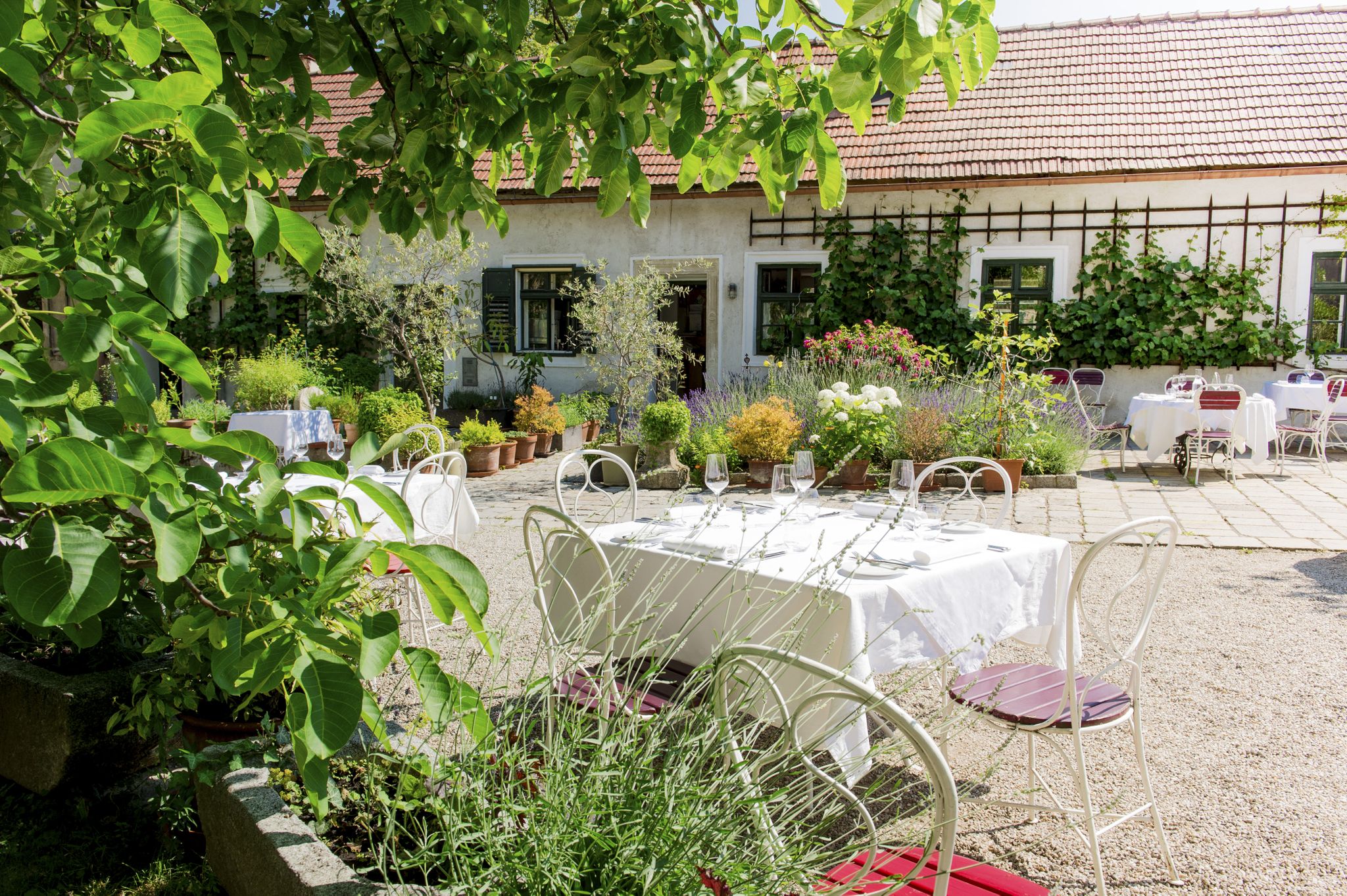
Gobelsburg Castle in Lower Austria's Kamptal Valley is not only a historic building, but also one of Austria's oldest and most renowned wineries. The beginnings of winemaking at this site date back to 1171; the present castle, with its Renaissance core, was rebuilt in the Baroque style in the 18th century. It has belonged to the Cistercian monastery of Zwettl since 1740, and since 1996, the winery has been managed by Michael and Eva Moosbrugger together with Willi Bründlmayer. On approximately 75 hectares of vineyards, they produce award-winning white and red wines – primarily Grüner Veltliner and Riesling.
5
0

Frequently Asked Questions
Which castles around Fels am Wagram are most popular with visitors?
Visitors frequently enjoy Grafenegg Castle, known for its 19th-century Tudor-style architecture and role as a cultural meeting place. Gobelsburg Castle is also popular, featuring a winery with historic cellars and a beautiful chapel. Haindorf Castle, with its Baroque architecture and extensive parkland, is another favored spot.
Are there any family-friendly castles to visit in the Fels am Wagram area?
Yes, several castles are suitable for families. Grafenegg Castle and Gobelsburg Castle are both categorized as family-friendly. Haindorf Castle also offers a large castle park, which can be enjoyable for families.
What kind of historical significance do the castles in Fels am Wagram hold?
The castles in the Fels am Wagram region offer a deep dive into Lower Austria's history. For example, Schloss Fels, though not publicly accessible for general tours, dates back to at least the 12th century and houses a local history museum. Grafenegg Castle has origins from 1435 and showcases romantic historicism, while Burg Maissau, dating to the 12th century, features early Gothic and Romanesque-Neo-Gothic architecture.
Can I visit Schloss Fels in Fels am Wagram?
Schloss Fels, a landmark in the market town, houses the local history museum, municipal library, and various local associations. While general public access for tours might be limited, visits to its rooms are possible by prior arrangement. It also has a historic wine cellar associated with the Schloss Fels winery.
Are there any castles in the area that are not open to the public?
Yes, Burg Maissau is a well-preserved hilltop castle with a rich history dating back to the 12th century, but it is privately owned by the Abensperg and Traun families and is not open to the public. Similarly, Schloss Thürnthal is privately owned and its interior may not be publicly accessible.
What outdoor activities can I do near the castles around Fels am Wagram?
The region offers various outdoor activities. You can find numerous hiking trails, such as the 'Nature Trail Fels am Wagram' or routes around Gösing am Wagram. For cycling enthusiasts, there are gravel biking routes like the 'Wagram Peace Stupa – Grafenegg Castle loop from Langenlois' and road cycling routes that explore the Danube and Kamp areas. You can find more details on these activities in the hiking guide, gravel biking guide, and road cycling guide for Fels am Wagram.
Are there any castles with a connection to wine in the Fels am Wagram region?
Yes, the region is known for its viticulture. Gobelsburg Castle is home to a winery with historic cellars. Schloss Fels also has a historic wine cellar associated with the Schloss Fels winery, highlighting the area's strong viticulture tradition.
What is the best time of year to visit the castles around Fels am Wagram?
The Wagram region is beautiful throughout the year, but spring and autumn are particularly pleasant for exploring the castles and the surrounding vineyards. The weather is generally mild, making it ideal for outdoor activities like hiking and cycling. Summer offers cultural events, such as the Langenlois Castle Festival at Haindorf Castle, but can be warmer.
Are there any castles that also serve as cultural venues?
Absolutely. Grafenegg Castle is a prominent cultural meeting place, hosting various events. Haindorf Castle, now a seminar hotel and training center, hosts the annual Langenlois Castle Festival, attracting operetta fans during the summer months.
What architectural styles can I expect to see among the castles in this area?
The castles display a range of architectural styles reflecting centuries of development. You can see the romantic historicism of the 19th century at Grafenegg Castle, early Gothic and Romanesque-Neo-Gothic elements at Burg Maissau, and Baroque architecture at Haindorf Castle. Schloss Thürnthal is notable for its blend of High Baroque forms and classical-antique stylistic elements.
Are there any castles that house museums or exhibitions?
Yes, Schloss Fels houses the local history museum (Heimatmuseum), offering insights into the area's past. Additionally, Hunger Tower (Reckturm) in Traismauer, a historical site with castle elements, houses the Traismauer City Museum, exhibiting antique sculptures and various finds.
Can I find restaurants or cafes near the castles?
Yes, some castles offer dining options. Haindorf Castle, for instance, includes a seminar hotel with a restaurant. The surrounding towns and villages, including Fels am Wagram and Langenlois, also provide various cafes and restaurants where you can enjoy local cuisine and wines.
Most popular routes around Fels am Wagram
Most popular attractions around Fels am Wagram

Get inspired with the komoot mobile app


Explore more
Looking for the best castles somewhere else? Discover other guides around Fels am Wagram:
