Top 20 Castles around Maria Saal
Best castles around Maria Saal are located in a region rich in historical significance and varied landscapes. Maria Saal itself is known for the fortress-like Maria Saal Cathedral, a central historical and spiritual site in Carinthia. The surrounding area features a mix of well-preserved castles, ruins, and fortified structures, providing insights into centuries of regional history. This area offers opportunities to explore historical architecture and significant landmarks.
Best castles around Maria Saal
- The most popular castles is View from Hochosterwitz…
Last updated: October 17, 2026
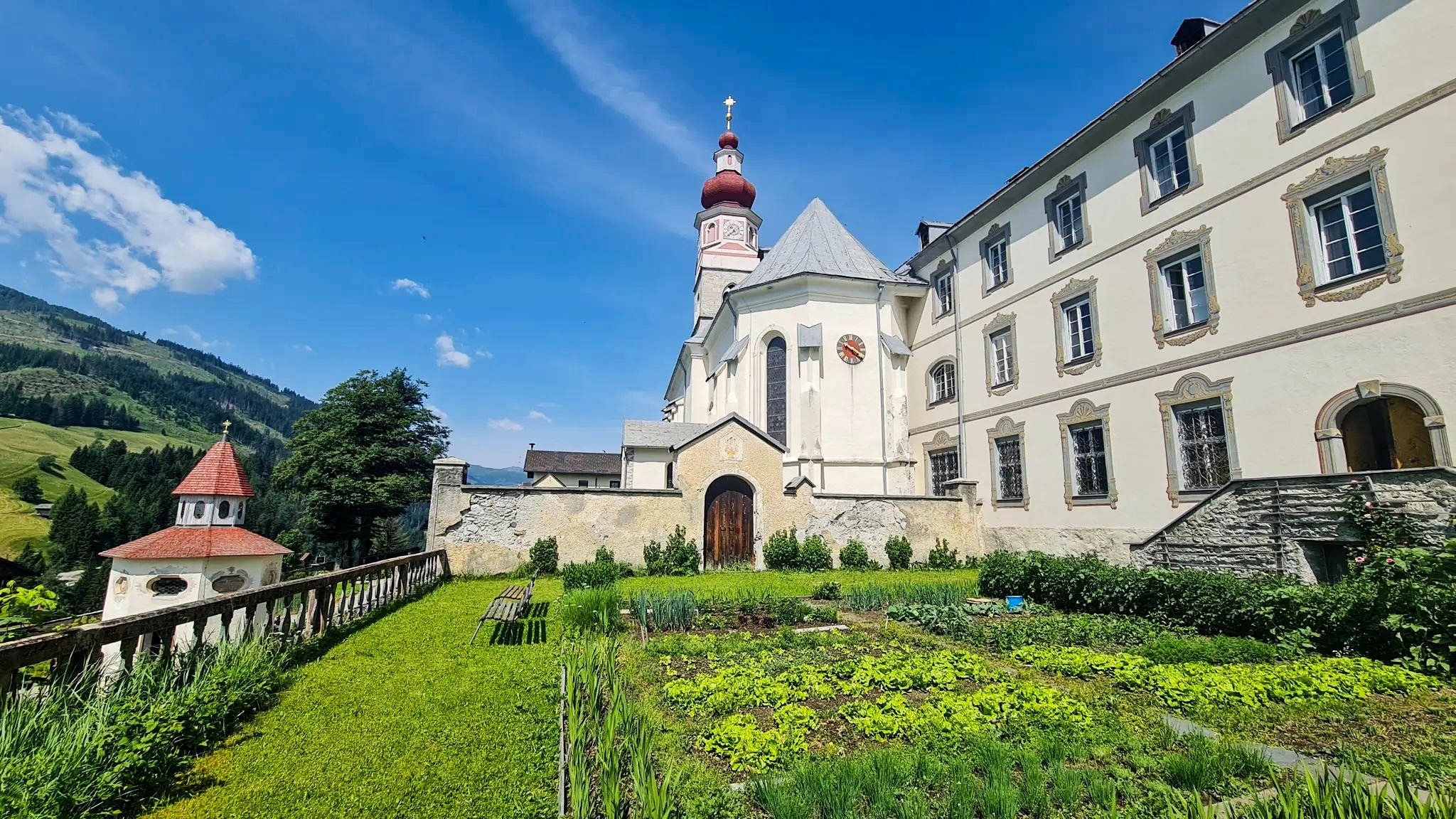
Hochosterwitz Castle
Highlight • Castle
Translated by Google •
Tip by

Maria Loretto Peninsula
Highlight • Beach
Translated by Google •
Tip by

Sign up now to discover places like this
Get recommendations on the best single tracks, peaks, & plenty of other exciting outdoor places.
Ruins of Liebenfels Castle
Highlight • Castle
Translated by Google •
Tip by

Meiselberg Castle
Highlight • Castle
Showing Translation
Tip by

Annabichl Castle
Highlight • Castle
Translated by Google •
Tip by

Sign up for free to discover even more castles around Maria Saal.
Already have an account?
Start today with a free account
Your next adventure awaits.

Other adventures around Maria Saal

Tips from the Community

The castle ruins were leased in 2020 by an entrepreneur from Liebensfels. The ruins, which were completely overgrown at the time, were extensively restored, renovated, and modernized. Among other things, a circular path with signs and info boards was designed, and a "Sky walk" provides a modern touch. You can tell everywhere that detailed work was done here and that "visitor-friendliness" and added value were and are given special importance. Verdict: absolutely worth seeing! https://de.wikipedia.org/wiki/Burg_Liebenfels_(K%C3%A4rnten)
1
0
Schloss Meiselberg was probably built in the 16th century. It is privately owned and not publicly accessible. The long arcade corridor leading to the entrance and the coloring of the facades, which are partially marbled, are remarkable in the external design.
1
0
The castle is located on a small hill. An asphalted path leads to the castle, which is not accessible. It was built in the period 1580 to 1587 by Georg von Khevenhüller. The castle has a baroque chapel and a historic terraced garden, which originally extended further east. Source: https://de.wikipedia.org/wiki/Schloss_Annabichl
0
0

The most coveted spot on Lake Wörthersee is undoubtedly the Maria Loretto peninsula in Klagenfurt's eastern bay. This magical place manages to bridge the gap between pristine nature and opulent festivities. Anyone who has experienced the Lendspitz nature reserve or witnessed the breathtaking view from Maria Loretto Castle will fall in love with this narrow gem forever. Whether it's a photo spot for a wedding or pure romance away from the crowds – everyone can escape the everyday here. Its high recreational value makes this peninsula the place to be! Anyone who has experienced the Lendspitz nature reserve or seen the breathtaking view from Maria Loretto Castle will fall in love with this narrow gem forever.
4
0

In this place, you can let go of time. Not because it passes too quickly, but because it ceases to be important. On the Maria Loretto peninsula, the world seems to whisper instead of speak. The water sparkles as reliably as an old poem that you want to reread again and again. Palm trees and plane trees share the view of the shore, while the castle stands discreetly in the background – as if it knew its impact and no longer needed to prove it. Here, you take off your shoes because the gravel path suggests it. You sit down on a marble bench, perhaps drink a glass of wine in the shade of the linden trees, or simply dip your feet in the turquoise water. And suddenly you understand why people used to build avenues to the lake: not out of a desire for representation, but to create a dignified path to happiness. If you're in a hurry, it's best to stay outside. If you have the heart for it, you can enter.
0
0

The main house is a three-storey building with five window axes to the east. This facade is elaborately designed, while the west facades are rather plain. The castle has a historic terraced garden that extends to St. Veiter Straße. Originally, the garden extended further to the east. The castle is used privately and is unfortunately not open to the public.
0
0
Annabichl Castle is located north of the city of Klagenfurt in the Annabichl district, which is named after the castle.
0
0

The fortifications of the Burgweg with 14 large gate structures leading in several turns through the rocky terrain to the top are characteristic and interesting from a fortress point of view. This road overcomes deeper rock notches at a moderate incline, occasionally leads along carved rock walls or widens to weapon sites until it reaches the main castle. A second approach, called the Narrensteig, leads up the steep, rocky western slope, is partly carved into the rock and leads into the castle without touching the gates of the main path. This access was blocked off by a defensive transverse wall erected at the lowest part with a few additions that no longer exist today. Both defensible approaches existed in earlier times, as reported by the 13th-century chronicler Unrest. Due to its age, the castle can be found both as a medieval fortress and as a fortress in the modern sense. A document from 1388 mentions the original design, consisting of a square tower or keep, the adjoining living quarters (palas), the small castle chapel and protective walls with battlements (wintperge) and embrasures, when the crossbow was still the main weapon. The actual core of the complex, the stronghold, is an independent defense body that includes older parts. The gates, partly in red sandstone, partly in green chlorite slate and enriched with white limestone or marble, are noteworthy as Mannerist architecture.
3
0
Frequently Asked Questions
What are the most historically significant fortified sites around Maria Saal?
While Maria Saal is primarily known for its fortress-like Maria Saal Cathedral, which served as a protective structure, other notable historical sites include the impressive Hochosterwitz Castle, known for its 14 gates, and the restored Ruins of Liebenfels Castle with its observation tower.
Are there any family-friendly castles or historical sites to visit near Maria Saal?
Yes, the View from Hochosterwitz Castle offers a small museum and a castle café, making it an engaging visit for families. The Maria Loretto Peninsula, featuring Maria Loretto Castle, is also considered family-friendly with its natural beauty and recreational opportunities by Lake Wörthersee.
What natural features can I explore near the castles around Maria Saal?
The Maria Loretto Peninsula is a prime example, offering a blend of natural beauty and historical architecture right on Lake Wörthersee. It's a great spot for enjoying the lake, relaxing, and taking in scenic views.
What outdoor activities can I do near these castles?
The region around Maria Saal offers various outdoor activities. You can find mountain hikes, such as the Ulrichsberg loop, or explore MTB trails like the Meiselberg Castle – Wald Trail. Cycling routes, including the Lend Canal loop, are also available. For more details on routes, visit the respective guides: Mountain Hikes around Maria Saal, MTB Trails around Maria Saal, and Cycling around Maria Saal.
Are there hiking trails near the castles around Maria Saal?
Yes, there are several hiking opportunities. For instance, you can find mountain hikes around Ulrichsberg and Magdalensberg. These trails offer varying difficulties and distances. You can explore more options in the Mountain Hikes around Maria Saal guide.
What are some unique architectural features of the Maria Saal Cathedral?
The Maria Saal Cathedral is a significant Gothic sacred building in Carinthia. It features intricate altars, frescoes, unique Gothic wood carvings, and world-famous Roman stone reliefs on its facade. It also houses Carinthia's largest church bell, the 'Maria Saalerin,' and a special Baroque organ.
Can I take a guided tour of the Maria Saal Cathedral?
Yes, guided tours are available for the Maria Saal Cathedral, providing deeper insights into its rich history and significance as a spiritual and historical center in Carinthia.
What kind of views can I expect from the castles or ruins in the area?
From the View from Hochosterwitz Castle, you can enjoy fantastic panoramic views of the surrounding landscape. The restored Ruins of Liebenfels Castle also offer an observation tower and a skywalk for impressive vistas.
Is there a castle near Maria Saal that is privately owned?
Yes, Meiselberg Castle, a beautiful 16th-century castle near Maria Saal, has been owned by the Hanau-Hořovice family since 1941.
What do visitors enjoy most about the Maria Loretto Peninsula?
Visitors appreciate the Maria Loretto Peninsula for its blend of pristine nature and historical charm. It's a popular spot for relaxation, enjoying the lakeside restaurants, and taking in the breathtaking views of Lake Wörthersee, making it a place to escape the everyday.
Are there any modern art installations near the historical sites?
Yes, at the Maria Saal Cathedral, a contemporary Stations of the Cross, made from over 20 tons of iron, aluminum, and stainless steel, has been installed since 2018. It surrounds the medieval church fortress in the old defensive moat, blending the passion story with modern life.
What is the significance of the Herzogstuhl near Maria Saal?
The Herzogstuhl (Duke's Chair) is a significant historical landmark near Maria Saal, deeply connected to Carinthia's past. It was the site where the dukes of Carinthia were enthroned in a traditional ceremony. You can find more information about this historical site on Visit Carinthia.
Most popular routes around Maria Saal
Most popular attractions around Maria Saal

Get inspired with the komoot mobile app


Explore more
Looking for the best castles somewhere else? Discover other guides around Maria Saal:
