Top 19 Castles around Sankt Florian
Best castles around Sankt Florian provide insight into the region's historical significance and architectural landscape. Sankt Florian is situated in Upper Austria, known for its blend of cultural sites and natural surroundings. The area features a variety of historical structures, from well-preserved castles to significant monastic complexes. Visitors can explore these sites to understand the local heritage and the evolution of Austrian architecture.
Best castles around Sankt Florian
- The most popular castles is Traun Castle, a castle that has…
Last updated: July 1, 2026
Traun Castle
Highlight • Castle
Translated by Google •
Tip by

Losensteinleiten Castle
Highlight • Castle
Translated by Google •
Tip by

Sign up now to discover places like this
Get recommendations on the best single tracks, peaks, & plenty of other exciting outdoor places.
Sign up for free
Spilberg Castle Ruins
Highlight • Castle
Spilberg Castle was once an important moated castle and was originally located on an island in the Danube, which belonged to the municipality of Enns. The castle has always …
Translated by Google •
Tip by

Spilberg Castle Ruins
Highlight • Castle
Translated by Google •
Tip by

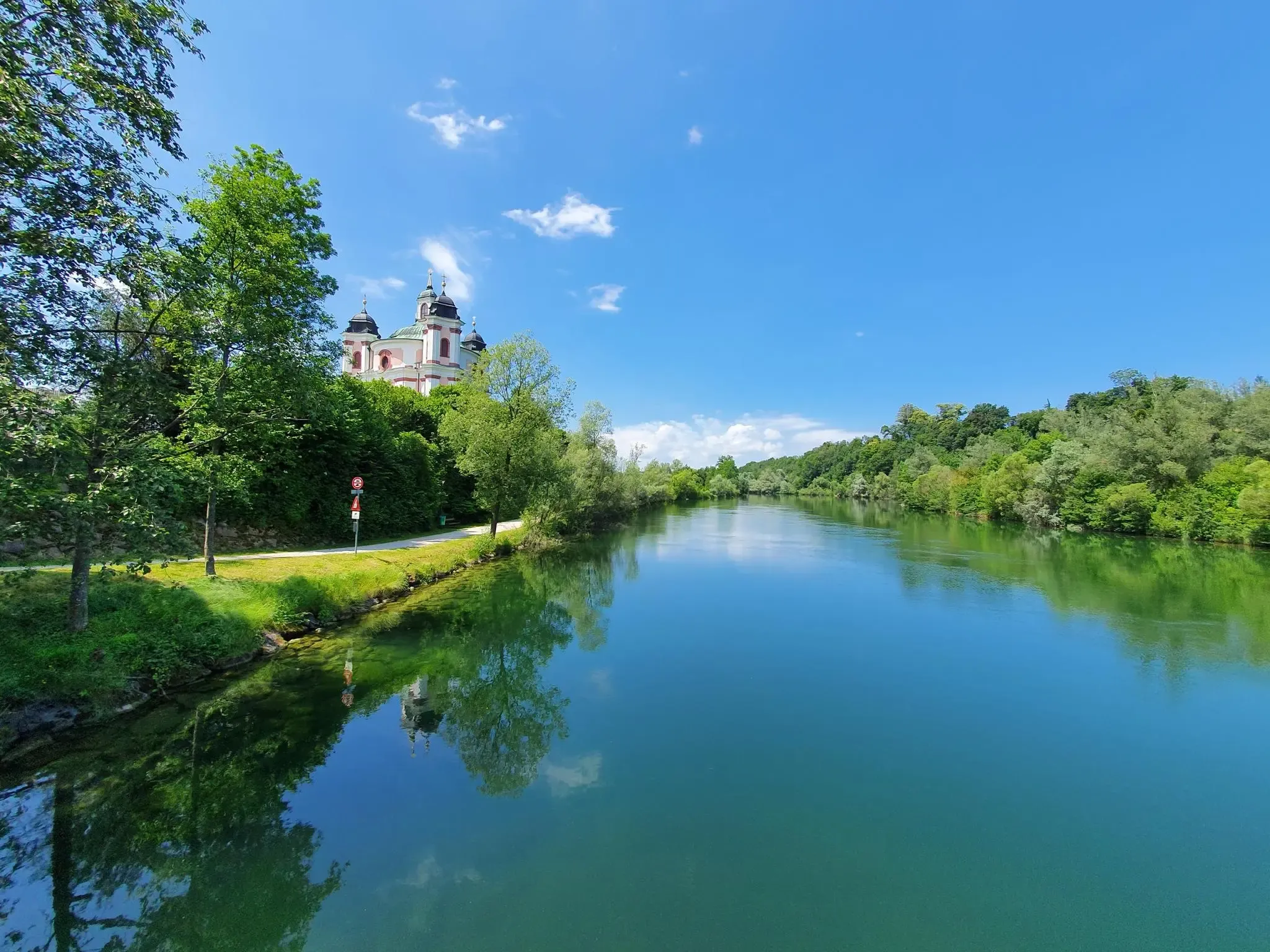
Ebelsberg Castle and Traun Riverside Path
Highlight • Cycleway
Translated by Google •
Tip by

Sign up for free to discover even more castles around Sankt Florian.
Sign up for free
Already have an account?
Start today with a free account
Your next adventure awaits.
Login or Signup

Other adventures around Sankt Florian

Tips from the Community

This castle can only be explored with a guided tour, which is highly recommended. It is one of the few sources of income and with the money the castle ruin is lovingly restored. Duration of the guided tour approx. 2 hours, registration for the guided tour at 0664/4846429.
0
0

Good friends, nature, beach and gastronomy 🏖️
0
0


Everything you need to know about the castle ruins and the association: https://www.spilberg.at/
1
0
My photos of the Spilberg Castle Ruins can only be seen in the mountain bike highlight: https://www.komoot.com/de-de/highlight/710174 Taken on my tour: 2025.04.14. SPILBERG CASTLE RUINS - MAUTHAUSEN ROUND https://www.komoot.com/de-de/tour/2189322575
1
0
My photos are from the tour: 2025.04.14. SPILBERG CASTLE RUINS - MAUTHAUSEN ROUND https://www.komoot.com/de-de/tour/2189322575 Everything you need to know about the castle ruins and the association: https://www.spilberg.at/
0
0

Bernhard von Losenstein had the current castle built in 1515 and gave it the name "Losensteinleiten". When a Turkish army under Kassim Pasha made the area unsafe in 1532, the castle suffered greatly. It is said that a hunter defended himself with many guns and shot a Turkish leader. This heroic act frightened the Turks and they fled. Between 1550 and 1570, the castle was enlarged by Georg Achaz von Losenstein. His wife was called Christina von Bergheim. The family died out with Franz Anton von Losenstein in 1692. The property passed to the Princes of Auersperg and their successors until 1950. From 1955 to 1993, Losensteinleiten Castle was owned by the Camillian Order, which ran a private high school with public rights until 1976. From 1978 to 1983, the Upper Austrian state government housed an agricultural college for girls. From 1985 to 1993, the Camillians ran the St. Kamillus retreat and education center in Losensteinleiten Castle, with a focus on the training and further education of people working in the service of the sick, especially in the denominational hospitals in Austria.
1
0

Traun Castle houses a freely accessible exhibition on the history of the castle and the nobility in the ring mantle complex.
7
1
Frequently Asked Questions
What are the most notable castles and historical sites in and around Sankt Florian?
While Sankt Florian is most famous for the magnificent St. Florian Monastery, a Baroque masterpiece, you can also find Traun Castle, a beautifully restored site with an exhibition on nobility, and Losensteinleiten Castle, a 16th-century Renaissance castle with a large garden. Tillysburg Castle, located directly in Sankt Florian, is another historic castle known for hosting events.
Are there family-friendly castles to visit near Sankt Florian?
Yes, several sites offer family-friendly experiences. Traun Castle is a great option, featuring a freely accessible exhibition that can engage visitors of all ages. The area around Ebelsberg Castle also offers a beautiful bike path along the Traun River, perfect for a family outing.
What kind of historical insights can I gain from visiting these castles?
The castles and historical sites around Sankt Florian offer a deep dive into the region's past. St. Florian Monastery showcases impressive Baroque architecture, an Imperial Library, and the burial site of Anton Bruckner. Traun Castle provides insights into the history of the castle and local nobility through its exhibition. Losensteinleiten Castle, a Renaissance conversion of a moated castle, reflects architectural changes over centuries.
What outdoor activities can I do near the castles in Sankt Florian?
The region offers various outdoor activities. You can find numerous hiking trails, such as the 'St. Florian Monastery – St. Florian Panorama loop' or the 'Weir on the Ipfbach – St. Florian Monastery loop'. For cycling enthusiasts, there are road cycling routes like the 'St. Florian Monastery – Schloss Hohenbrunn loop' and MTB trails, including the 'Pichlinger Lake – St. Florian Monastery loop'. You can explore more options on the easy hikes around Sankt Florian guide, the MTB Trails around Sankt Florian guide, or the Road Cycling Routes around Sankt Florian guide.
Are there any castles that are particularly good for a day trip from Sankt Florian?
For a day trip, Traun Castle is a popular choice, offering a restored setting and an exhibition. Losensteinleiten Castle, with its Renaissance architecture and garden, also makes for an interesting visit. Both are within easy reach and provide a rich historical experience.
What is the best time of year to visit castles around Sankt Florian?
The best time to visit is generally during the spring, summer, and early autumn months (April to October) when the weather is mild and conducive for exploring both indoor and outdoor areas. This period also allows for comfortable enjoyment of nearby cycling and hiking routes. Winter visits can be charming for indoor tours, but some outdoor areas or specific attractions might have reduced hours.
Can I find cafes or restaurants near the castles in Sankt Florian?
Yes, particularly around St. Florian Monastery, there are on-site options including a guesthouse and restaurant. For other castles, nearby towns and villages like Sankt Florian itself will offer various cafes and restaurants where you can enjoy local cuisine.
How long does it typically take to visit the castles in the Sankt Florian area?
The duration of a visit varies by site. For a comprehensive tour of St. Florian Monastery, including its library and Marble Hall, you should allocate at least 2-3 hours. Smaller castles like Traun Castle or Losensteinleiten Castle might take 1-2 hours to explore, depending on your interest in their exhibitions or grounds. Many visitors combine a castle visit with a nearby hike or bike ride.
Are there any castle ruins to explore near Sankt Florian?
Yes, the Spilberg Castle Ruins, located near Langenstein, offer a glimpse into a historic moated castle with a Romanesque crenellated tower. While partially inhabited, the ruins can be viewed from the outside on a tour, providing a unique historical experience in a floodplain landscape.
What makes <a href="https://en.wikipedia.org/wiki/St._Florian_Monastery" target="_blank" rel="noopener">St. Florian Monastery</a> a must-visit, even though it's not a traditional castle?
St. Florian Monastery is considered a cultural and architectural treasure that rivals traditional castles in its grandeur. Its highlights include the breathtaking Imperial Library, the opulent Imperial Marble Hall with its trompe l'oeil frescoes, and the Basilica housing the famous Bruckner Organ. It offers a deep dive into Baroque art, history, and music, making it an essential stop for anyone interested in the region's heritage.
Are there options for public transport to reach the castles?
Public transport options are available, particularly for major sites like St. Florian Monastery, which is well-connected within the municipality of Sankt Florian. For other castles, it's advisable to check local bus schedules or consider a combination of public transport and a short walk or taxi ride, as some might be in more rural settings.
What kind of natural features can I see near the castles?
Many castles are situated amidst beautiful natural landscapes. For instance, Losensteinleiten Castle features a large garden with a castle pond. The area around Ebelsberg Castle offers the scenic Traun Riverside Path, perfect for enjoying the river and surrounding nature. The Spilberg Castle Ruins are located in a floodplain landscape, the Schlossau, near the Danube.
Most popular routes around Sankt Florian
Most popular attractions around Sankt Florian

Get inspired with the komoot mobile app


Explore more
Looking for the best castles somewhere else? Discover other guides around Sankt Florian:
